Top 5 Protein Powder Comparison: Which Wins?
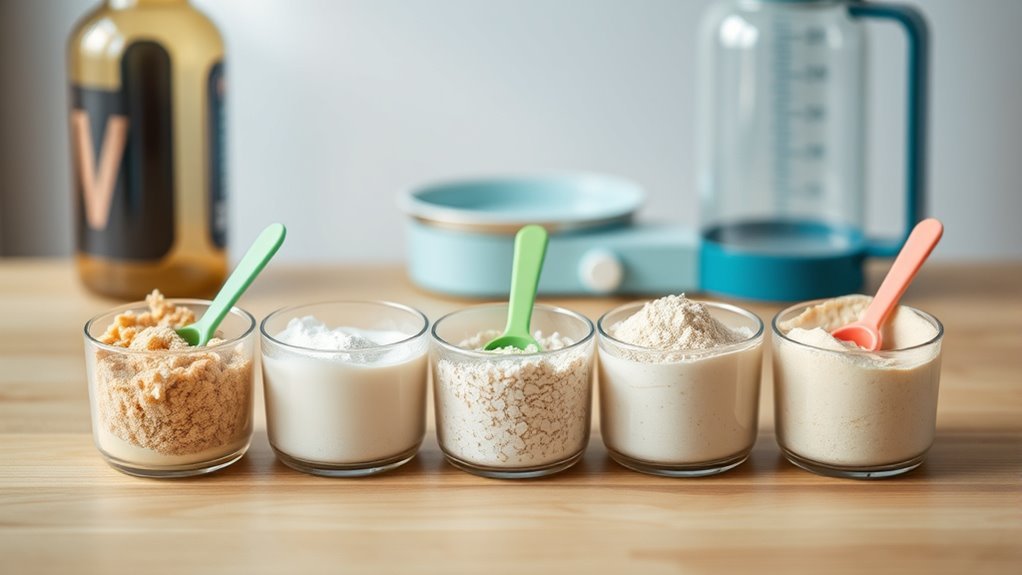
You’ll want to pick a protein powder that suits your specific goals, whether it’s muscle gain, weight loss, or recovery.
Whey isolate shines for fast absorption and muscle building, while casein helps with appetite control because it digests slowly.
Plant-based options work well if you’re vegan or avoiding allergens.
Taste plus mixability matter for sticking with it.
Each type offers unique benefits, so keep exploring to find the perfect match for your needs and preferences.
Choosing the Right Protein Powder for Your Goals
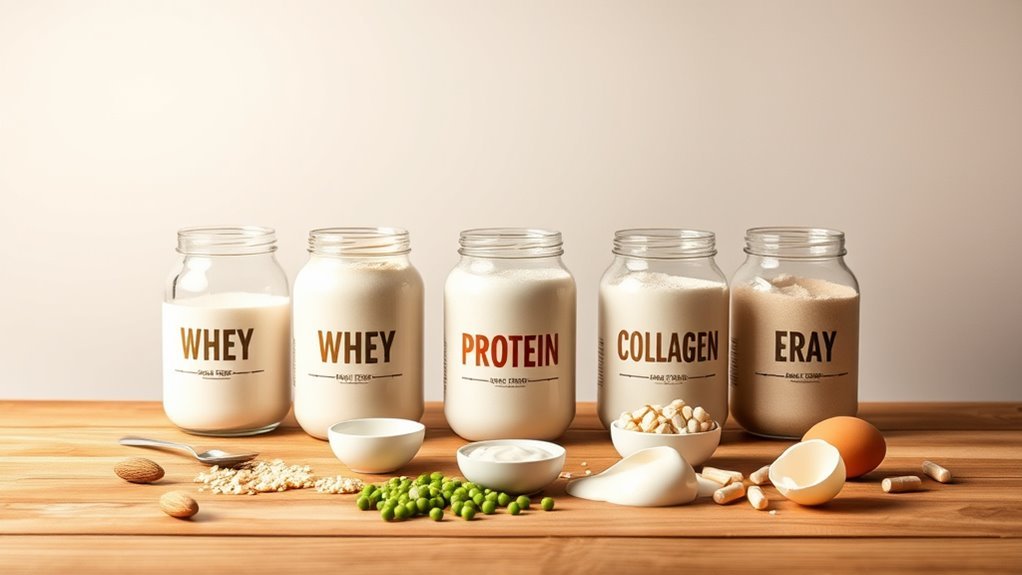
How do you choose the right protein powder for your goals? It all starts with identifying your specific protein goals, whether that’s muscle building, weight management, or recovery.
Choosing the right protein powder begins with understanding your unique goals—muscle building, weight management, or recovery.
If muscle building is your priority, whey isolate is a top choice because it offers fast protein absorption and a high protein content per serving. On the other hand, plant-based protein works well if you have dietary restrictions or prefer vegan options, providing healthy ingredients without allergens.
Pay close attention to the protein type and ingredient transparency to avoid added sugars or artificial fillers that could hinder your progress. Understanding how quickly your body absorbs different proteins helps you decide between fast-digesting options like whey isolate or slower ones like casein.
Ultimately, selecting a protein powder that aligns with both your dietary needs and protein goals guarantees you support your body effectively and stay on track toward your fitness aspirations.
Best Protein Powders for Muscle Gain and Recovery
Choosing the best protein powder for muscle gain and recovery means focusing on fast-absorbing, high-quality options that deliver ample protein per serving. Whey isolate supplements like Dymatize ISO100 Hydrolyzed and Swolverine Whey Protein Isolate provide 25g of protein each, making them perfect for post-workout muscle repair.
These powders contain essential amino acids that support muscle repair and promote efficient recovery. Optimum Nutrition Gold Standard Whey offers 24g of protein with a balanced amino acid profile, ideal for sustained muscle gain. If you prefer minimally processed ingredients, Legion Whey+ Certified Grass-Fed Irish Whey delivers 25g of high-quality protein to fuel your gains.
Most of these options have minimal fats and carbs, focusing on maximizing protein content to help you build muscle efficiently. By choosing a supplement rich in whey isolate, you guarantee fast absorption and effective muscle recovery after intense workouts.
Best Protein Powders for Weight Loss and Appetite
If you want to manage your weight and control appetite effectively, protein powders with slow digestion like casein are your best bet. Casein protein stands out in the protein powder comparison for weight loss due to its ability to form a gel in your stomach, slowing digestion and providing long-lasting fullness.
This slow digestion supports hunger management by releasing amino acids steadily, helping curb cravings between meals and overnight. Optimum Nutrition Casein Protein offers 24g per serving without added sugar or artificial sweeteners, ensuring clean ingredients that maximize satiety benefits.
While it’s a bit pricier, the investment pays off with effective appetite control and sustained energy. Choosing protein powders free from unnecessary additives enhances your protein for weight loss journey by promoting better hunger management.
If you want a reliable option that keeps you satisfied longer, casein protein is a smart choice for appetite control and long-term weight management.
Protein Powders With the Best Taste and Mixability
While protein content is essential, taste and mixability often determine whether you’ll stick with a powder long-term. Dymatize ISO100 Hydrolyzed Protein stands out for its excellent taste and smooth dissolve, blending effortlessly with water or milk without any gritty texture.
If you crave flavored protein powders, Ghost Whey Protein offers snack-inspired flavors with balanced flavor and good mixability. For a rich, creamy experience, Impact Whey’s Chocolate Brownie and Cinnabon flavors deliver a milkshake-like mouthfeel that many enjoy.
Naked Unflavored Whey Protein provides easy blendability and a clean option, though it has a slight aftertaste. Swolverine Whey Isolate and Ritual Daily Shake excel in both dissolving quickly and offering a satisfying mouthfeel, making them ideal if you prioritize smoothness.
Plant-Based vs. Collagen Protein Powders: What to Know
Taste and mixability often guide your protein powder choice, but understanding the source and benefits of different types can help you pick one that fits your lifestyle and goals.
Plant-based proteins, like pea and rice, are vegan and provide a complete protein profile when combined properly. Collagen peptides, on the other hand, are animal-derived and support skin, joint, and connective tissue health.
They offer unique amino acids like glycine and proline but aren’t complete proteins.
| Feature | Plant-Based Proteins | Collagen Peptides |
|---|---|---|
| Protein Sources | Vegan (pea, rice, hemp) | Animal-derived (bovine, marine) |
| Protein Content | Varies, often slightly lower | 18-20g per serving |
| Amino Acids | Complete when blended | Rich in glycine, proline |
| Health Benefits | Muscle support, vegan-friendly | Skin elasticity, joint health |
Choose based on your dietary needs and desired health benefits, balancing digestibility and protein content.
Frequently Asked Questions
How Do Protein Powders Affect Kidney Health Over Time?
Protein powders can cause kidney strain over time if you experience protein overload or ignore dosage safety. For healthy kidneys, moderate intake with proper hydration usually won’t harm renal function.
However, if you have kidney disease, you should monitor your health closely and consult a professional before changing supplement timing or dosage. Individual variability means some might tolerate more protein than others, so regular health monitoring is essential to avoid long-term effects.
Are There Any Common Allergens in Protein Powders to Watch For?
Yes, you should watch for common allergens like dairy concerns, soy allergens, gluten sensitivity, wheat intolerance, nut allergies, egg reactions, seafood allergies, and sesame seeds in protein powders.
Even if a product claims dairy-free options or allergen-free formulations, cross-contamination can happen. Always check ingredient labels carefully to avoid reactions.
Choosing a protein powder that fits your dietary needs helps you stay safe and healthy while meeting your nutrition goals.
What Are the Environmental Impacts of Protein Powder Production?
You should know protein powder production impacts the environment through water usage, greenhouse gas emissions, and biodiversity impact. Choosing brands with sustainable sourcing and fair trade practices helps reduce their carbon footprint.
Look for companies using renewable energy and eco friendly packaging made from biodegradable materials. Proper waste management also matters, so bulk options or recyclable containers minimize pollution. Your choices can support a cleaner, more responsible protein supply chain.
Can Protein Powders Be Used Safely During Pregnancy?
You can use protein powders safely during pregnancy by focusing on protein safety and ingredient transparency. Choose powders that meet strict supplement regulations and align with health guidelines.
Pay attention to safe dosages to support prenatal nutrition without overloading your system. Consider your dietary restrictions and pregnancy cravings, and prioritize powders that enhance nutrient absorption.
Always consult your healthcare provider to verify your prenatal supplements fit your individual needs and support a healthy pregnancy.
How Do Protein Powders Interact With Common Medications?
Protein powders can affect medication absorption by causing nutrient competition and enzyme interference, which alters absorption rates. You might experience drug interaction if supplements contain herbs or additives that impact gastrointestinal effects and metabolism.
Timing your supplement intake carefully helps avoid interference with medication absorption. Always consider dosage adjustments, especially with blood thinners or osteoporosis drugs.
To stay safe, consult your healthcare provider about supplement timing and potential interactions before using protein powders.
Conclusion
You want results, and the right protein powder delivers whether you’re building muscle, shedding pounds, or just craving great taste. Muscle gain meets recovery, weight loss bumps into appetite control, and plant-based vibes collide with collagen benefits.
It’s no coincidence that the best powders blend quality and convenience seamlessly. So, trust your goals, trust your taste buds, and pick the powder that fits your lifestyle because winning starts with choosing smart.