
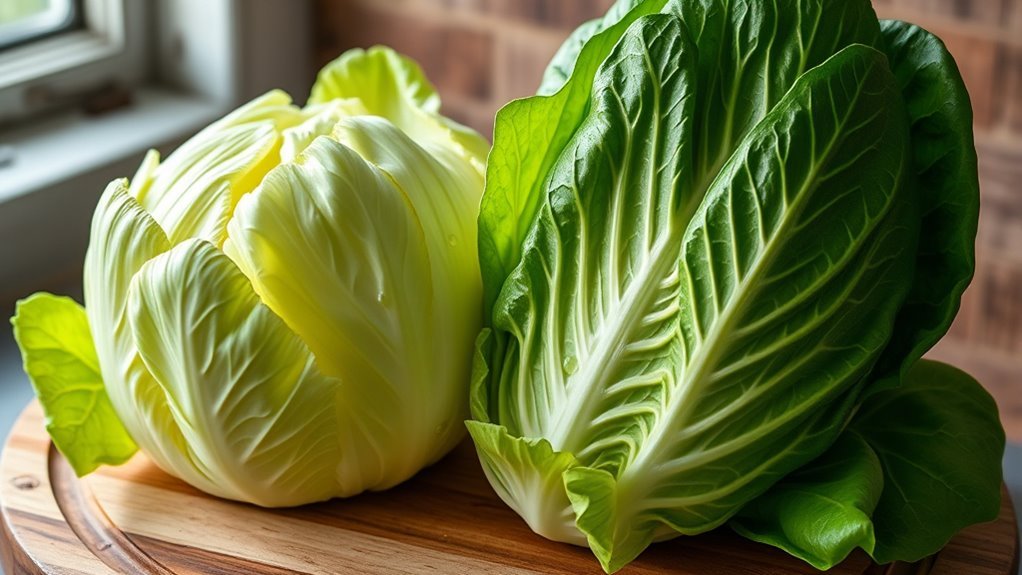
5 Key Nutrition Differences Between Iceberg Vs Romaine Lettuce Types
If you want more nutrients in your salad, choose romaine over iceberg lettuce. Romaine has higher levels of vitamins A, K, and folate, plus essential minerals like calcium and magnesium.
It also offers more fiber and antioxidants that support eye health and reduce inflammation.
While iceberg is crisp and hydrating with slightly fewer calories, it’s mostly water with fewer nutrients.
Keep exploring and you’ll discover how these differences impact your overall health.
Nutritional Overview of Iceberg and Romaine Lettuce
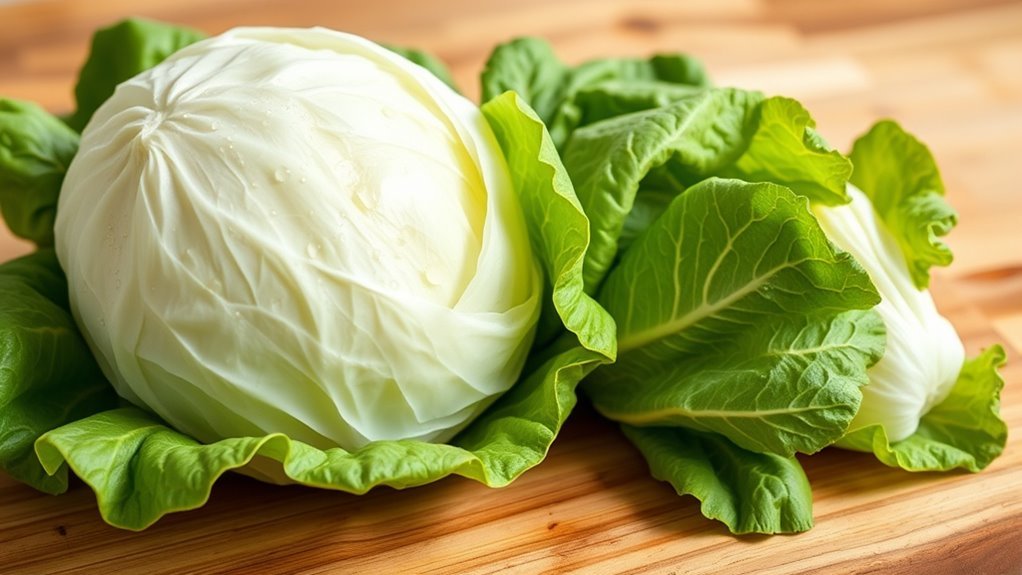
While both iceberg and romaine lettuces are low in calories, you’ll find that romaine packs a much higher nutritional punch. When you make a nutritional comparison between these popular leafy greens, romaine clearly stands out. It contains significantly more vitamin K, vitamin A, folate, and essential minerals than iceberg.
Vitamin K, crucial for blood clotting and bone health, is notably higher in romaine, making it a smarter choice if you want nutrient density in your salads. Iceberg lettuce, although refreshing and crunchy, is mostly water and provides fewer vitamins and minerals.
If you’re aiming to boost your intake of fiber and key nutrients, romaine lettuce gives you more value per serving. So, when choosing between these leafy greens, romaine delivers a stronger nutritional profile to support your health goals without sacrificing that crisp texture you enjoy.
Water and Calorie Content Compared
Because both iceberg and romaine lettuces have high water content, they make excellent low-calorie, hydrating choices for your meals. Iceberg lettuce contains about 96% water, slightly edging out romaine, which has around 95%. This marginal difference in water content gives iceberg its distinct crisp texture and revitalizing quality.
When you do a calorie comparison, iceberg lettuce offers approximately 13 calories per serving, while romaine comes in a bit higher at about 15 calories. Despite this small calorie gap, romaine provides greater nutrition density, packing more nutrients into each serving. So, if you’re watching calories but want a bit more nutritional value, romaine is a solid pick.
On the other hand, iceberg’s higher water content makes it a fantastic option if hydration and lightness are your priorities. Understanding these subtle differences helps you choose the lettuce that best fits your dietary goals without compromising on hydration or calorie control.
Fiber, Minerals, and Vitamin Content in Iceberg and Romaine Lettuce
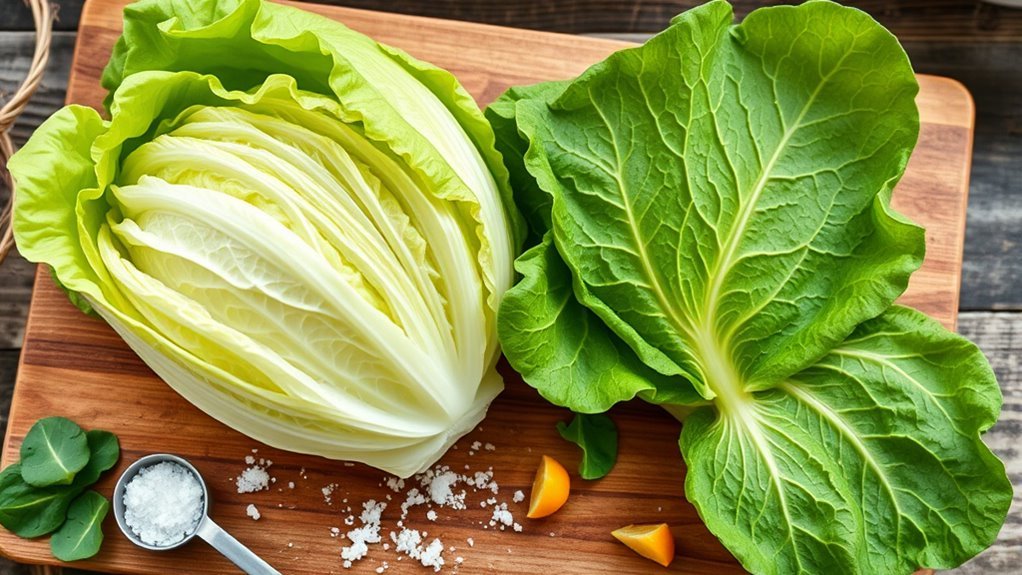
If you’re looking to boost your intake of vitamins and minerals, romaine lettuce offers a clear advantage over iceberg. Romaine contains considerably more vitamin A, about 436 mcg per 100 grams compared to iceberg’s 33 mcg.
Both lettuces give you fiber, but romaine edges ahead slightly, providing around 3.6–5.4% of your daily recommended intake per 100 grams. When it comes to minerals, romaine packs more magnesium and calcium, offering 14 mg and 33 mg per 100 grams, respectively, while iceberg contains lower amounts.
Although iceberg has higher water content, making it more hydrating, it’s less nutrient-dense overall. Choosing romaine helps you get more essential vitamins, minerals, and fiber in every serving, supporting better nutrition.
Why Romaine’s Antioxidants Boost Your Health
Beyond vitamins and minerals, romaine lettuce stands out for its rich antioxidant content, which plays an essential role in protecting your body from damage caused by free radicals. Romaine lettuce contains higher levels of antioxidants like beta-carotene, lutein, and zeaxanthin compared to iceberg lettuce.
These antioxidants help neutralize harmful free radicals, reducing oxidative stress and lowering your risk of chronic diseases. Plus, the vitamin C and polyphenols in romaine further boost its antioxidant power.
By adding romaine lettuce to your meals regularly, you support eye health, strengthen your immune system, and reduce inflammation. Research confirms that darker leafy greens like romaine offer considerably more antioxidant capacity than lighter varieties, amplifying these health benefits.
What Nutritional Differences Mean for Your Salad
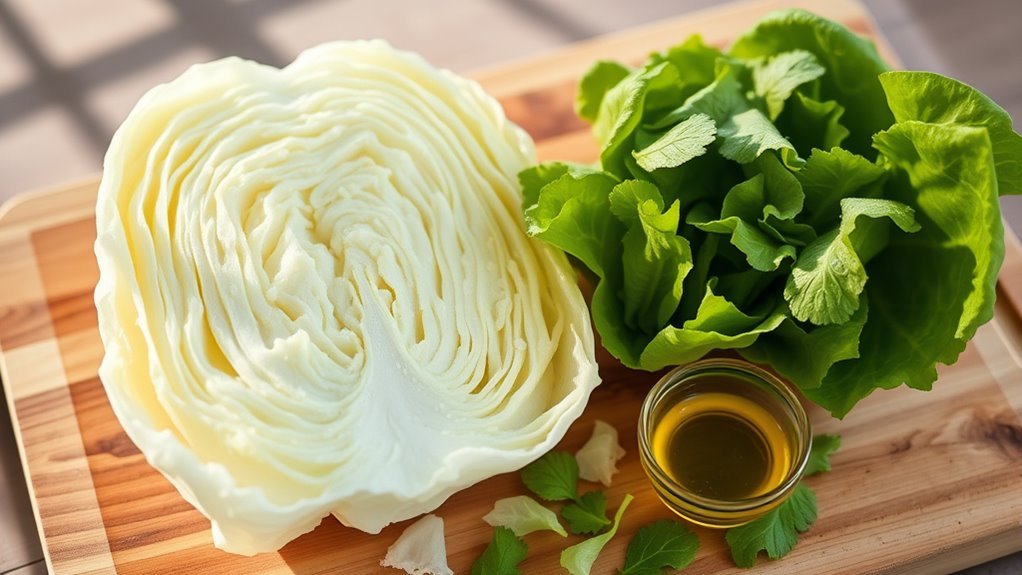
When you choose romaine lettuce for your salad, you’re opting for a nutrient-packed option that delivers far more vitamins and minerals than iceberg. Romaine’s high levels of vitamins A, C, and K make a real difference in your salad’s nutrition, supporting immune function, skin health, and blood clotting.
Unlike iceberg, which is mostly water and low in calories, romaine also provides more fiber and essential minerals like folate, calcium, magnesium, and potassium. This means your salad isn’t just invigorating—it also fuels your body with antioxidants and nutrients that promote overall well-being.
If you want every bite of your salad to contribute to your health goals, romaine is the smarter choice. Incorporating it regularly ensures you maximize your intake of critical vitamins and minerals, turning a simple salad into a powerful nutritional boost.
Frequently Asked Questions
How Do Iceberg and Romaine Lettuce Differ in Taste and Texture?
You’ll notice iceberg lettuce has a milder flavor profile and a higher crunchiness level thanks to its watery, tightly packed leaves. Romaine offers a more robust, slightly bitter taste with a layered, tender texture that’s fibrous but still crisp.
When it comes to culinary versatility, iceberg works great in sandwiches and wraps, while romaine shines in salads and dishes needing a heartier bite, like Caesar salads.
Which Lettuce Type Lasts Longer When Stored Fresh?
Think of iceberg lettuce as the marathon runner in the fridge, outlasting romaine in the shelf life comparison. You’ll get about 7-10 days of freshness from iceberg, while romaine holds strong for 5-7 days.
For freshness preservation, store both in airtight containers or wrap them in damp paper towels. These storage tips help you enjoy crisp, garden-fresh lettuce longer, no matter which type you choose.
Are There Any Allergy Concerns With Iceberg or Romaine Lettuce?
Yes, you can experience lettuce allergy symptoms like itching, swelling, or hives from iceberg or romaine. Both can cause cross reactivity with other greens, especially if you’re allergic to latex, increasing your risk of an allergic reaction.
The severity varies. Some people get mild oral discomfort, while others might face more intense reactions. If you’re sensitive, it’s best to consult an allergist before adding these lettuces to your diet.
How Do Iceberg and Romaine Lettuce Compare in Price?
Back in the days of the Renaissance, you’d find iceberg lettuce usually costs less than romaine, ranging from $1.50 to $3.00 per head, while romaine sits around $2.00 to $4.00 per bunch.
You’ll notice organic vs conventional lettuce farming practices impact prices too, with organic varieties costing more. If you’re mindful of lettuce nutritional content and your budget, iceberg is often the more economical pick, especially for larger quantities.
What Are the Best Recipes Using Iceberg Versus Romaine Lettuce?
You’ll love using iceberg lettuce in crunchy wedge salads or fresh lettuce wraps, where its crispness shines. Romaine’s sturdier leaves work best in hearty Caesar salads or filling lettuce cups.
For salad dressing tips, try creamy dressings with iceberg and tangy vinaigrettes with romaine to enhance flavor. Remember, growing and harvesting techniques affect texture and freshness, so choose fresh leaves.
Nutritional value comparison leans toward romaine for more vitamins.
Conclusion
You might think iceberg lettuce is just as healthy since it’s crunchy and revitalizing, but romaine really packs a bigger nutritional punch. With more fiber, vitamins, and antioxidants, romaine supports your digestion and overall health better.
So next time you’re making a salad, don’t settle for iceberg. Choose romaine to boost your meal’s benefits without sacrificing taste or texture. Your body will thank you for it!