7 Key Facts About the Nutritional Value of Black Olives
You’ll find that black olives pack heart-healthy monounsaturated fats and powerful antioxidants to protect your cells. They’re a low-carb, high-fiber snack that supports digestion and blood sugar balance.
Plus, they offer vitamin E, iron, and copper to boost immunity and bone strength. Watch out for their sodium and acrylamide risks by rinsing them before you eat.
Keep going to uncover easy ways to enjoy these flavorful, nutrient-rich olives safely.
Why Black Olives Are Packed With Nutrients
Although often overlooked, black olives pack a powerful nutritional punch that benefits your heart, skin, and immune system. When you include black olives in your diet, you get a rich source of monounsaturated fats, especially oleic acid. This plays a key role in supporting heart health and reducing inflammation.
These olives are also loaded with antioxidants like polyphenols and carotenoids, which protect your cells from oxidative damage and promote overall wellness. You’ll appreciate the vitamin E content in black olives, too, as it supports healthy skin and boosts immune function.
Plus, the curing process black olives undergo actually concentrates essential nutrients such as calcium and antioxidants, enhancing their nutritional value. With all these benefits, black olives aren’t just a tasty addition to your meals; they’re a nutrient-dense food that helps keep your body functioning at its best.
How Healthy Fats in Black Olives Support Heart Health
Because black olives are rich in monounsaturated fats like oleic acid, they play a powerful role in reducing LDL cholesterol and supporting your heart health. These healthy fats improve your cardiovascular health by lowering cholesterol levels and maintaining balanced blood pressure.
Black olives, rich in monounsaturated fats, help reduce LDL cholesterol and support heart health.
Including black olives in your diet provides antioxidants that help reduce inflammation, a major factor in heart disease.
Here’s how the healthy fats in black olives support your heart:
- Reduce LDL cholesterol, protecting arteries from plaque buildup
- Promote healthy blood pressure levels
- Decrease inflammation linked to cardiovascular risk
- Supply essential fatty acids for hormone and heart function
- Provide antioxidants that defend against oxidative stress
Black Olives as a Low-Carb, High-Fiber Snack
You’ll find black olives are a smart choice if you’re watching your carb intake. They have just about 6 grams of net carbs per 100 grams, which is pretty low. Plus, they pack a good amount of fiber, so they help keep you full and support digestion. Snacking on them can easily fit into your low-carb or weight management plan.
Low-Carb Nutritional Benefits
How can black olives fit into your low-carb lifestyle? Black olives are a smart choice for anyone following a low-carb diet. With about 6 grams of net carbs per 100 grams, they support carbohydrate-controlled eating without spiking blood sugar or insulin levels. Their dietary fiber content not only aids digestion but also helps you feel full longer.
Consider these low-carb nutritional benefits of black olives:
- Low net carbs (4-5 grams per 10-15 olives) fit well in a low-carb diet
- High dietary fiber promotes satiety and digestive health
- Healthy monounsaturated fats stabilize blood sugar
- Supports insulin level management
- Convenient, tasty snack for carbohydrate-controlled plans
Including black olives in your meals helps maintain steady energy while keeping carbs in check.
Fiber Content And Effects
Although black olives are often praised for their healthy fats, their fiber content makes them an excellent low-carb, high-fiber snack option. Black olives provide about 3.2 grams of dietary fiber per 100 grams, including soluble fiber that supports digestive health and helps regulate blood sugar by slowing carbohydrate absorption. This is ideal for low-carb diets.
Their fiber also offers prebiotic effects, promoting a healthy gut microbiota and enhancing overall digestive wellness. You can enjoy 10-15 olives to get around 2.5 grams of fiber, aiding satiety and gut function.
Since black olives tend to be high in sodium, rinsing them before eating helps reduce sodium intake without notably impacting their fiber benefits. This makes black olives a smart, fiber-rich choice for your diet.
How Antioxidants in Black Olives Protect Your Cells
You’ll find powerful antioxidants like oleuropein, hydroxytyrosol, and quercetin in black olives. These little compounds work hard to neutralize harmful free radicals. They help protect your cells by reducing oxidative stress and even guard your DNA from damage. So, when you include black olives in your diet, you’re actively supporting your body’s defense mechanisms. It’s a simple way to promote healthier cell function and keep things running smoothly.
Antioxidant Types in Olives
Because black olives contain powerful antioxidants like oleuropein, hydroxytyrosol, and quercetin, they help protect your cells from harmful free radicals. These antioxidants, mainly polyphenols, reduce oxidative stress, which can damage your cells over time.
Vitamin E in black olives also boosts your immune system and supports skin health. When black olives undergo curing or fermentation, these processes often preserve or even enhance their antioxidant content. By regularly eating black olives, you introduce a variety of antioxidants into your diet that work together to protect your body from oxidative damage.
Key antioxidants in black olives include:
- Oleuropein, known for its strong antioxidant effects
- Hydroxytyrosol, a potent polyphenol reducing oxidative stress
- Quercetin, which helps neutralize free radicals
- Polyphenols, supporting overall cellular health
- Vitamin E, protecting skin and immune functions
Cellular Protection Mechanisms
When you include black olives in your diet, their antioxidants actively protect your cells from damage caused by free radicals. Key bioactive compounds like oleuropein and polyphenols neutralize these harmful molecules, reducing oxidative stress that threatens cellular integrity.
Vitamin E in black olives shields your cell membranes from lipid peroxidation, further supporting cellular protection. Furthermore, polyphenols trigger cellular defense pathways, boosting your body’s ability to repair and detoxify damaged cells efficiently.
The antioxidants also downregulate pro-inflammatory gene expression, helping decrease inflammation-related cellular damage. By regularly consuming black olives, you supply your body with powerful antioxidants that strengthen cellular protection mechanisms, helping to combat aging and disease.
This makes black olives a smart choice for maintaining healthy, resilient cells.
How Black Olives Boost Bone Health and Immunity
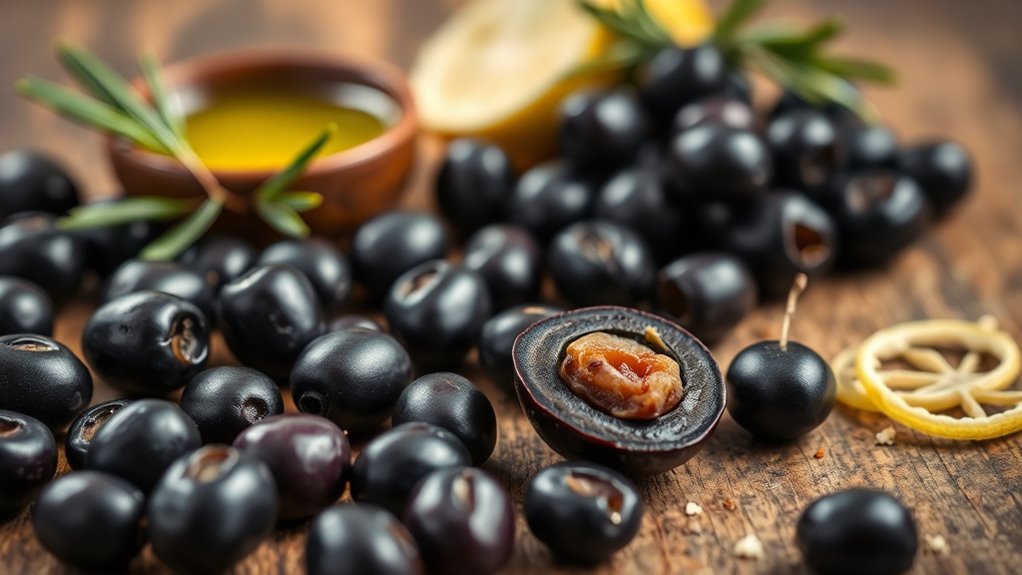
Although often overlooked, black olives pack a powerful nutritional punch that can help boost your bone health and immunity. These small fruits deliver essential nutrients and antioxidants, including vitamin E and iron, that support your body in multiple ways.
Black olives are nutrient-rich fruits that support bone health and strengthen immunity with essential vitamins and antioxidants.
The copper in black olives plays a key role in collagen synthesis, maintaining strong, healthy bones. At the same time, their anti-inflammatory compounds help reduce chronic inflammation, which can weaken bone density.
Plus, antioxidants in black olives protect your immune system by lowering oxidative stress. Here’s how black olives support your health:
- Provide copper for collagen and bone strength
- Deliver vitamin E and polyphenols as antioxidants
- Supply iron to aid red blood cell production and immune support
- Contain anti-inflammatory compounds to protect bone density
- Offer essential nutrients that enhance both bone health and immunity
Incorporating black olives into your diet is a tasty way to strengthen your bones and boost your immune defenses naturally.
Sodium and Acrylamide Risks in Black Olives
Black olives offer many health benefits, but it’s important to be aware of some potential risks, especially related to their sodium content and the presence of acrylamide. Black olives contain about 735 mg of sodium per 100 grams, which can contribute to elevated blood pressure if you consume them excessively.
To manage this, you can practice sodium reduction by rinsing or soaking the olives before eating. They absorb less salt, making them a better option for those sensitive to sodium.
Furthermore, acrylamide, a potential carcinogen, may form in black olives during certain curing processes and processing methods. The level of acrylamide varies but is generally low.
Still, you should eat black olives in moderation to minimize health risks linked to both sodium and acrylamide. Paying attention to how black olives are cured and stored can also help reduce acrylamide exposure, ensuring you enjoy their benefits safely.
Easy Ways to Add Black Olives to Your Diet
If you want to easily boost your meals with flavor and nutrition, adding black olives is a simple choice. Packed with healthy fats, antioxidants, fiber, vitamins, and minerals, black olives fit perfectly into the Mediterranean diet. They give your dishes a tasty nutritional boost.
Boost your meals with black olives—rich in healthy fats, antioxidants, and essential nutrients for a flavorful, nutritious Mediterranean touch.
Here are some easy ways to include them in your meals and snacks:
- Toss black olives into salads or pasta for extra healthy fats and antioxidants.
- Add sliced black olives on pizza or toast to enhance flavor and nutrients.
- Include whole black olives on snack boards with cheese, nuts, and veggies for savory snack ideas.
- Stir chopped black olives into tapenade or spreads to serve with low-carb crackers or vegetables.
- Mix black olives into Mediterranean-style grain bowls or stews for a quick nutritional upgrade.
Using black olives this way helps you enjoy their rich taste while supporting a balanced, nutrient-rich diet.
Frequently Asked Questions
Are Black Olives Suitable for People With Nut Allergies?
Yes, black olives are generally safe for you if you have a nut allergy since they’re nut-free varieties and don’t cause nut cross reactivity or olive allergy symptoms.
However, you should watch for allergen labeling to avoid cross contact risks during processing. Always take allergy precautions by checking product labels and consulting manufacturers to confirm safe consumption.
If you’re unsure, talk to your healthcare provider before adding black olives to your diet.
How Should Black Olives Be Stored for Maximum Freshness?
Imagine storing olives like a medieval alchemist guarding precious potions. For olive storage and freshness preservation, keep unopened jars in a cool, dark spot away from light exposure.
Once opened, use airtight storage containers and refrigerate promptly. Proper sealing is key to extend shelf life, and always keep olives submerged in brine.
Maintain a steady storage temperature to prevent spoilage. Following these refrigeration tips guarantees your black olives stay fresh and flavorful longer.
Can Black Olives Help With Weight Loss?
Yes, black olives can help with weight loss because their olive calorie count is low, making them a nutrient-dense snack with low calorie density. Their fat content, mainly monounsaturated fats, supports fat metabolism.
The fiber benefits promote satiety effects, helping you control your appetite. By practicing portion control, you can enjoy their flavor and fiber benefits while managing calorie intake effectively, supporting your overall weight management goals.
Do Black Olives Contain Any Gluten or Common Allergens?
Black olives don’t naturally contain gluten or common allergens, so you’re usually safe. However, during olive processing, cross-contamination can happen, especially if facilities handle gluten products.
Preservation methods and flavor profiles might include additives with gluten, so always check labels. Different olive varieties undergo unique fermentation processes that affect antioxidant content and sodium levels, influencing their culinary uses.
Stay cautious if you have sensitivities, but black olives themselves are generally gluten- and allergen-free.
What Is the Difference Between Black and Green Olives Nutritionally?
You’ll notice nutritional differences between black and green olives mainly come from olive harvesting and processing methods. Green olives, picked earlier, have higher antioxidant content and a sharper flavor profile.
Black olives, fully ripened, contain more oil and calories, offering milder flavors. Packaging techniques preserve these traits.
These nutritional differences influence their culinary uses and health benefits, so choosing between them depends on your taste preference and dietary goals.
Conclusion
Black olives are a nutrient-packed snack you’ll want to keep on hand. With healthy fats that support heart health and antioxidants that protect your cells, they offer big benefits in a small package.
Plus, they’re low-carb and high in fiber, making them a smart choice for your diet. Did you know just 10 black olives provide nearly 15% of your daily iron? Adding them to your meals is an easy way to boost nutrition and flavor.