

How to Understand Sweet Potato Nutrition in a Deep Dive
To truly understand sweet potato nutrition, you’ll want to explore how its nutrients vary by color. Orange types are rich in beta-carotene, while purple ones are high in anthocyanins.
Pay attention to how cooking methods like boiling or steaming affect vitamins, fiber, and glycemic index. Also, consider resistant starch’s gut benefits and portion size impacts.
These factors all influence sweet potatoes’ powerful antioxidant and disease-fighting abilities.
Keep following to uncover even deeper insights about this versatile root.
What’s Special About Sweet Potato Nutrition?

Although sweet potatoes come in various colors and flavors, their nutritional benefits stand out across the board. You’ll find that orange-fleshed sweet potatoes are especially rich in beta-carotene, a powerful antioxidant your body converts into vitamin A, essential for vision and immune health.
Beyond beta-carotene, sweet potatoes pack a punch with significant amounts of dietary fiber, including both soluble and insoluble types. This fiber mix supports your gut health by promoting digestion and helps regulate blood sugar levels, making sweet potatoes a smart choice for maintaining stable energy.
You also get a good dose of vitamins C and B6, plus minerals like potassium and manganese, which contribute to overall wellness. Keep in mind, though, that how these nutrients impact you can vary based on how sweet potatoes are grown and prepared, but their core nutritional profile always offers valuable health benefits you can count on.
How Sweet Potato Varieties Differ in Nutrients
When you choose sweet potatoes, their color often signals distinct nutrient profiles that can benefit your health in different ways. Orange-fleshed sweet potatoes are packed with trans-β-carotene, a crucial source of provitamin A.
Purple flesh varieties stand out with their rich anthocyanin content, known for potent antioxidant effects. Yellow and orange types also carry higher levels of phenolic acids like chlorogenic acid, while white-fleshed ones offer fewer carotenoids but still provide antioxidants.
| Sweet Potato Variety | Key Nutrient Highlights |
|---|---|
| Orange-fleshed | High trans-β-carotene (0.38–12.9 mg) |
| Purple flesh | Rich in anthocyanins (14–182 mg) |
| Yellow and Orange | Elevated phenolic acids |
| White-fleshed | Low carotenoids, some antioxidants |
| Genetic influence | Color indicates nutrient content |
Knowing these differences helps you pick sweet potatoes that best suit your nutritional needs.
Why Sweet Potato Beta-Carotene and Anthocyanins Matter
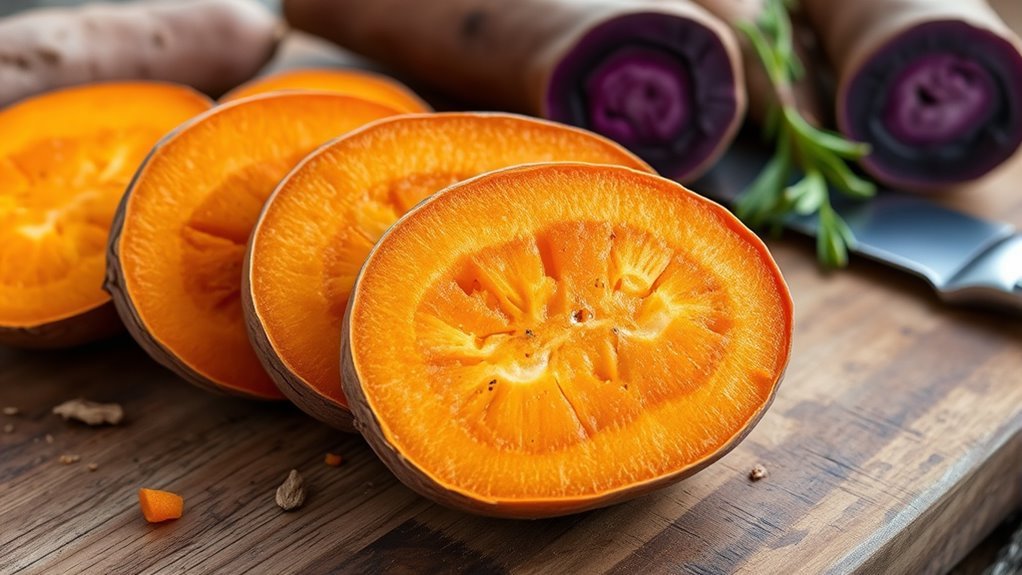
Because sweet potatoes contain beta-carotene and anthocyanins, they offer more than just appealing colors. They provide powerful antioxidants that support your health. Beta-carotene, found abundantly in orange-fleshed sweet potatoes, converts into vitamin A in your body, which is essential for maintaining good vision and a strong immune system.
In fact, these sweet potatoes can have up to 12.9 mg of trans-β-carotene per 100 grams, making them a rich source of provitamin A.
On the other hand, purple sweet potatoes are packed with anthocyanins, antioxidants known for reducing inflammation and promoting cardiovascular health. The vibrant orange and purple colors of sweet potatoes are clear signs of their rich phytochemical content, including these two potent compounds.
How Sweet Potatoes Provide Essential Vitamins and Minerals
Beyond their vibrant colors and antioxidants, sweet potatoes offer a wealth of essential vitamins and minerals that support your overall health. Their nutrient content includes plenty of vitamin A precursors like beta-carotene, which are indispensable for maintaining good vision and boosting your immune system.
Sweet potatoes are rich in vitamin A precursors, vital for vision and immune health.
You’ll also get a solid dose of vitamin C, helping your skin stay healthy while improving iron absorption.
Sweet potatoes provide potassium, essential for regulating fluid balance, blood pressure, and nerve function. They also contain B vitamins such as B6 and B5, which play key roles in energy metabolism and brain health.
Furthermore, minerals like manganese, copper, and iron contribute to strong bones and efficient oxygen transport throughout your body.
What Role Fiber Plays in Sweet Potato Health Benefits

You’ll find both soluble and insoluble fiber in sweet potatoes, and each one plays an important role in your health. This fiber helps keep your digestion on track, manages blood sugar levels, and even supports heart health. When you get to know these types of fiber, it’s easier to see how they boost the benefits of eating sweet potatoes.
Types Of Fiber
How exactly does the fiber in sweet potatoes benefit your health? Sweet potatoes contain both soluble and insoluble fiber, each playing a unique role. Soluble fiber slows carbohydrate absorption, which helps regulate blood sugar levels after meals.
Insoluble fiber adds bulk to your stool, promoting regular bowel movements and supporting digestive health. Together, they contribute to satiety, helping you manage your weight effectively.
Here’s what you can expect from the fiber in sweet potatoes:
- Soluble fiber slows sugar absorption, reducing blood sugar spikes
- Insoluble fiber promotes healthy digestion and bowel regularity
- Around 4.44 grams of fiber per 100 grams enhance fullness and weight control
Cooking methods like boiling and steaming preserve these fibers, maximizing their benefits for your health.
Fiber’s Health Impact
The fiber in sweet potatoes does more than just support digestion. It plays an essential role in overall health. This fiber, both soluble and insoluble, promotes regular bowel movements and enhances gut health.
It also slows carbohydrate absorption, helping you maintain steady blood sugar levels. Plus, the fiber in the skin increases satiety, which aids weight management. When you eat cooled cooked sweet potatoes, resistant starch acts as a prebiotic, nourishing your beneficial gut bacteria.
Furthermore, fiber supports heart health by lowering LDL cholesterol. Here’s a quick look:
| Fiber Benefit | Impact on Health |
|---|---|
| Digestive Support | Regular bowel movements |
| Blood Sugar Control | Slows carb absorption |
| Satiety | Helps with weight management |
| Gut Health | Feeds beneficial bacteria |
| Heart Health | Lowers LDL cholesterol |
How Sweet Potato Carbohydrates Affect Blood Sugar
Sweet potatoes have starches and simple sugars that can influence your blood sugar levels. The way you cook them actually makes a difference—boiling tends to lower their glycemic index, while baking usually raises it. So, knowing these details can really help you keep track of how sweet potatoes affect your blood sugar.
Carb Types And Impact
Although carbohydrates in sweet potatoes vary, you’ll find mainly starches and simple sugars like glucose and fructose. These influence your blood sugar differently depending on their form and amount. Understanding these carbs helps you manage blood sugar effectively.
Here’s what matters most:
- The glycemic index (GI) of sweet potatoes changes with preparation. This affects how quickly sugar enters your bloodstream.
- Resistant starch, formed when cooked sweet potatoes are cooled, slows digestion and reduces blood sugar spikes.
- Dietary fiber lowers the net carbs, moderating blood sugar response and improving overall glucose control.
Cooking Method Influence
How you cook your sweet potatoes can considerably influence how their carbohydrates affect your blood sugar. Different cooking methods impact the glycemic index, changing how quickly the sugars enter your bloodstream.
Boiling lowers the glycemic index to about 44, causing a slower, steadier rise in blood sugar. In contrast, baking sweet potatoes increases the glycemic index to around 64, leading to a quicker spike since sugars become more concentrated. Steaming helps preserve water-soluble nutrients and can slightly reduce carbohydrate impact on blood sugar.
Furthermore, cooling boiled or baked sweet potatoes boosts resistant starch, which slows digestion and further moderates blood sugar rises. So, choosing your cooking methods thoughtfully helps you manage the glycemic response from sweet potatoes more effectively.
Glycemic Index Explained
Why does the glycemic index (GI) matter when you eat sweet potatoes? The GI measures how quickly the carbs in sweet potatoes raise your blood sugar. Understanding this helps you manage your energy and blood sugar levels better.
Cooking methods play a big role in changing the GI of sweet potatoes. Boiling lowers the GI to about 44, making the carbs release slowly. Baking or roasting raises the GI to roughly 64–65 due to sugar concentration.
Portion size also affects the glycemic load, which influences your overall blood sugar response.
How Sweet Potato Resistant Starch Boosts Gut Health
When you cook and then cool sweet potatoes, their resistant starch content rises markedly, acting as a powerful prebiotic fiber that feeds the beneficial bacteria in your gut. This resistant starch isn’t digested in your small intestine; instead, it ferments in your colon, producing short-chain fatty acids that support gut health.
By including boiled and cooled sweet potatoes in your diet, you can increase your resistant starch intake by about 10-15% compared to eating them freshly cooked. This boost helps promote the growth of beneficial bacteria such as Bifidobacteria and Lactobacilli, which play key roles in maintaining a balanced digestive system.
Furthermore, resistant starch from sweet potatoes can improve your bowel regularity and may reduce inflammation in your gut. By focusing on this type of fiber, you’re actively supporting a healthier gut environment, which is essential for overall digestive well-being.
How Cooking Methods Change Sweet Potato Nutrition
Because cooking methods considerably affect the nutritional profile of sweet potatoes, choosing the right technique can help you maximize their health benefits. Different methods influence their glycemic index and the retention of water-soluble vitamins, which are vital for overall nutrition.
Here’s how common cooking methods impact sweet potato nutrition:
Boiling lowers the glycemic index to about 44 and helps preserve water-soluble vitamins like vitamin C and B vitamins by minimizing nutrient loss in cooking water.
Steaming retains more water-soluble vitamins and antioxidants compared to baking or roasting, thanks to reduced nutrient leaching.
Baking raises the glycemic index to around 64 by concentrating sugars and carbohydrates, but it also intensifies flavor despite some nutrient loss.
Avoid high-heat frying, as it adds fats and calories, which can reduce sweet potatoes’ health benefits. Choosing methods like boiling or steaming helps you enjoy sweet potatoes with better nutritional value.
How Portion Size and Cooking Affect Sweet Potato Benefits
You’ll want to keep an eye on your portion size because a medium sweet potato has about 22 grams of net carbs, which can affect your blood sugar. And it’s not just the amount you eat that matters—how you cook it plays a role too. For instance, boiling a sweet potato lowers its glycemic index, while baking actually raises it. So, by tweaking both the portion size and the cooking method, you can better manage how sweet potatoes impact your health.
Portion Size Nutrient Impact
Although sweet potatoes offer many nutritional benefits, the portion size you choose and the way you cook them considerably affect their impact on your health. Portion sizes directly influence your carbohydrate content and calorie intake. So, it’s important to adjust servings based on your needs. For example, a medium sweet potato (~130g) provides about 26g of carbs, including fiber, which affects net carbs.
Consider these points about portion sizes and carbohydrate content:
- A 100g serving contains roughly 20.1g carbs with 4g fiber, impacting net carb values.
- Larger portions increase total carbs and calories, influencing weight and blood sugar.
- Tailoring portion sizes helps optimize the sweet potato’s health benefits without overloading carbs.
Being mindful of portion sizes guarantees you get the right balance for your nutrition goals.
Cooking Methods Nutrient Changes
When you choose how to cook your sweet potatoes, you directly affect their nutrient content and how your body processes them. Different cooking methods cause distinct nutrient changes.
Boiling lowers the glycemic index and preserves water-soluble vitamins like C and B much better than baking. Baking, however, increases carbohydrate concentration and the glycemic index due to water loss.
Steaming retains more antioxidants and vitamins compared to roasting or frying, which degrade sensitive phytochemicals such as anthocyanins and carotenoids. Acylated anthocyanins, though, remain more heat-stable.
Keep in mind, portion size and the water content during cooking also influence nutrient density. Choosing the right cooking method helps you maximize sweet potato benefits by preserving key nutrients and controlling how your body absorbs them.
Glycemic Index Variations
Since cooking methods and portion sizes directly influence how sweet potatoes impact your blood sugar, understanding these factors can help you make better dietary choices. The glycemic index (GI) of sweet potatoes shifts significantly with cooking techniques and serving size, affecting their benefits.
Consider these points:
- Boiling lowers the GI to around 44, while baking raises it to about 64.
- A medium baked sweet potato (~130g) has a moderate glycemic load (~14), influencing blood sugar more than smaller portions.
- Cooling cooked sweet potatoes increases resistant starch, which helps reduce the glycemic response.
What Phytochemicals Drive Sweet Potato’s Antioxidant Effects
You’ll find that purple sweet potatoes owe much of their antioxidant power to a variety of phytochemicals, especially anthocyanins, phenolic acids, and flavonoids. Anthocyanins, present in concentrations from 14 to 182 mg per 100 g fresh weight, are key antioxidants that also benefit from acylation, which boosts their stability against heat and UV damage.
Phenolic acids such as chlorogenic acid are abundant too. Purple varieties can contain up to 13,268 mg per kg of dry weight, adding significant antioxidant strength. Flavonoids like quercetin, myricetin, and kaempferol further enhance these effects, with levels reaching approximately 579.5 µg per gram dry weight.
Together, these phytochemicals create a potent antioxidant profile that helps neutralize free radicals. While orange sweet potatoes offer carotenoids, it’s the purple sweet potatoes’ rich anthocyanins and phenolic acids that primarily drive their impressive antioxidant capabilities.
How Sweet Potato Nutrients Support Disease Prevention
How exactly do the nutrients in sweet potatoes help protect your body from disease? Sweet potatoes are packed with antioxidants and bioactive compounds that actively support your health by combating oxidative stress and inflammation. These are key drivers of chronic diseases.
Sweet potatoes fight oxidative stress and inflammation, key factors in preventing chronic diseases.
Here’s how these nutrients work in your body:
- Anthocyanins in purple sweet potatoes act as powerful antioxidants, reducing oxidative stress and lowering risks of cardiovascular disease and cancer.
- Beta-carotene in orange-fleshed varieties converts to vitamin A, boosting your immune system and helping fend off infections.
- Phenolic acids like chlorogenic acid inhibit inflammation and protect cells from oxidative damage, supporting overall disease prevention.
Frequently Asked Questions
Can Sweet Potatoes Help With Weight Loss?
Yes, sweet potatoes can help with weight loss. Their sweet potato fiber keeps you feeling full longer, reducing your overall calorie intake.
Plus, sweet potato antioxidants support your metabolism and overall health. Choosing cooking methods like boiling and eating cooled sweet potatoes boosts resistant starch, which acts like fiber to enhance satiety.
Just remember to watch your portions so you don’t consume too many calories while enjoying these nutritious benefits.
Are Sweet Potatoes Safe for People With Diabetes?
Yes, sweet potatoes can be safe for people with diabetes since boiling lowers their glycemic index to about 44, helping control blood sugar. Just watch your portions and avoid sweet potato allergies if you’re sensitive.
Also, sweet potato fermentation is being studied for potential benefits, but it’s best to consult your doctor before trying fermented varieties. Pairing them with protein or healthy fats can further stabilize your glucose levels.
How Do Sweet Potatoes Compare to Regular Potatoes Nutritionally?
When you compare sweet potatoes to regular potatoes nutritionally, you’ll find sweet potatoes generally offer more fiber, vitamin A, and antioxidants. Their glycemic index is usually lower, especially when boiled, meaning they cause a slower blood sugar rise.
Regular potatoes have more potassium and may contain more resistant starch, but sweet potatoes win in nutrient density and immune support. So, for a nutrient comparison, sweet potatoes often edge out regular potatoes.
What Is the Best Way to Store Sweet Potatoes to Retain Nutrients?
Think of sweet potato varieties as treasure chests, each holding unique nutrients you want to protect. To keep those treasures intact, follow storage best practices: store sweet potatoes in a cool, dry, well-ventilated spot, ideally between 55-60°F, away from sunlight.
Don’t refrigerate them or wash before storing, as moisture and cold can spoil their flavor and nutrients. Use them within a week to enjoy their peak freshness and health benefits.
Can Eating Sweet Potato Skins Cause Any Digestive Issues?
Yes, eating sweet potato skins can cause digestive issues for some people because of their high fiber content. If your digestive system is sensitive, the extra fiber might lead to bloating or gas.
However, don’t overlook the skin benefits. They provide antioxidants and vitamins that boost nutrition. To avoid discomfort, wash and cook the skins well, and introduce them gradually to see how your body reacts.
Conclusion
When you bite into a sweet potato, you’re not just tasting sweetness. You’re opening a treasure chest of nutrients that fuel your body and protect your health.
Imagine vibrant beta-carotene and powerful antioxidants working like tiny warriors inside you, battling disease and boosting energy.
By understanding how varieties, cooking, and portion size affect these benefits, you can make sweet potatoes a delicious, nourishing ally in your daily wellness journey.