Types of Nutrition: The 6 Classes & Their Functions
Nutrition science organises everything the human body requires into six fundamental classes. These six types form the foundation every other nutritional question builds on — which foods deliver energy, which build tissue, which enable enzymatic reactions, which regulate immunity, and which makes all biological processes possible. This guide names and explains each type, then maps each one to the specific food groups that deliver it and the MyWeeklyEats content that covers it in depth.
What are the 6 types of nutrition — and how many classes are there?
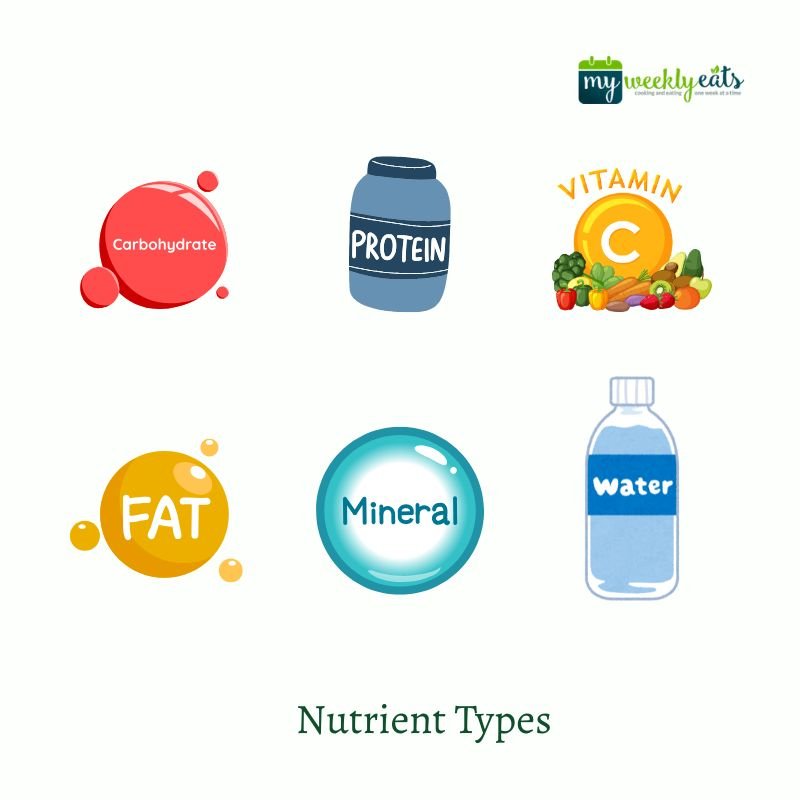
There are 6 types of nutrition: carbohydrates, proteins, fats, vitamins, minerals, and water. Some sources add fibre as a seventh — but fibre is a subtype of carbohydrates in standard classifications. Carbohydrates, proteins, and fats are the three macronutrients. Vitamins and minerals are micronutrients. Water is an essential compound in its own category.
The six types divide into three groups by required quantity. Macronutrients — carbohydrates, proteins, and fats — are needed in gram quantities daily. Micronutrients — vitamins and minerals — are needed in milligrams or micrograms. Water is an essential compound in its own category, required in litre quantities that no other class can substitute for.
The fibre question arises often: some sources list 7 types of nutrition, placing fibre separately. In standard scientific and educational classification, fibre is an indigestible complex carbohydrate — a carbohydrate subtype rather than an independent class. Its functional importance is equal to a standalone class for practical dietary purposes, but the established 6-type framework places it within carbohydrates.
The 6 Types of Nutrition — Functions, Sources & MyWeeklyEats Cluster (ItemList)
| # Type | Category | Energy | Primary Function | Key Weekly Foods | MyWeeklyEats Coverage |
|---|---|---|---|---|---|
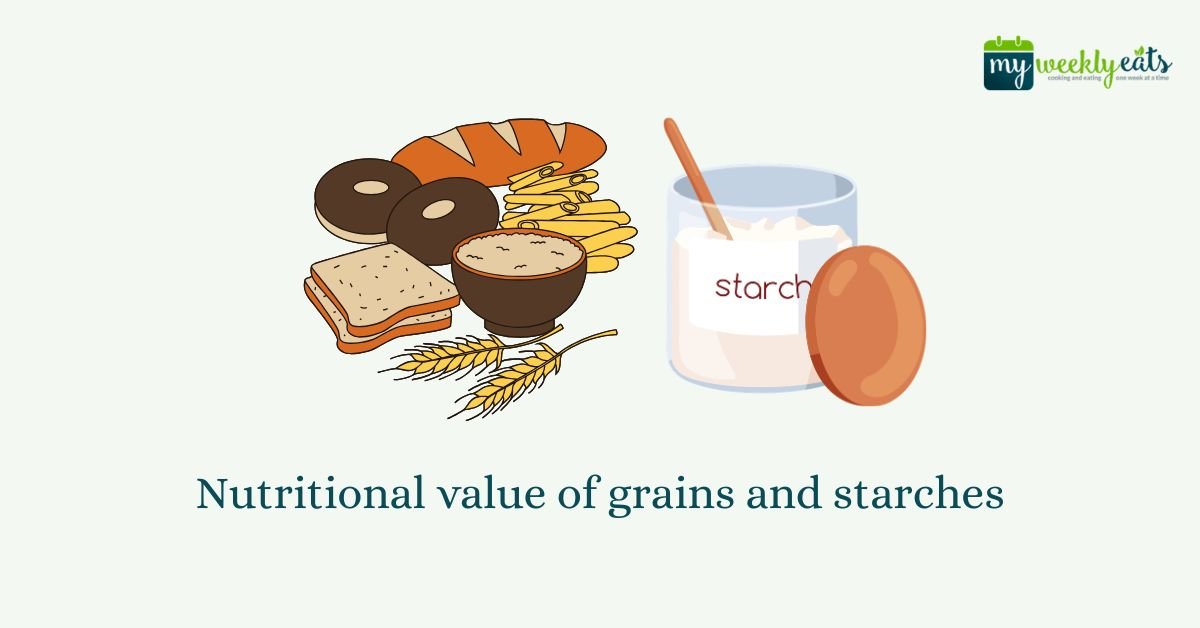
| 1Carbohydrates | Macronutrient | 4 cal/g | Primary energy — brain + cells; dietary fibre from complex forms | Grains, fruits, legumes, starchy vegetables | Grains & Starches → |
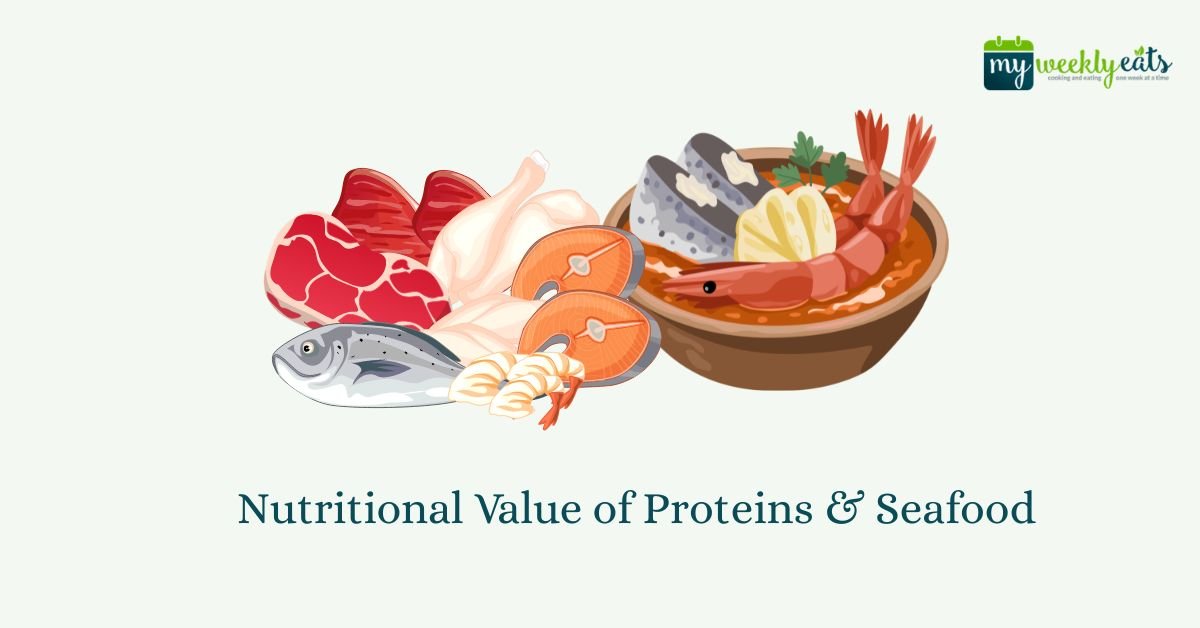
| 2Proteins | Macronutrient | 4 cal/g | Tissue building, repair, enzymes, hormones, immune antibodies | Meat, fish, eggs, dairy, legumes | Proteins & Seafood → |
| 3Fats | Macronutrient | 9 cal/g | Steroid hormones, fat-soluble vitamin absorption, cell membrane structure | Nuts, seeds, oils, fatty fish, dairy | Nuts, Seeds & Fats → |
| 4Vitamins | Micronutrient | 0 cal | Metabolic regulation, coenzyme function, immunity, antioxidant activity | Vegetables, fruits, meat, dairy, fortified foods | Vegetables & Plant Foods → |
| 5Minerals | Micronutrient | 0 cal | Bone structure, enzymatic reactions, oxygen transport, thyroid function | Dairy, meat, seafood, dark leafy greens, legumes | Deficiencies & Needs → |
| 6Water | Essential compound | 0 cal | Nutrient transport, waste removal, temperature regulation, all cellular biochemistry | Water, beverages, food moisture content | Why Nutrition Matters → |
What are the types of nutrition — and how do macronutrients differ from micronutrients?
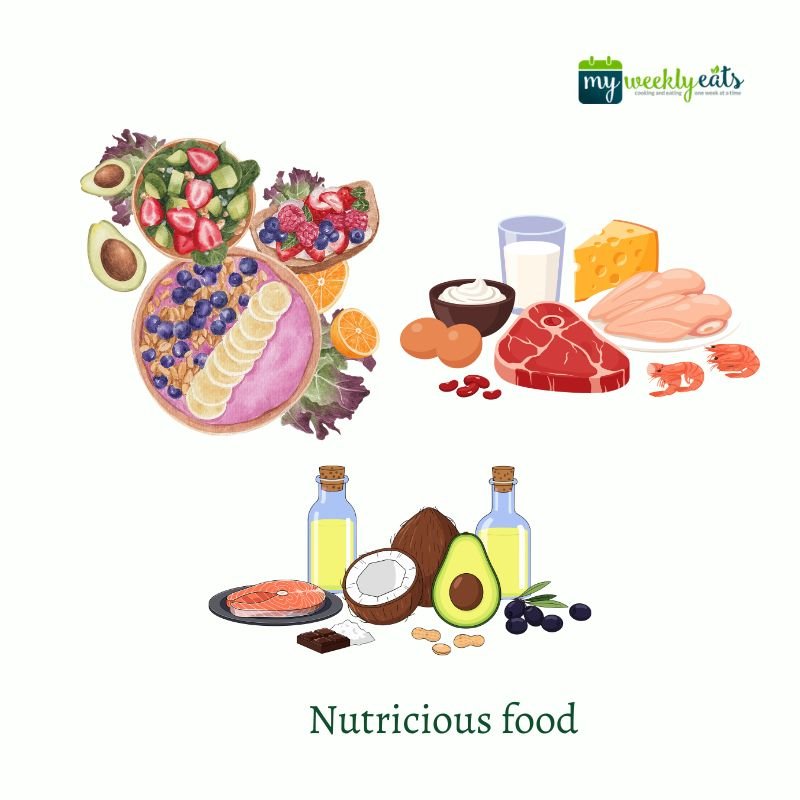
Nutrition types divide into two primary categories. Macronutrients — carbohydrates, proteins, and fats — are required in gram quantities and provide the body’s energy. Micronutrients — vitamins and minerals — are required in milligram or microgram quantities and perform regulatory and structural functions without providing energy. Water is a separate essential compound in its own category.
Macronutrients
Carbohydrates
4 cal/g
The brain’s preferred energy source. Digested into glucose, the primary cellular fuel. Complex carbohydrates (grains, legumes) provide sustained energy and dietary fibre. Simple carbohydrates provide rapid energy.
Proteins
4 cal/g
Built from 20 amino acids, 9 of which are essential — the body cannot synthesise them. Forms every tissue, catalyses enzymatic reactions, produces hormones, and synthesises immune antibodies.
Fats
9 cal/g
More than twice the energy density of carbohydrates or protein. Essential for steroid hormone production, fat-soluble vitamin absorption (A, D, E, K), and cell membrane structure throughout every tissue.
Micronutrients
Vitamins (13 essential)
Water-soluble: B vitamins (B1, B2, B3, B5, B6, B7, B9, B12) and vitamin C — excreted in urine when in excess, requiring regular dietary supply.
Fat-soluble: Vitamins A, D, E, and K — stored in body fat and liver, requiring dietary fat for absorption. No caloric energy; function as coenzymes, antioxidants, and hormone precursors.
Minerals (~16 essential)
Macro-minerals: Calcium, phosphorus, magnesium, sodium, potassium — required in larger milligram amounts daily.
Trace minerals: Iron, zinc, selenium, iodine, copper — required in microgram to low-milligram amounts. Enable bone formation, enzymatic reactions, oxygen transport, and thyroid hormone production.
Water
H₂O
Water is neither macronutrient nor micronutrient — it provides no energy and is required in litre quantities (2–3L daily for most adults). It is the medium through which all nutrient transport, waste removal, temperature regulation, and cellular biochemistry occur. Every biological process in the body requires water. No other nutrition type substitutes for it.
What does each of the 6 types of nutrition do in the body?
Each type performs non-substitutable functions. Carbohydrates fuel cells and the brain. Proteins build and repair tissue. Fats produce hormones and carry fat-soluble vitamins. Vitamins regulate metabolism and immunity. Minerals build bone structure and enable enzymatic reactions. Water transports nutrients and enables every biological process — no other nutrition type substitutes for any of these roles.
1 Carbohydrates
Glucose, derived from carbohydrate digestion, is the brain’s preferred fuel — the only fuel the brain uses directly without conversion. Complex carbohydrates also provide indigestible fibre that supports gut microbiome diversity and satiety. Without adequate carbohydrate intake, the body catabolises protein for energy — diverting it from tissue maintenance.
2 Proteins
Every tissue in the body — muscle, skin, bone matrix, organ wall, immune cell — is constructed from amino acid chains. Nine essential amino acids cannot be synthesised by the body; they must come from food. Proteins also produce every enzyme that drives metabolism and every antibody that constitutes immune defence.
3 Fats
Dietary fats are required for steroid hormone production (oestrogen, testosterone, cortisol all derive from cholesterol) and for absorbing the fat-soluble vitamins A, D, E, and K. Without dietary fat present in a meal, fat-soluble vitamins in that meal cannot be absorbed regardless of their food source. Phospholipids form the bilayer of every cell membrane.
4 Vitamins
Each of the 13 essential vitamins functions as a coenzyme, antioxidant, or hormone precursor. Vitamin C enables collagen synthesis — without it, wounds cannot heal and connective tissue degrades. The B vitamins drive cellular energy metabolism. Vitamin D regulates calcium absorption and immune signalling. Each has a specific, non-substitutable biochemical role.
5 Minerals
Structural minerals (calcium and phosphorus) form approximately 70% of bone dry weight, providing the skeleton’s mechanical strength. Functional minerals include iron (incorporated into haemoglobin for oxygen transport in every red blood cell), iodine (required for thyroid hormone synthesis), and zinc (a cofactor in over 300 enzymatic reactions throughout the body).
6 Water
At approximately 60% of total body weight, water transports all dissolved nutrients across cell membranes and removes metabolic waste products via urine and perspiration. It regulates body temperature through evaporative cooling. Every chemical reaction in the body — every enzyme, every metabolic pathway, every nerve signal — occurs in an aqueous environment.
How do the 6 types of nutrition map to a weekly plate — and where in MyWeeklyEats?
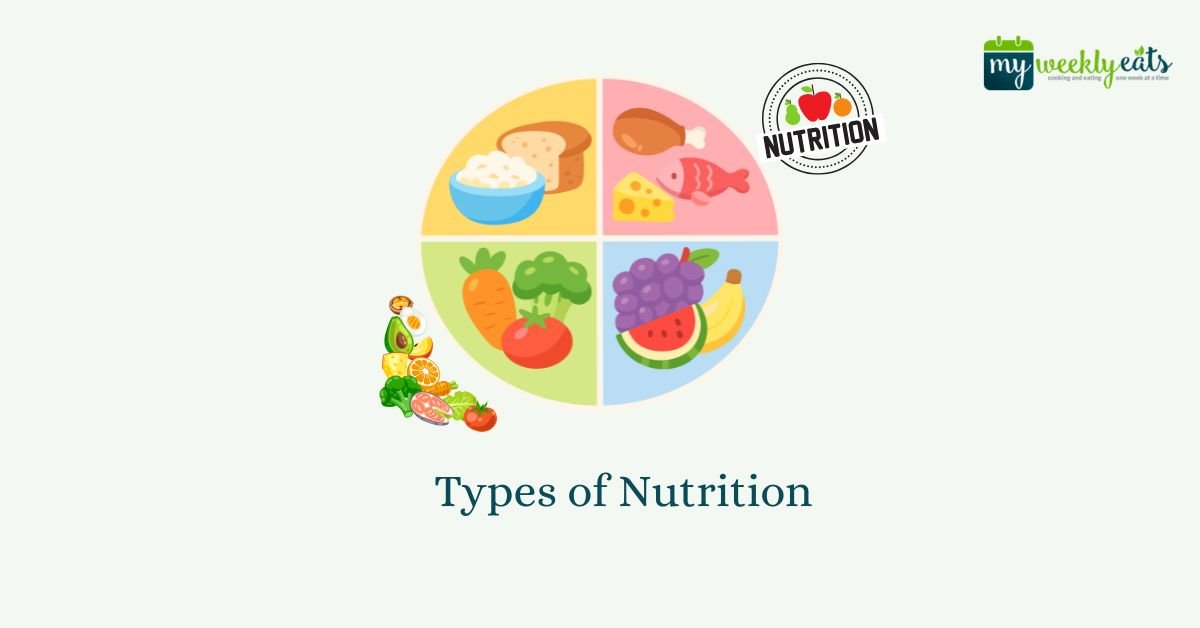
Each nutrition type maps directly to specific food groups and MyWeeklyEats content areas. Carbohydrates come from grains and starches. Proteins from meat, seafood, and legumes. Fats from nuts, seeds, and oils. Vitamins and minerals from vegetables, fruits, and dairy. Water from beverages and food. A weekly rotation covering all food groups covers all 6 types without supplementation for most adults.
Every type of nutrition has a specific food group that delivers it — and a MyWeeklyEats content cluster that covers it in depth:
Carbohydrates
Whole grains, starchy vegetables, legumes, fruit — the body’s primary energy supply, fibre source, and B vitamin delivery system.Grains & Starches →
Proteins
Meat, fish, shellfish, eggs, dairy, and legumes — covering all essential amino acids across the week through varied sources.Proteins & Seafood →
Fats
Nuts, seeds, cooking oils, fatty fish, and dairy — covering omega-3, monounsaturated, and fat-soluble vitamin absorption needs.Nuts, Seeds & Fats →
Vitamins
The broadest category — diverse vegetables, fruits, and fortified foods, each delivering different vitamin profiles. Variety is the mechanism.Vegetables & Plants →
Minerals
Dairy, meat, seafood, and dark leafy greens — and the deficiency risks when these food groups are consistently absent from the weekly plate.Deficiencies & Needs →
Water
Beverages and food moisture content — and why consistent hydration is a nutritional requirement, not an optional health behaviour.Why Nutrition Matters →
This page completes the MyWeeklyEats 21-topic semantic content network — 1,131 keywords covering 237,660 monthly searches across the full nutrition domain. Each link above connects to the content cluster that covers its nutrition type in depth.
Explore the Complete MyWeeklyEats Nutrition Guide
21 topics. Every type of nutrition covered in depth — from calculating recipe nutrition to understanding deficiencies and building goal-specific weekly plates. Explore the Full MyWeeklyEats Nutrition Guide →
The Bottom Line
The six types of nutrition — carbohydrates, proteins, fats, vitamins, minerals, and water — each perform functions that no other type can substitute for. No single food delivers all six. No single food group covers all the types. A varied weekly plate that rotates through the food groups mapped above — grains, proteins, fats, vegetables, dairy and seafood, and consistent hydration — covers all six types of nutrition without requiring supplementation for most healthy adults.