
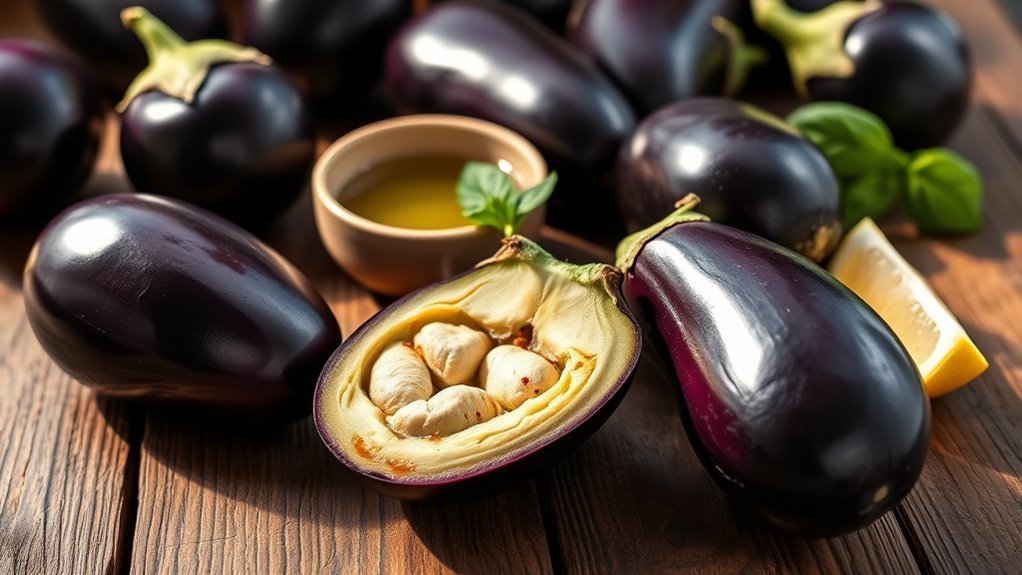
10 Nutritional Facts About the Value of Eggplant
Eggplant offers you about 26 calories per 100 grams, packed with fiber, vitamins like folate, and minerals such as manganese and potassium.
Its antioxidants, including anthocyanins and nasunin, protect your cells and support heart health.
The fiber helps digestion, controls blood sugar, and promotes fullness, aiding weight management.
Some varieties have more antioxidants, thanks to genetics.
Watch for sensitivity to solanine, a natural compound.
Keep exploring to discover how to best enjoy its health benefits.
Key Nutrients That Make Eggplant Healthy

Although eggplant contains only about 26 calories per 100 grams, it delivers a powerful mix of fiber, vitamins, and minerals that boost your overall nutrient intake. You’ll find essential nutrients like manganese, folate, potassium, niacin, magnesium, and copper in every serving, all contributing to your body’s proper function.
What sets eggplant apart are its antioxidant properties, primarily from compounds like anthocyanins and nasunin, which help protect your cells from oxidative damage. These antioxidants support your health by neutralizing harmful free radicals, reducing inflammation, and potentially lowering the risk of chronic diseases.
Including eggplant in your diet means you’re not just getting low calories, but also a nutrient-dense food that works hard to fuel your body. Its combination of vitamins, minerals, and antioxidants makes it a smart choice for anyone aiming to maintain balanced nutrition without sacrificing flavor or variety.
How Eggplant’s Fiber Boosts Digestion and Controls Blood Sugar
Beyond its rich mix of vitamins and antioxidants, eggplant stands out for its high fiber content, which plays a key role in supporting your digestion and managing blood sugar levels. One cup of eggplant provides about 3 grams of dietary fiber, promoting regular bowel movements and keeping your digestive system running smoothly.
The fiber in eggplant slows digestion, allowing sugars to be released gradually into your bloodstream, which helps stabilize blood sugar levels. Soluble fiber forms a gel-like substance in your gut, improving insulin sensitivity and glucose metabolism. This means your body handles sugar more efficiently, reducing blood sugar spikes after meals.
Furthermore, the fiber keeps you feeling full longer, which can help control calorie intake and support balanced blood sugar. When combined with eggplant’s polyphenols, fiber further aids in regulating blood sugar, making it a smart addition to your diet if you’re focused on digestive health and blood sugar control.
Why Eggplant’s Antioxidants Protect Your Cells
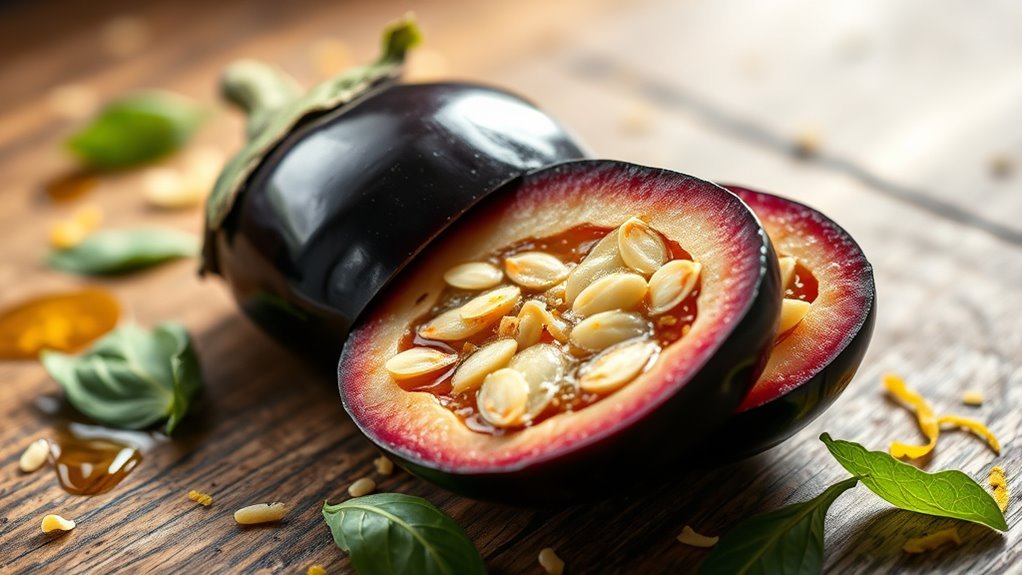
You’ll find powerful antioxidants in eggplant, like anthocyanins. These are what give it that rich purple color and help neutralize harmful free radicals. Plus, there’s nasunin, a unique antioxidant found in the skin. It protects your cell membranes from damage as you age. Together, these compounds work to support your cells’ health and defend against oxidative stress.
Role of Anthocyanins
Because eggplants owe their rich purple color to anthocyanins, you benefit from powerful antioxidants that protect your cells from damage. These anthocyanins neutralize harmful free radicals, reducing oxidative stress that can lead to aging and chronic diseases.
What makes anthocyanins in eggplant special is their ability to cross cell membranes, offering protection right where it’s needed inside your cells. This intracellular defense helps maintain cellular integrity and supports overall health.
Nasunin’s Cellular Defense
How exactly does eggplant protect your cells from damage? The secret lies in nasunin, a powerful antioxidant found in eggplant skin. Nasunin shields your cell membranes from oxidative harm by neutralizing harmful free radicals. It also chelates iron, reducing the formation of these damaging molecules.
What’s remarkable is nasunin’s ability to cross cell membranes, directly guarding your nuclear and mitochondrial DNA. This protection supports overall cellular health and may lower the risk of age-related damage.
Here’s why nasunin matters:
- Neutralizes free radicals linked to aging and disease
- Protects cell membranes from oxidative stress
- Chelates iron, preventing free radical formation
- Penetrates cells to defend DNA inside mitochondria and nucleus
How Eggplant Supports Heart Health and Reduces Inflammation
You’ll find that eggplant’s antioxidants help lower inflammation, which is really important for heart health. The anthocyanins in eggplant work to boost your heart function by protecting your blood vessels and improving circulation. On top of that, the fiber in eggplant supports your cardiovascular system by managing cholesterol levels and keeping your arteries clear. So, including eggplant in your diet is a tasty way to give your heart some extra care.
Antioxidants Lower Inflammation
When you include eggplant in your diet, you tap into powerful antioxidants like anthocyanins, especially nasunin, that actively reduce inflammation in your body. These antioxidants work by lowering inflammatory markers linked to cardiovascular risks, helping protect your heart.
The polyphenols in eggplant also inhibit pathways that trigger tissue inflammation, reducing chronic inflammation’s impact. Regularly enjoying eggplant means shielding your cells from oxidative stress, a major cause of inflammation-related diseases.
Here’s how eggplant’s antioxidants benefit you:
- Decrease inflammation markers tied to heart disease
- Block inflammatory pathways in tissues
- Protect cells from oxidative damage
- Support lowering risks of inflammation-driven conditions like atherosclerosis
Incorporating eggplant supports your body’s natural defense against inflammation effectively.
Anthocyanins Boost Heart Function
Because eggplant contains anthocyanins, powerful antioxidants responsible for its vibrant color, you can protect your heart cells from oxidative damage by including it in your diet. These anthocyanins help lower inflammatory markers linked to cardiovascular disease, reducing inflammation, a major contributor to heart problems.
Research shows that consuming eggplant’s anthocyanins improves heart function and vascular health by decreasing oxidative stress and promoting healthy blood vessels. By regularly eating eggplant, you support your heart’s overall health and resilience.
Anthocyanins work by neutralizing harmful free radicals and calming inflammation, helping your cardiovascular system operate more efficiently. Incorporating eggplant into your meals is a simple, natural way to boost heart function and protect yourself from heart disease.
Fiber Supports Cardiovascular Health
Although anthocyanins play a key role in heart health, the fiber in eggplant also makes a big difference by lowering cholesterol and supporting your cardiovascular system. Fiber-rich eggplant helps reduce blood sugar spikes, which can minimize inflammation linked to heart disease.
Its antioxidants and polyphenols work together to protect your arteries from oxidative stress and improve blood vessel function. Adding eggplant to your meals regularly can strengthen your heart’s health in several ways:
- Provides 2.4 grams of fiber per two-thirds cup, aiding cholesterol reduction
- Prevents blood sugar spikes that trigger inflammation
- Contains polyphenols that lower oxidative stress
- Supports improved blood vessel function and lowers heart disease risk
Eating eggplant is a smart way to boost your heart health naturally.
How Eggplant Helps Weight Management and Satiety
If you want to manage your weight effectively, incorporating eggplant into your meals can make a real difference. Eggplant’s high fiber content promotes feelings of fullness, helping you control portions without feeling deprived.
Since it contains only about 26 calories per two-thirds cup, it’s a low-calorie option that supports your weight management goals. The fiber slows digestion, stabilizing blood sugar levels and preventing those frustrating hunger spikes that lead to overeating.
Plus, eggplant’s versatility lets you create satisfying, nutrient-dense dishes that replace higher-calorie ingredients without sacrificing flavor. By including eggplant regularly in a balanced diet, you naturally reduce your overall calorie intake, making it easier to lose or maintain weight.
What Cancer-Fighting Compounds Are in Eggplant
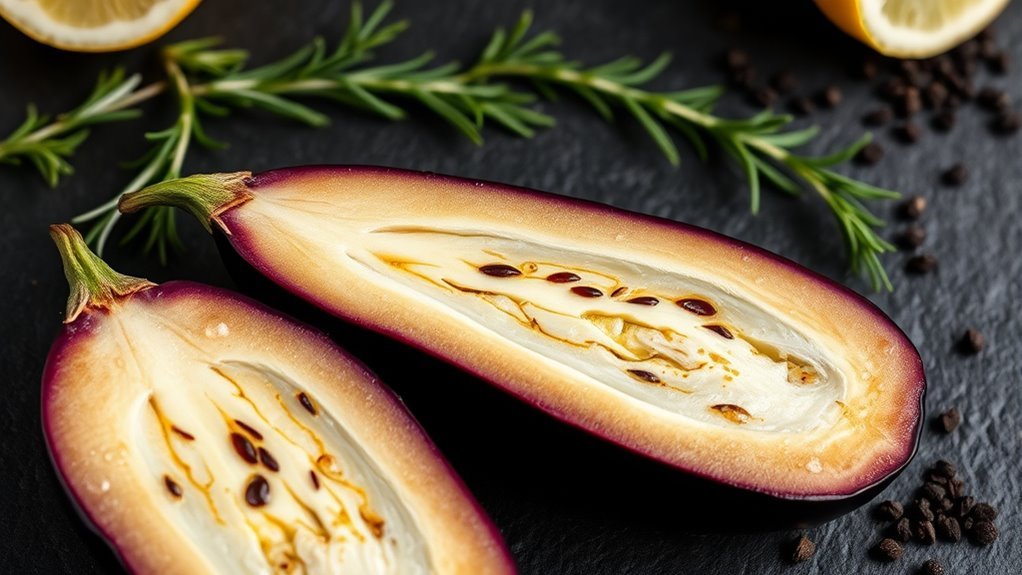
Eggplant contains several cancer-fighting compounds, with solasodine rhamnosyl glycosides (SRGs) being the most notable. These compounds have shown promise in lab studies by promoting apoptosis, or programmed cell death, which helps reduce the growth of cancer cells.
Eggplant’s solasodine rhamnosyl glycosides promote apoptosis, helping to inhibit cancer cell growth in lab studies.
SRGs especially demonstrate potential against skin cancers, making eggplant a valuable addition to your diet. While more research is necessary to confirm these effects in humans, including eggplant in a diet rich in fruits and vegetables is linked to a lower risk of certain cancers.
Here’s what makes eggplant’s cancer-fighting compounds stand out:
- SRGs can induce cancer cell death and limit cancer recurrence.
- They interfere with cancer cell growth by triggering apoptosis.
- Laboratory evidence highlights their effectiveness against skin cancers.
- Consuming eggplant within diverse produce supports overall cancer prevention.
How Eggplant Varieties Differ in Nutrients and Benefits
When you explore different eggplant varieties, you’ll notice they differ considerably in their nutrient and phytochemical content. Varieties like ‘EMI’ and ‘Lagkada’ stand out because they contain higher levels of antioxidants and secondary metabolites, which can boost your health more effectively.
These phytochemicals include phenolics, anthocyanins, flavonoids, and chlorogenic acid, all known for their protective effects. You’ll also find that carbohydrate content varies among cultivars, influencing their overall nutritional benefits.
This means that choosing a specific variety can impact the health advantages you get from eggplants. Understanding these differences helps you select eggplants rich in beneficial compounds.
While genetic factors drive this variation, it’s the diverse phytochemical profiles that shape the unique nutrient value across eggplant cultivars. So, when you pick your eggplant, consider how the variety affects its nutrient and health-promoting qualities to make the most of its benefits.
Eggplant Genetics: What Makes Varieties Unique?
Although you might not realize it, the unique traits of each eggplant variety come down to their genetics. These genetic differences influence the levels of important phytochemicals like phenolics, anthocyanins, and flavonoids. These compounds affect antioxidant capacity and health benefits.
Specific gene variations, such as SNPs in phenylpropanoid pathway genes (C4H, HQT, ANS), result in diverse nutritional profiles among cultivars.
You’ll find that genetics make certain varieties, like ‘EMI’ and ‘Lagkada,’ richer in antioxidants and secondary metabolites. Understanding these genetic markers helps breeders develop eggplants with enhanced health properties.
Here’s what genetics determine in eggplant varieties:
- Phytochemical content and antioxidant levels
- Presence of beneficial secondary metabolites
- Genetic polymorphisms in key biosynthesis genes
- Molecular markers guiding targeted breeding
How to Prepare Eggplant to Maximize Nutrition
If you want to get the most nutrition from your eggplant, how you prepare it matters a lot. Start by salting sliced eggplant and letting it sit for 30 minutes. This reduces bitterness and enhances nutrient absorption. Rinse off the excess salt to keep the flavor balanced.
Baking, roasting, or steaming are your best cooking options. They preserve the eggplant’s antioxidants better than frying. Removing the skin is optional, but doing so can improve texture and reduce bitterness if you prefer.
Also, cut the eggplant into uniform pieces to ensure even cooking and better retention of its nutritional value.
| Preparation Step | Benefit |
|---|---|
| Salting | Reduces bitterness, improves nutrients |
| Rinsing | Removes excess salt, better flavor |
| Baking/Roasting/Steaming | Preserves antioxidants |
| Uniform Cutting | Ensures even cooking, retains nutrients |
Eggplant Risks and Allergies to Know
You should know that eggplants contain solanine, which might cause sensitivity or inflammation in some people. So, if you notice symptoms like a rash, swelling, or itching after eating eggplant, you could be having an allergic reaction. It’s a good idea to pay close attention to how your body responds, especially if you have a history of nightshade sensitivities.
Solanine Sensitivity Concerns
Because eggplants belong to the nightshade family, they contain solanine, a natural chemical that can trigger inflammation or digestive issues in some people. If you’re sensitive to solanine, eating eggplant might worsen joint pain or cause gastrointestinal discomfort.
While ripe eggplants usually have low solanine levels, green or sprouted parts contain more, increasing the risk of sensitivity. To protect yourself, consider these points:
- Avoid green or sprouted eggplant sections to reduce solanine intake.
- Monitor any digestive or inflammatory symptoms after eating eggplant.
- If you have arthritis or joint pain, note possible flare-ups linked to solanine.
- Consult a healthcare provider if you suspect solanine sensitivity or nightshade allergy.
Being aware of solanine’s effects helps you enjoy eggplant safely.
Allergic Reaction Symptoms
Along with solanine sensitivity, some people may experience allergic reactions to eggplant that range from mild to severe. You might notice symptoms like rash, swelling, itching, or hives shortly after eating it.
In rare cases, allergic reactions can cause hoarseness or difficulty breathing, signaling a serious issue that needs immediate attention. If you have sensitivity to nightshade vegetables, including eggplant, you might also experience joint pain flare-ups.
Allergic reactions may appear right away or several hours later, so it’s important to monitor your body’s response carefully. If you have known food allergies or sensitivities, you should consult your healthcare provider before adding eggplant to your diet to avoid potential risks. Taking these precautions helps you enjoy eggplant safely.
Frequently Asked Questions
Can Eggplant Be Grown Indoors Year-Round?
Yes, you can grow eggplant indoors year-round with the right setup. Indoor cultivation requires you to provide 12-16 hours of sunlight or use grow lights to mimic natural light.
Keep the temperature between 70-85°F, use a deep container for roots, and maintain consistent watering with well-draining soil. You’ll also need to manage humidity and prune regularly to support healthy growth and control pests effectively.
What Is the Best Way to Store Fresh Eggplant?
Wondering how to keep your fresh eggplant at its best? The best storage tips are simple: store uncut eggplant in your fridge’s crisper drawer for up to a week. Wrap it loosely in paper towels or a perforated plastic bag to prevent moisture buildup.
Don’t wash it before storing! If you’ve already cut it, use an airtight container and eat within 1-2 days to avoid browning and drying out.
How Long Does It Take for Eggplant to Ripen After Picking?
Eggplants don’t ripen after picking, so their ripening duration is fundamentally zero. You need to harvest them when they’re fully ripe, glossy, and firm because they won’t improve in flavor or texture off the plant.
If you pick them early, they’ll stay firm but won’t develop their full color or sweetness. To enjoy the best taste, always pick eggplants at peak ripeness since waiting won’t enhance them.
Are There Cultural or Traditional Dishes Centered Around Eggplant?
Yes, eggplant holds strong cultural significance and features in many traditional dishes you’ll find worldwide. You’ll enjoy baba ganoush in the Middle East or Italy’s eggplant parmesan.
In India, dishes like bharwa baingan showcase eggplant’s importance. You can also savor Japan’s nasu dengaku or Greek moussaka, both centered around eggplant.
Its cultural significance shines in these recipes, highlighting eggplant’s versatility and deep-rooted place in diverse cuisines.
Can Eggplant Be Used as a Meat Substitute in Recipes?
Yes, you can use eggplant as a meat alternative since it contains about 3 grams of fiber per cup, helping you feel full longer. Its meaty texture absorbs flavors well, making it perfect for dishes like burgers or stews.
When you cook eggplant right, it mimics the chewiness of meat, letting you enjoy satisfying, nutrient-dense meals without sacrificing taste or texture in your favorite recipes.
Conclusion
You’ve seen how eggplant isn’t just a purple veggie—it’s a nutritional powerhouse that fuels your body like a well-oiled machine. By adding eggplant to your meals, you’re planting seeds of health that grow stronger digestion, heart support, and weight control.
Just like a key revealing hidden treasures, eggplant opens doors to vibrant wellness. So, don’t hesitate. Embrace this versatile veggie and let it nourish you from the inside out.