

How to Understand the Nutritional Value of Egg Yolk
You can understand egg yolk’s nutritional value by recognizing it’s packed with essential vitamins like A, D, E, and B12.
It also offers healthy fats including omega-3s that support heart and brain health.
It also offers high-quality protein and unique compounds that boost immunity and eye health.
While it contains cholesterol, it usually doesn’t raise your blood cholesterol much.
If you want to discover how cooking affects its nutrients and who might need to limit intake, keep exploring these details.
What Nutrients Make Egg Yolk Special?

Although many people focus on the egg white, the yolk holds most of the egg’s valuable nutrients. When you eat the yolk, you’re getting a concentrated source of vitamins, essential fatty acids, protein, and carotenoids.
The yolk contains fat-soluble vitamins that your body needs for various functions. It also delivers essential fatty acids like omega-3s, vital for heart and brain health.
You’ll find high-quality protein here, packed with all the amino acids your body requires for repair and growth. Plus, the yolk is rich in carotenoids such as lutein and zeaxanthin, which support your eye health and protect against oxidative damage.
What Key Vitamins and Minerals Does Egg Yolk Provide?
When you eat egg yolk, you get a concentrated source of essential vitamins and minerals that support your overall health. Egg yolk is rich in fat-soluble vitamins A, D, E, and K, all critical for various body functions. It also provides B vitamins like B12, B2 (riboflavin), and folate, which play key roles in energy metabolism and cell maintenance.
Beyond vitamins, egg yolk supplies important minerals such as phosphorus, selenium, iodine, and calcium. These help maintain bone strength and support thyroid health. It’s also the primary source of choline in eggs, essential for brain development and liver function.
What makes egg yolk’s nutrition stand out is the high bioavailability of its vitamins and minerals, meaning your body efficiently absorbs and uses these nutrients. Including egg yolk in your diet guarantees you get a powerful mix of vitamins and minerals that directly contribute to your well-being.
How Do Egg Yolk Fat and Cholesterol Affect Your Health?
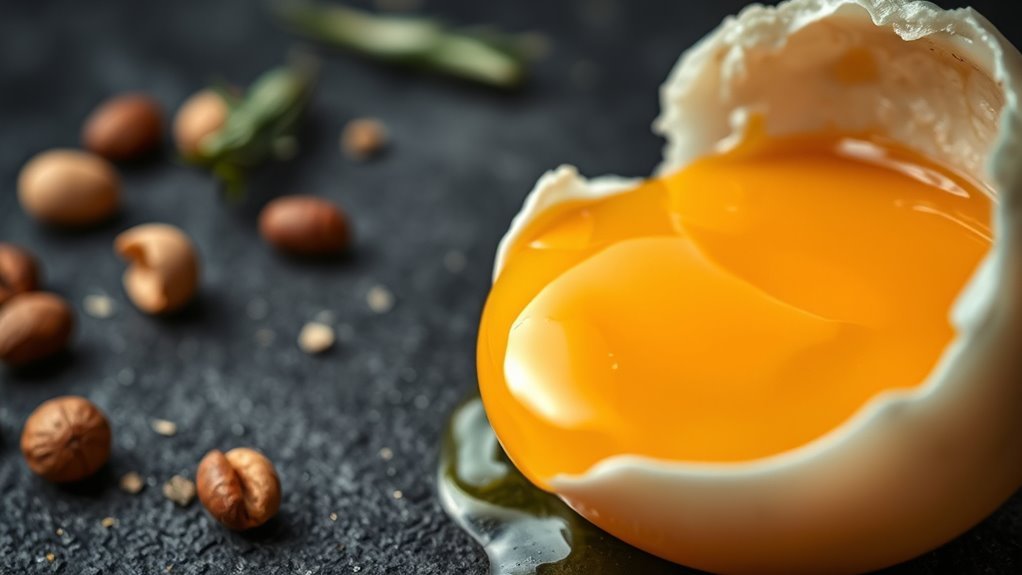
Egg yolks do contain cholesterol, but for most people, this doesn’t really cause a big increase in blood cholesterol levels. Plus, the fats found in egg yolks are mostly the healthy kind—unsaturated fats, including omega-3s—that actually support heart health. So, knowing how these parts work in your body can help you make smarter choices about whether to include egg yolks in your diet.
Cholesterol Impact Explained
Since many people worry about cholesterol, it’s important to understand how the cholesterol and fats in egg yolks actually affect your health. Each large egg yolk contains about 210 mg of cholesterol, but recent studies show that dietary cholesterol from egg yolks has minimal impact on your blood cholesterol levels for most people. This is because your body regulates cholesterol absorption effectively.
The fats in egg yolks are mostly unsaturated, which can help improve your cholesterol profile by raising HDL, or “good” cholesterol. Eating eggs in moderation doesn’t seem to increase cardiovascular risk if you’re generally healthy.
However, if you have conditions like hypercholesterolemia or heart disease, it’s wise to monitor your intake and consult your healthcare provider to manage your cholesterol effectively.
Healthy Fats Benefits
Although many worry about cholesterol, the healthy fats found in egg yolks play an essential role in supporting your heart and brain health. Egg yolks contain monounsaturated and polyunsaturated fats, including omega-3 fatty acids like EPA and DHA, which promote heart health and cognitive function.
These fats also help your body absorb fat-soluble vitamins A, D, E, and K, boosting nutrient utilization. Despite their cholesterol content, egg yolks have minimal impact on blood cholesterol levels for most people.
Eating them in moderation provides beneficial fats that may reduce inflammation and improve your lipid profile. By including egg yolks in your diet, you support a healthy balance of fats that contribute to maintaining normal cholesterol levels and overall cardiovascular wellness.
What Bioactive Compounds in Egg Yolk Support Immunity and Eye Health?
When you consume egg yolk, you benefit from several bioactive compounds that actively support your immune system and eye health. Lutein and zeaxanthin, two powerful carotenoids in egg yolk, accumulate in your retina, helping to protect against age-related macular degeneration.
These antioxidants reduce oxidative stress, which plays a key role in maintaining healthy vision. Furthermore, immunoglobulins like IgY found in egg yolk stimulate your immune responses and provide passive immunity against bacterial infections, strengthening your body’s defenses.
Egg yolk also contains phosvitin, an antioxidant that further reduces oxidative damage related to immune and eye health. Sulfated glycopeptides enhance immune cell activity, supporting overall immune function, while peptides released during digestion offer anti-inflammatory effects that contribute to immune defense and eye well-being.
How Does Egg Yolk Protein Compare to Egg White Protein?

How do the proteins in egg yolk stack up against those in egg white? Egg white contains about 3.6 grams of protein per egg, mainly ovalbumin, which is highly digestible and serves as a lean source of amino acids.
Egg yolk, on the other hand, offers roughly 2.7 grams of protein but packs a higher biological value. The protein in egg yolk includes lipoproteins and phosphoproteins that not only deliver essential amino acids but also provide crucial nutrients like choline and phosphates.
Despite having less total protein, egg yolk’s protein is more nutrient-dense and contains all the essential amino acids in a highly bioavailable form. So, when you compare protein quality, egg yolk protein can be just as beneficial, if not more so, than protein from egg white.
How Do Cooking Methods Change Egg Yolk’s Nutrition and Safety?
Understanding the protein quality in egg yolks is just one part of the picture. How you cook them can considerably affect both their nutritional value and safety. Different cooking methods influence heat-sensitive nutrients and overall nutrient preservation.
For example, frying or scrambling eggs in oil or butter adds fat and calories, altering the yolk’s nutritional profile. High heat can denature proteins, making them easier to digest but may reduce some vitamins sensitive to heat.
Boiling or poaching are better choices since they preserve most nutrients while ensuring safety by effectively killing harmful bacteria like Salmonella. Cooking egg yolks thoroughly, reaching an internal temperature of 160°F (71.1°C), is essential for safety.
Be mindful not to overcook, as this causes a greenish ring from an iron-sulfur reaction. This doesn’t affect safety but might impact appearance. By choosing appropriate cooking methods, you can balance nutrient preservation with ensuring your egg yolks are safe to enjoy.
What Safety Tips Should You Follow When Handling Egg Yolks?
Since egg yolks can harbor harmful bacteria like Salmonella, you need to handle them with care to keep your food safe. Following proper handling and food safety practices is essential, especially when dealing with raw egg yolks. Here are key safety tips to protect yourself and others:
Handling egg yolks carefully is crucial to prevent harmful bacteria and ensure food safety.
Always buy eggs from reputable sources and check for cracks or holes before use. Store eggs in the refrigerator at 40°F (4.4°C) immediately after purchase to slow bacterial growth.
Cook egg yolks thoroughly until firm, reaching an internal temperature of 160°F (71.1°C). Wash your hands, utensils, and surfaces thoroughly after handling raw egg yolks to avoid cross-contamination.
If you use raw egg yolks in recipes, consider pasteurized eggs or egg products to reduce risk. By following these safety tips, you guarantee proper handling and maintain food safety, keeping your meals both delicious and safe.
How Do Egg Yolks Fit Into Different Diets and Health Goals?
Although egg yolks contain a notable amount of cholesterol, you don’t have to avoid them if you’re aiming for specific health goals or following various diets. Egg yolks deliver impressive nutrition, including vitamin B12, vitamin D, choline, and omega-3 fatty acids, which support brain and eye health. Their rich content of fat-soluble vitamins and minerals makes them ideal for nutrient-dense eating plans like the Mediterranean or vegetarian diets.
If you’re focused on muscle building or immune support, the high-quality protein and bioactive compounds in egg yolks can help meet your nutritional needs effectively. While low-fat or calorie-restricted diets might limit yolk intake, you can still enjoy egg whites to maintain protein intake. Overall, egg yolks fit well into balanced diets by providing essential nutrients and health benefits without considerably affecting cholesterol levels in most healthy individuals.
Incorporating egg yolks thoughtfully enhances your diet’s nutrition and supports your health goals.
Who Should Limit Egg Yolk Intake and Why?
If you have high cholesterol or heart disease, you should limit how many egg yolks you eat because their cholesterol content can raise your blood lipid levels. Egg yolks contain about 210 mg of cholesterol each, which can affect your high blood cholesterol and potentially worsen hypertension. You’ll want to practice moderation to protect your cardiovascular health.
Here are the groups who should be cautious:
- Individuals with hypercholesterolemia or elevated LDL cholesterol
- People diagnosed with heart disease or at risk of cardiovascular issues
- Those managing hypertension sensitive to dietary cholesterol
- Pregnant women and people with specific metabolic disorders
While healthy individuals might tolerate egg yolks better, if you belong to these groups, limiting yolk intake helps keep your blood cholesterol in check. Remember, balancing egg yolks with a nutrient-rich diet can support your health without compromising essential vitamin intake.
Frequently Asked Questions
How Long Can Egg Yolks Be Stored Safely in the Refrigerator?
You can safely keep egg yolks in the refrigerator for up to 2 days if you store them properly. For best egg yolk storage, use a sealed container and cover the yolks with water or plastic wrap to maintain refrigeration safety. Without a cover, use them within 24 hours to avoid yolk spoilage.
Pasteurized yolks last longer, up to 5 days. Always check the shelf life and look for off smells or discoloration before use.
Can Egg Yolks Be Frozen for Later Use?
Yes, you can freeze egg yolks for later use by following proper freezing techniques. To maintain good egg yolk storage and nutritional preservation, mix yolks with a pinch of salt or sugar before freezing to prevent gelation.
Store them in an airtight container, label with the date, and use within 3-4 months for ideal shelf life. When thawed, use yolks promptly in cooked dishes to enjoy their best texture and nutrition.
What Are Creative Recipes That Highlight Egg Yolk Nutrition?
You can whip up creative breakfast ideas like creamy scrambled eggs or rich custards to start your day with nutrient-packed goodness. Try decadent dessert recipes such as silky crème brûlée or velvety flan to showcase egg yolks’ richness.
Blend nutrient-packed smoothies with raw yolks for a brain-boosting punch. Don’t forget gourmet egg yolk dishes like homemade aioli or ravioli fillings that highlight their vitamins and healthy fats beautifully.
How Do Egg Yolks Affect Athletic Performance and Recovery?
You might think egg yolks are just fat, but they actually boost your athletic performance and recovery. They improve protein absorption, which speeds up muscle repair after workouts.
Plus, their antioxidant benefits protect your muscles from damage, helping you recover faster. The vitamins in yolks also give you an energy boost, keeping you fueled during training.
Including egg yolks supports both your strength and stamina effectively.
Are There Environmental Impacts Linked to Egg Yolk Production?
Yes, egg yolk production does have environmental impacts. You should know that intensive poultry farming increases the carbon footprint through high resource use and pollution concerns like water contamination.
To reduce these effects, you can look for eggs produced with sustainable farming practices, which often include organic feed and rotational grazing. Choosing products with eco friendly packaging also helps minimize the overall environmental impact connected to egg yolk production.
Conclusion
You might’ve heard egg yolks are bad for your heart because of cholesterol, but the truth is more balanced. While they do contain cholesterol, they also provide essential nutrients that support your health.
By understanding how to prepare and enjoy them safely, you can include egg yolks in your diet without worry. So, don’t shy away. Embrace the yolk’s benefits while keeping your overall health in check!