Nutritional Yeast and Brewer’s Yeast: Are They the Same Thing?
Nutritional yeast and brewer’s yeast aren’t the same, even though both come from deactivated Saccharomyces cerevisiae. You’ll find nutritional yeast has a cheesy, nutty flavor and is rich in B vitamins, often fortified with B12, making it great for immune support and energy. Brewer’s yeast has a bitter taste and offers digestion benefits with more chromium and selenium. Depending on your goals, each yeast serves different purposes—there’s a lot more to explore about their unique uses and benefits.
What Is Nutritional Yeast and How Is It Made
What exactly is nutritional yeast, and why has it become so popular? You’ll find nutritional yeast is a deactivated yeast, usually from the species Saccharomyces cerevisiae. It’s grown on a sugar-rich medium like molasses, then harvested, washed, and heat-treated to stop its growth.
This process preserves its nutrients while making it safe to eat. Because it’s inactive, it won’t cause fermentation in your body.
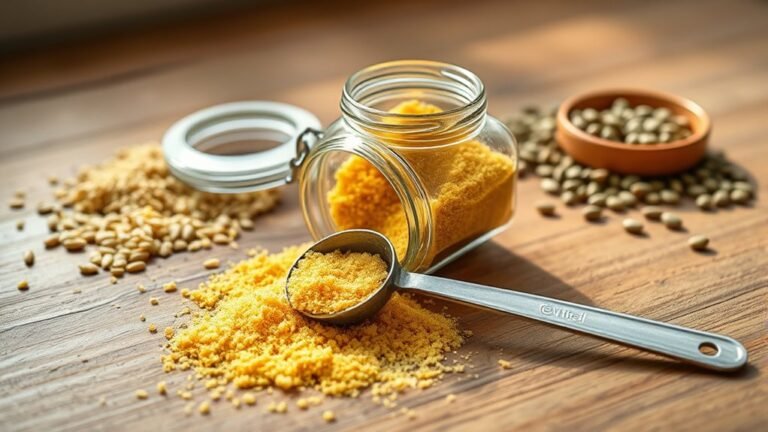
People love it for its cheesy, nutty flavor, making it a favorite vegan cheese substitute. Plus, it’s packed with B vitamins, protein, and fiber.
You can sprinkle it on popcorn, mix it into sauces, or blend it into smoothies. Nutritional yeast offers a versatile, nutrient-dense boost without any dairy or gluten.
What Is Brewer’s Yeast and How Is It Produced
While nutritional yeast is prized for its flavor and nutrient content, brewer’s yeast serves a different purpose and has a unique production process.
You’ll find brewer’s yeast primarily used in beer and alcohol production. It’s a byproduct of fermenting sugars from malted grains like barley. During fermentation, the yeast consumes sugars, producing alcohol and carbon dioxide.
After fermentation, the yeast cells are collected, washed, and often dried or processed into supplements. Unlike nutritional yeast, brewer’s yeast is usually active or deactivated depending on its intended use.
It contains a rich profile of B vitamins and proteins, but its production focuses on optimizing fermentation rather than flavor enhancement. Understanding this will help you see why these yeasts, though related, aren’t interchangeable.
Taste and Texture Differences Between Nutritional and Brewer’s Yeast
Because you’ll likely use nutritional and brewer’s yeast in different ways, it’s important to recognize how their tastes and textures differ.
Nutritional yeast has a light, cheesy flavor with a slightly nutty undertone, making it perfect for sprinkling on popcorn or stirring into sauces.
Brewer’s yeast, on the other hand, has a more bitter, robust taste that can be off-putting if used raw.
Texture-wise, nutritional yeast usually comes as flaky or powdery granules that dissolve easily, while brewer’s yeast often has a coarser, grainy feel.
- Nutritional yeast tastes cheesy and nutty
- Brewer’s yeast has a bitter, strong flavor
- Nutritional yeast is flaky or powdery
- Brewer’s yeast feels coarser and grainy
- Nutritional yeast blends smoothly into dishes
Nutritional Profiles: Comparing Vitamins, Minerals, and Protein Content
Although both nutritional yeast and brewer’s yeast offer valuable nutrients, their vitamin, mineral, and protein content vary considerably.
Nutritional yeast typically provides a rich source of B-complex vitamins, especially B12, which is often added during processing, making it a popular choice for vegans. It also contains a good amount of protein, around 8 grams per two tablespoons, plus minerals like zinc and selenium.
Brewer’s yeast, on the other hand, naturally contains more chromium and selenium but less B12 unless fortified. Its protein content is similar but may have a stronger, bitter taste.
If you’re looking to boost your intake of specific vitamins or minerals, knowing these differences helps you pick the right yeast for your dietary needs without confusion.
Comparing Health Benefits of Nutritional and Brewer’s Yeast
How do nutritional yeast and brewer’s yeast stack up when it comes to health benefits? Both offer unique advantages that can support your well-being.
Nutritional yeast is known for boosting your immune system and providing antioxidants that protect your cells.
Brewer’s yeast, on the other hand, often helps improve digestion and supports healthy skin due to its rich B-vitamin content.
Here’s a quick comparison to highlight their key health benefits:
- Nutritional yeast supports immune function with beta-glucans.
- Brewer’s yeast promotes gut health through prebiotic fibers.
- Nutritional yeast contains antioxidants that reduce oxidative stress.
- Brewer’s yeast helps regulate blood sugar levels.
- Both provide essential B vitamins that enhance energy metabolism.
Choosing either can complement your diet, depending on which benefits you value most.
Which Yeast Supplement Should You Choose Based on Your Goals?
When you decide to add a yeast supplement to your routine, consider your specific health goals to choose the best option.
If you want a boost in B vitamins and a savory, cheesy flavor, nutritional yeast is your go-to. It’s great for vegans or anyone looking to enhance energy and support immunity.
On the other hand, brewer’s yeast suits you if you aim to improve digestion or balance blood sugar, thanks to its probiotic properties. It’s often used for gut health and to promote healthy skin.
Remember, nutritional yeast is deactivated and better for flavor and vitamin intake, while brewer’s yeast is more focused on digestive benefits.
Pick based on what your body needs most to get the best results.
Common Uses for Nutritional Yeast in Cooking and Diets
Nutritional yeast adds a rich, cheesy flavor to many dishes, making it a favorite among those seeking plant-based alternatives to dairy. You can easily sprinkle it over popcorn or roasted vegetables for an instant flavor boost. It’s also perfect for thickening sauces and soups while adding a savory depth.
If you’re vegan, nutritional yeast is a go-to ingredient for creating dairy-free cheese sauces or dressings. Plus, it’s great for boosting the nutritional content of your meals without altering the taste drastically.
Here are common ways you can use nutritional yeast in your cooking:
- Sprinkle on pasta or pizza as a cheese substitute
- Mix into mashed potatoes for extra flavor
- Add to scrambled tofu or omelets
- Blend into smoothies for a nutrient boost
- Stir into salad dressings or dips
Brewer’s Yeast Benefits for Digestion and Immunity
Although brewer’s yeast is often overshadowed by its nutritional counterpart, it offers powerful benefits for your digestion and immune system. Packed with B vitamins, chromium, and beta-glucans, brewer’s yeast supports healthy gut flora, helping you break down food more efficiently and absorb nutrients better.
Its beta-glucans also stimulate your immune cells, boosting your body’s defense against infections. Regularly incorporating brewer’s yeast into your diet can help maintain a balanced digestive system and promote overall immune resilience.
Because it’s rich in fiber, it encourages regular bowel movements, reducing discomfort and promoting gut health. So, if you want to strengthen your digestion and immunity naturally, brewer’s yeast is a valuable addition to your wellness routine.
Side Effects and Who Should Avoid Nutritional or Brewer’s Yeast
Since both nutritional and brewer’s yeast offer potent health benefits, it’s important to be aware of potential side effects and who should steer clear.
Some people may experience digestive upset, headaches, or allergic reactions. If you have certain health conditions or sensitivities, you should avoid these yeasts to prevent complications.
You should be cautious or avoid nutritional or brewer’s yeast if you:
- Have a yeast allergy or sensitivity
- Take monoamine oxidase inhibitors (MAOIs)
- Experience frequent migraines
- Are immunocompromised
- Have candida overgrowth or fungal infections
Always consult your healthcare provider before adding these yeasts to your diet, especially if you fall into any of these categories. This helps guarantee you enjoy benefits without risking adverse effects.
Frequently Asked Questions
Can Nutritional or Brewer’s Yeast Be Used in Baking Bread?
You can use brewer’s yeast for baking bread since it’s active and helps dough rise, but nutritional yeast won’t work because it’s inactive and mainly adds flavor, not leavening, to your recipes.
Are There Gluten Concerns With Nutritional or Brewer’s Yeast?
You generally won’t face gluten concerns with nutritional or brewer’s yeast since they’re grown on gluten-free substrates. However, always check labels, as cross-contamination can occur during processing, especially if made in facilities handling gluten.
How Should Nutritional and Brewer’s Yeast Be Stored for Freshness?
You should store nutritional and brewer’s yeast in airtight containers, kept in a cool, dark place. Refrigeration helps maintain freshness longer, especially after opening. Avoid moisture and heat to prevent spoilage or clumping.
Can Children Safely Consume Nutritional or Brewer’s Yeast?
Yes, children can safely consume nutritional yeast in moderate amounts, but you should avoid brewer’s yeast unless recommended by a doctor. Always introduce new foods gradually and watch for any allergic reactions or digestive issues.
Do Nutritional or Brewer’s Yeast Interact With Common Medications?
Yes, nutritional and brewer’s yeast can interact with certain medications like MAO inhibitors and blood thinners. You should check with your healthcare provider before adding them to your diet, especially if you take prescription drugs.
Conclusion
Now that you know the differences between nutritional and brewer’s yeast, you can choose the one that fits your needs best. Nutritional yeast offers a cheesy flavor and is great for boosting vitamins, while brewer’s yeast supports digestion and immunity. Consider your taste preferences and health goals before adding either to your diet. Just be mindful of potential side effects and who should avoid them to get the most benefit safely.