Does Freeze-Dried Fruit Have Nutritional Value and How to Assess It?
Freeze-dried fruit keeps most of its vitamins, antioxidants, and minerals, often preserving vitamin C and B-complex nearly intact. Since water is removed, calories and sugars concentrate, so watch portion sizes and check labels for added sugars.
You’ll get a nutrient-dense, shelf-stable snack that’s closer to fresh fruit than traditional dried options.
By understanding how it compares nutritionally and spotting quality markers, you can make smarter choices and enjoy its benefits fully.
What Is Freeze-Dried Fruit?
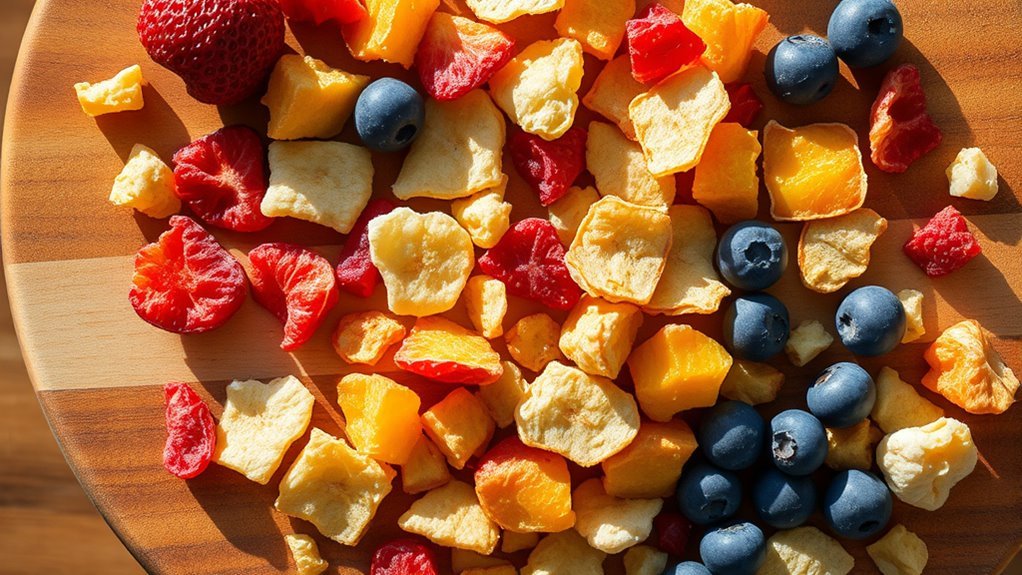
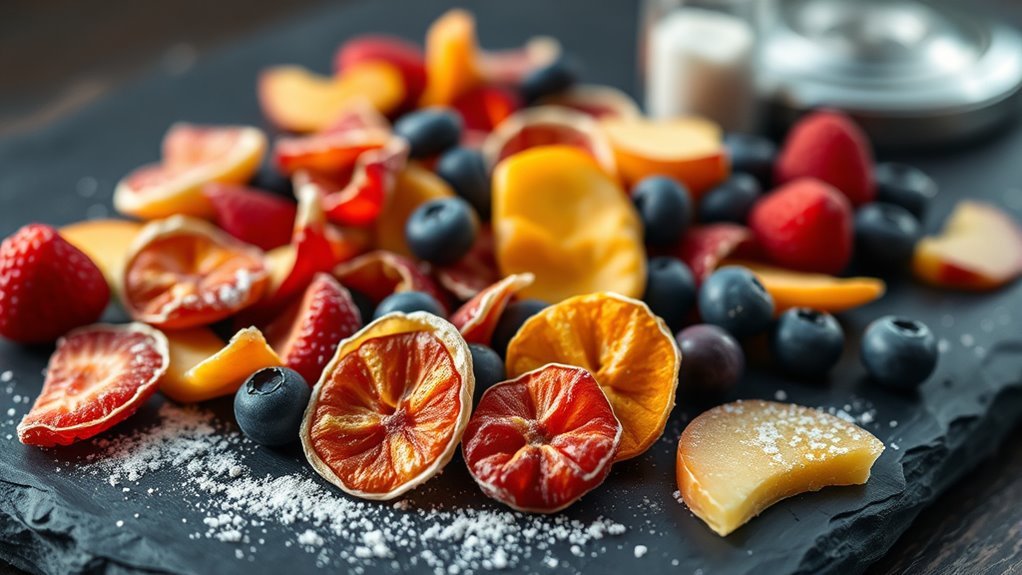
Although freeze-dried fruit looks and feels different from fresh fruit, it keeps most of the original flavor, color, and nutrients by removing water through a freezing and vacuum process. When you choose freeze-dried fruit, you’re getting a product where moisture has been sublimated, meaning ice turns directly into vapor without becoming liquid.
This method is one of the best preservation methods because it preserves vitamins, antioxidants, and the fruit’s natural taste far better than traditional drying. You’ll notice freeze-dried fruit remains crispy and light, with minimal moisture to prevent spoilage, making it perfect for long-term storage at room temperature.
Popular fruits like strawberries, bananas, apples, pineapples, and blueberries often undergo this process, so you can enjoy them as snacks or recipe ingredients anytime without losing much nutritional value. Understanding this helps you appreciate why freeze-dried fruit is a convenient, nutrient-rich option compared to other preservation methods.
How Does Freeze-Drying Work?
You start by freezing the fruit at really low temperatures. Then, you lower the pressure, which makes the ice turn straight into vapor. This step removes almost all the water from the fruit.
Because of this process, the fruit’s structure stays intact, and it keeps most of its nutrients and flavor. So, in the end, you get a light, crispy texture without losing the natural shape or health benefits.
Freeze-Drying Process Explained
When you freeze-dry fruit, the process starts by freezing it at extremely low temperatures. Then, the fruit is placed in a vacuum chamber where water sublimates directly from ice to vapor. This unique freeze-drying method removes almost all the water content without applying heat, preserving the fruit’s structure and nutrients.
During freeze-drying, you’ll notice the water content drops by 98-99%, resulting in a lightweight, dry product. The process occurs at temperatures between -40°C to -50°C. The cellular structure, flavor, and nutrients remain intact due to minimal heat exposure. The finished fruit stays shelf-stable while retaining much of its original taste and nutrition.
Nutrient Preservation Mechanism
The freeze-drying process not only removes water but also locks in the fruit’s nutritional value through careful temperature and pressure control. When you freeze-dry fruit, you freeze it first, then use a vacuum to turn ice directly into vapor, skipping the liquid phase.
This low-temperature method minimizes nutrient loss, especially for heat-sensitive vitamins like vitamin C. Because freeze-drying preserves the fruit’s cellular structure, antioxidants, phytonutrients, and flavor compounds stay intact.
The vacuum environment also prevents oxidation and microbial growth, helping maintain nutritional integrity over time. Compared to traditional drying methods, freeze-drying offers superior nutrient preservation, so you get most of the original nutrients in a lightweight, shelf-stable form.
Texture And Moisture Removal
Although freeze-drying might seem complex, it works by freezing fruit at extremely low temperatures and then removing moisture through sublimation, turning ice directly into vapor without becoming liquid. This moisture removal process preserves the fruit’s cell structure, resulting in a unique crunchy texture that’s both light and crispy. You’ll notice the fruit maintains its shape and color, unlike other drying methods.
Key benefits of this texture and moisture removal include:
- Around 98-99% of moisture is removed, leaving less than 2% in the final product
- The crunchy texture retains original flavor and nutrients
- Cell walls stay intact, preventing shrinkage and collapse
- Low moisture content extends shelf life by inhibiting microbial growth
This makes freeze-dried fruit a tasty, nutrient-rich snack with a satisfying crunch.
How Does Freeze-Drying Affect Nutritional Content?
You’ll find that freeze-drying keeps most nutrients intact, including vitamins like C and antioxidants. It’s pretty impressive because this method preserves nutrient levels much better than traditional drying techniques. So, let’s dive in and see how this impacts vitamin preservation, antioxidant stability, and overall nutrient retention.
Nutrient Retention Levels
How well does freeze-drying preserve the nutrients in fruit? Freeze-drying offers excellent nutrient retention compared to other methods. By removing water at low temperatures, it keeps most vitamins and antioxidants intact.
Here’s what you need to know about nutrient retention in freeze-dried fruit:
- Preserves 80-100% of vitamins like C and B-complex
- Retains antioxidants and phytonutrients, maintaining health benefits
- Minimizes nutrient loss compared to heat-drying or canning, which can lose up to 50%
- Increases nutrient density per serving due to water removal
Vitamin Preservation Impact
Why does freeze-drying preserve vitamins so effectively? It’s all about the low-temperature process that avoids heat damage, which causes nutrient loss in other drying methods.
Freeze-drying keeps most vitamins, especially water-soluble ones like vitamin C, largely intact. Since vitamin C is sensitive to heat and light, you’ll appreciate that freeze-drying retains up to 90-100% of it compared to fresh fruit.
While some minor nutrient loss can happen, overall freeze-dried fruit maintains a nutritional profile very close to fresh produce. So, when you choose freeze-dried fruit, you’re getting a product that preserves essential vitamins better than most preservation techniques, making it a smart choice if you’re focused on vitamin retention.
Antioxidant Stability Effects
Although drying methods often reduce antioxidant levels, freeze-drying preserves most antioxidants by using low temperatures and a vacuum environment that minimizes nutrient degradation and oxidation. When you choose freeze-dried fruit, you benefit from remarkable antioxidant stability, which helps maintain the fruit’s nutritional power.
Research shows vitamin C, a key antioxidant, stays mostly intact through freeze-drying compared to fresh fruit. This method outperforms heat or air drying, which can considerably diminish antioxidant content.
Key advantages of freeze-drying for antioxidant stability include:
- Preservation of vitamin C and other antioxidants
- Minimal nutrient degradation due to low temperatures
- Reduced oxidation thanks to the vacuum environment
- Higher antioxidant retention than other drying methods
Which Vitamins and Minerals Stay in Freeze-Dried Fruit?
Because freeze-drying uses low temperatures, it preserves most of the vitamins and minerals found in fresh fruit. So you still get essential nutrients like vitamin C, potassium, and magnesium. While vitamin C may decrease slightly, it remains much higher than in heat-dried fruit.
B vitamins such as riboflavin and niacin also stay well intact, supporting your energy metabolism. Minerals like calcium, potassium, and magnesium maintain their levels, ensuring you benefit from their essential roles.
Here’s a quick look at some key vitamins and minerals retained in freeze-dried fruit:
| Nutrient | Type | Role in the Body |
|---|---|---|
| Vitamin C | Vitamin | Immune support, antioxidant |
| Potassium | Mineral | Muscle function, electrolyte balance |
| Riboflavin | Vitamin | Energy metabolism |
This preservation means freeze-dried fruit remains a nutrient-dense snack option with plenty of vitamins and minerals to offer.
How Does Freeze-Dried Fruit Compare to Fresh and Dried Fruit?
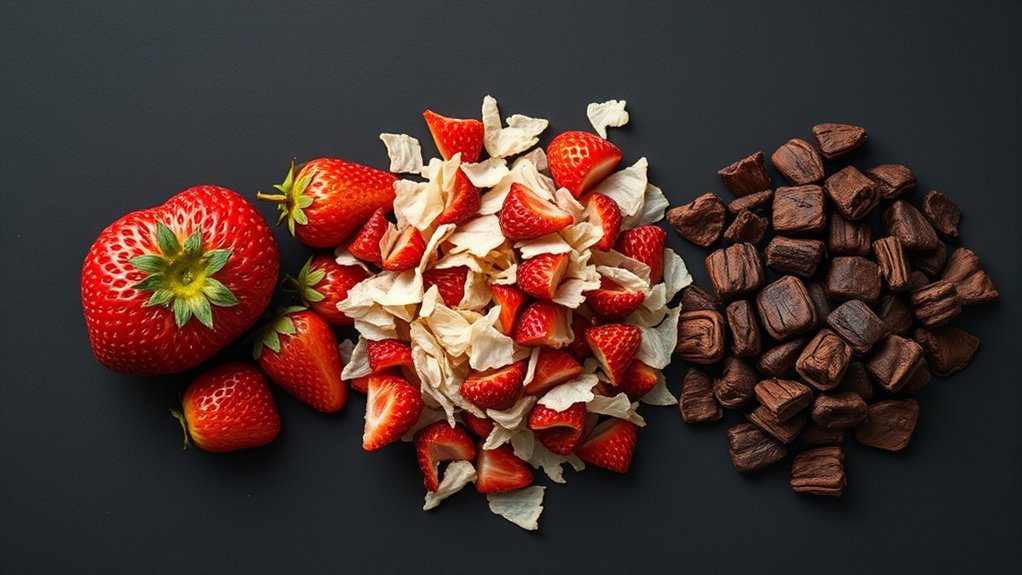
You’ll find that freeze-dried fruit holds onto more nutrients than regular dried fruit, especially vitamin C. That’s because the process used is much gentler. Since all the water is removed, the sugars and calories get more concentrated, which means you’re getting a more nutrient-dense snack per serving.
When you compare freeze-dried fruit to fresh fruit, they offer pretty similar vitamins. The main difference is that freeze-dried fruit doesn’t have the hydration fresh fruit does, but it does last a lot longer on the shelf. So, it’s a great option if you want something nutritious that keeps well.
Nutrient Retention Differences
How well does freeze-dried fruit hold onto its nutrients compared to fresh and traditionally dried fruit? Freeze-dried fruit excels in nutrient retention, often preserving 80-90% of vitamin C, whereas heat-dried fruit can lose up to 50%. It also keeps most antioxidants and phytonutrients intact thanks to its low-temperature process.
When compared to fresh fruit, freeze-dried options are more nutrient-dense by weight due to dehydration concentrating nutrients.
Keep these points in mind about freeze-dried fruit’s nutrient retention:
- Retains higher water-soluble vitamin levels than oven or sun-dried fruit
- Preserves antioxidants better than traditional drying
- Holds vitamin C content close to fresh fruit
- Offers concentrated nutrients per serving compared to fresh fruit
Freeze-dried fruit provides impressive nutrient retention, making it a smart choice for preserving fruit’s nutritional value.
Calorie And Sugar Concentration
While freeze-dried fruit retains most of its nutrients impressively, the removal of water markedly concentrates its sugars and calories. Compared to fresh fruit, freeze-dried options can pack up to five times more sugar per serving, so you’ll want to watch portion sizes carefully.
Unlike traditional dried fruit, freeze-dried fruit has a similar or slightly higher sugar concentration because it preserves nutrients better. Remember, a small handful of freeze-dried fruit can contain as many calories as a much larger portion of fresh fruit.
To keep your calorie and sugar intake in check, always check nutrition labels for any added sugars and enjoy freeze-dried fruit in moderation. This way, you can savor the convenience without overloading on calories or sugar.
Sugar and Calorie Considerations in Freeze-Dried Fruit
Because freeze-dried fruit loses its water content, it retains most of its natural sugars in a much smaller, more calorie-dense form. This means when you snack on freeze-dried fruit, you’re consuming concentrated sugar and calories compared to fresh fruit. That’s why keeping portion sizes in check is essential.
Here’s what you should consider about sugar and calories in freeze-dried fruit:
- Sugar content is markedly concentrated, sometimes doubling or tripling per serving compared to fresh fruit.
- The calorie density increases as water is removed, so smaller portions pack more calories.
- It’s easy to overeat because freeze-dried fruit is light and snackable.
- Excessive consumption can lead to unintended spikes in both sugar and calorie intake.
How to Spot Added Sugars on Freeze-Dried Fruit Labels
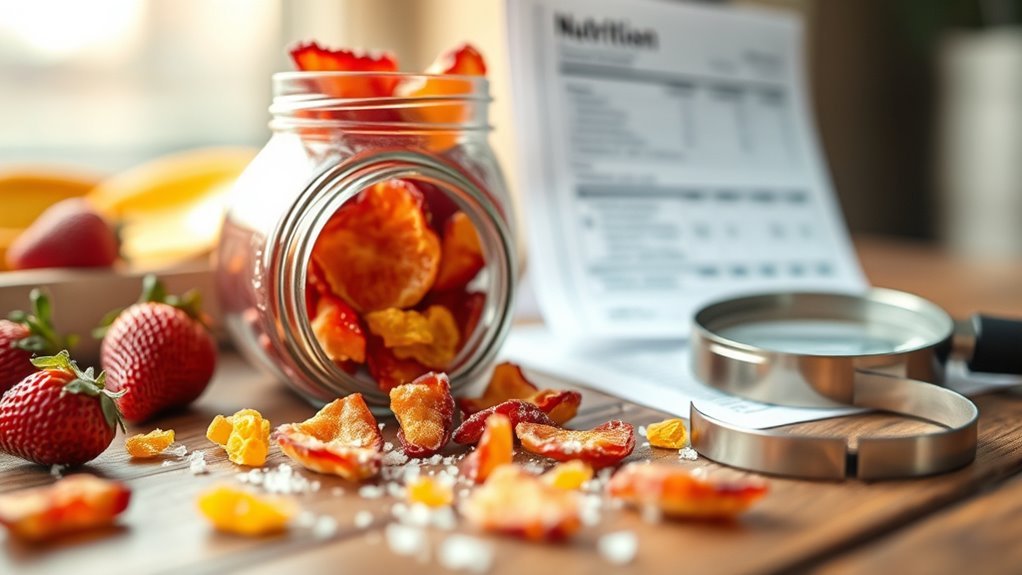
Since freeze-dried fruit naturally concentrates sugars, it can be tricky to tell if extra sugars have been incorporated. To spot added sugars, start by checking the ingredient list for terms like “sugar,” “glucose,” or “corn syrup.”
Then, examine the nutrition facts panel for sugar amounts that seem higher than expected. Bright colors or an overly sweet taste can also hint at added sugars. Choosing products labeled “no added sugar” or “unsweetened” helps avoid unnecessary sweeteners.
Here’s a quick guide to spotting added sugars:
| What to Check | What to Look For | Why It Matters |
|---|---|---|
| Ingredient List | Sugar, glucose, corn syrup | Indicates added sugars |
| Nutrition Facts Panel | High sugar content | Reveals unexpected sugars |
| Product Label | “No added sugar,” “unsweetened” | Ensures minimal added sugars |
| Appearance & Taste | Bright colors, overly sweet flavor | Possible added sugars |
Use this approach to make healthier freeze-dried fruit choices.
Recommended Serving Sizes for Freeze-Dried Fruit
If you want to enjoy the benefits of freeze-dried fruit without overdoing it, sticking to the recommended serving size is key. Since freeze-dried fruit is concentrated, a small serving packs as many nutrients as a larger portion of fresh fruit. However, portion control matters because it can be calorie-dense and high in natural sugars.
Typically, a serving size is about 1/4 cup (15-20 grams), roughly equal to 1/2 cup of fresh fruit by volume.
Keep these points in mind for proper portion control:
- Serving sizes usually range from 1 to 2 tablespoons on packaging labels.
- Each serving contains about 30-50 calories.
- Adults should aim for 1.5 to 2 cups of fruit daily, including freeze-dried options.
- Adjust portions based on your personal calorie needs to avoid excess intake.
Common Myths About Freeze-Dried Fruit Nutrition
Although freeze-dried fruit might seem less nutritious at first glance, it actually keeps most of its vitamins and antioxidants intact. You might have heard that dried fruit loses nutrients or contains added sugars and preservatives, but that’s not true for pure, high-quality freeze-dried fruit.
Many people confuse it with other processed snacks, assuming it’s low in nutritional benefits. However, freeze-dried fruit retains much of the original fruit’s vitamin C, B vitamins, and antioxidants. Don’t let the crunchy texture fool you; it’s far from just an empty snack.
Another common myth is that all freeze-dried fruit is full of artificial additives. In reality, many brands offer natural, minimally processed options, preserving the fruit’s healthful qualities. So, when you choose freeze-dried fruit, you’re still getting a nutrient-dense alternative to fresh or traditionally dried fruit without unnecessary extras.
When to Choose Freeze-Dried Fruit Over Fresh or Dried?
When you need a convenient, nutrient-packed snack that won’t spoil quickly, freeze-dried fruit offers a smart alternative to fresh or traditionally dried options. Thanks to freeze drying, this fruit retains most of its vitamins and antioxidants while gaining an extended shelf life. You’ll find it perfect when fresh fruit isn’t practical or available.
Choose freeze-dried fruit over fresh or dried when you want a lightweight, portable snack for hiking or travel. It’s great if long shelf life is a priority without refrigeration. You might also prefer it because it has no added sugars or preservatives found in some dried fruits. Plus, it gives you a concentrated nutrient source without the moisture content.
Frequently Asked Questions
Can Freeze-Dried Fruit Cause Allergic Reactions?
Yes, freeze-dried fruit can cause allergic reactions because the allergenic proteins usually stay intact, triggering immune responses if you’re sensitive. You should be aware of allergy risks, especially if you have fruit allergies.
Cross-contamination during processing might introduce other allergens like nuts or soy, increasing risks. Always read labels carefully to avoid unexpected ingredients that could provoke severe reactions, including anaphylaxis, so you can protect yourself effectively.
How Should Freeze-Dried Fruit Be Stored for Best Quality?
You should store freeze-dried fruit using airtight, moisture-proof containers to lock in freshness. Preservation techniques like keeping it in a cool, dark place away from heat sources and sunlight help maintain quality and nutrients.
Using resealable bags or vacuum-sealed packaging extends shelf life and keeps fruit crisp. Always check expiration dates and verify packaging is intact.
These storage methods guarantee your freeze-dried fruit stays tasty and nutritious longer.
Is Freeze-Dried Fruit Safe for Infants and Toddlers?
Yes, freeze-dried fruit can be safe for infants and toddlers if you offer it in small, age-appropriate portions and supervise them closely to prevent choking. Keep infant nutrition in mind by choosing freeze-dried fruits without added sugars or preservatives.
Also, watch for allergen risks, especially if your child hasn’t tried that fruit before. Always check with your pediatrician to make sure it fits your child’s diet and developmental stage.
Can Freeze-Dried Fruit Be Rehydrated for Recipes?
Absolutely, you can rehydrate freeze-dried fruit for recipes; it’s like magic! Using simple rehydration techniques, just soak the fruit in water or juice for 5 to 15 minutes, and it’ll regain moisture quickly.
This process helps with flavor preservation, so your fruit tastes close to fresh. Whether you’re baking, blending smoothies, or making sauces, rehydrated freeze-dried fruit adds vibrant texture and taste, making your recipes shine effortlessly.
Are There Environmental Benefits to Choosing Freeze-Dried Fruit?
Yes, you’ll find significant environmental impact benefits when choosing freeze-dried fruit. It uses less energy than traditional drying and reduces transportation emissions thanks to its lightweight nature.
You’ll also cut down on packaging waste, since it’s shelf-stable and lasts longer. These sustainability benefits mean you’re supporting lower water usage and less food spoilage, making freeze-dried fruit a smart, eco-friendly choice for your snacks or recipes.
Conclusion
Freeze-dried fruit keeps up to 97% of its nutrients, making it a smart snacking choice when fresh options aren’t around. You’ll get most of the vitamins and minerals you need, without the added sugars often found in dried fruit.
Just check the label to avoid surprises. So, next time you want a crunchy, nutrient-packed treat that lasts longer, grab freeze-dried fruit. You’ll enjoy great taste and nutrition in every bite!