How to Make Mayonnaise in a Food Processor in 3 Simple Steps
Start by gathering room-temperature egg yolks, mustard, lemon juice, salt, and pepper. Then set up your clean, dry food processor.
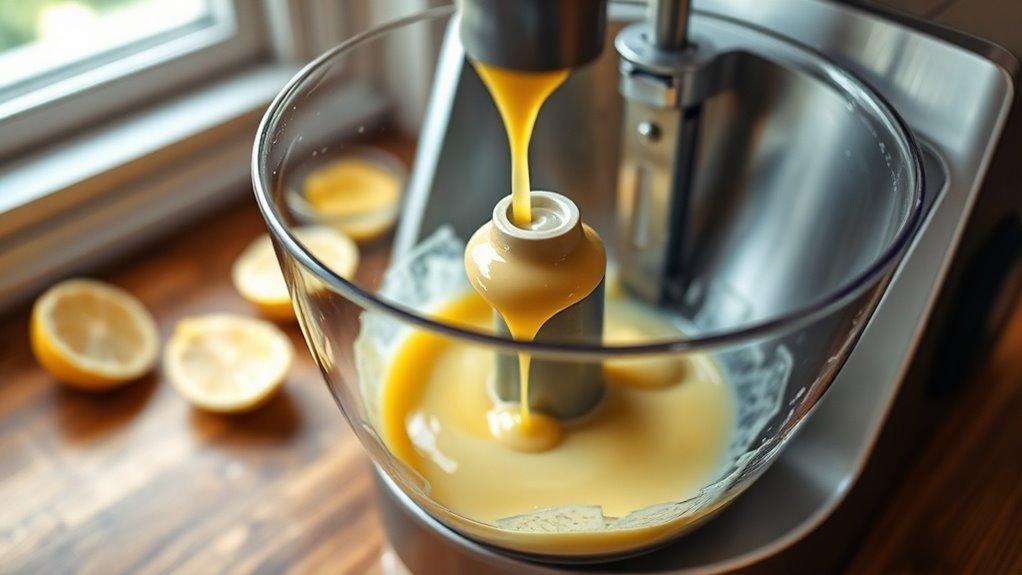
Begin blending the yolks and mustard, drizzling in half the oil slowly through the feed tube’s plunger to create a stable emulsion.
Finish by gradually adding the remaining oil in a thin stream, then season to taste. If you want tips on fixing broken mayo or flavor variations, you’ll find helpful insights ahead.
Prepare Mayonnaise Ingredients and Set Up Your Food Processor
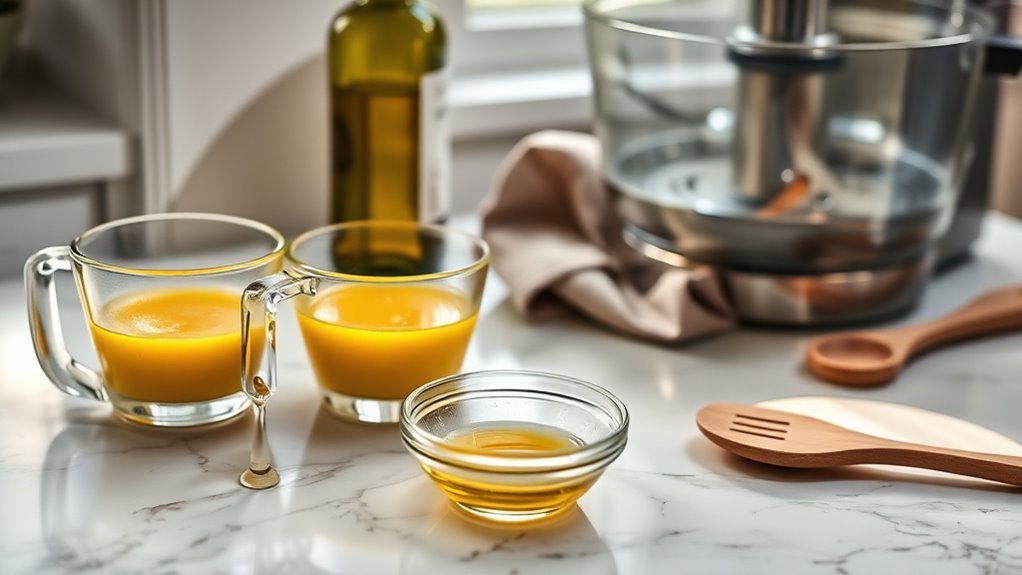
Begin by gathering room-temperature egg yolks from two large eggs, 1–2 teaspoons of mustard, 1–2 tablespoons of lemon juice, and a pinch of salt and pepper. Place them in the clean, dry food processor bowl fitted with the blade to guarantee proper emulsification. Make sure your food processor‘s bowl and blade are completely dry and free from residue to avoid breaking the emulsion.
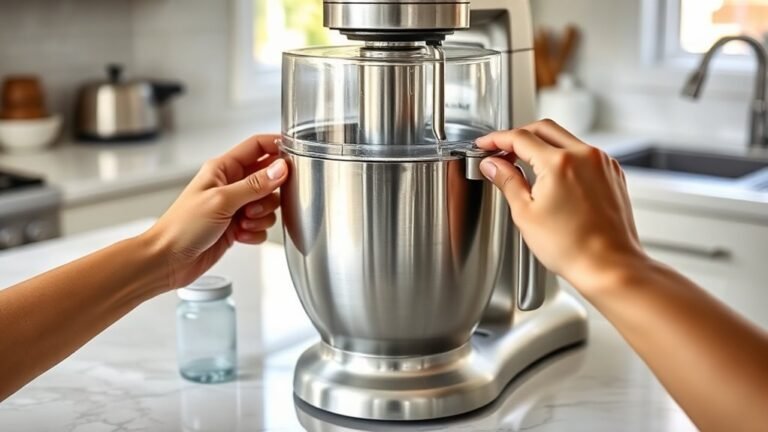
Next, measure about 1½ cups of neutral oil in a liquid measuring cup with a narrow spout. Position the food processor near the counter and plug it in, ready to start. Pour roughly half the oil into the feed tube’s plunger, designed to slowly drizzle the oil through its tiny hole while the processor runs.
This setup secures a steady, controlled flow essential for emulsification. Keep a rubber spatula nearby to scrape the sides if needed, and verify all ingredients are at room temperature before blending.
Drizzle Oil Gradually to Emulsify Mayonnaise
Start the food processor before the oil begins to flow, allowing a slow, steady drizzle through the feed tube’s plunger. This slow drizzle is vital for forming a stable emulsion. Pour about half the oil into the plunger so it can drip through the tiny hole, giving the yolk-mustard base time to bind oil and water droplets evenly.
To guarantee your mayonnaise emulsifies perfectly, follow these steps:
- Begin with the food processor running and let the oil dribble slowly through the feed tube’s plunger.
- Once the oil in the plunger is almost gone, pour the remaining oil in a thin, continuous stream to maintain the emulsion’s consistency.
- Use a measuring cup with a spout to control the pour and stop to scrape any oil clinging to the sides.
This method guarantees a smooth, creamy mayonnaise by allowing the oil to integrate gradually without breaking the emulsion.
Season and Troubleshoot Your Mayonnaise

How do you know when your homemade mayonnaise is perfectly seasoned? After blending, taste it and adjust with salt, pepper, and up to an extra teaspoon of lemon juice or vinegar to brighten the flavor without thinning the emulsion.
If your mayo feels too thin, chill it briefly to firm up, then whisk or pulse in oil, a teaspoon at a time, until it thickens.
If the mayonnaise breaks or separates, don’t worry. Perform a broken mayonnaise rescue by whisking 4 teaspoons of water or lemon juice in a separate bowl to create a cream-like base.
Slowly whisk or process about half a cup of the broken mayo into this base before adding the rest.
For garlicky aioli, fold in minced garlic after the emulsion forms to avoid bitterness.
Store your mayo in an airtight container in the fridge for up to a week, discarding it if you notice off odors, color changes, or mold.
Frequently Asked Questions
Can I Use Egg Whites Instead of Yolks for Mayonnaise?
You can try making a low fat mayo using egg white emulsion, but it’s tricky. Egg whites lack the fat and lecithin yolks provide, so their protein structure alone can’t create a stable emulsion.
Without added emulsifiers or stabilizers, your mayo may separate quickly and be thinner. If you want a healthier option, consider aquafaba or plant-based replacers for better texture and stability than plain egg whites.
What Type of Oil Is Best for Homemade Mayonnaise?
You’ll want to use a neutral flavored oil with a high heat tolerance, like grapeseed or light olive oil, for your homemade mayonnaise. These oils let the egg and mustard flavors shine without overpowering the taste.
If you prefer a nutty flavored twist, try blending in some extra-virgin olive oil, but keep it balanced so it doesn’t get bitter. Avoid strong oils that can dominate your mayo’s flavor. Pour slowly for best results!
How Long Can Homemade Mayonnaise Be Stored Safely?
You can safely store homemade mayonnaise for about seven days if you follow proper shelf life guidelines. Always keep it in an airtight storage container to prevent contamination.
Temperature control is key. Store it in the refrigerator below 40°F (4°C) to maintain freshness. Using clean utensils each time you scoop helps avoid bacteria that shorten shelf life.
Label your container with the date made so you won’t exceed safe consumption time.
Can I Add Other Flavors Like Garlic or Herbs?
Yes, you can easily customize your mayo! For garlic aioli, stir in minced garlic or garlic paste after making the mayo to avoid bitterness.
To make herb mayo, fold in finely chopped fresh herbs like parsley or dill for brightness. If you want spicy mayonnaise, add chipotle or hot sauce sparingly and taste as you go.
Puree softer ingredients before mixing to keep your mayo smooth and stable.
Is It Safe to Use Raw Eggs in Mayonnaise?
Using raw eggs in mayonnaise carries salmonella risks, so you need to weigh raw safety carefully. To reduce risk, use pasteurized eggs or pasteurized egg yolks. These are heat-treated to kill bacteria but still emulsify well.
If you’re making mayo at home, proper refrigeration and consuming it quickly also helps. When in doubt, choose commercial mayo made with pasteurized eggs or egg substitutes to keep things safer.
Conclusion
Now that you’ve mastered making mayonnaise in your food processor, you’ve got a secret weapon in the kitchen. With just a few simple steps, you can whip up creamy, homemade mayo that beats store-bought any day.
Don’t be afraid to experiment with flavors. After all, practice makes perfect. Remember, even if it doesn’t turn out flawless the first time, every attempt brings you closer to mayo magic.
You’ve got this!