Does Frozen Fruit Have the Same Nutritional Value as Fresh Fruit?
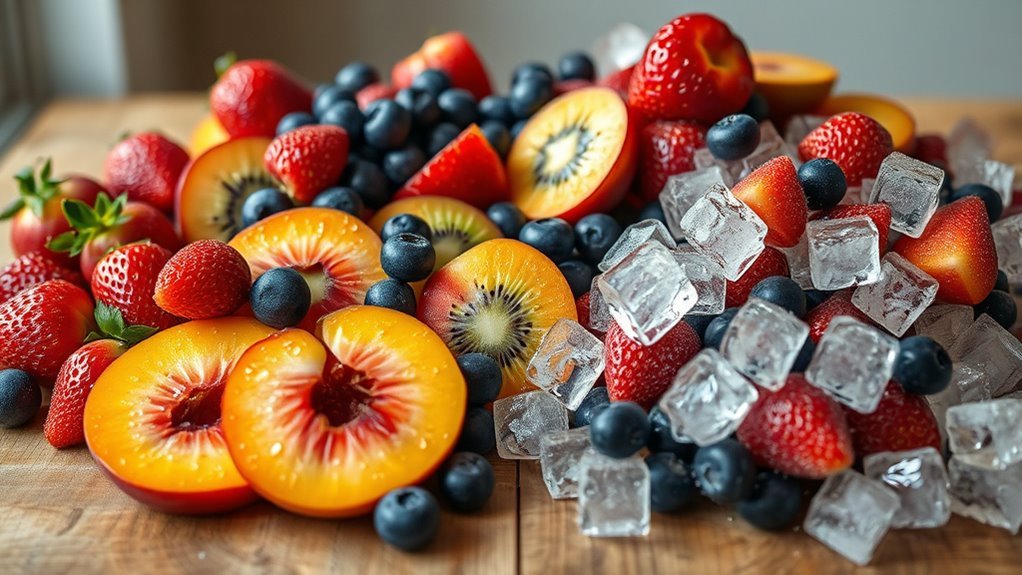
You’ll find frozen fruit often matches or even surpasses fresh fruit in nutrition because it’s picked at peak ripeness and quickly frozen to lock in vitamins, minerals, and antioxidants.
While some vitamins like C and B can dip slightly, freezing halts nutrient loss that fresh fruit may suffer during transport and storage.
Frozen fruit also lasts longer and saves you prep time.
If you want to understand how storage, cost, and handling impact your fruit’s nutrition, keep exploring.
Nutritional Preservation in Frozen Fruit
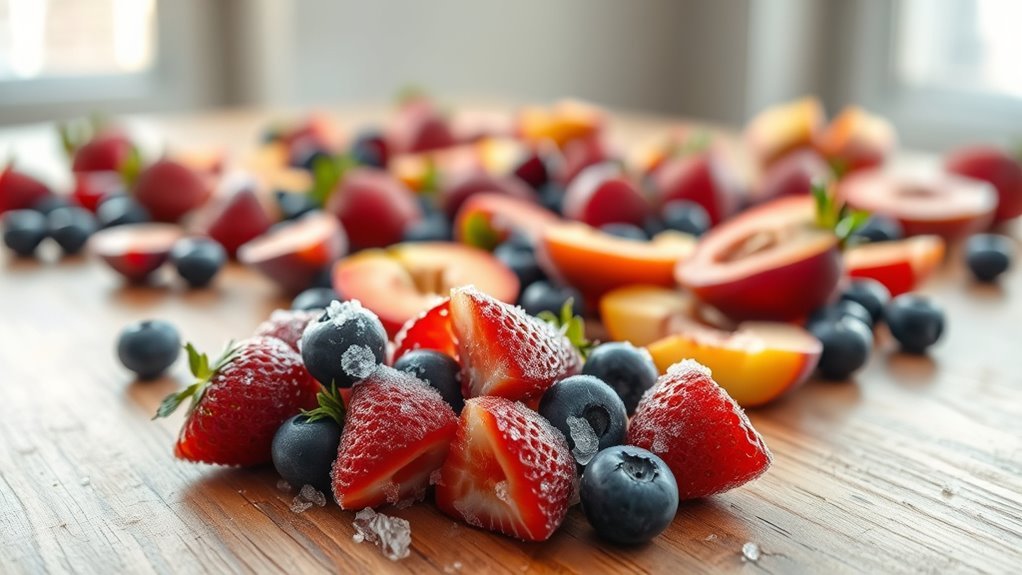
Because frozen fruit is picked at its peak ripeness and quickly frozen, it locks in most of its nutrients right away. This rapid process helps preserve the nutritional value of frozen fruits, often matching or even surpassing that of fresh fruit stored for days.
When you choose frozen fruits without added sugars or preservatives, you’re getting a product that maintains high levels of vitamins and minerals, including vitamins B2 and E, which stay stable during freezing.
Studies show that essential nutrients like vitamin C can remain intact or even be higher in frozen fruits compared to fresh ones that have undergone transportation and storage. This means you don’t have to worry about significant nutrient loss when opting for frozen options.
Nutrients Stable and Lost in Frozen Fruit
While freezing fruit immediately after harvest locks in many nutrients, some vitamins like vitamin C and certain B vitamins can degrade slightly during the process. However, the nutrient content of frozen fruits and vegetables generally remains high because freezing stops the natural breakdown that fresh produce goes through during storage.
Minerals, for example, stay stable and intact, so you still get essential nutrients like potassium and magnesium.
When you choose frozen fruits and vegetables, you can expect:
- A preservation of most vitamins and minerals, often matching or surpassing fresh produce stored for days.
- Minimal nutrient loss compared to fresh fruit that may lose vitamins during transport.
- High nutrient content without added sugars or preservatives if you select plain frozen options.
Storage and Transport Effects on Fresh Fruit Nutrients
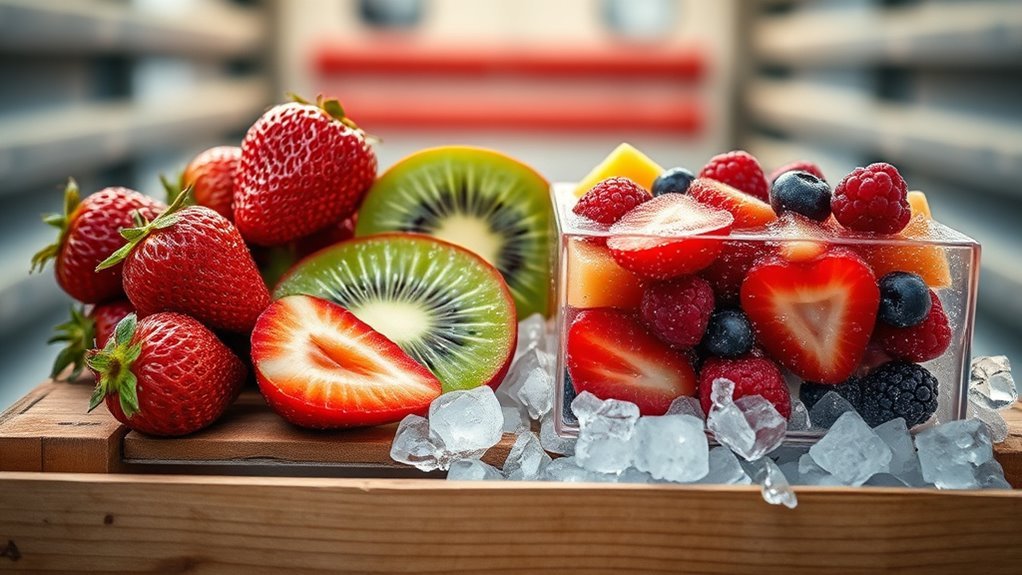
Frozen fruit retains most of its nutrients by being processed quickly after harvest, but fresh fruit faces different challenges. When you buy fresh fruit, it often spends days in transit and storage, exposed to air, light, and temperature changes that chip away at its nutrients.
For example, spinach can lose nearly half of its nutrients in just four days at room temperature. You might not realize that produce picked before it’s fully ripe may already have lower nutrient levels by the time it reaches your table. Plus, any disruptions in cold storage during transport can speed up nutrient degradation.
In contrast, frozen fruit and veggies undergo rapid freezing soon after harvest, locking in vitamins and minerals and ensuring better nutrient preservation. So, while fresh fruit offers great taste and texture, its nutrient content can diminish simply due to the time and conditions required to get it from farm to fridge.
Nutrient Comparison: Fresh vs Frozen Fruit
When you compare nutrient levels, you’ll find that fruits frozen soon after harvest often retain just as many vitamins and minerals as fresh fruit at its peak ripeness. Because frozen produce is processed quickly, it locks in nutrients like vitamin C and B vitamins that might otherwise degrade during the longer storage and transport times fresh produce often requires.
Fruits frozen soon after harvest retain vitamins and minerals as well as fresh fruit at peak ripeness.
The mineral content remains stable through freezing, ensuring you get essential nutrients without significant loss.
Here’s why frozen fruit can be just as nourishing as fresh:
- It preserves antioxidants and vitamins that fresh fruit can lose over time.
- It delivers consistent vitamin C levels, even after months in the freezer.
- It maintains mineral content, supporting your overall health.
Convenience and Cost Benefits of Frozen Fruit

One key advantage of frozen fruit is how it saves you both time and money. Frozen produce is often more cost-effective than fresh fruit since it lasts longer and reduces waste. You don’t have to worry about immediate consumption, which makes meal planning easier.
Plus, frozen fruit comes pre-washed and pre-cut, so you save prep time compared to fresh produce. It’s available year-round, giving you consistent access regardless of season.
Here’s a quick look at the convenience and cost benefits:
| Benefit | Frozen Fruit Advantage |
|---|---|
| Shelf Life | Longer, reduces spoilage |
| Preparation Time | Pre-washed and pre-cut |
| Availability | Year-round, not seasonal |
Choosing frozen fruit means you get convenience without sacrificing cost-effectiveness, perfect for your busy lifestyle.
What to Watch for on Frozen Fruit Labels
Saving time and money with frozen fruit is great, but you’ll want to pay close attention to the labels before making your choice. Look for terms like “frozen at peak ripeness,” which means the fruit was picked and frozen at its nutritional best. Avoid packages with added sugars or syrups, as these add unnecessary calories and reduce health benefits.
Instead, prioritize products labeled “no added sugars” or “100% fruit” for the purest nutrition.
Here are key points to watch for on frozen fruit labels:
- Freeze-dried or flash-frozen claims ensure minimal nutrient loss during processing.
- No added sugars or preservatives guarantees you’re getting wholesome fruit without unwanted extras.
- Clear storage and expiration dates help you maintain freshness and nutritional quality.
Safe Handling and Storage Tips to Preserve Nutrition and Safety
To keep your fruit nutritious and safe, make sure you wash it properly before freezing. Then, store it at a steady 0°F (-18°C). It’s a good idea to use airtight packaging to avoid freezer burn. Also, don’t forget to label your packages with dates so you can keep track of freshness. When it’s time to thaw, do it in the fridge or use the fruit directly to prevent bacterial growth.
Proper Washing Techniques
How can you guarantee your fruits are both safe and nutritious before eating? Proper washing techniques are key to enjoying fresh produce without worry. Start by rinsing your fruit under clean, running water to remove dirt and reduce harmful germs like Salmonella and E. coli.
For produce with tougher skins, use a brush or cloth to clean more effectively. You can also soak fruits briefly in a vinegar solution (1 part vinegar to 3 parts water) to remove pesticides and bacteria. After washing, dry your produce with a clean towel to prevent mold and bacterial growth.
Remember, treating your fresh fruit with care helps preserve its nutrition and safety.
Feel confident knowing your fruit is clean and safe
Enjoy the full flavor of fresh produce without chemicals
Protect your health with simple, effective washing steps
Freezing Temperature Guidelines
After washing your fruit thoroughly to remove dirt and bacteria, storing it properly is the next step to keep it safe and nutritious. You should store frozen fruit at or below 0°F (-18°C) to guarantee effective nutrient preservation and prevent spoilage.
Maintaining a consistent freezing temperature helps protect the fruit’s quality and safety over time. Avoid repeatedly thawing and refreezing your fruit, as this causes temperature fluctuations that lead to nutrient loss and increase bacterial growth risks.
Use airtight, moisture-resistant containers or bags to prevent freezer burn, which can degrade nutritional content. Finally, consume frozen fruit within 8-12 months to enjoy maximum nutrition and safety.
Following these freezing temperature guidelines helps you get the most from your frozen fruit.
Safe Storage Practices
Where should you store your frozen fruit to keep it fresh and nutritious? You need to maintain a consistent temperature of 0°F (-18°C) to preserve nutrients and prevent thawing. Safe storage is crucial to keep frozen fruit tasty and healthy.
Follow these tips to protect your frozen fruit: use airtight, moisture-proof packaging to avoid freezer burn and keep texture intact. Never refreeze thawed fruit because it loses nutrients and increases spoilage risk. Consume frozen fruit within 8-12 months to enjoy ideal nutrient retention.
When thawing, do it safely in the refrigerator or microwave instead of at room temperature. By practicing these safe storage habits, you’ll ensure your frozen fruit stays as nutritious as possible.
Choosing Fresh vs Frozen Fruit for Your Diet
Although both fresh and frozen fruits offer excellent nutritional benefits, choosing between them depends on your lifestyle and preferences. If you enjoy the natural texture and flavor of fresh fruit, especially when it’s in season, buying fresh can be satisfying.
However, fresh fruit can lose nutrients during transportation and storage, and if you don’t consume it quickly, it might spoil, leading to food waste. On the other hand, frozen fruit is harvested at peak ripeness and flash-frozen, preserving most nutrients and sometimes even containing more vitamins than fresh fruit stored for days.
Frozen fruit also helps you reduce food waste since it lasts longer and you can use only what you need. Ultimately, your choice might hinge on how quickly you use fruit and whether you prefer fresh texture or the convenience and longer shelf life of frozen options.
Both fresh and frozen fruits can fit well into a healthy diet when handled properly.
Making the Best Choice for Your Fruit Needs
When you’re picking fruit, it really helps to think about how you plan to use it and how long you need it to last. For example, frozen fruit is super convenient and lasts much longer in the freezer. On the other hand, fresh fruit is great when you want something with a nice texture and immediate versatility.
Also, don’t forget to consider how you’ll store your fruit and its nutritional value. Keeping these in mind will make sure you get the most out of whatever fruit you choose.
Convenience and Versatility
Because frozen fruit comes pre-washed, peeled, and sliced, you can save time on preparation and jump straight into making smoothies or recipes. This convenience lets you enjoy nutritious fruit without the hassle of cleaning or chopping.
Frozen fruit also offers impressive versatility. You can toss it into smoothies, bake it into desserts, or add it to savory dishes anytime, no matter the season. Plus, it helps reduce food waste since you only use what you need.
Here’s why frozen fruit suits your busy lifestyle:
- Quick, no-prep ingredient ready whenever you are
- Access to a wide variety of fruits year-round
- Flexible portioning to match your recipe or craving
With frozen fruit, convenience and versatility come together to simplify your healthy eating.
Storage and Shelf Life
How long can you keep your fruit fresh and nutritious? Fresh fruit has a shorter shelf life, often losing nutrients within days if not eaten quickly. On the other hand, frozen fruit offers much longer storage options.
When you store frozen fruit properly, sealed tight and kept at consistent freezing temperatures, you can enjoy it for several months without significant nutrient loss. Avoiding temperature fluctuations is key to preventing freezer burn and maintaining quality.
Nutritional Quality Considerations
Choosing between frozen and fresh fruit isn’t just about how long they last. It also comes down to their nutritional value. Frozen fruit is often picked and frozen quickly, locking in most vitamins and minerals so you don’t lose out on nutritional quality.
While some vitamins like vitamin C and B vitamins may dip slightly, minerals stay steady. In fact, frozen fruit can sometimes pack more nutrients than fresh fruit that’s been sitting around.
To make the best choice for your fruit needs, remember:
- Opt for frozen fruit without added sugars or preservatives
- Store fruit properly to keep vitamins and minerals intact
- Choose what fits your lifestyle and freshness preference
That way, you enjoy healthy fruit anytime without sacrificing nutrition.
Frequently Asked Questions
Can Frozen Fruit Cause Digestive Issues Compared to Fresh Fruit?
Frozen fruit usually won’t cause more digestive issues than fresh fruit, so you can feel confident about your digestive health. Nutritional differences between frozen and fresh fruit are minimal, and freezing sometimes even makes fruit easier to digest by softening its texture.
Just watch out for added sugars or preservatives in frozen varieties, as they might irritate your gut. As long as you store and prepare frozen fruit properly, it’s safe and gentle on digestion.
Are There Any Environmental Impacts of Choosing Frozen Over Fresh Fruit?
Yes, choosing frozen fruit impacts the environment differently than fresh fruit. You’ll reduce the carbon footprint because frozen fruit’s longer shelf life means less frequent shipping in the supply chain.
However, freezing and storing require energy, which adds to electricity use. So, while frozen fruit helps cut transport emissions, you should consider the energy consumption in storage to fully understand its environmental impact.
Does Freezing Fruit Affect Its Taste or Texture Significantly?
Yes, freezing fruit does affect its taste and texture, but you might not find it drastic. Flavor preservation is pretty good, so the fruit often tastes close to fresh, sometimes even sweeter due to moisture loss.
However, texture changes are noticeable, especially in high-water fruits like berries, which get softer or mushier after thawing. Using flash freezing can help you keep the texture more intact by minimizing cell damage and ice crystal formation.
Can Frozen Fruit Be Used in Cooking and Baking the Same as Fresh?
Yes, you can use frozen fruit in cooking and baking just like fresh fruit. Frozen fruit offers excellent flavor preservation, so your dishes won’t lose their fruity taste.
Keep in mind, though, texture changes occur when thawed. Frozen fruit tends to be softer, which works great for sauces or smoothies but may release extra moisture in baked goods. You might need to adjust your recipes slightly to manage this.
How Does Freezing Affect the Antioxidant Levels in Fruit?
Freezing preserves antioxidants by quickly halting enzymatic activity, so you’ll see excellent antioxidant preservation in frozen fruit. The freezing process effects lock in nutrients like vitamin C and polyphenols immediately after harvest, keeping their levels stable or even higher than fresh fruit stored for a while.
When you thaw frozen fruit, there might be a slight loss, but overall, the antioxidant content remains well-preserved. This makes frozen fruit a great option for nutrition.
Conclusion
Did you know frozen fruit can retain up to 90% of its nutrients compared to fresh? That means you’re still getting a powerhouse of vitamins and minerals, even if it’s not fresh-picked.
Frozen fruit offers convenience, longer shelf life, and often better value. So next time you’re deciding, remember: both fresh and frozen have unique benefits. Choose what fits your lifestyle and enjoy your fruit without worrying about missing out on nutrition!