What Are GLP-1 Balanced Meals and How to Create Them
GLP-1 balanced meals combine protein, fiber, and healthy fats in the right portions to help you control blood sugar, stay full longer, and support digestion.
You’ll focus on nutrient-dense foods like lean meats, legumes, whole grains, and healthy oils while spacing meals every few hours to prevent side effects.
These meals are designed to be gentle on your stomach and boost long-term health. Keep exploring to discover how to tailor them perfectly to your needs.
What Are GLP-1 Balanced Meals and Why They Matter
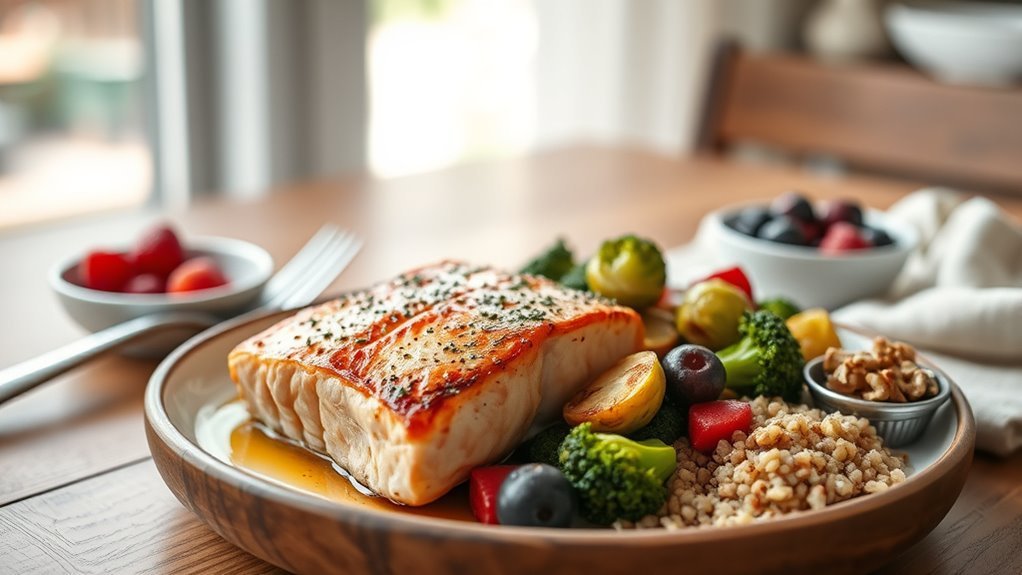
Although GLP-1 medications play a key role in managing appetite and blood sugar, your meals need to support their effects for the best results. GLP-1 balanced meals focus on nutrient-dense foods rich in protein and fiber, which help keep your blood sugar levels steady and boost satiety.
Supporting GLP-1 medications with protein- and fiber-rich meals helps stabilize blood sugar and increase fullness.
By prioritizing lean proteins, healthy fats, and complex carbohydrates, these meals guarantee you get adequate nutrition even when your appetite decreases. Including fiber not only promotes fullness but also aids in preventing blood sugar spikes.
These meals are designed to be easily digestible and properly portioned to reduce common side effects like nausea or digestive discomfort. Following a GLP-1 balanced meal plan helps you maintain consistent nutrient intake, supporting weight loss and muscle preservation.
Tailoring meals to your individual health goals and tolerances enhances overall well-being and complements your medication, making your treatment more effective and sustainable in the long run.
How GLP-1 Medications Affect Appetite and Digestion
When you take GLP-1 medications, they slow down your stomach emptying, which helps you feel full longer and curbs your hunger. This delayed gastric emptying means food stays in your stomach longer, prolonging satiety and reducing the urge to eat frequently.
Furthermore, GLP-1 medications activate receptors in your brain that regulate appetite, leading to decreased cravings and better control over food choices. Their hormonal effects also suppress glucagon release and boost insulin secretion, stabilizing your blood sugar levels.
This balance minimizes hunger-driven eating and supports mindful meal portions. Moreover, these hormonal changes often reduce intrusive food thoughts, making it easier for you to focus on balanced meals without constant food distractions.
Altogether, the influence of GLP-1 medications on gastric emptying and hormonal effects helps you manage appetite effectively and supports digestion in a way that complements your nutritional goals.
Key Nutrients for GLP-1 Balanced Meals: Protein, Fiber, and Fats
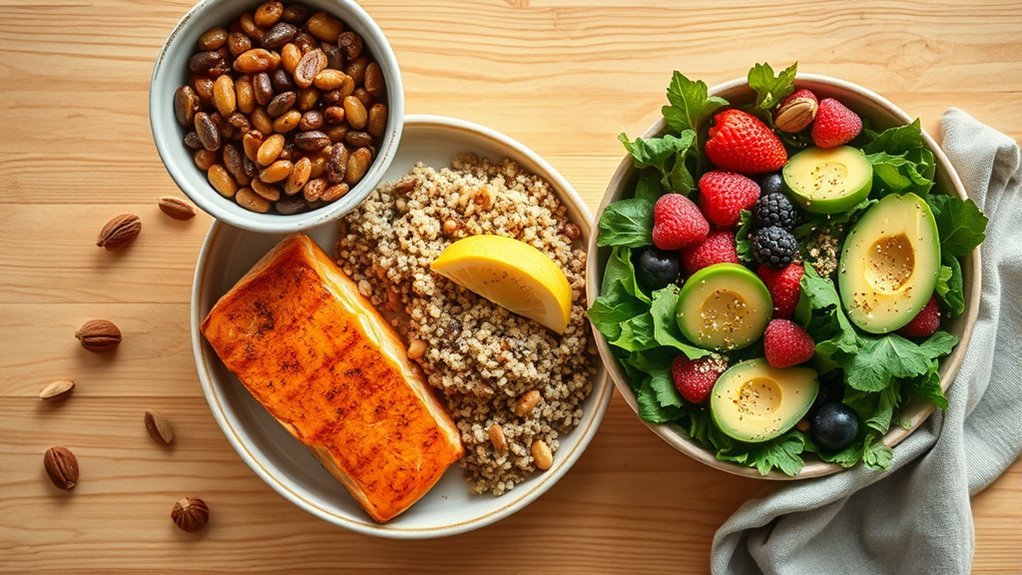
You’ll want to focus on getting enough protein, fiber, and healthy fats in your meals to support GLP-1 balance. Protein helps keep you full and preserves muscle. Fiber, on the other hand, slows down digestion and boosts satiety. And don’t forget about healthy fats like nuts and olive oil—they aid nutrient absorption and help keep your energy steady throughout the day.
Protein’s Role In Nutrition
How does protein play an essential role in your nutrition, especially when managing weight with GLP-1 medications? Protein helps preserve lean muscle mass, which is critical since GLP-1 meds may increase muscle loss. It also boosts satiety, keeping you full longer and stabilizing blood sugar.
Including 25-30 grams of protein per meal enhances nutrient density and supports your body’s functions, like tissue repair and immune health.
| Protein Source | Protein Content (g) | Benefits |
|---|---|---|
| Eggs | 6 | High-quality amino acids |
| Lean Meats | 22-26 | Muscle preservation |
| Fish | 20-25 | Supports immune health |
| Plant-based | 5-10 | Nutrient-dense, fiber-rich |
| Dairy | 8-14 | Satiety and muscle repair |
Prioritize protein to maintain muscle and optimize your GLP-1 balanced meals.
Fiber Benefits And Sources
Fiber plays a crucial role in managing appetite and digestion, especially when you’re using GLP-1 medications. It slows gastric emptying and prolongs feelings of fullness, helping you control hunger more effectively.
To support your GLP-1 balanced meals, aim to include a variety of fiber-rich foods like berries, legumes, whole grains, vegetables, and seeds such as chia and flaxseeds. These not only boost fullness but also stabilize blood sugar and improve digestion, enhancing your metabolic health.
The daily fiber goal is around 25 grams for women and 38 grams for men, with some on GLP-1 therapy benefiting from even more. Pair fiber thoughtfully with protein and healthy fats to create satisfying meals that keep you energized and comfortable throughout the day.
Healthy Fats Importance
Although protein and fiber are essential, healthy fats play a vital role in GLP-1 balanced meals by supporting hormone production and cellular function. Healthy fats like avocados, nuts, and olive oil provide essential fatty acids that your body needs for these processes.
Including small portions of healthy fats in your meals boosts satiety, helping you feel fuller longer, which is especially helpful when GLP-1 medications suppress appetite. Fats also aid in the absorption of fat-soluble vitamins (A, D, E, and K), indispensable for immune health and metabolism.
Furthermore, healthy fats help stabilize blood sugar by slowing carbohydrate absorption, reducing post-meal spikes. Consuming fats in moderation across meals supports weight management and preserves muscle during GLP-1 therapy, making them an indispensable part of your balanced diet.
How Much Protein You Need in GLP-1 Balanced Meals
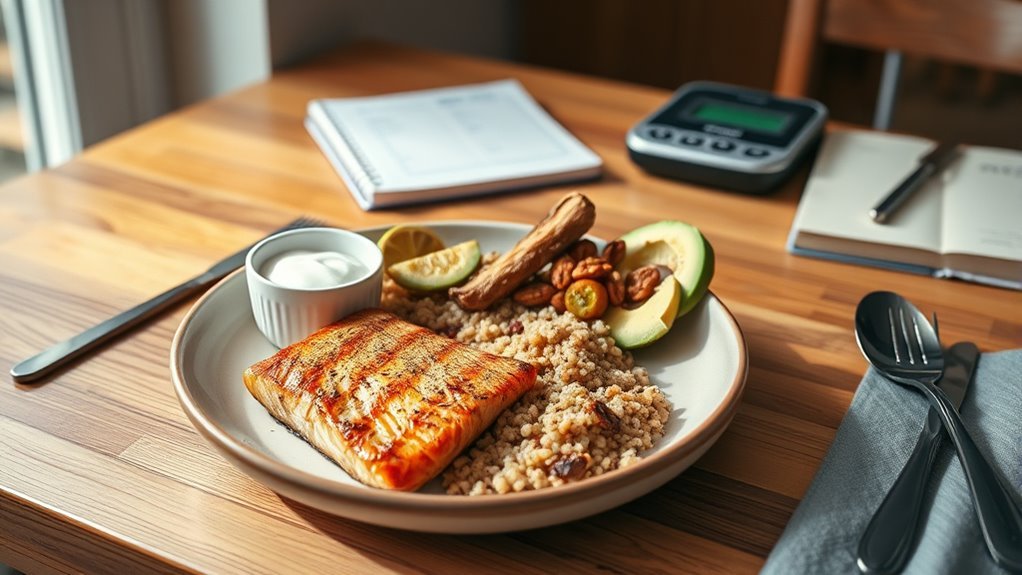
When you’re managing your meals with GLP-1 therapy, aiming for 25 to 30 grams of protein per meal helps support muscle maintenance and keeps you feeling full. To create an effective meal plan, calculate your daily protein needs by multiplying your goal weight by 0.7 to 1 gram of protein.
This guarantees you get enough protein to preserve muscle mass while benefiting from GLP-1’s appetite regulation. Focus on lean protein sources like eggs, chicken, fish, tofu, and Greek yogurt to meet your protein targets without excess fat.
Distributing protein evenly across your meals optimizes absorption and energy levels throughout the day. Consuming sufficient protein is essential because GLP-1 therapy can reduce your appetite, increasing the risk of muscle loss if protein intake falls short.
The Role of Fiber in Supporting Digestion and Fullness
Along with protein, including plenty of fiber in your GLP-1 balanced meals can help you feel full and support digestion. Fiber slows gastric emptying, which promotes a lasting feeling of fullness and helps control your appetite. It also plays an essential role in steady blood sugar regulation by forming a gel-like substance in your gut that slows glucose absorption.
Including fiber with protein in GLP-1 meals boosts fullness, supports digestion, and helps regulate blood sugar.
Here’s how fiber benefits you:
- Supports healthy digestion by reducing bloating and improving bowel regularity.
- Enhances fullness, making it easier to manage portion sizes.
- Helps regulate blood sugar levels, preventing spikes and crashes.
- Gradually increasing fiber intake prevents digestive discomfort like gas and promotes satiety.
To maximize these benefits, focus on fiber-rich foods such as berries, legumes, and whole grains. Incorporating these into your GLP-1 balanced meals will not only boost digestion but also help maintain steady blood sugar and lasting fullness throughout the day.
Why Healthy Fats Matter for Your GLP-1 Meals
Because healthy fats play an essential role in hormone production and blood sugar regulation, including them in your GLP-1 balanced meals can make a significant difference in how satisfied you feel after eating. Healthy fats like avocados, nuts, and olive oil help stabilize blood sugar levels, which supports the effectiveness of your GLP-1 therapy.
They also boost satiety, so you’re less likely to experience cravings or reach for unhealthy snacks between meals.
Additionally, healthy fats improve the absorption of fat-soluble vitamins A, D, E, and K, which are essential for overall nutrient balance and well-being. By choosing small, consistent portions, you meet your daily calorie needs without overloading your digestion.
This is especially important when managing appetite through GLP-1 therapy. Replacing unhealthy fats with these beneficial options also reduces inflammation and supports cardiovascular health.
That way, you maintain a balanced, sustainable approach to weight and blood sugar management.
Why Hydration Matters on GLP-1 Medications
Although GLP-1 medications help regulate appetite and blood sugar, they also slow gastric emptying, which can increase your risk of dehydration. That’s why staying on top of your hydration is essential when using these medications.
GLP-1 medications slow gastric emptying, raising dehydration risk—staying hydrated is crucial.
Proper fluid intake supports digestion and helps prevent common gastrointestinal side effects like nausea, bloating, and gas.
To maintain ideal hydration on GLP-1 medications, follow these tips:
- Drink at least eight cups of water daily to prevent constipation and support digestion.
- Sip water throughout the day, especially around meals and exercise, to enhance medication effectiveness.
- Monitor your fluid intake carefully since reduced appetite might lower your natural thirst cues.
- Prioritize hydration to maintain blood volume and circulation, important for your overall metabolic health.
Choosing Easy-to-Digest, Nutrient-Dense Ingredients for GLP-1 Meals
When preparing meals on GLP-1 medications, choosing easy-to-digest, nutrient-dense ingredients can help you avoid common digestive discomforts like bloating and nausea. Focus on gentle carbs such as oats and brown rice, which provide energy without overwhelming your digestive system.
Incorporate cooked vegetables and lean proteins that are soft and simple to digest, reducing irritation and promoting comfort. Opt for minimally processed foods like leafy greens, berries, and legumes, as they deliver essential vitamins and fiber while being gentle on digestion.
Avoid high-fat or fried items that can exacerbate side effects. Prioritizing foods with moderate fiber content ensures smooth digestion and better nutrient absorption.
How to Portion Your GLP-1 Balanced Meals for Success
To portion your GLP-1 balanced meals for success, aim for about 25-30 grams of protein in each serving. At the same time, make sure to balance your carbs and fats wisely so everything works together.
Try spreading your meals evenly throughout the day—think about having 4 to 6 smaller servings. This helps keep your energy steady and prevents big spikes or crashes.
Of course, listen to your body. You can adjust the timing and portions based on how you feel and what your nutritional needs are. Finding the right balance is all about tuning in and making it work for you.
Protein Portion Guidelines
How much protein should you include in each GLP-1 balanced meal to support your goals? Aim for 25-30 grams of protein per meal to promote muscle maintenance and fullness. Proper portion size is key in meal planning to keep your intake consistent and effective.
Here’s how to nail your protein portions:
- Calculate your daily protein needs by multiplying your goal weight (in pounds) by 0.7 to 1.0 grams.
- Choose lean protein sources like poultry, seafood, eggs, Greek yogurt, tofu, or tempeh.
- Spread your protein intake evenly across meals and snacks to sustain energy and reduce hunger spikes.
- Use measuring tools or a food tracking app to ensure accuracy in your portion sizes.
Following these guidelines helps you optimize your GLP-1 balanced meals for success.
Balancing Carbs And Fats
Although protein plays a crucial role in your GLP-1 balanced meals, balancing carbohydrates and fats is equally important to maintain steady blood sugar and promote fullness. Aim to portion about 25-30 grams of fiber-rich carbohydrates like berries, vegetables, and whole grains. These slow glucose absorption and keep you satisfied longer.
Incorporate healthy fats such as avocado, nuts, and olive oil, making sure they don’t exceed 20-30% of your daily calories. A balanced plate often means filling half with non-starchy vegetables and dividing the rest between consistent portions of carbs and fats.
Pay close attention to how your body responds. Adjust portions based on your fullness and digestive comfort to optimize your meal’s success and support your GLP-1 goals effectively.
Meal Timing Strategies
Balancing the right portions of carbohydrates, fats, and protein sets the stage for effective meal timing strategies that support your GLP-1 goals. Proper portion control combined with meal timing can boost your digestion and energy levels throughout the day.
To portion your GLP-1 balanced meals for success, follow these steps:
- Divide your plate so half is fiber-rich vegetables, one-quarter lean protein, and one-quarter healthy fats or complex carbs.
- Eat smaller meals 3-4 times daily to aid digestion and avoid discomfort.
- Include about 25-30 grams of protein per meal to promote satiety and muscle maintenance.
- Time meals around your daily activities, like before or after exercise, to optimize energy levels.
Adjust portions based on how hungry you feel and any side effects to find your ideal balance.
When and How Often to Eat for Optimal GLP-1 Digestion and Energy
To optimize GLP-1 digestion and sustain your energy, you should eat smaller, more frequent meals spaced evenly every 3 to 4 hours. This meal timing helps maintain steady energy levels and supports GLP-1’s role in regulating appetite and digestion. Waiting 2 to 3 hours between meals allows your digestive system to process food effectively, enhancing GLP-1 digestion and preventing blood sugar spikes or drops.
Focus on balanced meals that include adequate protein and fiber to improve digestion and avoid gastrointestinal discomfort. Consistent eating patterns regulate appetite signals, promoting better satiety and energy throughout the day. By spreading your meals evenly, you support sustained fullness and optimize GLP-1 function, which is vital for maintaining stable energy levels.
Incorporating these meal timing strategies into your routine will help you harness GLP-1’s benefits, keeping your digestion efficient and your energy balanced from morning to night.
Simple GLP-1 Balanced Meal Recipes and Ideas
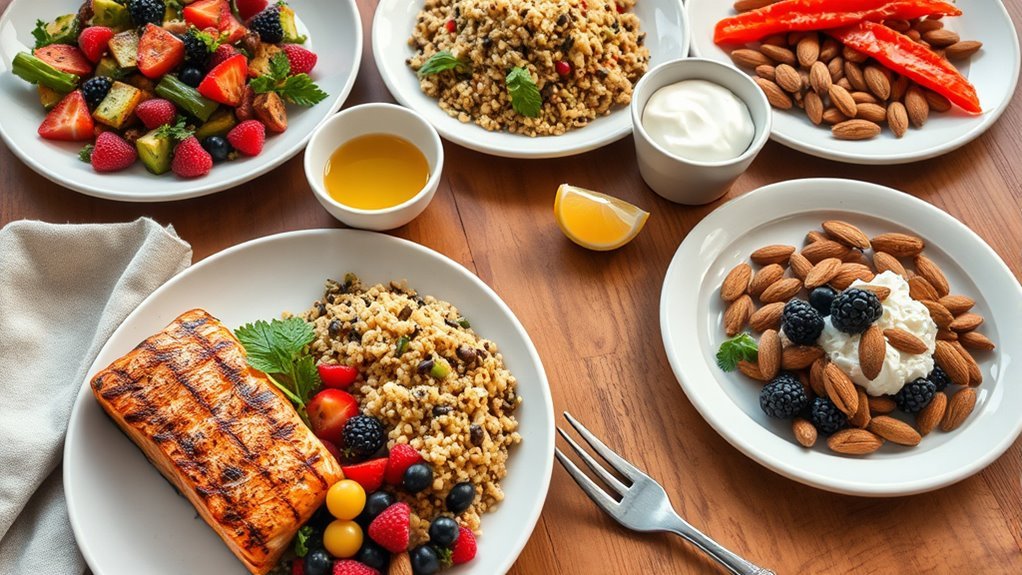
When you focus on simple GLP-1 balanced meals, you include high-quality protein, fiber-rich vegetables, and healthy fats that keep you full and nourished. These meals support satiety and stable energy levels, essential during GLP-1 therapy. Here are some easy ideas to get started:
- Grilled chicken with roasted broccoli and a drizzle of olive oil provides lean protein, fiber, and healthy fats.
- Scrambled eggs with spinach and avocado combine protein, fiber, and heart-healthy fats in one quick dish.
- A vegetable stir-fry with tofu or lean beef packed with fiber and protein, cooked in avocado oil, balances nutrients and portion control.
- Protein smoothies with Greek yogurt, berries, and a spoonful of flaxseed offer fiber, protein, and omega-3 fats for a nutritious boost.
Adjusting GLP-1 Meals for Side Effects and Personal Preferences
Although GLP-1 balanced meals provide great nutritional support, you may need to adjust them to ease side effects like nausea or bloating. Adjusting meals means tweaking portion sizes, food textures, and ingredients to minimize discomfort.
Focus on easily digestible options such as smoothies, cooked vegetables, and lean proteins. Also, consider your personal preferences because taste and intolerances matter for long-term success.
Gradually increase fiber and spread healthy fats throughout the day to reduce gas and bloating. Monitoring your body’s response and consulting a healthcare professional can guide effective meal modifications.
| Side Effect | Meal Modification | Tips |
|---|---|---|
| Nausea | Smaller portions | Eat slowly, hydrate well |
| Bloating | Cooked veggies, fiber spread | Avoid raw high-fiber foods |
| Gas | Lean proteins, healthy fats | Introduce fats gradually |
| Taste issues | Flavor herbs, spices | Substitute disliked foods |
| Intolerances | Alternative ingredients | Keep a food diary |
Frequently Asked Questions
Can GLP-1 Balanced Meals Help With Long-Term Weight Maintenance?
Yes, GLP-1 balanced meals can help you with long-term weight maintenance by focusing on meal timing and portion control to keep your hunger in check. They offer dietary flexibility, so you don’t feel restricted, making it easier to stick with healthy habits.
Are GLP-1 Balanced Meals Suitable for Vegetarians or Vegans?
Of course, GLP-1 balanced meals are suitable for you if you prefer plant-based options, no magic cow required! You can swap in vegan protein sources like beans, lentils, tofu, and tempeh without missing a beat.
Vegetarian meal ideas? Think fiber-rich veggies and whole grains paired with dairy-free substitutions like almond milk or coconut yogurt. You’ll keep your meals balanced, tasty, and perfectly tailored to your lifestyle without sacrificing flavor or nutrition.
How Do GLP-1 Balanced Meals Impact Blood Sugar Levels?
GLP-1 balanced meals improve your blood sugar regulation by slowing digestion, which smooths out post meal effects. This steadier pace helps your insulin response work more efficiently, preventing sharp spikes in glucose.
Can Children or Adolescents Use GLP-1 Balanced Meal Plans?
You can’t just toss children or teens onto GLP-1 balanced meal plans like they’re grown-ups! Pediatric nutrition demands careful attention, especially with adolescent health in mind.
Meal planning for youth must respect dietary restrictions and their unique growth needs. So, no, GLP-1 balanced meals aren’t typically recommended for kids without strict medical guidance.
Instead, focus on tailored nutrition that supports healthy development and consult healthcare pros before making changes.
What Kitchen Tools Make Preparing GLP-1 Balanced Meals Easier?
You’ll find kitchen gadget essentials like a high-quality chef’s knife and a digital kitchen scale invaluable for meal prep strategies. They help with precise chopping and portion control techniques, ensuring balanced meals.
A slow cooker or Instant Pot simplifies cooking nutrient-rich dishes, while a blender handles smoothies and soups effortlessly. Keep ingredient substitutions handy to maintain variety and nutritional balance.
These tools streamline your prep and keep your GLP-1 meals on track.
Conclusion
Creating GLP-1 balanced meals is like planting seeds for lasting health. You’re fueling your body with the right mix of protein, fiber, and fats to keep hunger at bay and digestion smooth.
By portioning your meals thoughtfully and timing them well, you’ll harness GLP-1’s power to feel energized and satisfied. Embrace these habits, adjust for your needs, and watch your wellness bloom with every bite you take.