What Is a Vegan Meal Plan and How to Create One
A vegan meal plan helps you eat balanced, nutrient-rich plant foods daily, cutting down on impulsive, less healthy choices and saving time. Start by tracking your current diet to spot gaps and tailor meals around essential nutrients like B12, iron, and omega-3s.
Organize meals with themes and flexible ingredient swaps, then prep in bulk for ease. Customize flavors and portions to fit your lifestyle.
Keep going to discover how to shop smart and adjust your plan for lasting success.
Why Having a Vegan Meal Plan Makes Healthy Eating Easier
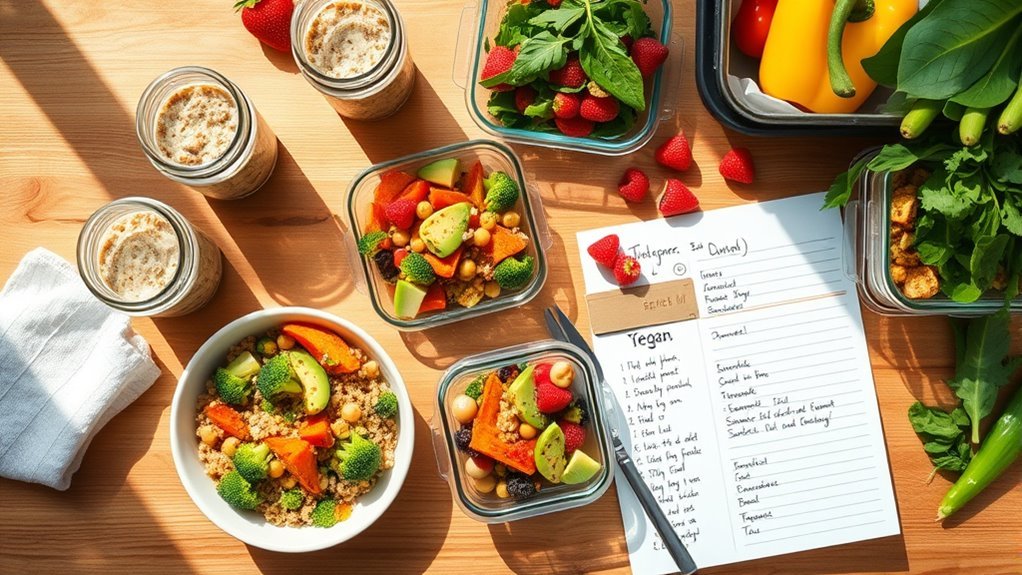
When you create a vegan meal plan, you make healthy eating simpler by ensuring you include a variety of nutrient-rich plant foods every day. This kind of planning helps you maintain balanced nutrition by systematically incorporating leafy greens, berries, and other nutrient-dense ingredients essential for a plant-based diet.
By mapping out your meals in advance, you avoid impulsive choices that might steer you toward less nutritious options. A clear meal plan also reduces decision fatigue, saves time, and keeps you consistent, making it easier to stick to healthy eating habits.
Plus, having a detailed shopping list from your meal plan minimizes the risk of grabbing processed foods at the last minute. Thoughtful meal planning also allows you to address specific nutrition needs, like ensuring you get enough B12, D3, and omega-3s through targeted plant-based sources or supplements.
How to Assess Your Current Diet Before Vegan Meal Planning
Before you dive into planning your vegan meals, spend a few days just paying attention to what you’re currently eating. Jot it down or use an app—whatever works for you. Then, take a look at your intake compared to nutritional guidelines. This way, you can spot any gaps or imbalances easily. Doing this will really help you make smarter choices and build a balanced vegan diet that fits your needs perfectly.
Tracking Current Food Intake
How well do you know your current eating habits? Tracking your food intake is a pivotal first step before switching to a vegan meal plan.
Use a food diary or a tracking app to record everything you eat and drink over several days. This helps you get a clear picture of your dietary habits, including your daily servings of fruits, vegetables, grains, proteins, and fats.
By analyzing your food patterns, you can spot reliance on processed foods, added sugars, or unhealthy fats. This detailed tracking also reveals nutritional gaps that you might need to fill with plant-based alternatives.
Regularly reviewing your logs empowers you to make practical adjustments, ensuring your progression to vegan eating is balanced and nutrient-dense.
Comparing Nutritional Guidelines
Why compare your current diet to nutritional guidelines? Doing so lets you see how your nutrient intake stacks up against established dietary recommendations. Start with a thorough dietary assessment by tracking your food intake for at least three days using tools like the VNutrition app or a food diary.
This helps you identify where your diet may fall short or exceed needs, especially regarding key nutrients like protein, vitamin B12, vitamin D, iron, calcium, omega-3 fatty acids, and iodine. Understanding these gaps allows you to tailor your vegan meal plan to include adequate plant-based nutrients.
Aligning your current diet with nutritional guidelines ensures your transition to a vegan lifestyle meets your body’s needs while emphasizing whole, nutrient-rich foods.
Identifying Dietary Gaps
Tracking your current diet gives you a clear picture of what you’re actually eating and where it might be lacking. Start with a dietary assessment by keeping a food diary for three days. Note portion sizes and food types using apps or paper logs.
Then, analyze your intake for nutrient gaps and food diversity, focusing on plant-based sources. Pay special attention to common nutrient deficiencies like vitamin B12, vitamin D, omega-3, and iron. This helps you identify what to include in your vegan meal plan.
| Step | Focus Area | Purpose |
|---|---|---|
| Food Diary | Record all foods | Capture accurate intake |
| Dietary Assessment | Compare to guidelines | Spot nutrient gaps |
| Analyze Food Diversity | Variety of foods | Ensure balanced nutrition |
| Identify Deficiencies | Key nutrients | Plan necessary supplements/foods |
Essential Nutrients Every Vegan Meal Plan Needs
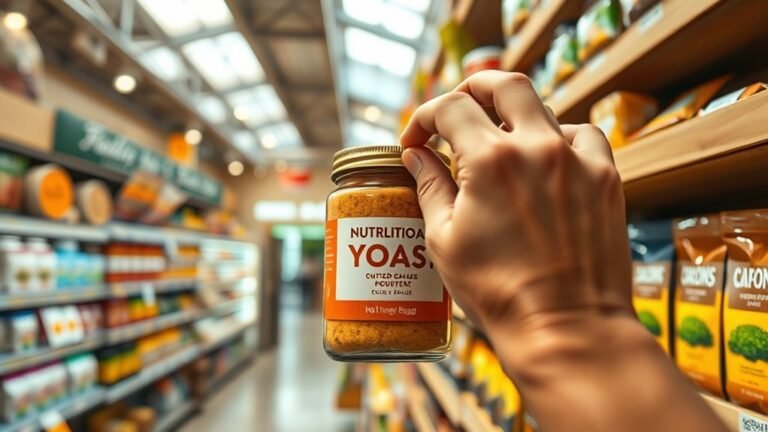
What key nutrients should you prioritize to keep your vegan meal plan balanced and healthy? First, verify you get enough vitamin B12, which isn’t naturally found in plants. You can find it in fortified foods or supplements.
Omega-3 fatty acids are essential for heart and brain health, so include flaxseeds, walnuts, or algae-based supplements. Iron from lentils, spinach, and fortified cereals is important, but pair these with vitamin C-rich foods to boost absorption.
For strong bones, calcium is vital; rely on fortified plant milks, leafy greens, and tofu. Ultimately, vitamin D supports calcium absorption and immune function, but since sunlight exposure varies, you may need supplements or fortified foods.
Planning Weekly Meal Themes for Simplicity
Once you’ve nailed down the key nutrients to keep your vegan meals balanced, organizing your week around meal themes can make sticking to your plan much easier. Meal themes provide a clear structure, so you won’t waste time deciding what to cook each day. They also support consistency, which is essential for effective weekly planning and meal prep.
Organizing your week with meal themes simplifies cooking decisions and boosts consistent, effective meal planning.
To get started, consider these ideas:
- Assign days to specific cuisines or dishes, like “Pasta Monday” or “Taco Tuesday,” to simplify grocery shopping.
- Rotate themes seasonally to keep your meals exciting while using fresh, in-season ingredients.
- Batch cook ingredients related to each theme to speed up meal prep and minimize food waste.
Creating Flexible Meal Blocks for Breakfast, Lunch, and Dinner
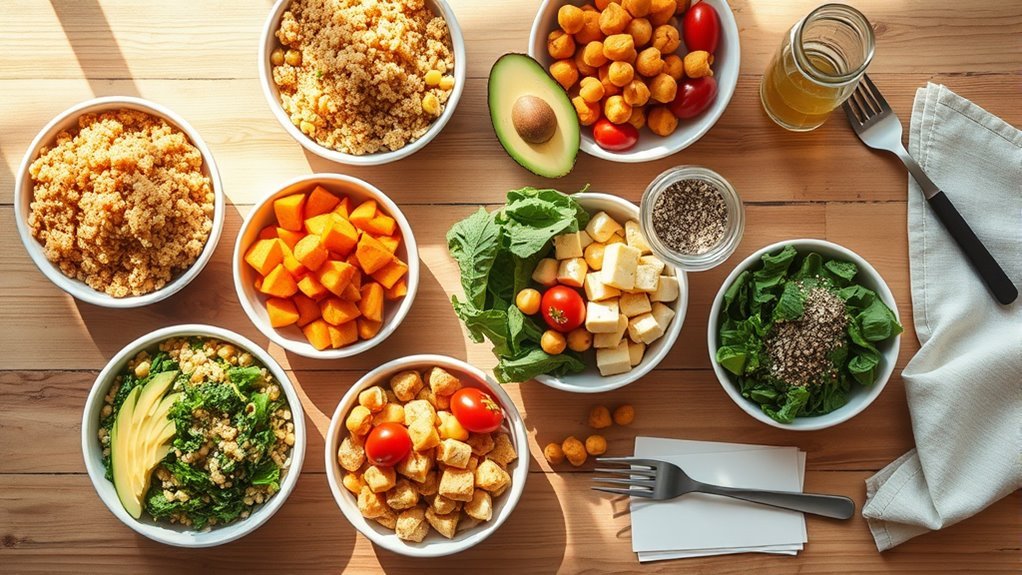
You can make your day easier by creating flexible meal blocks for breakfast, lunch, and dinner using core ingredients that go well together. Just focus on building balanced meals with a good mix of grains, veggies, and plant-based proteins to keep things nutritious and satisfying.
This way, you’ll save time and can easily swap ingredients depending on what’s fresh or what you’ve got in your kitchen. It’s a simple approach that keeps your meals interesting without any extra hassle.
Flexible Meal Block Ideas
Although meal planning can feel overwhelming, creating flexible meal blocks for breakfast, lunch, and dinner helps you streamline choices and reduce decision fatigue. By grouping similar ingredients and cooking methods, you simplify food prep and boost ingredient versatility.
This approach makes batch cooking easier and improves your overall meal planning.
Here are three flexible meal block ideas:
- Bowl Day – Combine grains, veggies, and plant-based proteins for customizable bowls.
- Pasta Day – Use different sauces and veggies to keep pasta exciting while using similar ingredients.
- Stir-Fry Day – Quickly sauté seasonal vegetables with tofu or tempeh for a nutritious, fast meal.
These blocks save time, reduce waste, and adapt easily to your preferences or seasonal produce.
Building Balanced Meals
How do you create meals that are both balanced and adaptable? Focus on combining whole foods like grains, legumes, and vegetables to guarantee nutrient diversity. Building balanced meals means crafting flexible meal blocks you can customize for breakfast, lunch, and dinner.
Batch cooking staples such as cooked grains and roasted veggies during meal prep makes assembling meals quick and efficient. Adding flavor with onions, garlic, and spices keeps your meals exciting and satisfying.
Here’s a simple template to guide your meal planning:
| Meal | Whole Grains | Greens & Veggies |
|---|---|---|
| Breakfast | Oats or quinoa | Spinach or kale |
| Lunch | Brown rice | Mixed salad greens |
| Dinner | Barley or millet | Roasted broccoli |
Use this framework to maintain nutrient diversity and enjoy balanced meals every day.
Customizing Your Vegan Meal Plan to Your Preferences
When tailoring your vegan meal plan, selecting foods that match your taste preferences, dietary needs, and cultural traditions makes it easier to stick with and enjoy. Customization lets you create meals that truly satisfy you while meeting your nutritional goals.
Focus on variety by including diverse plant-based proteins, grains, fruits, and vegetables to keep your diet balanced and exciting. Adjust portion control according to your energy needs and lifestyle for sustained satisfaction.
Incorporate diverse plant-based foods and tailor portions to your energy needs for a balanced, enjoyable diet.
Here’s how to customize your plan effectively:
- Replace ingredients you dislike or are allergic to with alternatives that suit your dietary preferences.
- Incorporate your favorite flavors, spices, and culinary styles to make meals enjoyable and flavorful.
- Balance portion sizes and meal frequency based on your daily activity and hunger cues to avoid overeating or underfueling.
Tips for Efficient Vegan Shopping and Meal Prep
Efficient vegan shopping and meal prep save you time, money, and stress during the week. Start by creating a detailed grocery list based on your weekly meal plan to avoid impulse buys and guarantee you get all essentials.
Focus on bulk staples like grains, beans, and frozen produce. They’re budget-friendly and versatile. Cooking large batches of rice, lentils, and roasted veggies in advance lets you assemble meals quickly without scrambling.
Don’t overlook frozen fruits and vegetables. They extend shelf life and keep your meals nutritious and affordable. Organizing your kitchen so frequently used ingredients are easy to find speeds up meal prep and cuts down on frustration.
How to Track Progress and Adjust Your Vegan Meal Plan
Keeping your vegan meal plan on track means regularly checking in on how well your food choices meet your nutritional needs. Tracking progress helps you spot where your plan hits the mark or falls short, guiding necessary meal plan adjustments. Use feedback from your body and health markers to guarantee your plan supports your well-being.
Regularly assess your vegan plan to ensure it meets your nutritional needs and supports overall well-being.
Stay flexible to adapt based on seasonal foods, tastes, or new nutritional info. Here’s how to keep your plan effective:
- Review your food diary or tracking app weekly to check if you’re meeting nutritional goals like protein, iron, and B12 intake.
- Compare your actual meals with your plan, adjusting portions or food choices to fix gaps or excesses.
- Listen to your body’s feedback, like energy levels and health signs, to decide if further meal plan adjustments are needed.
Frequently Asked Questions
How Do I Handle Dining Out While Following a Vegan Meal Plan?
When dining out, use restaurant tips by checking menus online to plan your order. Navigate the menu carefully, looking for vegan options or dishes that allow easy ingredient substitutions. Don’t hesitate to ask about dietary restrictions; most places accommodate you.
Use social strategies by informing friends or hosts about your needs, making dining more comfortable. Being proactive helps you enjoy meals out without compromising your vegan meal plan.
Can a Vegan Meal Plan Support Athletic Performance and Muscle Gain?
Imagine lifting weights fueled by vibrant veggies instead of heavy meats. Yes, a vegan meal plan can support athletic performance and muscle gain if you focus on protein intake and nutrient diversity.
You’ll want to nail meal timing and portion control to maximize energy and recovery. Sometimes, supplement needs like B12 or creatine help fill gaps.
With careful planning, you’ll build muscle and boost performance while enjoying plant-based power.
What Are Common Vegan Meal Plan Mistakes to Avoid?
You’ll want to avoid common vegan meal plan mistakes like neglecting meal prep, which leads to poor choices. Don’t stick to limited ingredient variety; it can cause nutrient gaps and boredom.
Skipping portion control often results in overeating or underfueling. Overlooking snack options leaves you hungry between meals, and ignoring meal timing can disrupt energy levels.
Plan thoughtfully to stay balanced and energized throughout your day.
How Do I Introduce Vegan Meal Planning to Picky Eaters?
You might think picky eaters will reject vegan meals, but with the right picky eater strategies, you can win them over. Use familiar food substitutions to ease the change and flavor enhancement tips like herbs and spices to excite their palate.
Employ gradual shift methods to avoid overwhelming them and sensory acceptance techniques to help them appreciate new textures. This approach turns skepticism into curiosity and makes vegan meal planning a shared adventure.
Are There Budget-Friendly Tips Specific to Vegan Meal Planning?
Yes, you can save money by focusing on affordable ingredients like beans, lentils, and rice. Buy plant-based staples in bulk to cut costs and try bulk cooking to prepare meals ahead.
Using seasonal produce not only boosts flavor but lowers prices. Incorporate meal prep tips like freezing portions for busy days.
These strategies help you stick to your budget while enjoying varied, nutritious vegan meals without breaking the bank.
Conclusion
Creating a vegan meal plan is like planting a garden. You start with the right seeds (nutrients), nurture them consistently, and watch your health bloom.
Just like 75% of successful gardeners track their plants’ progress, you’ll want to monitor your meals and adjust as needed. By planning thoughtfully and staying flexible, you’ll find that healthy eating isn’t a chore but a rewarding journey that nourishes both body and soul.