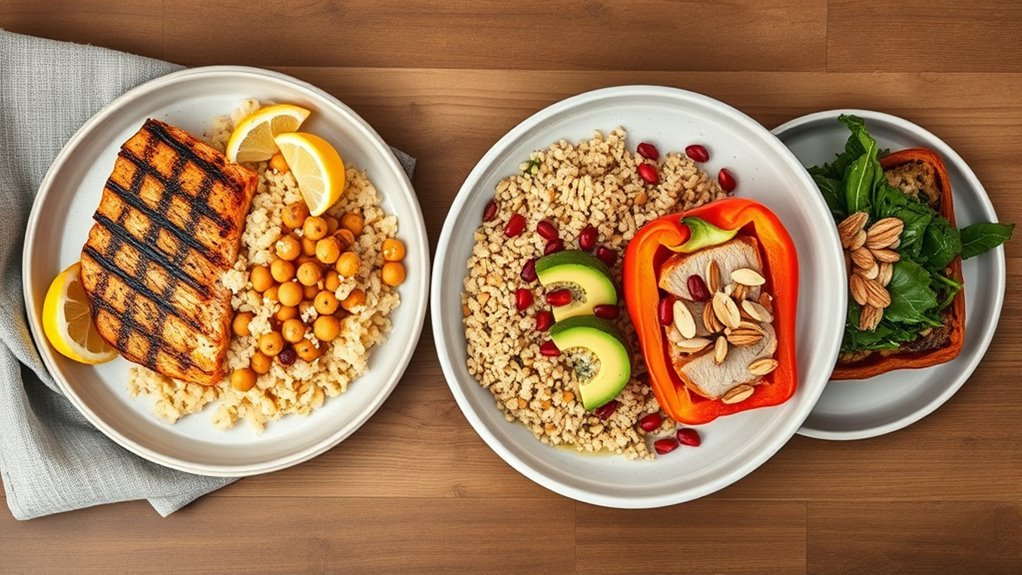
3 High Protein Anti-Inflammatory Meal Plans to Try
You can boost your energy and reduce inflammation by trying high-protein, anti-inflammatory meal plans. Focus on lean meats or plant-based proteins paired with fiber-rich vegetables to stabilize blood sugar and keep you full longer.
Quick options like lentil bowls, tofu stir-fries, and chickpea salads save time while packing omega-3s and antioxidants. Incorporate seeds like chia for added benefits.
Keep exploring these meal ideas to support your wellness and fuel your busy lifestyle.
Why Choose a High-Protein Anti-Inflammatory Meal Plan?
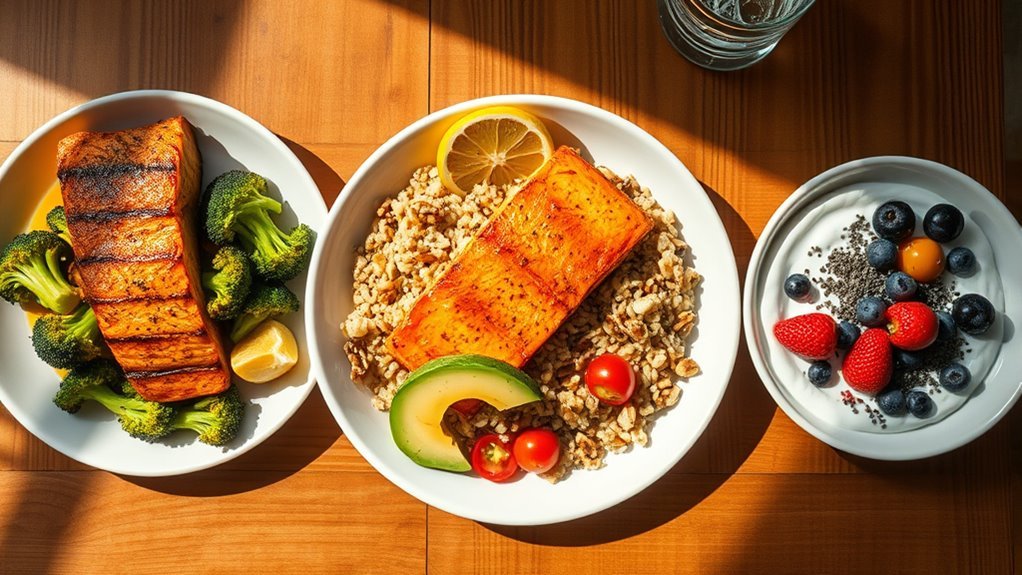
Although many diets claim to improve health, choosing a high-protein anti-inflammatory meal plan can directly reduce chronic inflammation linked to conditions like heart disease, diabetes, and arthritis. By focusing on nutrient-dense foods rich in protein and healthy fats, you’ll support your immune function and lower inflammatory markers such as CRP and TNF-α.
This approach often includes omega-3s from fatty fish, nuts, and seeds, which are powerful in fighting inflammation. Following a high-protein, anti-inflammatory meal plan helps you maintain muscle mass and promotes long-term health by stabilizing blood sugar and supporting weight management.
It’s more than just eating well; it’s about strategically selecting foods that combat inflammation at its root, improving your overall wellness. When you prioritize these choices, you’re actively reducing chronic inflammation and enhancing your body’s ability to heal and protect itself.
This meal plan is a practical, effective way to strengthen your health every day.
Protein-Rich Anti-Inflammatory Meal Plans for Energy and Satiety
When you focus on protein-rich, anti-inflammatory meals, you’ll notice sustained energy and reduced hunger throughout the day. Protein plays a key role in these meal plans by promoting satiety and supporting inflammation reduction.
Focusing on protein-rich, anti-inflammatory meals boosts energy and curbs hunger naturally throughout the day.
Including high-quality protein from lean meats and plant-based protein sources guarantees your muscles stay strong while curbing inflammation. Pairing these proteins with fiber-rich vegetables stabilizes blood sugar, preventing energy dips.
Here are three tips to optimize your meal plans for energy and satiety:
- Aim for at least 90 grams of protein daily from fish, poultry, beans, and yogurt to maintain consistent energy.
- Combine lean meats or plant-based protein with fiber-dense veggies to keep you full longer and reduce cravings.
- Choose nutrient-dense, protein-packed foods that support inflammation reduction and prevent processed snack temptations.
Plant-Based and Quick Anti-Inflammatory Meals for Busy Lifestyles
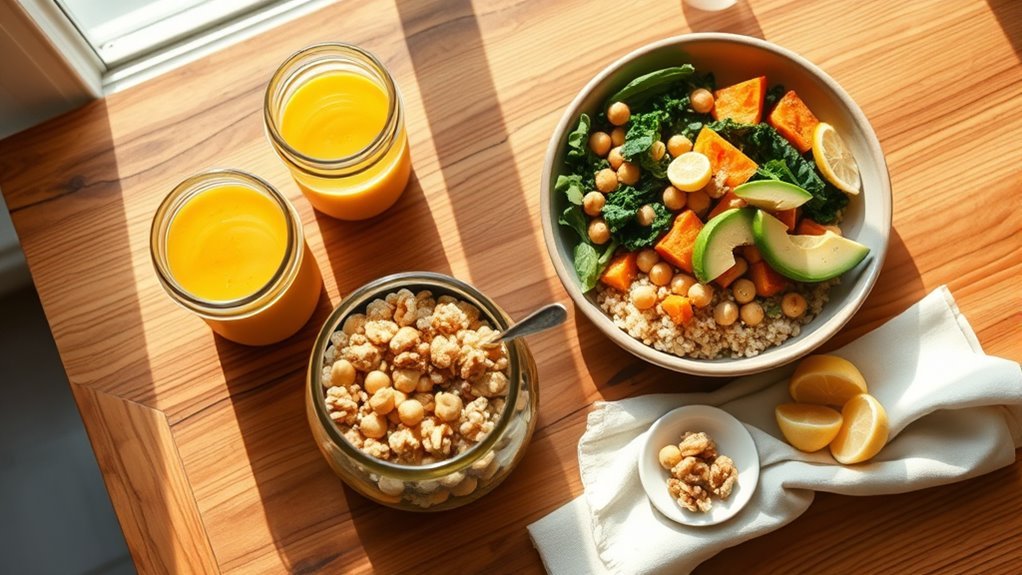
If you need quick, nutritious meals that fight inflammation, plant-based options like lentil bowls and tofu stir-fries deliver high protein and fiber without lengthy prep times. These vegetarian meals, rich in legumes and fiber, support gut health and reduce inflammation effectively.
You can prepare chickpea salads or stir-fries in under 20 minutes, perfect for busy lifestyles. Incorporating seeds such as chia and flaxseeds boosts your plant-based protein intake by about 5 grams per ounce and adds beneficial omega-3s.
To save time during meal prep, use pre-cooked legumes and frozen greens. They retain nutrients and speed up cooking. High-protein, anti-inflammatory plant-based meals provide sustained energy and support overall wellness without sacrificing flavor or convenience.
Frequently Asked Questions
How Do Anti-Inflammatory Foods Affect Workout Recovery?
Anti-inflammatory foods speed up your workout recovery by reducing muscle soreness and inflammation. When you focus on fiber intake and antioxidant levels, you enhance gut health and immune support, which aids healing.
Omega-3 benefits reduce joint pain, while vitamin synergy improves nutrient absorption. Paying attention to nutrient timing and hydration effects optimizes your metabolism boost.
Avoiding food sensitivities prevents flare-ups, letting your body recover faster and feel stronger after workouts.
Can Dairy Cause Inflammation in Some People?
Yes, dairy can cause inflammation in some people, especially if you have a dairy allergy, lactose intolerance, or casein sensitivity. Milk consumption may trigger inflammatory reactions, and processed dairy like certain cheeses or butter could worsen this.
However, yogurt often offers benefits due to probiotics. If you notice issues, try dairy-free alternatives to reduce inflammation and support your recovery and overall health.
What Are the Best Spices for Reducing Inflammation?
Spices soothe and support! You’ll find turmeric benefits in its powerful anti-inflammatory compound curcumin. Ginger properties reduce swelling and ease pain. Cinnamon effects help regulate blood sugar and fight inflammation.
Clove health stems from antioxidants, while black pepper boosts turmeric’s impact. Cayenne benefits include pain relief, and cardamom uses ease digestion.
Nutmeg advantages calm inflammation, saffron qualities uplift mood, and coriander impact lowers inflammatory markers. Add these spices to feel fantastic!
How Much Protein Is Ideal per Meal for Inflammation Control?
You should aim for about 20-30 grams of protein intake per meal to support inflammation control. Spreading protein evenly through meal timing and meal frequency helps optimize protein absorption and maintains amino acid balance.
Focus on protein diversity by including various dietary sources like plant-based proteins, which aid in reducing inflammation markers. Practicing portion control guarantees you don’t overload, promoting better nutrient utilization and a balanced anti-inflammatory diet.
Are There Any Supplements That Support Anti-Inflammatory Diets?
Did you know omega-3 sources can reduce inflammation markers by up to 30%? Yes, anti-inflammatory supplements like omega-3s, herbal supplements, and antioxidant supplements offer great supplement benefits.
You should focus on natural anti inflammatories and pay attention to supplement timing for best results. Always prioritize supplement safety by consulting with a professional before adding dietary supplements to your routine.
This helps you manage inflammation effectively and safely.
Conclusion
By choosing a high-protein anti-inflammatory meal plan, you’re giving your body the fuel it needs to fight inflammation and keep your energy steady. Whether you prefer plant-based options or quick meals for your busy life, these plans are like a shield, protecting your health while satisfying your hunger.
So, don’t wait. Embrace these delicious meals and watch your well-being soar to new heights every day!