What Is a Food Processor Used For?
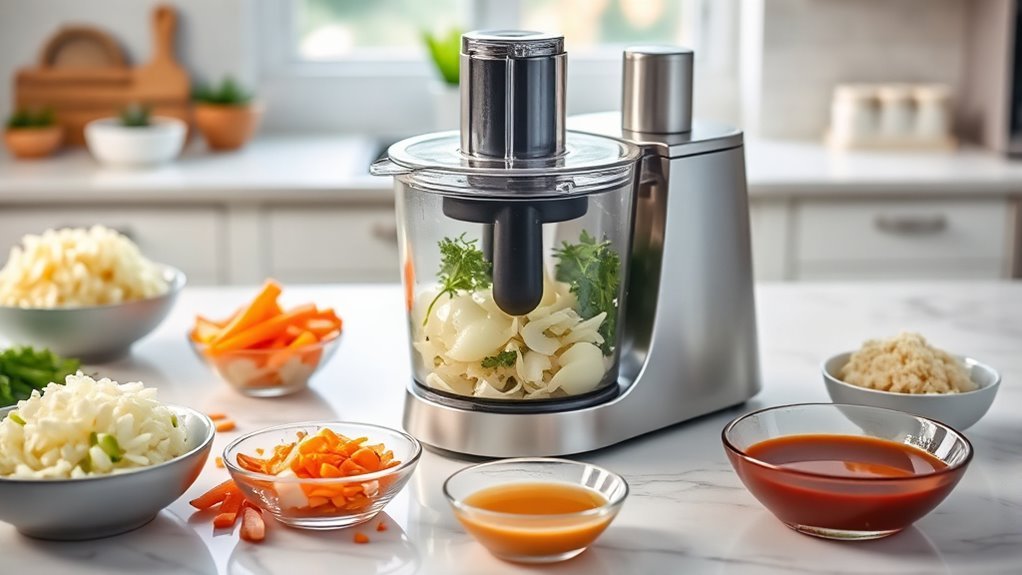
You use a food processor to chop, slice, shred, grind, and mix ingredients quickly and evenly, making meal prep faster and more consistent. It handles everyday tasks like chopping vegetables or grating cheese with ease, and even is great for mixing dough or pureeing soups.
With various blades and speed settings, you can customize texture and save time. If you want to explore more ways to boost your kitchen efficiency and creativity, there’s plenty more to uncover.
Why a Food Processor Is Essential in Modern Kitchens
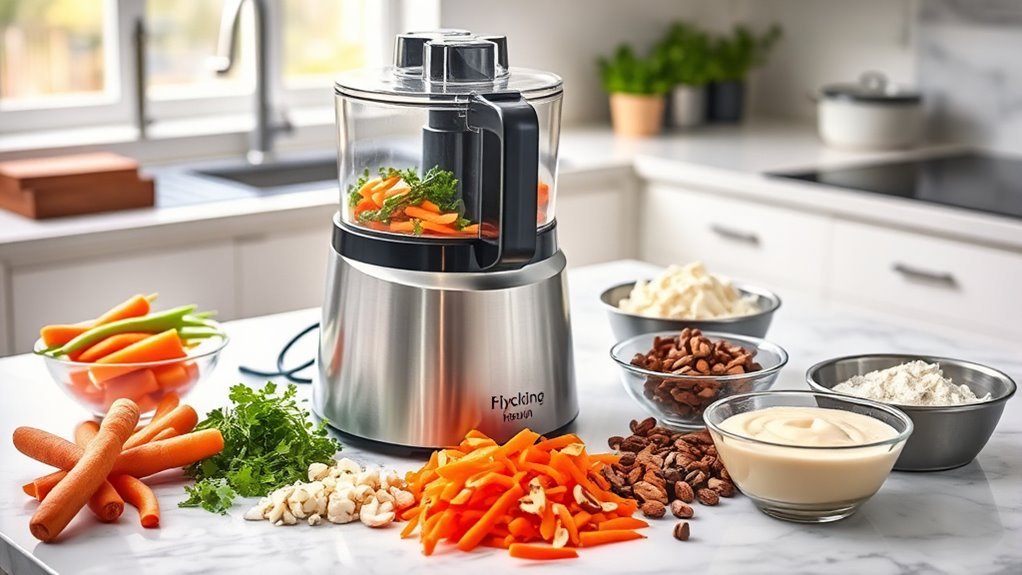
You’ll often find that a food processor becomes your kitchen’s most reliable helper, speeding up repetitive tasks like slicing, chopping, and shredding with ease. When you’re chopping veggies, it cuts down the effort and mess, letting you prepare ingredients faster and more uniformly than by hand.
A food processor quickly handles slicing, chopping, and shredding, making meal prep faster and neater.
This not only streamlines your cooking but also helps make your life easier by handling tedious kitchen chores quickly.
Beyond chopping veggies, a food processor can puree soups, grind nuts, and mix dough, adding versatility to your prep work. Its ability to manage multiple tasks means you can rely on it for various recipes without switching tools constantly.
Since its introduction to home kitchens in the 1970s, it’s become essential because it consistently delivers precise results and saves energy. Using a food processor, you’ll enjoy smoother meal prep, making your everyday cooking more efficient and less stressful.
How Food Processors Save Time on Meal Prep
Beyond versatility, food processors dramatically cut down the time you spend on meal prep. When you use a food processor, you streamline tasks that usually take up a lot of your time. Here’s how you make a food processor work for you:
- Quickly slice, chop, mince, or shred vegetables with consistent results, eliminating repetitive manual effort.
- Effortlessly grate cheese, puree soups, or prepare baby food, so you spend less time standing at the counter.
- Speed up multi-step recipes by mixing sauces, chopping nuts, or kneading dough in minutes instead of hours.
Basic Food Prep Tasks You Can Do With a Food Processor
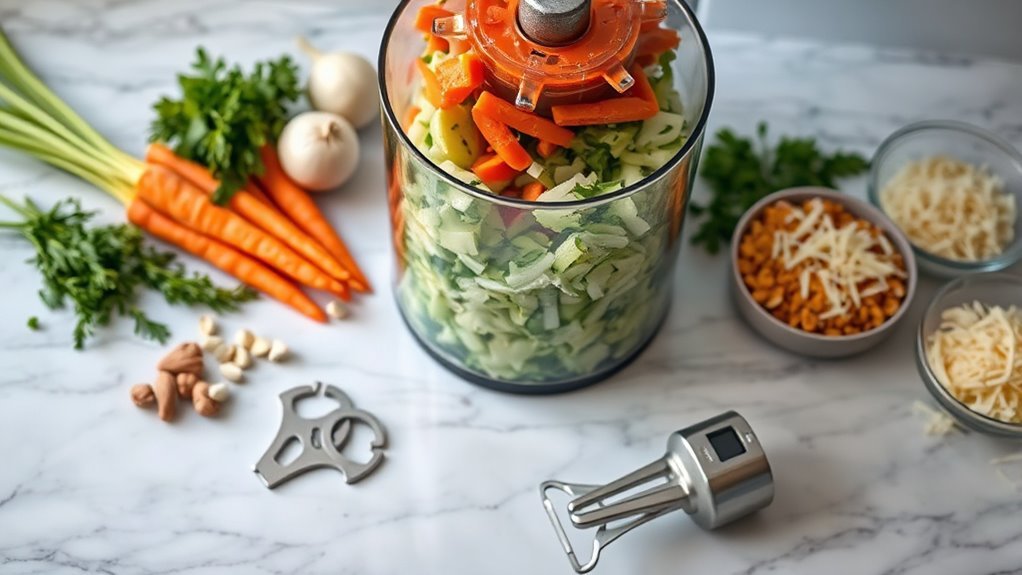
You can use your food processor to quickly slice and chop vegetables, which makes prep faster and the pieces more uniform. It’s also perfect for shredding cheese evenly or grating veggies for salads and casseroles. Plus, if you have the right blade, you can grind nuts and even cooked meat, saving you time and effort.
Vegetable Slicing And Chopping
Although chopping and slicing vegetables by hand can be time-consuming, a food processor speeds up these tasks with interchangeable blades and discs. You can make food prep easier and faster with this versatile kitchen tool.
Here’s how a food processor helps you handle vegetables efficiently:
- Quickly slice onions, carrots, and cucumbers into uniform pieces, saving you prep time.
- Mince vegetables evenly by pulsing in short bursts, perfect for sauces and salsas.
- Chop large batches of vegetables consistently, ideal for meal planning and bulk cooking.
Using a food processor to make food prep smoother lets you focus more on cooking and less on tedious chopping. It’s a smart way to speed up your kitchen routine while ensuring even cuts for better cooking results.
Cheese Shredding And Grating
Handling cheese with a food processor can save you a lot of time compared to shredding or grating by hand. By using the right shredding or grating disc, you can quickly make consistent cheese shreds perfect for even melting in lasagna, tacos, or gratins.
The processor lets you control the size, producing anything from snowflake-fine to chunkier shreds depending on the disc and processing time. Chilling firm cheese slightly before processing helps achieve cleaner cuts and reduces clumping.
Plus, the food processor can handle repetitive grating in steady batches, cutting your effort greatly. You can also use it to grate hard vegetables like carrots alongside cheese, making it easy to prepare toppings, slaws, or mixed bases efficiently and uniformly.
Nut And Meat Grinding
When you need to grind nuts or mince meat quickly and evenly, a food processor becomes an invaluable tool. It helps you save time during vegetable prep and even assists with sauce emulsifying by finely chopping ingredients. Here’s how you can put it to work:
- Pulse nuts to your desired texture for dessert crusts, coatings, or toppings without turning them into paste.
- Process roasted nuts continuously to create smooth homemade nut butters.
- Use short pulses to mince meat evenly for burgers, meatballs, or stuffing.
Remember to choose the right blade and work in batches to avoid coarse or pasty results. Grinding dried fruit this way also gives you a sticky texture perfect for baking. Your food processor is truly versatile for various basic food prep tasks.
Baking and Dough Mixing With a Food Processor
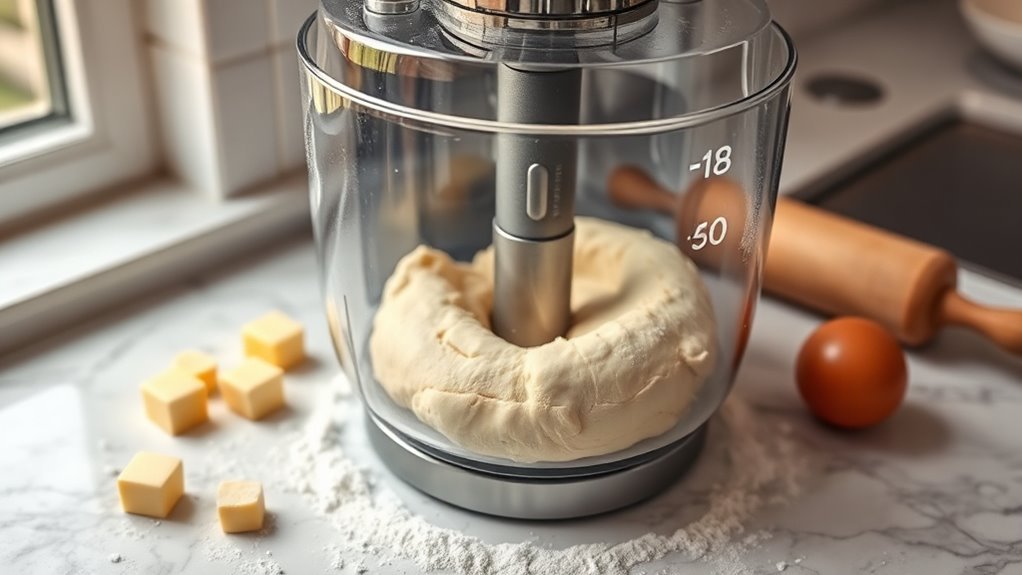
With a food processor, you can mix pizza dough and other baking doughs quickly and evenly, cutting down on manual kneading. The processor helps maintain the ideal dough temperature, which is vital for proper yeast activation and fermentation.
By pulsing the dough just right, you control gluten development without overworking it. This is key in baking science for achieving the perfect texture. It also guarantees even dough hydration by thoroughly combining water and flour, which speeds up kneading techniques and produces consistent results.
Using the right blade, you can incorporate nuts or dried fruit uniformly into your dough or batter, enhancing flavor and texture. Plus, a food processor streamlines repetitive mixing steps, saving time and effort.
Whether you’re preparing bread, pizza, or pastries, this tool makes the entire dough-mixing process more efficient and precise. It lets you focus on perfecting your baking skills.
Fun and Creative Food Processor Uses
Although you might think of food processors as just tools for chopping or mixing, they actually open up a world of fun and creative possibilities in the kitchen. With a little imagination, you can use your processor for recipe prep hacks that save time and elevate your meals. Here are three exciting ways to get started:
Food processors unlock creative kitchen hacks that save time and elevate your meals with ease.
- Healthy snack making becomes effortless when you chop dried fruit or grind nuts and seeds to create your own snack mixes or baking add-ins.
- Whip up creative kitchen toppings by processing nuts, seeds, or herbs into textured blends that add flavor and crunch to salads, soups, and more.
- Spiralize vegetables into fun, fresh veggie noodles that you can toss with your favorite sauce for a light, nutrient-packed meal.
Making Nut Butters and Sauces With Your Food Processor
You’ve already explored how a food processor can help create tasty snacks and unique toppings, but it’s also perfect for crafting homemade nut butters and sauces. Start by grinding nuts—chop them first, then process until the oils release, creating a smooth, spreadable butter.
You can adjust the texture by pulsing for chunkier spreads or blending longer for creamy results. The same technique applies to seeds and dried fruits, giving you control over thickness and consistency.
For sauces, your food processor excels at making emulsions like homemade pesto. Begin by processing aromatics like garlic and herbs, then gradually add oils and other ingredients for a perfectly blended sauce.
Using pulse mode helps you control texture, whether you want a chunky salsa or a silky dressing. This approach reduces manual effort and delivers consistent, quick results every time you make nut butters or sauces.
How to Choose the Best Food Processor
When you’re picking out the best food processor, the first thing to think about is the bowl size. You want something that matches what you usually cook—nothing too big or too small. Then, take a look at the blades and attachments it comes with. It’s important they can handle slicing, shredding, and chopping, so you’re covered for all your kitchen tasks. Oh, and don’t forget to check the motor power and speed settings. You’ll want a machine that can easily manage everything from soft veggies to tougher dough.
Capacity And Size
When selecting a food processor, consider how much you usually prep at one time to select the right capacity. Small bowls (3–4 cups) suit quick tasks like chopping nuts, while mid-size (5–7 cups) handle everyday meals. For larger batches or family cooking, opt for a bowl over 8 cups to avoid multiple runs.
Keep these points in mind:
- Measure your counter space and ensure counter clearance to fit the processor comfortably.
- Check the bowl size against the max-fill line to prevent motor strain and uneven chopping.
- Look for models with smart blade storage and attachment organization to keep everything tidy and accessible.
Choosing the right size helps you prep efficiently without clutter or wasted effort.
Blade Types And Attachments
Although selecting the right food processor might seem overwhelming, matching blade types and attachments to your cooking tasks simplifies the decision. Start by checking blade compatibility. Many models come with an S-blade for chopping, mincing, and coarse puréeing, plus slicing blades for uniform cuts.
If you shred or grate often, look for reversible or interchangeable drum-style attachments. They improve chopping speed and consistency compared to hand grating. For dough, confirm the processor includes a kneading blade or dough function to develop texture effortlessly.
Also, review attachment kits carefully. Citrus blades, emulsifying discs, and multiple feed tubes help handle various foods with less prep and mess. Choosing the right blades and attachments ensures your processor fits your cooking style perfectly.
Motor Power And Speed
Consider the motor power and speed settings carefully to get the most out of your food processor. A strong motor (500–1000+ watts) handles tough ingredients smoothly, while variable speeds let you control texture precisely. To optimize performance, keep these points in mind:
- Choose a model with multiple speed settings and a pulse function to avoid over-processing and achieve consistent results.
- Match speed with the right blade or attachment for efficient chopping, slicing, or grating. This also helps prolong blade maintenance by reducing wear.
- Prioritize safety features and easy cleaning tips, like detachable parts and stable bases, to ensure safe operation and hassle-free upkeep.
Considering these factors helps you get both power and precision, ensuring your food processor works efficiently and lasts longer.
Tips for Maintaining and Cleaning Your Food Processor
To keep your food processor running smoothly and safely, always unplug it before cleaning. Carefully detach the blade and bowl to avoid cuts and prevent food from hardening on the edges. Rinse removable parts immediately after use, then wash them in warm, soapy water or place dishwasher-safe components in the dishwasher.
Never submerge the motor base. Instead, wipe it with a damp cloth and dry it thoroughly to avoid moisture damage. If food sticks, soak attachments for 10 to 15 minutes in warm water. Then scrub gently with a non-abrasive brush to protect the blade surfaces.
For safe storage, keep blades covered or store them in a protective container to prevent accidental cuts and protect the blades. Also, store the bowl and lid dry to reduce odors and avoid rust or buildup in seals. Following these steps helps prevent odors and extends your food processor’s lifespan.
Troubleshooting Common Food Processor Issues
A food processor can save you time and effort in the kitchen, but it may occasionally run into issues. When making troubleshooting, focus on these key areas:
- Safety switch checks: If your processor won’t start, ensure the bowl and lid are locked correctly. Most models won’t operate unless both the safety switch and locking mechanisms are fully engaged.
- Sealing ring leaks: If you notice leaking or loud vibrations, inspect the sealing ring. Make sure it’s clean, properly seated, and the blade assembly is correctly installed and undamaged.
- Motor overheating prevention: If the motor slows or bogs down, pulse in short bursts and avoid overloading with tough ingredients like nuts or dough. This helps prevent overheating and protects your processor’s motor.
Frequently Asked Questions
Can a Food Processor Replace a Blender?
Can a food processor replace a blender entirely? Not quite. You’ll find it great for chopping and creating thick sauces with perfect consistency, but when it comes to smoothie compatibility or crushing ice smoothly, a blender wins.
Food processors struggle with very liquid blends and require extra effort to achieve that silky texture. So, while a food processor handles many tasks, it won’t fully replace your blender for drinkable, smooth results.
Are Food Processors Safe for Kids to Use?
Yes, food processors can be safe for kids to use with strict supervision tips in place. You should always practice child safe operation by keeping sharp blades out of reach and using safety locks.
Involve your kids in supervised meal prep by letting them add pre-cut ingredients while you control the machine. Teach them to never touch moving parts and always wait for blades to stop. This keeps cooking fun and safe!
How Noisy Is a Typical Food Processor?
A typical food processor can be pretty noisy, often reaching 70–90 dB, especially when you’re using higher speed settings. Tasks like dough mixing or grain grinding make the motor work harder, increasing noise.
If you want to cut down on sound, try running it on lower speeds or choose a model with sound-dampening features. Also, make sure it’s stable on your counter to avoid extra rattling while processing.
Can I Use a Food Processor for Hot Ingredients?
Yes, you can use a food processor for hot ingredients, but you should let them cool to a warm safety temperature first. When making quick soups, blend in small batches with the lid vented to avoid splashing and pressure buildup.
Use quick bursts rather than continuous blending to protect your machine. After processing, follow proper cleaning tips to keep seals and blades in good shape, especially since heat can affect some parts.
What Attachments Come With Most Food Processors?
Most food processors come with chopping blades, slicing discs, and shredding attachments to handle a variety of tasks. You’ll often find multi-purpose chopping blades that chop, mince, or roughly slice ingredients.
Slicing discs let you create even, thin slices quickly. Shredding attachments help you grate cheese, vegetables, or zest citrus with ease. These basic attachments cover most everyday food prep needs, making your cooking faster and more efficient.
Conclusion
You’ve seen how a food processor can revolutionize your kitchen, saving you time and effort on everything from chopping veggies to whipping up dough. It’s like having a trusty medieval squire by your side, ready to handle the grunt work.
Whether you’re making nut butter or experimenting with new recipes, this tool is essential. Keep it clean, choose wisely, and don’t let common issues slow you down. Your culinary adventures await!