How You Grind Coffee Beans in a Food Processor
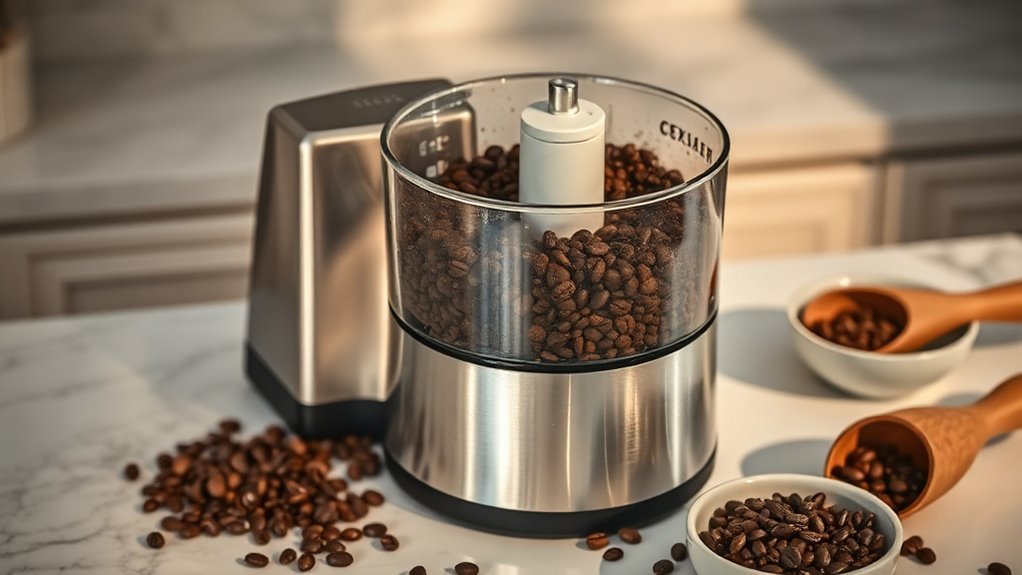
To grind coffee beans in a food processor, start with about 1 to 1.5 cups of whole beans. Add them gradually to avoid overcrowding.
Use the pulse setting in short bursts, shaking or stirring between pulses for an even grind and to prevent overheating. Keep the lid firmly closed to preserve aroma and freshness.
Adjust pulse lengths for your desired coarseness, whether coarse or medium-fine. Follow these steps, and you’ll find how to get a better grind and maintain your processor.
When To Grind Coffee Beans With a Food Processor
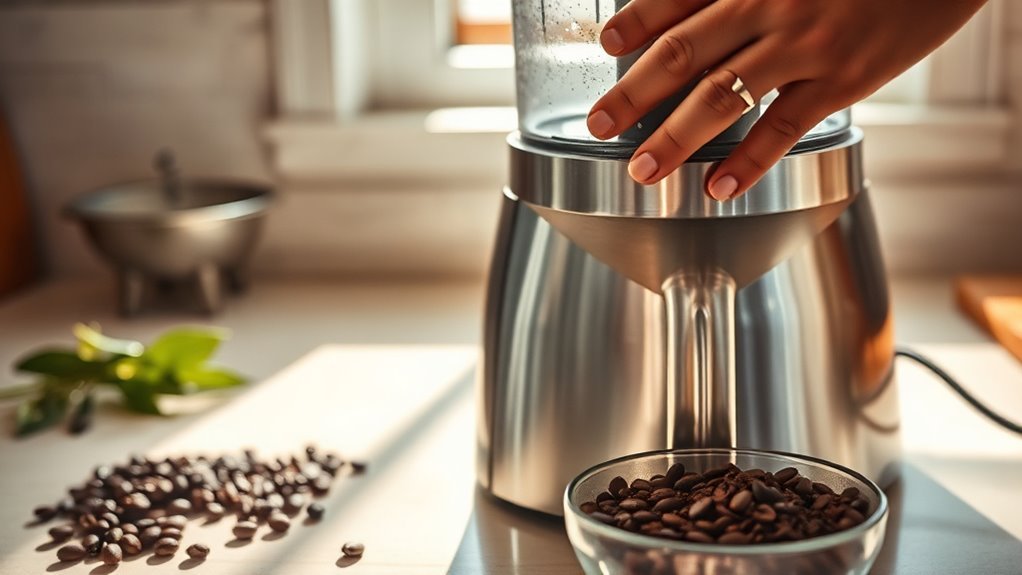
If you want the freshest coffee flavor, grind your whole beans in a food processor right before brewing. Pre-ground coffee loses its rich oils quickly as oxygen and moisture degrade the flavor, so grinding just before use preserves that vibrant taste.
When you grind coffee beans in a food processor, add about 1 to 1.5 cups of beans and use the pulse function. Shake or stir between pulses to avoid uneven chunks and control the grind size more precisely.
Shorter pulses create coarser grinds, while longer ones yield medium-fine textures ideal for methods like Aeropress or V60 filter brewing. This freshly ground coffee ensures efficient extraction, preventing watery or bitter brews.
To keep the flavor intact, grind only what you need immediately and avoid overheating by blending in short bursts. By timing your grinding this way, you maximize the full potential of your coffee’s aroma and taste.
Preparing Coffee Beans for Food Processor Grinding
To get the best results by ensuring grinding coffee beans in your food processor, start by selecting whole beans and measuring about 1 to 1.5 cups per batch. This amount gives enough space for even chopping without overcrowding.
Start with whole beans and measure 1 to 1.5 cups for even grinding in your food processor.
When preparing coffee beans for food processor grinding, add them gradually, a few at a time, since a food processor needs more beans than a blender to grind consistently around its wider circumference. Using the pulse setting is essential; grind in short bursts and shake the processor between pulses to avoid uneven chunks.
Remember, the grind texture changes with processing time. Short pulses yield a coarse to medium grind, while longer pulsing produces medium-fine grounds. For the best flavor, grind coffee beans at home in small batches right before brewing to prevent aroma loss caused by oxygen exposure and moisture.
Preparing your coffee beans this way ensures consistent results when grinding coffee using your food processor.
How To Grind Coffee Beans in a Food Processor
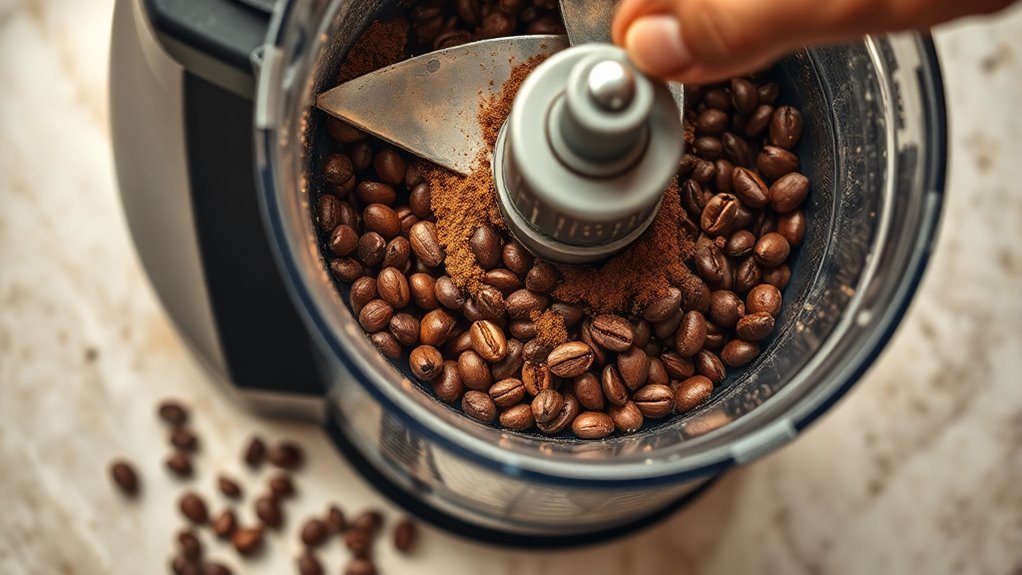
When you add 1 to 1.5 cups of whole coffee beans to your food processor, make sure to use the pulse setting and shake or stir between pulses for an even grind. This method helps you avoid overheating and ensures more consistent particle size.
Unlike a burr coffee grinder, which produces uniform grounds through a precise grinding process, a food processor chops beans unevenly, so grinding in small batches is essential. Add just a few beans at a time to improve texture control and avoid burnt or bitter flavors caused by friction heat.
Keep the lid firmly closed and use short pulses for coarser grounds or longer ones for medium-fine results. Remember to grind every batch immediately before brewing to lock in freshness and aroma.
With these tips, you can successfully grind coffee at home using your food processor, making it a convenient alternative when a burr coffee grinder isn’t available.
Getting the Right Grind Size With a Food Processor
Grinding coffee beans in a food processor requires careful attention to achieve the right grind size for your brewing method. You’ll want to use the pulse setting and shake the bowl between bursts to get control over the coarseness. Start with about 1 to 1.5 cups of beans.
For a French Press, aim for a coarse grind with a sea-salt-like texture. Drip or filter methods call for a medium grind resembling sand. Checking your grind after each pulse helps you maintain a uniform grind and avoid inconsistencies.
Keep these points in mind:
- Pulse in short bursts to prevent overheating and uneven grinding
- Add a few beans at a time for finer, consistent grounds
- Match grind size to your brew. Too coarse tastes watery; too fine tastes bitter
Mastering the grind size with a food processor ensures your coffee extracts just right. This balances flavor for every cup.
Tips for Preventing Overheating and Uneven Grinding
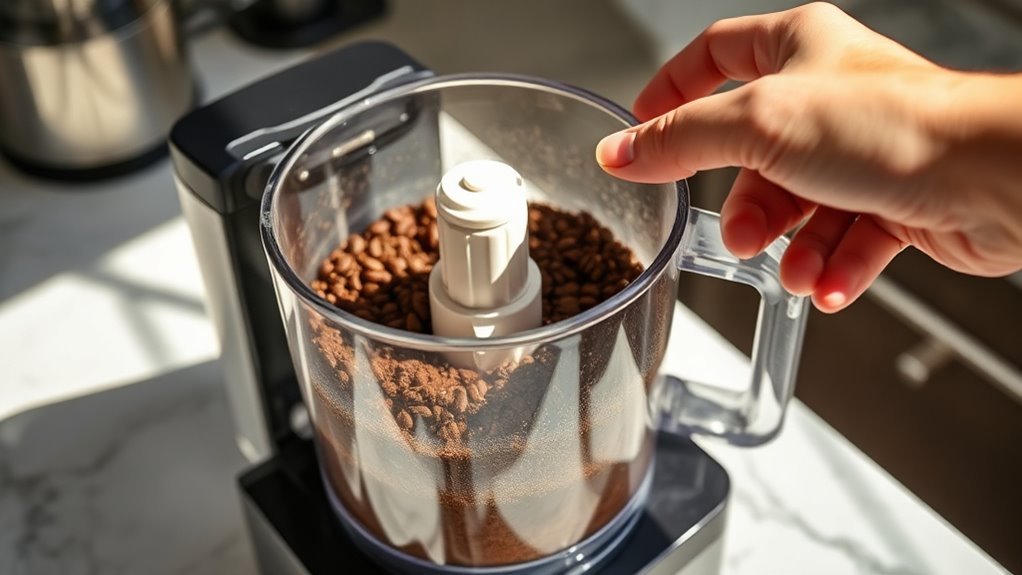
To prevent overheating and uneven grinding, try using short pulses instead of running the processor continuously. It’s a good idea to pause and stir the beans between pulses. This way, you keep the grind consistent and avoid those dull flavors and uneven particle sizes that can sneak in otherwise.
Short Pulses Technique
Although it’s tempting to hold the pulse button continuously, you’ll want to use short bursts instead to prevent the beans from getting too hot and developing a bitter taste. The short pulses technique mimics how burr grinders work by controlling grind size through brief, controlled bursts rather than a continuous grind.
Since a food processor’s grinder uses two blades, pulsing helps you avoid uneven heating and crushing of beans.
To get finer grounds without overheating too much, use medium-high pulses and stop frequently. Grind small batches, adding a few beans at a time. Keep the lid closed and shake between pulses for consistency.
This method ensures a uniform grind while preserving flavor, much like a burr grinder’s precision.
Evenness Through Stirring
Since uneven grinding can lead to inconsistent flavor extraction, you’ll want to make sure the beans are stirred between pulses to keep the particle size uniform. When you pulse in short bursts, pause to shake or stir the grounds so you avoid uneven chunks or a coarseness gradient.
This evenness through stirring replicates what manual grinders achieve naturally, helping you get a consistent grind suitable for various brewing methods. Remember to grind only 1 to 1.5 cups at a time to prevent overheating, which can cause bitterness.
If you see clumps or large pieces, add a few beans and pulse briefly instead of running the processor longer. Using this technique ensures your grounds are evenly processed, whether you’re aiming for espresso or drip coffee.
How To Clean and Maintain Your Food Processor After Grinding
After grinding, it’s important to clean the blade and removable parts carefully to stop coffee oils from building up. Just use warm, soapy water along with a soft brush to get rid of any stuck grounds, especially around the blade assembly.
Try to clean it right away and make sure to dry everything thoroughly. This helps keep odors from developing and makes sure your food processor stays fresh and ready for the next time you use it.
Cleaning Blade Components
When you finish grinding your coffee beans, unplug your food processor and carefully remove the blade for cleaning. Unlike dedicated types of coffee grinders, food processors typically have stainless steel blades that require thorough attention to maintain your coffee’s flavor profile.
Start by washing the blade in warm, soapy water, using a small brush to clear grounds lodged around the spindle and blade housing. Before washing, wipe the bowl, lid, and rubber gasket with a dry or slightly damp microfiber cloth to remove dry dust and coffee oils.
Use short pulses and avoid overfilling to minimize mess on the blades. Rinse thoroughly after washing to prevent residue buildup.
Let all parts air-dry fully, especially the spindle area, to maintain performance.
Preventing Odor Build-Up
To keep your food processor fresh, you should immediately run it briefly with a tablespoon of dry rice or coarse sugar right after grinding coffee beans. This simple step helps in preventing odor build-up by absorbing leftover oils and removing fine grounds.
Different types of coffee oils can cling to the bowl, lid, and blade areas, so clean these parts promptly with warm soapy water and a damp cloth. For stuck-on grounds, pulse the processor with warm water and dish soap rather than soaking, giving you complete control over cleaning without overheating.
Make sure all parts dry fully before reassembly to avoid moisture that traps stale smells. These minimal maintenance steps keep your food processor odor-free and ready for your next grind.
How Food Processor Grinding Stacks Up Against Other Coffee Grinding Methods
Grinding coffee with a food processor offers a practical alternative to traditional methods, but it comes with trade-offs in consistency and control. While conical burrs provide the perfect brew by crushing beans uniformly and allowing precise grind adjustments, a food processor tends to produce a mix of particle sizes. This inconsistency affects the extraction and flavor, especially if you’re aiming for a specific type of coffee or a coarser grind. However, it’s better than a standard blade grinder, especially when you pulse and shake between bursts.
Here’s how food processor grinding stacks up:
- Burr grinders: Deliver consistent grind size and control, ideal for fine-tuning your brew.
- Food processors: Offer a middle ground with moderate uniformity, but less precision.
- Blade grinders: Often produce uneven grinds and heat, risking burnt flavors.
Using a food processor can work well if you adapt your expectations and brewing style accordingly.
Common Food Processor Grinding Mistakes to Avoid
Using a food processor for coffee grinding can save time, but it also brings some common pitfalls that can affect your brew’s flavor and consistency. Read on to discover mistakes to avoid for the best results. First, don’t grind in long continuous runs. Pulse in short bursts with about 1/4 to 1/2 cup of beans to achieve even chunks and prevent overheating, which can cause a burnt taste.
Also, don’t overload the bowl; a moderate batch size around 1 to 1.5 cups works well to ensure proper coverage and uniform grinding. Consistency checks are key since particle size can vary. So, add a few beans at a time and pulse until you hit the texture you need.
Grinding with the lid loose or too early compromises aroma and grind uniformity. Using these tips gives you control over your coffee grind and helps you brew a better cup every time.
Frequently Asked Questions
Can I Grind Other Spices and Coffee Beans Together in a Food Processor?
You shouldn’t grind coffee beans and spices together due to grinding compatibility issues and flavor transfer risks. Combining them can lead to uneven spice ratios and inconsistent particle sizes, which hurts your brew.
If you must, use pulse techniques to control grinding time and grind spices separately first. Also, avoid oily or sticky spices to prevent residue buildup.
Always clean the processor thoroughly between batches to minimize flavor crossover.
How Long Does Ground Coffee From a Food Processor Stay Fresh?
Think of your ground coffee as a fleeting flame, bright and full of life but quick to fade. Once you grind in a food processor, you’ve got about a few hours to savor peak freshness.
Using an airtight storage container helps slow oxidation, but even then, the flavor dims fast. Grind size impacts how quickly oxygen dulls your brew, so finer grounds lose freshness sooner.
For the best taste, brew right after grinding.
Is It Safe to Use a Plastic Food Processor Bowl for Coffee Grinding?
Yes, you can safely use a plastic food processor bowl for grinding coffee if it’s food-safe and you control static by pulsing short bursts. Plastic safety matters. Avoid scratched or warped bowls to prevent contamination.
Be ready for odor retention since coffee oils cling to plastic. Clean thoroughly with warm, soapy water after each use. Limiting batch size and stopping if you notice heat helps maintain safety and preserve flavor.
Can I Use a Food Processor to Grind Flavored or Oily Coffee Beans?
Can you tame the oily beast of flavored coffee beans in your food processor? Yes, but it takes care. Use grind consistency tips like pulsing in short bursts and stirring between to avoid uneven chunks.
Manage flavor oil by keeping batches small and cleaning bowl residue immediately to prevent flavor carryover. Controlling static cling helps keep grounds where they belong.
With a little attention, you’ll master flavor oil management and get a solid grind every time.
Does the Brand of Food Processor Affect Coffee Grind Quality?
Yes, the brand of your food processor definitely affects grind consistency. Different motors produce varying amounts of heat, which can impact your coffee’s flavor by causing burnt notes.
You’ll also notice that blade maintenance and design influence how evenly your beans break down. Plus, static charge buildup varies between models, affecting how grounds cling inside the container.
Choosing the right brand helps you achieve a better, more uniform grind for your coffee.
Conclusion
Now that you know how to grind coffee beans with a food processor, you might wonder if it’s really worth it. Will you get that perfect, fresh grind every time?
If you follow the tips carefully, avoid overheating, and clean your processor well, you just might surprise yourself. But be warned, one wrong move could leave you with uneven grounds or a bitter brew.
Ready to put your skills to the test? Your perfect cup awaits.