5 Key Features to Look for in a Food Processor
You want a food processor with the right motor power, around 500 to 700W, to handle your kitchen tasks without strain.
Choose a capacity that fits your household, like 8 to 12 cups for smaller families or 14+ cups for batch cooking.
Look for versatile blades and attachments made of 304 stainless steel for durability.
Make sure it has safety features like overload protection and an intuitive design for easy use and storage.
Exploring these points further can help you pick the perfect model.
Choose the Right Motor Power for Your Food Processor
Selecting the right motor power for your food processor guarantees it handles your kitchen tasks efficiently without wearing out prematurely. If you belong to a medium-sized family, choosing a motor power in the 500–700W range works well for dough, nut butter, and meat grinding without overstraining the appliance. This range balances performance and durability for common kitchen needs.
You’ll want to check if your processor features an overload protector. This essential safety component prevents motor burnout if you accidentally overfill the bowl or the motor stalls. It’s a smart safeguard that extends your unit’s lifespan.
Keep in mind that larger bowls need stronger motors to maintain efficiency and reduce vibration. If you plan on frequent heavy use, look for a sturdy motor construction with a good cooling design. This combination guarantees your food processor performs smoothly and lasts longer even under continuous, demanding tasks.
Pick the Best Food Processor Capacity and Containers
Matching the right food processor capacity to your household needs guarantees efficient meal prep without waste or extra cleanup. For small families, an 8 to 12 cup bowl is ideal, while larger households or those who batch cook should opt for 14 to 16 cup units or more.
Choosing the right food processor size ensures efficient meal prep with minimal waste and cleanup.
Check the included containers. Models like the Glen 4052 come with a liquidizer, grinder, and chutney jar, so you won’t need extra purchases. When making peanut butter or chopping nuts, you’ll want the power and capacity to pulse a few times without overheating.
Look for features that prevent overflow, such as a central feeding tube and a specially designed spindle, especially with bigger bowls. Also, a compact accessory rack helps keep all containers and attachments organized and ready for use.
Choosing the right size and containers makes certain your food processor handles everything from delicate purees to thick peanut butter with ease.
Choose Versatile Food Processor Blades and Attachments
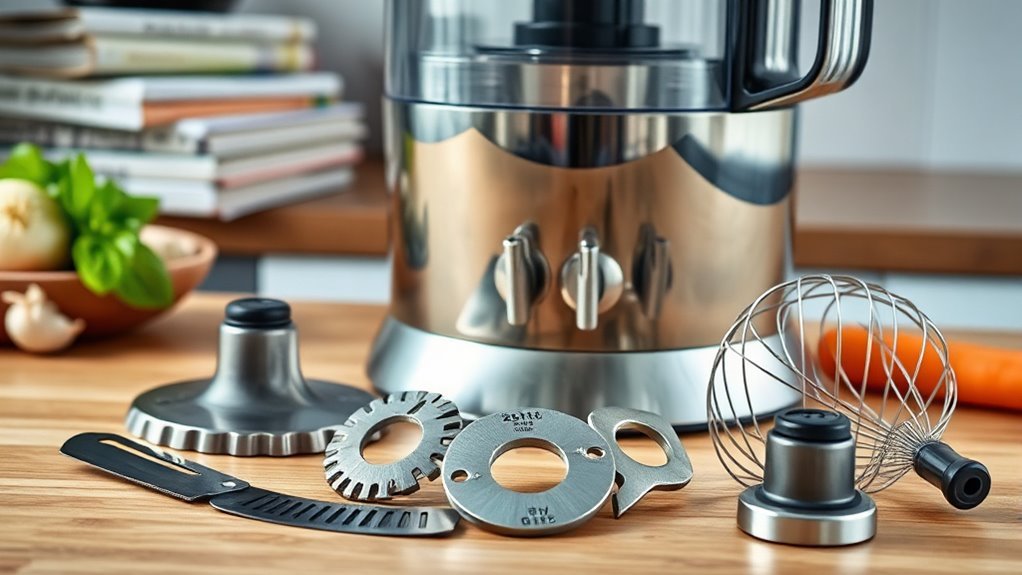
Once you’ve chosen the right capacity and containers, turn your attention to the blades and attachments that will truly expand your food processor’s capabilities. Focus on an S blade selection that includes a chopping blade for general tasks, plus a dedicated kneading blade for dough. This combination handles pureeing, chopping, and kneading efficiently.
For greater versatility, look for discs offering fine and medium slicing and shredding options. Up to six discs cover various prep needs like salads and gratings.
Make certain all blades and attachments are made from food-grade stainless steel, specifically 304 grade, to resist rust and stay sharp during heavy use. Also, verify attachment compatibility with your processor’s motor power to avoid wear or damage.
A well-matched set typically includes three jars (liquidizer, grinder, chutney), six discs, and the essential blades, so you won’t need extra purchases. Choosing versatile, durable blades and attachments guarantees your food processor meets all your kitchen tasks with ease.
Check Food Processor Safety Features and Overload Protection
Because food processors handle tough tasks, you need to prioritize safety features that protect both you and the appliance. Look for models with an overload protector mechanism like a thermal cutoff or circuit breaker that automatically shuts off the motor if it overheats or faces excessive load, preventing damage.
Make sure the motor power matches the processor’s capacity, typically 500–700W for medium-family units, to reduce the risk of overheating during heavy-duty jobs. Check that the food processor includes a visible reset switch or an easy-access fuse so you can quickly restart it after an overload without disassembling the unit.
Also, confirm the manufacturer provides clear duty cycle guidelines, detailing recommended continuous run times and necessary cool-down periods. Following these helps avoid overheating, especially when processing dense or sticky ingredients, ensuring safe and reliable operation every time.
Prioritize Food Processor Design, Ease of Use, and Storage

When selecting a food processor, focus on a compact, straightforward design that features a central feeding tube and a stable spindle to minimize vibrations and guarantee smooth operation. A compact layout not only saves counter space but also assures stability during processing.
Choose models with intuitive controls, simple speed selections paired with a pulse function, so you can easily achieve precise textures without confusion. Ease of use matters, so look for interchangeable discs and food-grade 304 stainless steel blades that fit effortlessly and clean up quickly.
Don’t overlook accessory storage. A built-in rack or compact storage solution keeps blades, discs, and jars organized and safe, preventing clutter and damage. By prioritizing design, you assure comfortable operation and efficient storage, making your food prep faster and tidier.
In short, a well-designed food processor with thoughtful controls and smart accessory storage will enhance your kitchen experience while maintaining a neat workspace.
Frequently Asked Questions
How Do Food Processors Compare to Blenders in Functionality?
You’ll find food processors give you better texture control thanks to their pulse function, letting you chop or shred precisely. They offer attachment versatility with discs and blades for slicing, grating, or kneading dough, which blenders usually don’t match.
While blenders excel at smooth purees, processors handle coarse or dense foods more efficiently. So, if you want varied textures and multifunctional use, a food processor’s pulse and attachments make it the smarter choice.
Can Food Processors Handle Hot Food Without Damage?
Think of your food processor as a delicate guardian, not a firebreather. It can’t handle intense heat tolerance. Hot foods risk thermal shock that cracks its plastic or glass.
Steam handling is vital. Without it, pressure builds, leading to leaks or motor damage. To protect your machine, always cool ingredients below 60°C. Pulse gently with hot soups, and let steam escape safely.
Treat it with care, and it’ll serve you well.
What Maintenance Is Required to Prolong Food Processor Lifespan?
To prolong your food processor’s lifespan, you’ll want to focus on blade sharpening to keep cuts efficient and safe. Replace gaskets regularly to prevent leaks and maintain a tight seal.
Always allow motor cooling by using the pulse function and taking breaks during heavy processing to avoid overheating. Clean parts promptly, dry blades carefully, and store attachments properly.
These steps help your processor run smoothly and last longer.
Are There Noise Level Differences Between Food Processor Models?
Wondering if motor noise varies between food processor models? Yes, it definitely does. Models with stronger motors often produce more noise, while those with sound insulation or rubber feet tend to run quieter.
Since manufacturers rarely provide decibel ratings, you’ll want to check user reviews or test the noise firsthand. Choosing a model with good sound insulation can make your kitchen experience much more pleasant, especially during heavy-duty tasks.
How Important Is Brand Reputation When Choosing a Food Processor?
Brand reputation is essential when choosing a food processor because it directly impacts brand perception and your overall satisfaction. You’ll want to check warranty importance since reputable brands often back their products with longer warranties, showing confidence in durability.
Customer reviews also give valuable insights into real-world performance and support. When you prioritize trusted brands, you reduce risks of poor quality and get better accessories, making your purchase smarter and safer.
Conclusion
Now that you know what to look for in a food processor, the real question is, are you ready to transform your kitchen game? Choosing the right motor power, capacity, versatile blades, safety features, and user-friendly design will make all the difference.
But don’t rush. There’s one final detail that could change everything. Ready to discover it and pick the perfect processor? Your culinary adventure is just about to begin.