When to Use Blender Versus Food Processor for 3 Key Tasks
You’ll want to use a blender for smooth soups, silky purees, stable emulsions, and crushing ice since its powerful motor creates velvety, lump-free textures.
Choose a food processor when you need chunky chopping, slicing, or dough prep because it handles thick, dry ingredients and larger batches better without over-processing.
Matching your appliance to the task and volume guarantees perfect results every time. Keep exploring for tips on getting the right texture and consistency with each tool.
When Should You Reach for a Blender? (Smooth Soups, Emulsions, and Frozen Drinks)
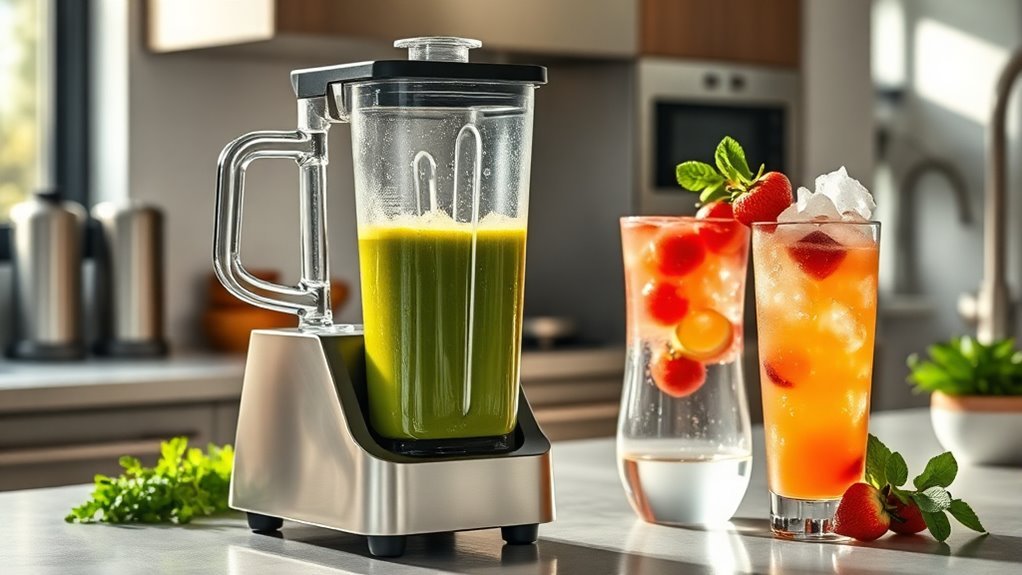
When you want a silky, lump-free texture in puréed soups like butternut or tomato, reach for a blender. Its blades and vortex incorporate more liquid and shear fibers better than a food processor. The powerful motor in a blender effortlessly creates smooth soups, ensuring an even, velvety consistency.
For silky, lump-free puréed soups, a blender’s powerful blades create smooth, velvety textures effortlessly.
You’ll also find a blender perfect for emulsifying vinaigrettes or hollandaise-style sauces. Its continuous high-speed motion produces stable emulsions without extra effort.
When it comes to frozen fruit, a high-powered blender is your best friend. Models with motors rated 1,000+ watts or labeled “ice crush” can break down frozen fruit and ice into fine, drinkable slush, ideal for smoothies or frozen cocktails.
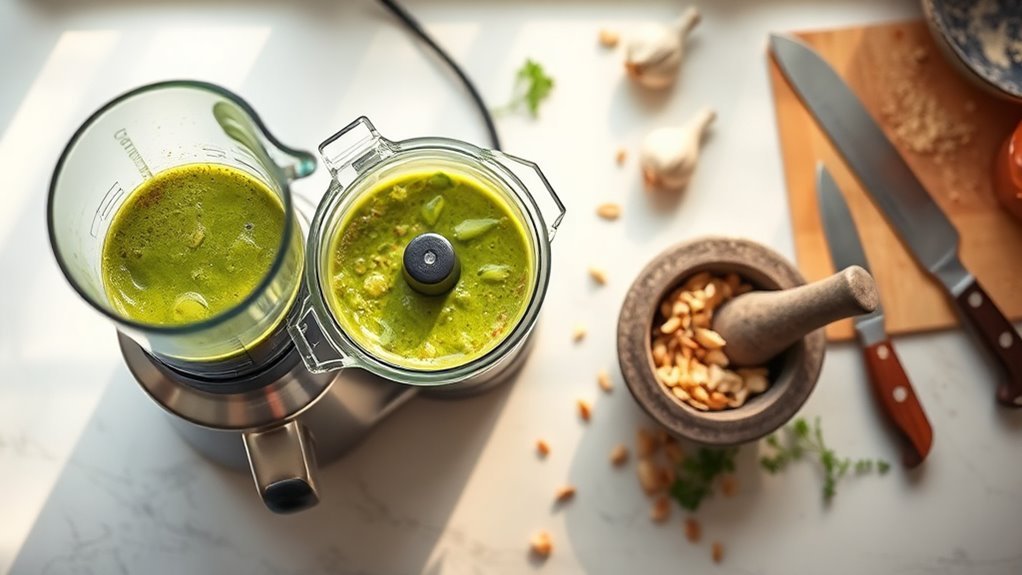
Furthermore, blenders excel at making creamy pestos, nut-based sauces, or hummus, delivering a luscious mouthfeel that a food processor can’t match. Whether whipping thin batters or blending liquids, the blender’s power offers smooth, aerated results every time.
How Texture and Batch Size Help You Choose Between Blender and Food Processor
Choosing between a blender and a food processor often comes down to the texture you want and the batch size you’re working with. For ultra-smooth results like silky nut butters or creamy hummus, a high-powered blender excels, pureeing ingredients thoroughly. On the other hand, if you prefer a coarser texture, the best food processor with a properly sized processor bowl gives you control over chunkiness.
Batch size matters too. Small amounts (under 1–2 cups) don’t process well in large bowls, causing uneven chopping or rattling. In those cases, a mini food processor or hand-chopping works better. When working with liquid-heavy mixtures, blenders handle the volume and emulsify efficiently, while food processors may leak or struggle.
Match the appliance and its capacity to your recipe’s texture and volume needs to get consistent, ideal results every time.
Why a Food Processor Is Best for Chunky, Dry Prep and Doughs

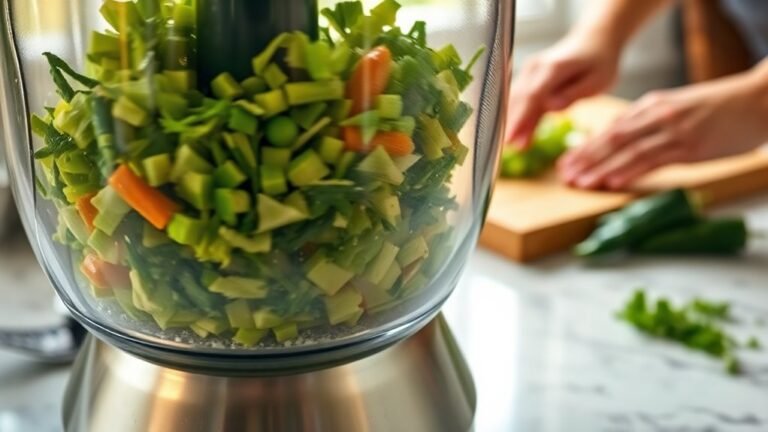
Because food processors use wide, flat bowls and sharp metal S-blades, they excel at quickly chopping chunky, dry ingredients like vegetables and nuts without needing extra liquid. You’ll appreciate the food processor’s pulsing function, which gives you precise control to keep textures chunky for salsas or coarse pesto. Blenders often overdo this by creating creamy results.
When it comes to doughs, a food processor shines by cutting cold butter into flour with short pulses, producing the pea-sized fat pieces that make flaky pie crusts or biscuits, all in under a minute. Plus, attachments and feed chutes let you grate cheese or slice veggies uniformly, tasks that demand dry friction not a blender’s liquid vortex.
Keep in mind, though, your processor needs ample counter space, and it handles larger batches best. Tiny amounts might not process well in the big bowl, so mini processors or hand chopping can be smarter for small jobs.
Frequently Asked Questions
Can I Use a Blender or Food Processor for Nut Milk?
Yes, you can use either a blender or food processor to make homemade nutmilk. For best results, soak your nuts for 6 to 12 hours to soften them.
A high-speed blender creates a smoother milk, while a food processor works but might be grainier. Add plant-based sweeteners like dates or maple syrup during blending for natural sweetness.
Remember to strain your nutmilk well for a creamy texture and enjoy your fresh, plant-based drink!
Which Appliance Is Easier to Clean After Heavy Use?
You might think food processors are easier to clean, but blenders actually win here. With fewer parts, sealed blades, and dishwasher-safe pitcher components, you spend less time on blade removal and scrubbing.
Food processors require careful sealing gasket care and often need hand-washing of blades and discs to avoid dulling. So, after heavy use, your blender saves you time and hassle, making cleanup much simpler and quicker overall.
Are There Safety Tips Specific to Blenders or Food Processors?
You should always use blade guards when handling blades to avoid cuts. Pay close attention to overfill warnings on both blenders and food processors to prevent spills or motor strain.
Keep cord management in mind. Make sure cords are untangled and away from wet areas to avoid electrical hazards. Remember never to operate these machines without their lids securely in place.
Always unplug them before cleaning or adjusting blades to stay safe.
Can Either Appliance Handle Hot Ingredients Safely?
You can handle hot ingredients safely with some blenders if you use proper venting methods to release steam and respect their temperature limits, usually around 212°F. Look for blenders made with heat resistant materials designed for hot liquids.
Food processors generally aren’t built for hot foods since their plastic bowls can warp and trap steam. To stay safe, always let ingredients cool slightly and never exceed your appliance’s recommended temperature limits.
How Do Power Ratings Affect Blender and Food Processor Performance?
When it comes to motor power, watt comparison tells you a lot. Higher wattage means your blender’s blade speed can cut through tough ingredients smoothly. Food processors rely on torque over speed to handle dense mixtures.
If your motor power is low, expect slower chopping or blending, like trying to run before you can walk. Choosing the right watt range guarantees you’re not spinning your wheels with underpowered gear.
Conclusion
Now you know when to grab your blender or food processor for the best results. Did you know 60% of home cooks prefer blenders for smooth soups and frozen drinks? That’s because blenders excel at creating silky textures and emulsions.
Meanwhile, food processors shine with chunky, dry prep and doughs. By considering texture and batch size, you’ll save time and get perfect results every time.
Keep these tips in mind and enjoy cooking like a pro!