How Is Nutritional Yeast Made in 5 Simple Steps
You start growing yeast on a sugar-rich medium, fueling rapid cell growth.
Next, you harvest the yeast by separating it from the liquid, creating a concentrated yeast cream.
Then, you deactivate the yeast with careful heat treatment to guarantee safety and stability.
After that, you fortify it with essential vitamins like B12 to boost nutrition.
Finally, the yeast is dried and packaged for freshness.
Keep exploring to uncover more about each step’s details.
Yeast Cultivation on Sugar-Rich Medium
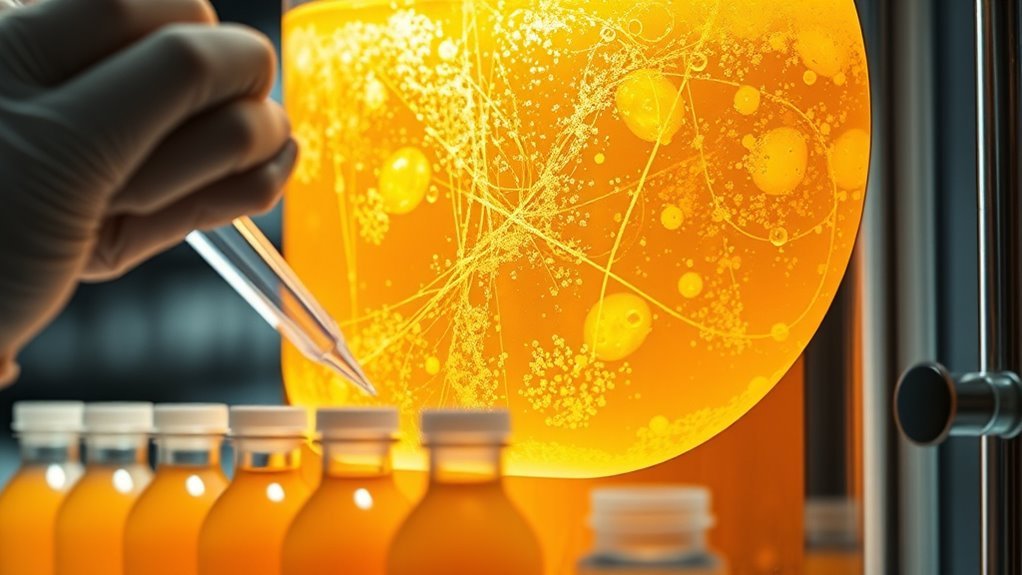
Although you might not see it, nutritional yeast begins its journey in carefully controlled fermentation tanks where *Saccharomyces cerevisiae* feeds on sugar-rich mediums, usually molasses from sugarcane or beets. This yeast cultivation relies on a nutrient-rich medium that supplies glucose, fueling the cellular metabolism essential for rapid biomass growth.
In these fermentation tanks, controlled fermentation conditions like oxygen levels, temperature, and pH are continuously monitored and adjusted to optimize yeast health and proliferation. As *Saccharomyces cerevisiae* consumes the sugars, it converts them into energy and new cells, expanding the yeast population efficiently.
This process guarantees a high-quality biomass suitable for further processing. After achieving the desired growth phase, the yeast is ready for yeast harvesting and then deactivated yeast processing to become the nutritional supplement you recognize.
Understanding this precise cultivation on a sugar-rich medium highlights the scientific care behind every batch of nutritional yeast you use.
Yeast Harvesting From Fermentation Tanks
Once the yeast has thrived in fermentation tanks, the next step is to separate it from the liquid culture. You begin the yeast harvesting process by transferring the mixture to a centrifuge, which spins at high speeds to efficiently collect the yeast cells.
This action forms a thick mass called yeast cream, which contains concentrated yeast from the fermentation process. You then wash the yeast cream with water to remove residual nutrients and by-products left from yeast cultivation. This guarantees a cleaner product before moving forward.
The harvested yeast cream is now ready for the next phase, preparing for deactivation and pasteurization, though those steps come later. At this point, the yeast harvesting focuses on concentrating and purifying the yeast cells from the fermentation tanks.
Yeast Deactivation and Safety Pasteurization
Before the yeast can become the nutritional supplement you recognize, manufacturers deactivate it through precise heat treatment. This yeast deactivation step uses a controlled pasteurization process that heats the yeast to specific temperatures, ensuring safety by killing any potential pathogens. This heat treatment stops yeast growth, creating inactive yeast that won’t ferment or leaven your food. The deactivation method also guarantees sterilization so the final product remains safe and stable for consumption.
During nutritional yeast production, the pasteurization process is carefully managed to protect heat-sensitive vitamins, preserving the nutritional quality you rely on. By applying just the right amount of heat, manufacturers maintain the balance between effective safety measures and nutrient retention. This step is essential to prevent spoilage and keep the sterile, inactive form of yeast that makes nutritional yeast such a reliable supplement.
Yeast Fortification With Essential Vitamins
After the yeast is safely deactivated and pasteurized, producers enhance its nutritional value by adding key vitamins. Nutritional yeast is often fortified with vitamin B12, a synthetic vitamin, because natural yeast can’t produce B12 on its own.
This fortification step occurs during the production process, where the vitamin is carefully mixed in after harvesting. The added nutrients are measured precisely to guarantee each serving provides a significant percentage of your daily B12 needs, often exceeding 700% of the recommended daily value.
This careful control maintains the stability and bioavailability of vitamin B12, so your body can absorb it efficiently. Fortified nutritional yeast is especially valuable as a dietary supplement for vegans and vegetarians, who might struggle to get enough B12 from plant-based foods alone.
Nutritional Yeast Drying and Packaging
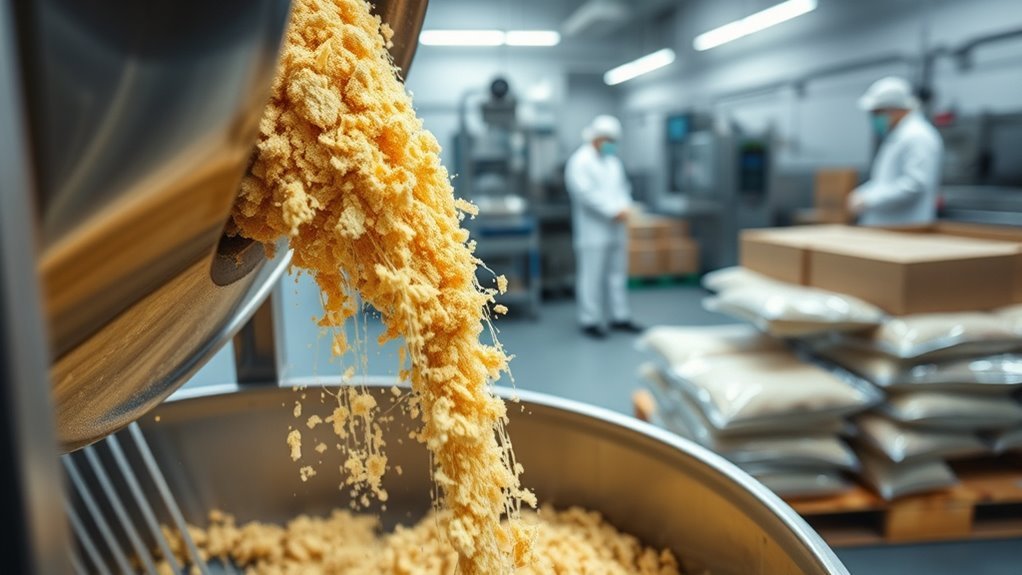
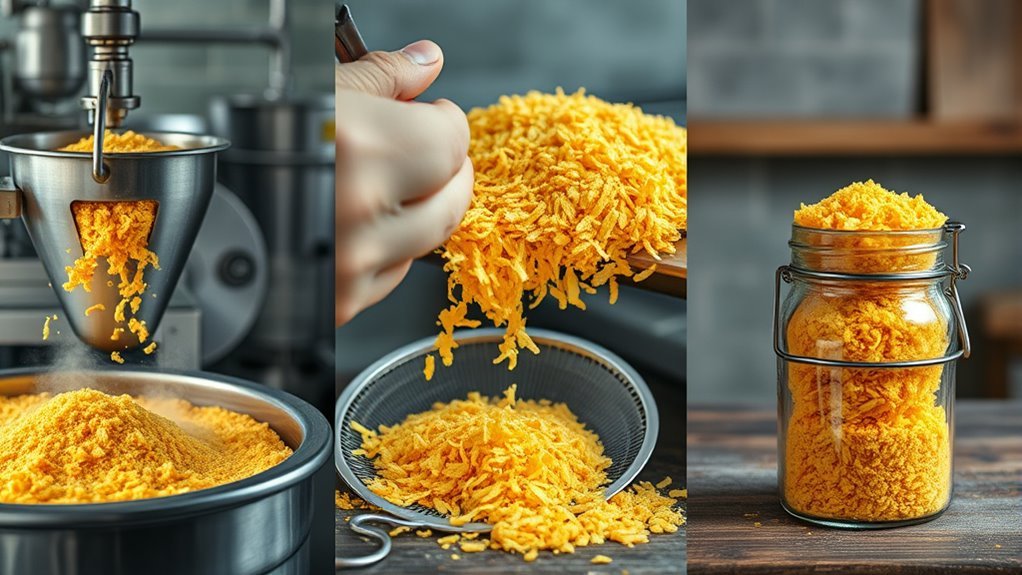
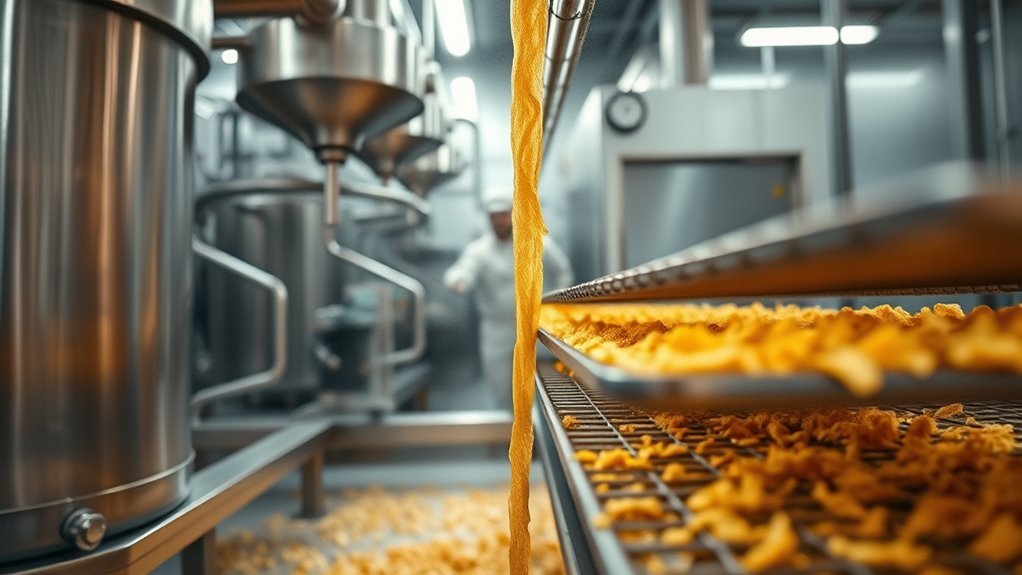
Two essential steps follow harvesting and pasteurizing the yeast: drying and packaging. You’ll dry the yeast cream using rotary dryers or vacuum filter dryers, transforming it into a shelf-ready, stable product. This drying process removes moisture, guaranteeing the yeast stays fresh and safe for consumption.
Once dried, you cut the yeast into different forms based on the intended use: flakes, for easy sprinkling or cooking; granules, offering a coarser texture; and powder, for smooth blending or baking.
Next, you move on to packaging. You seal the dried yeast in recyclable containers that provide moisture protection and prevent contamination. Proper packaging keeps the product fresh during storage at room temperature and prepares it for distribution. By carefully managing drying and packaging, you ensure the nutritional yeast maintains its quality until it reaches your kitchen.
Frequently Asked Questions
What Does Nutritional Yeast Taste Like?
You’ll find nutritional yeast’s flavor profile rich with savory umami and a cheesy flavor that often reminds you of Parmesan. It carries a nutty taste with mild bitterness and tangy notes, creating complex layers that keep your palate interested.
The roasted aroma and caramel undertones add warmth, while the salty finish enhances its appeal. This combination makes it perfect for boosting dishes with a unique, satisfying depth of flavor.
Is Nutritional Yeast Gluten-Free?
You might wonder if nutritional yeast fits your gluten-free diet. Good news: it’s naturally gluten-free, but ingredient sourcing and processing methods can raise cross contamination concerns.
If you have gluten sensitivity or gluten intolerance, you’ll want to look for gluten free certifications and gluten free labeling on the package. Using certified gluten free products guarantees safety, letting you enjoy nutritional yeast confidently in your gluten free recipes without worry.
Can Nutritional Yeast Be Used as a Cheese Substitute?
Yes, you can use nutritional yeast as a cheese substitute because it offers a rich cheese flavor perfect for dairy-free cheese options. It’s a popular vegan alternative with a strong nutritional profile, including B vitamins.
You’ll love its culinary uses in sauces, dressings, and toppings. Nutritional yeast pairs well with garlic and lemon, enhancing plant-based cheese dishes. It suits various dietary restrictions and adds nutritional benefits to your cooking applications.
How Should Nutritional Yeast Be Stored at Home?
You should store nutritional yeast in airtight packaging to preserve freshness and extend its shelf life up to two years. Use storage containers that control moisture and protect from light. Keep it in a cool, dark location for temperature stability.
Refrigeration helps prevent clumping and discoloration but isn’t required. Always reseal bags tightly using proper methods. Watch for freshness indicators like off smells or darkening color to guarantee quality before use.
Are There Any Common Allergens in Nutritional Yeast?
Nutritional yeast is usually free from common allergens, but you should always check allergen labeling to avoid surprises. Cross contamination risks exist during manufacturing processes, so ingredient sourcing matters for those with sensitivities.
If you have dietary restrictions or common sensitivities, consider allergy testing before adding it to your diet. To manage allergies effectively, look for allergen-free options and stay informed with consumer awareness about potential risks.
Conclusion
Now that you know how nutritional yeast is made, from cultivating yeast to drying and packaging, doesn’t it make you appreciate every sprinkle even more? This simple process transforms tiny yeast cells into a powerful, vitamin-packed superfood.
By understanding these five steps, you can see how much care goes into crafting this savory, nutritious ingredient. So next time you add nutritional yeast to your meals, you’ll savor not just the flavor but the whole journey behind it.