
How Do You Balance Nutrients in Your Meals Each Day?
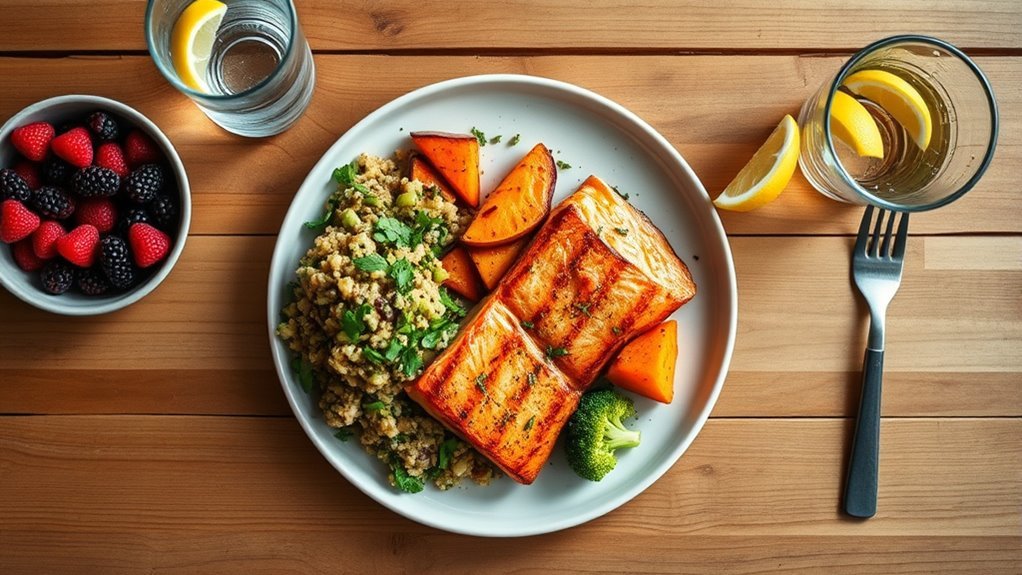
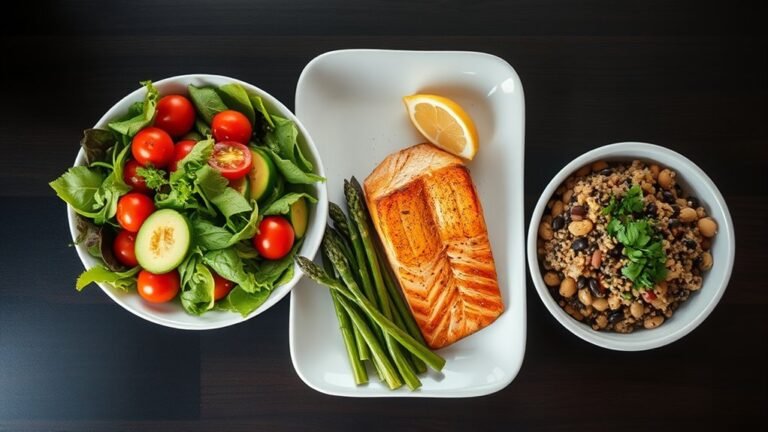
You balance nutrients daily by filling half your plate with colorful fruits and vegetables, a quarter with lean proteins like beans or fish, and a quarter with whole grains for fiber and energy.
Add some dairy or fortified alternatives for calcium and vitamin D.
Use smaller plates and visual cues to control portions, and limit added sugars, salt, and unhealthy fats.
Planning meals with variety helps keep your diet balanced and flavorful.
Exploring these tips can guide you toward healthier meals.
What Is a Balanced Meal?
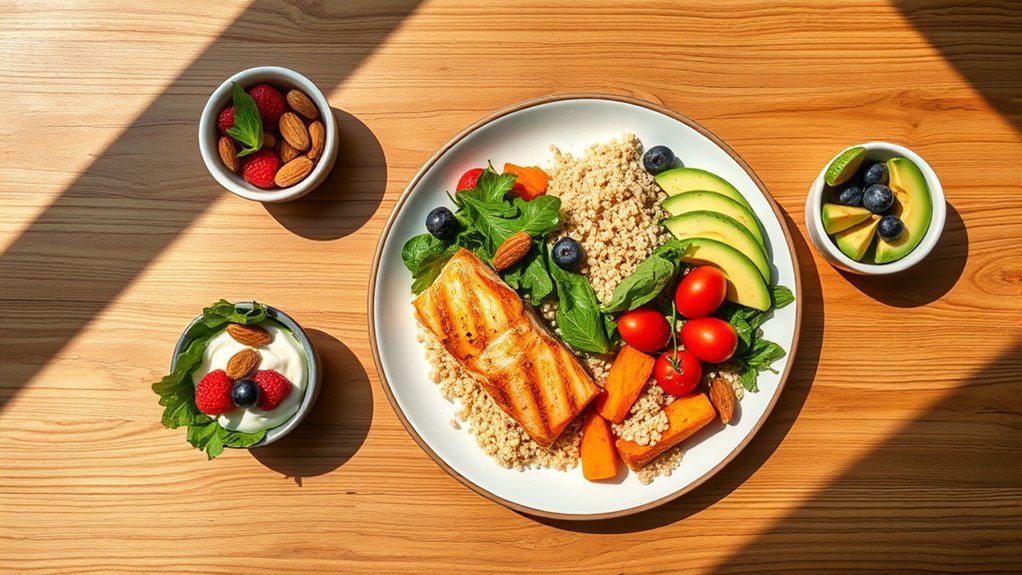
When you create a balanced meal, you combine fruits, vegetables, proteins, whole grains, and dairy to get essential nutrients your body needs. To maintain a balanced diet, focus on including nutrient-dense foods from each food group. That means choosing options packed with vitamins, minerals, and antioxidants.
Visualize your plate: fill half with colorful fruits and vegetables, one-quarter with protein, and one-quarter with whole grains. This approach helps you control portion sizes and keeps your energy steady throughout the day. Paying attention to portion sizes ensures you don’t overeat while meeting your nutritional needs.
The Essential Food Groups for Balanced Meals
To build balanced meals that fuel your body effectively, you need to include a variety of essential food groups. Each group provides unique nutrients that support your overall health and keep your meals healthy and balanced.
Including diverse essential food groups fuels your body and supports overall health through balanced nutrition.
Here are the key food groups to focus on:
- Grains Choose whole grains like brown rice or whole wheat for fiber and sustained energy.
- Proteins Include beans, fish, eggs, or lean meats to supply critical amino acids for muscle health.
- Dairy or Fortified Alternatives Incorporate milk, yogurt, or plant-based drinks for calcium and vitamin D, which strengthen bones.
- Fruits and Vegetables Though discussed later, remember they should cover just over a third of your plate to deliver essential vitamins, minerals, and fiber.
Balancing these food groups daily ensures you get the right mix of nutrients, keeping your meals nutritious and your body energized.
How to Include Fruits and Vegetables in Balanced Meals?
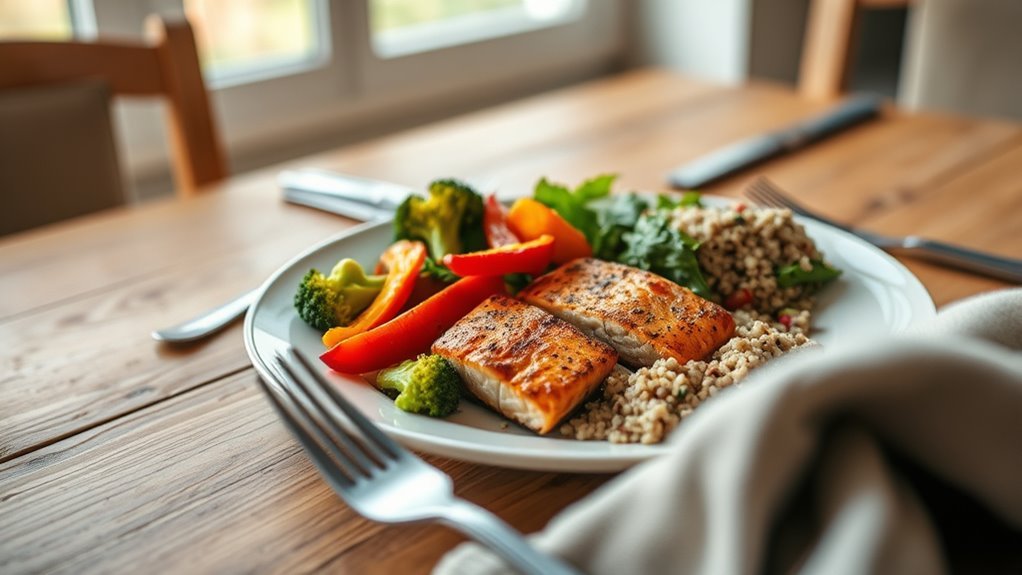
You can start by aiming to fill half your plate with colorful fruits and vegetables. Each portion is roughly 80 grams. Mixing different colors not only brightens your meal but also boosts the variety of nutrients you get.
For example, try adding berries to your breakfast or a side salad to lunch. These little changes make it easy to include more fruits and veggies in your daily routine.
Portion Sizes Explained
Three simple portions of fruits or vegetables, each about 80 grams, can make a big difference in balancing your meals. Understanding portion sizes is key to balanced eating and meeting your daily food intake goals. Here’s how you can manage it:
- Treat one portion as roughly a small apple or a handful of greens (80 grams).
- Aim to fill just over a third of your plate with fruits and vegetables.
- Include a mix of fresh, frozen, or canned options to easily hit your daily 5+ portions.
- Limit dried fruit portions to mealtimes due to their higher sugar content.
Variety and Color
Although many people focus on quantity, including a variety of colorful fruits and vegetables in your meals guarantees you get a wide range of essential nutrients and antioxidants. Aim to include at least five different types daily, featuring colors like red, orange, green, purple, and yellow.
Adding vegetables to every meal, such as spinach or peppers in omelets and salads, boosts fiber and vitamin intake. Fresh herbs, colorful bell peppers, and vibrant fruits not only enhance the color of your plate but also increase nutritional diversity.
Meal and Snack Ideas
How can you easily add more fruits and vegetables to your meals and snacks each day? Try these simple meal ideas to create balanced meals that boost your nutrient intake:
- Add chopped vegetables like spinach, peppers, or tomatoes to omelets, sandwiches, and pasta.
- Top your oatmeal, yogurt, or cereal with fruit such as berries or sliced bananas.
- Snack on raw vegetables like carrots, cucumbers, or bell peppers paired with hummus or dip.
- Aim to fill half your plate with fruits and vegetables throughout the day.
Including at least one serving of fruit or vegetables in every meal and healthy snack helps you reach 5+ portions daily. These easy swaps make your meals more colorful, nutritious, and balanced without extra effort.
How to Choose Wholegrains and Starchy Foods
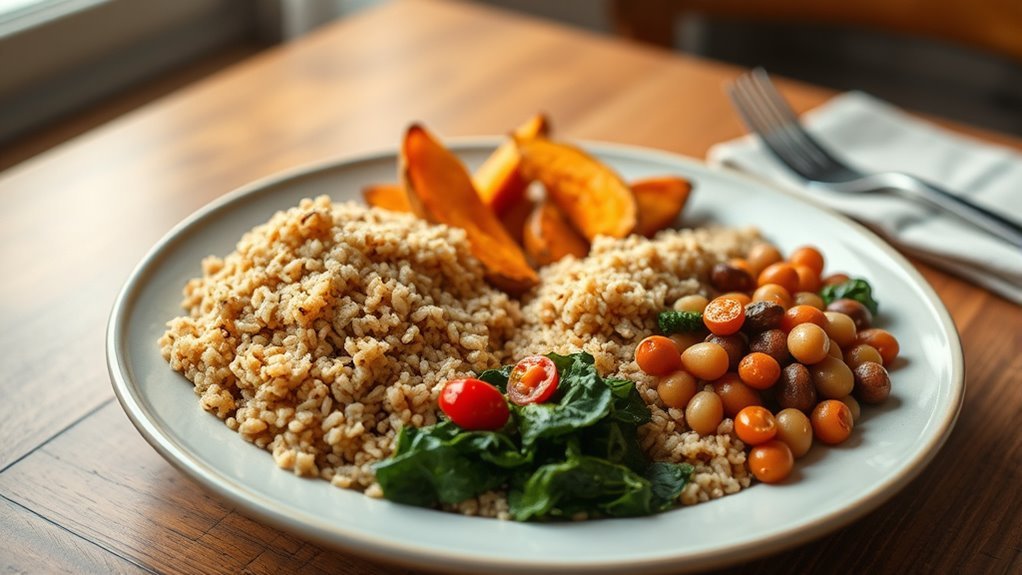
When you pick wholegrains like brown rice and wholewheat bread, you’re getting more fiber and essential nutrients compared to the refined versions. It’s a simple swap that makes a big difference.
You’ll also want to choose starchy foods that keep their skins on, like potatoes. That way, you get extra vitamins and minerals along with the carbs.
Benefits of Wholegrains
Why settle for refined grains when wholegrains offer so much more? Wholegrain foods like brown rice, wholewheat bread, and oats pack extra fiber, vitamins, and minerals that refined grains lack.
By choosing wholegrain options, you boost your nutrient intake and support heart health. Here’s why wholegrains should be your go-to:
- They contain all parts of the grain, including bran, germ, and endosperm, preserving essential nutrients.
- Wholegrains help lower cholesterol and stabilize blood sugar, reducing heart disease and diabetes risk.
- Their fiber content supports digestion and keeps you feeling full longer.
- Look for labels stating “100% wholegrain” or “whole wheat” to get the maximum benefit.
Incorporating wholegrains daily is a simple way to improve your overall health and nutrient balance.
Choosing High-Fibre Options
When you select wholegrain or high-fiber starchy foods, you naturally boost your daily fiber intake and improve overall nutrition. Choose wholegrain or wholemeal bread, rice, pasta, and cereals to increase dietary fiber.
Potatoes are best eaten with their skins on, as this adds fiber and vitamins. Incorporate a variety of starchy foods like oats, barley, and quinoa, which offer both fiber and essential nutrients.
Limiting refined grains such as white bread and white rice helps you avoid low-fiber options. For balanced nutrition, aim to fill at least a quarter of your plate with whole grains or high-fiber starchy foods.
This simple shift supports digestion and keeps your meals nutrient-rich throughout the day.
Incorporating Starchy Foods
How can you make starchy foods work better for your health? Start by choosing wholegrain and wholemeal options like brown rice, wholewheat bread, and oats. These provide more fiber and essential nutrition compared to refined grains.
To get the most from starchy foods:
- Opt for potatoes with skins on to boost fiber, vitamins, and minerals.
- Include a variety of starchy foods daily for balanced energy and diverse nutrients.
- Prioritize higher-fiber options to support digestion, lower cholesterol, and improve heart health.
- Limit refined and processed starchy foods like white bread and sugary cereals to avoid excess sugars and calories.
How to Incorporate Dairy and Dairy Alternatives
Although dairy products offer essential nutrients like calcium and vitamin D, you can easily meet your daily needs by including 1-2 servings of dairy or fortified alternatives in your meals. Try a glass of milk or a cup of yogurt to boost calcium and vitamin D intake.
If you prefer plant-based options, choose fortified products like unsweetened soy drinks, which often contain added calcium and vitamin D. Opt for lower-fat dairy choices such as semi-skimmed milk or reduced-fat cheese to support heart health without sacrificing nutrients.
You can also add dairy to your meals and snacks by mixing yogurt into smoothies, sprinkling cheese on sandwiches, or topping oatmeal with a dollop of yogurt. Be mindful of products high in fat and sugar, and always check nutrition labels to pick those fortified with essential nutrients.
This approach helps you balance flavor and nutrition effectively every day.
How to Choose Healthy Proteins: Beans, Fish, Meat, and Eggs
You can boost your health by choosing a variety of proteins like beans, fish, lean meats, and eggs each day. It’s a good idea to limit red and processed meats to keep saturated fats in check. Plus, enjoying plant-based proteins gives you extra fiber and nutrients.
Try to include at least two portions of fish each week, especially oily types. They’re great for supporting your heart and overall wellness. Mixing things up like this makes it easier to stay healthy and satisfied!
Protein Sources Overview
When selecting proteins, aiming for a variety helps you get all the essential amino acids your body needs. Including different sources guarantees balanced nutrition and supports overall health. Here’s how to choose healthy proteins:
- Include plant-based options like beans, lentils, and chickpeas for fiber and cholesterol-lowering benefits.
- Eat at least two portions of fish weekly, emphasizing oily fish rich in omega-3 fatty acids.
- Opt for lean meats to reduce saturated fat intake while meeting protein needs.
- Incorporate eggs prepared with minimal added fats for a versatile protein source.
Limiting Red Meat
How much red meat should you include in your diet to stay healthy? Limiting red meat to about 350-500 grams or three portions weekly can considerably support your heart health and reduce the risk of certain cancers.
While red meat is a valued protein source, balancing it with alternatives strengthens your healthy eating habits. Try replacing some red meat meals with fish, especially oily types like salmon or mackerel, which provide beneficial omega-3 fatty acids.
You can also include nutrient-rich eggs regularly and lean poultry to diversify your protein sources. Incorporating beans, pulses, and lentils lowers saturated fat intake, further protecting your heart.
Benefits Of Plant Proteins
Balancing your protein sources by including more plant-based options can greatly enhance your overall nutrition. Plant proteins like beans, lentils, and chickpeas boost nutrient balance by offering fiber, vitamins, and minerals that support digestive health. Here’s why you should add them to your meals:
- They provide 15-20 grams of protein per cooked cup, making them a budget-friendly choice.
- They help lower saturated fat intake, reducing your risk of heart disease.
- Swapping red or processed meats with plant proteins cuts harmful compounds linked to cancer and inflammation.
- Choosing plant proteins also supports environmental sustainability by lowering greenhouse gas emissions.
Incorporating more plant proteins is a smart, healthy way to achieve nutrient balance and protect your heart.
Using Healthy Oils and Spreads Wisely
Although oils and spreads add flavor and texture to your meals, choosing the right types and using them in moderation is essential for heart health. Opt for healthy oils like olive, canola, or sunflower, as they’re rich in unsaturated fats that support your cardiovascular system.
When you cook or dress salads, these oils provide beneficial fats without raising LDL cholesterol. Incorporate spreads made from these unsaturated oils in small amounts to boost flavor and nutrition without adding too much saturated fat.
Remember, oils and spreads are calorie-dense, about 120 calories per tablespoon, so keep portions controlled to maintain a balanced calorie intake. Avoid butter and trans fats, which can harm heart health.
How to Limit Saturated Fat, Added Sugar, and Salt
Choosing healthy oils is a great start, but you also need to watch your intake of saturated fat, added sugar, and salt to keep your meals heart-friendly. To practice healthy eating, focus on these key steps:
- Choose lean meats and low-fat dairy to reduce saturated fat.
- Avoid sugary drinks and processed snacks to cut added sugar.
- Prepare meals with fresh ingredients and avoid processed foods to lower sodium.
- Check nutrition labels for products with less saturated fat, added sugar, and sodium.
Portion Sizes for Each Food Group
When you plan your meals, paying attention to portion sizes for each food group guarantees you get the right nutrients without overeating. For balanced meals, aim to fill half your plate with fruits and vegetables, each portion roughly 80 grams.
Protein sources like meat, fish, beans, or eggs should take up about one-quarter of your plate. Portion sizes may vary depending on your age and activity level.
The remaining quarter should include whole grains such as brown rice or whole-wheat bread, following dietary guidelines for healthy carbohydrate intake. Don’t forget to include dairy or dairy alternatives like milk or yogurt in moderation, usually one to two servings daily.
Sticking to these portion sizes assures you enjoy a variety of nutrients while avoiding excess calories. By balancing your food groups thoughtfully, you support your overall health and maintain energy balance throughout the day.
Simple Ways to Plan Balanced Meals at Home
Planning balanced meals at home becomes easier when you use a simple formula: fill half your plate with fruits and vegetables, a quarter with lean proteins, and a quarter with whole grains. This approach guarantees you get a variety of nutrients without overcomplicating meal planning.
To maintain portion control and create balanced meals, try these simple steps:
- Visualize your plate to keep portions right. Half for produce, one-quarter each for protein and grains.
- Incorporate a colorful mix of fruits and vegetables for diverse vitamins and minerals.
- Use pantry staples like canned beans, frozen veggies, and whole grains to save time and stay consistent.
- Include healthy fats such as olive oil, nuts, or avocado in moderation to support overall health.
Tips for Reading Nutrition Labels to Make Healthier Choices
Although nutrition labels can seem overwhelming at first, learning to read them effectively helps you make smarter, healthier food choices. Start by checking the % Daily Value to see if a product contains high levels of unhealthy fats, sodium, or added sugars. Aim for foods with less than 5% Daily Value of these nutrients to keep your meals balanced.
Don’t just rely on the Nutrition Facts panel. Scan the ingredient list for added sugars, trans fats, and processed ingredients that might not be obvious. Remember, serving sizes on labels can be smaller than what you actually eat, so adjust your calculations accordingly to get an accurate picture of your intake.
Comparing nutrition labels side by side makes it easier to choose options lower in sodium, added sugars, and unhealthy fats. By mastering these tips, you’ll confidently pick foods that support your health goals every day.
Adapting Balanced Meals to Your Culture and Lifestyle
To create balanced meals that truly fit your lifestyle, you need to embrace the foods and flavors that resonate with your culture. Adapting balanced meals means respecting your cultural food preferences while ensuring nutrient balance. Here’s how you can do it:
- Choose culturally preferred protein sources like legumes in Indian dishes or fish in Japanese meals to meet your nutritional needs.
- Adjust portion sizes and meal components to align with traditional eating patterns without compromising on food group proportions.
- Use familiar spices, herbs, and cooking methods to keep meals appealing and sustainable within your cultural context.
- Consider meal structure, such as multiple small dishes in Middle Eastern cuisine or shared plates, to encourage variety and balance.
Frequently Asked Questions
How Does Hydration Impact Nutrient Balance in Daily Meals?
Hydration impacts nutrient balance by maintaining electrolyte balance, which helps your muscles and nerves function properly. When you manage your water intake timing, you enhance hydration and minerals absorption from your meals.
This fluid and nutrient synergy guarantees your body uses vitamins and minerals efficiently. Staying well-hydrated boosts circulation, delivering nutrients where they’re needed.
Can Meal Timing Affect Nutrient Absorption and Energy Levels?
Meal timing truly transforms your nutrient absorption and energy levels. By syncing your dietary schedule, you support steady sustenance and supercharge your system’s efficiency.
Eating balanced meals and snacks at strategic intervals keeps your energy elevated and helps your body soak up vitamins and minerals better. Skipping meals or random eating can disrupt this rhythm, leaving you sluggish.
What Role Do Supplements Play in a Balanced Diet?
Supplements play a supportive role in a balanced diet by addressing dietary gaps you might have. Their efficacy depends on your specific needs, so a multivitamin can offer broad nutrient synergy, enhancing how your body uses vitamins and minerals together.
However, supplements shouldn’t replace whole foods, which provide complex nutrients. Use supplements wisely to fill gaps, but always focus on diverse, nutrient-rich meals for the best health results.
How to Handle Nutrient Balance When Eating Out Frequently?
Master meal portioning and mix ingredient variety to manage nutrient balance when eating out frequently. You’ll want to watch your portions carefully, choose dishes that respect your dietary restrictions, and balance flavors to satisfy without sacrificing nutrition.
Opt for grilled proteins, fresh veggies, and whole grains. Don’t forget to sidestep heavy sauces and instead select lighter dressings. This smart strategy keeps your meals flavorful and nutritionally sound every time you dine out.
Are There Specific Nutrient Needs for Different Age Groups?
Yes, you have specific micronutrient requirements that change with age. Age-specific dietary guidelines help you adjust your intake to support growth, bone health, and energy.
For example, children need more calcium and iron, while older adults require extra vitamin D and dietary fiber to aid digestion. Keep in mind that nutrient absorption rates can decline as you age, so focusing on nutrient-dense foods becomes even more important for your health.
Conclusion
Balancing your meals each day isn’t rocket science. You just need the right mix of food groups and portion control. By including plenty of colorful fruits and veggies, wholegrains, and dairy or alternatives, you fuel your body like a well-oiled machine.
Don’t forget to read labels and adapt meals to fit your lifestyle and culture. With these simple habits, you’ll feel unstoppable, ready to conquer anything life throws your way!



One Comment