How to Create a Keto Meal Plan in 5 Simple Steps
To create a keto meal plan, first find your daily carb limit, typically 20-50 grams of net carbs, to stay in ketosis.
Next, choose nutrient-dense foods like healthy fats, proteins, and low-carb veggies.
Build balanced meals combining these to keep energy up.
Prep and batch cook to save time and make healthy choices easy.
Finally, track your macros and adjust as needed for lasting success.
Keep exploring to discover tips that make keto effortless and enjoyable.
Find Your Daily Carb Limit to Stay in Ketosis

How do you determine the right carb limit to maintain ketosis? Most people find their daily carb limit lies between 20-50 grams of net carbs. Net carbs are total carbs minus fiber, since fiber doesn’t impact blood sugar or ketosis.
Tracking your carbohydrate intake closely helps prevent ketosis disruption caused by exceeding your personal carb threshold. Using food logs or carb tracking apps makes carbohydrate monitoring simple and accurate.
Remember, your ideal daily carb limit isn’t one-size-fits-all. Factors like metabolism, activity level, and body composition influence it. By consistently logging your food and noting how your body reacts, you can fine-tune your personalized keto plan.
This approach guarantees you stay within your carb limit without guesswork, maximizing fat burning and sustaining ketosis. So, commit to carbohydrate monitoring, track net carbs diligently, and adjust your intake as needed to maintain that perfect state of ketosis effectively.
Choose Nutrient-Dense Keto Foods for Your Meals
Once you’ve established your daily carb limit, the next step is picking the right foods to keep you in ketosis while nourishing your body. Focus on nutrient-dense foods that deliver vitamins, micronutrients, and antioxidants essential for your health.
Choose nutrient-packed foods that support ketosis and nourish your body with essential vitamins and antioxidants.
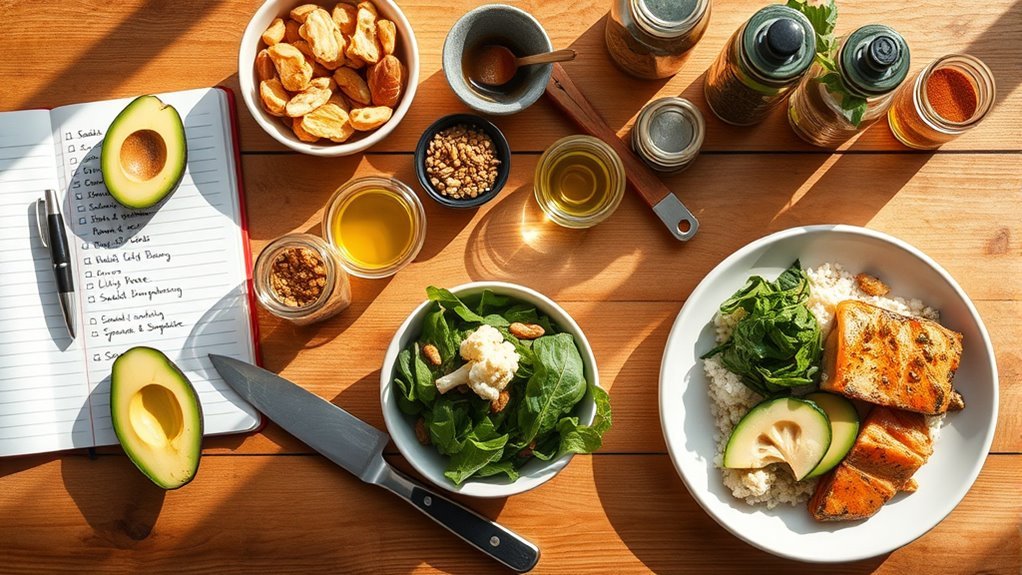
Prioritize healthy fats like avocados, nuts, seeds, and olive oil. They support ketosis and provide lasting energy. Include keto-friendly options such as eggs, fatty fish, and lean meats to maintain muscle without exceeding carb limits.
Don’t forget low-carb vegetables like spinach, kale, broccoli, and cauliflower. They supply fiber and micronutrients while keeping carbs low. Choose whole foods that are minimally processed to maximize nutrient intake and avoid hidden sugars.
Limit high-sugar fruits but enjoy small portions of berries for antioxidants and flavor. By selecting these nutrient-rich keto-friendly foods, you’ll fuel your body effectively and sustain ketosis with balanced nutrition every day.
Build Balanced, Varied Keto Meals That Energize You

Although sticking to a keto diet means limiting carbs, you can still enjoy a wide variety of balanced meals that keep you energized. Building keto meals that combine healthy fats, moderate protein, and low-carb vegetables guarantees you get essential nutrients without exceeding your net carbs.
Focus on meal variety to avoid boredom and maintain an energy-boosting ketogenic diet.
When planning balanced meals, keep these tips in mind:
- Include low-carb vegetables like spinach, broccoli, and peppers for nutrient diversity
- Use healthy fats such as avocados, olive oil, and nuts to add flavor and satiety
- Choose moderate protein sources like eggs, fish, and poultry to support muscle and energy
- Track net carbs carefully to stay within 20-50 grams daily and maintain ketosis
- Rotate recipes weekly to keep your ketogenic meal plan interesting and balanced
Prep and Batch Cook Your Keto Meals for the Week
When you prep and batch cook your keto meals for the week, you save time and reduce stress around daily cooking. Start your meal planning by choosing keto staples like roasted chicken, boiled eggs, and cauliflower rice. You can cook these ahead in large batches.
Use versatile ingredients such as baked bacon or grilled sausages that fit multiple meals to keep things simple. Dedicate time to chop vegetables, marinate meats, and assemble meals in one session.
Portion control becomes effortless when you divide your meals into meal prep containers. This makes grab-and-go keto meals convenient and consistent. Cooking ahead lets you stick to your weekly plan without last-minute decisions or unhealthy choices.
Track Your Keto Macros and Adjust for Lasting Success
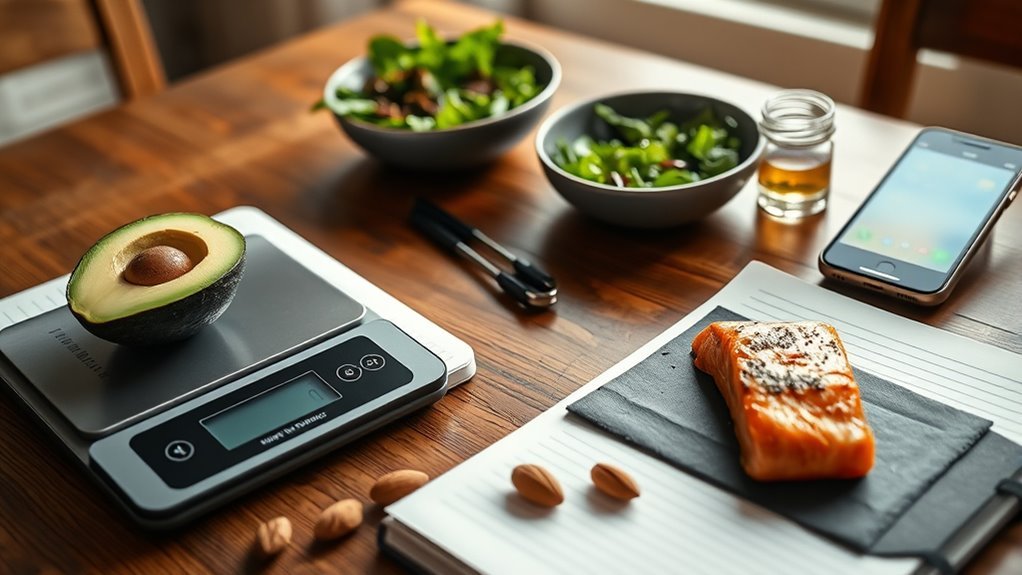
Tracking your keto macros lets you stay on target by monitoring your intake of fats, proteins, and net carbs each day. Use a food diary or a food tracking app to log every meal and snack, keeping your net carbs under 50 grams to maintain ketosis.
Regular progress monitoring helps you spot hidden carbs and evaluate your macronutrient ratio, so you can make meal adjustments as needed. If your energy dips or weight loss stalls, tweak your keto macros by increasing fats or protein. Consistent tracking guarantees long-term adherence and better results.
Remember to:
- Log all meals and snacks daily in a food tracking app or diary
- Keep net carbs within recommended limits for ketosis
- Review your macronutrient ratio regularly
- Adjust meals based on your progress and activity level
- Identify hidden carbs in processed foods to avoid setbacks
Tracking and adjusting your keto macros sets you up for lasting success.
Frequently Asked Questions
Can I Follow Keto if I’m Vegetarian or Vegan?
Yes, you can follow keto if you’re vegetarian or vegan by focusing on plant-based options like nuts, seeds, and avocados. Use vegetarian sources and vegan-friendly fats such as coconut oil and MCT oil.
Incorporate dairy alternatives and protein substitutions like tofu or tempeh. Keep nutrient considerations in mind, including supplement needs for B12 and iron.
Use meal planning tips and flavor enhancements to create tasty recipe ideas that keep you in ketosis.
How Soon Will I See Results on a Keto Diet?
You’ll probably see keto weight loss before you even realize it, mostly water weight from carb restriction in the first couple of weeks. As your body undergoes a metabolic shift and fat adaptation kicks in, fat burning ramps up, and insulin levels drop.
Appetite suppression helps, too. Energy levels and body composition often improve after 3–4 weeks, once you’re deep into the ketosis timeline. Stick with it, and the real changes come.
What Are Common Keto Diet Mistakes to Avoid?
Watch out for common keto mistakes like carb miscalculations from hidden sugars in processed foods or sauces. Avoid excessive protein and dairy dependence, as they can stall ketosis.
Don’t rely on snack overuse or inconsistent tracking. It’s key to monitor macros closely. Keep an eye on electrolyte imbalance and calorie overload, which can cause fatigue or weight gain.
Also, pay attention to meal timing to maintain steady energy and avoid setbacks.
How Does Keto Affect Exercise and Athletic Performance?
Keto affects your exercise and athletic performance by promoting fat adaptation, which helps improve muscle endurance and stamina during prolonged workouts. You might face glycogen depletion early on, reducing high-intensity strength training capacity temporarily.
However, once adapted, your energy levels stabilize, aiding workout recovery. Keep up with hydration needs and maintain electrolyte balance to prevent fatigue and cramps. Overall, keto can enhance endurance but requires patience as your body adjusts.
Is Intermittent Fasting Necessary for Keto Success?
Think of intermittent fasting as a turbocharger, not a necessity, for your keto journey. You don’t have to lock into strict meal timing or long fasting durations to see metabolic adaptation.
It can help with hunger control, insulin levels, and fat burning while supporting energy levels and muscle preservation. But you’ll still enjoy dietary flexibility and hormone regulation without it.
Focus first on consistent keto eating, then add fasting if it suits your lifestyle.
Conclusion
By following these five simple steps, you’ll master your keto meal plan like a pro. Finding your carb limit and choosing nutrient-dense foods sets a solid foundation, while balanced meals keep your energy soaring all day.
Prepping and batch cooking save you from kitchen chaos, and tracking your macros guarantees lasting success. Stick with it, and you’ll feel like a keto superhero, conquering cravings and fueling your body effortlessly every single day!