
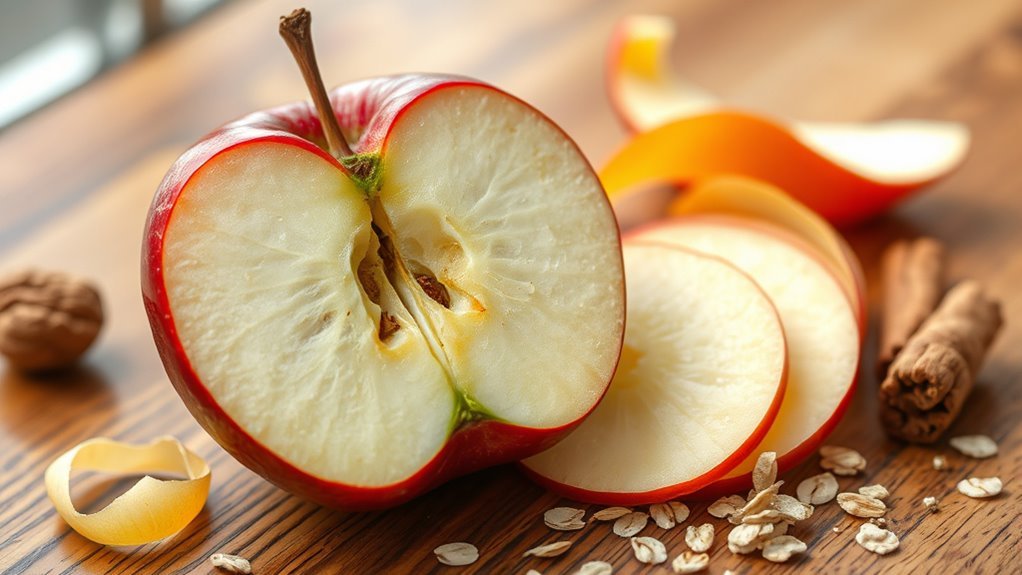
How to Understand Nutrition in Apples
You get natural sugars, fiber, vitamins, and minerals from apples, making them a balanced snack. Their carbs provide steady energy, while fiber helps control blood sugar and promotes digestion.
Apples also offer antioxidants and cancer-fighting compounds, especially in the peel. Washing well reduces pesticide residues without losing nutrients.
Storing them right keeps them fresh longer. If you want to understand how apples support your health and how to enjoy them best, there’s plenty more to explore.
Basic Nutrients in Apples: Calories, Carbs, Protein, and Fat

Although apples may seem simple, their nutritional profile offers valuable insights. When you pick up a medium-sized apple, you’re getting about 95 calories, mostly from natural sugars and carbohydrates. These carbohydrates total around 25 grams, combining sugars like fructose, sucrose, and glucose with beneficial dietary fiber.
You won’t find much protein in an apple, only about 0.5 grams per medium fruit. Fat is also minimal, roughly 0.3 grams, and it’s mostly unsaturated with virtually no cholesterol. These basic nutrients in apples make them a light, nutrient-rich snack that’s low in fat and protein but packed with natural sugars and carbs.
Understanding this helps you appreciate what apples contribute to your diet beyond just sweetness. They offer a balanced mix of essential nutrients with a focus on carbohydrates and natural sugars, all while keeping calories in check.
How Apples Give You Energy
How exactly do apples fuel your body throughout the day? A medium apple provides about 25 grams of carbohydrates, mainly from natural sugars like fructose, sucrose, and glucose. These sugars give you quick energy by being easily absorbed, helping you stay active and focused.
Thanks to the low glycemic index of apples, around 42 to 44, this energy is released gradually, preventing sudden blood sugar spikes. The fiber in apples plays a key role by slowing digestion, which means you get a steady supply of energy over a longer period rather than a quick crash.
Along with carbohydrates, the water and micronutrients in apples support your body’s overall energy metabolism. So, when you eat an apple, you’re not just getting a snack; you’re fueling your body with a balanced source of energy that keeps you going efficiently throughout the day.
Why Fiber in Apples Is Good for You

Why should you care about the fiber in apples? A medium apple provides about 4.37 grams of fiber, covering roughly 16% of your daily recommended intake. This fiber plays a vital role in supporting your gut health and improving digestion.
The soluble fiber, known as pectin, helps lower LDL cholesterol, promoting heart health. It also adds to your feeling of satiety, which can help you manage your weight by reducing overall calorie intake.
Besides pectin, the insoluble fiber mainly found in apple skin adds bulk to your stool, aiding regular bowel movements and preventing constipation. Including apples in your diet means you’re fueling your body with fiber that supports a healthy digestive system and helps maintain cholesterol levels.
Blood Sugar Control With Apples
Beyond fiber’s benefits for digestion and heart health, apples also play a helpful role in managing your blood sugar levels. Apples have a low to moderate glycemic index, typically between 42 and 44, which means they cause only a gradual rise in blood glucose. This makes them a smart choice for maintaining stable blood sugar.
The secret lies in their high fiber content, especially soluble fiber like pectin, which slows digestion and the absorption of carbohydrates. This slower digestion helps prevent sudden spikes in blood sugar after you eat.
Plus, the natural sugars in apples are mostly fructose, which, combined with fiber, supports a steady energy release. Eating whole apples instead of juice guarantees you get the full benefit of fiber, which helps moderate blood sugar levels more effectively.
Key Vitamins and Minerals in Apples for Health
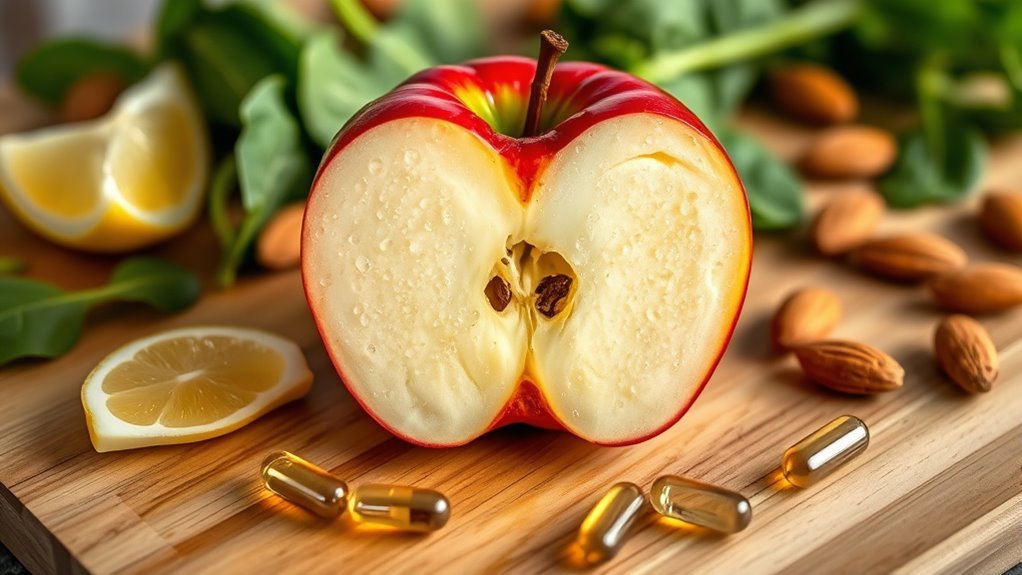
You’ll find that apples pack essential vitamins like vitamin C, which boosts your immune system and fights free radicals. Plus, they contain key minerals such as potassium and magnesium. These minerals are great for supporting your heart, muscles, and bones. When you understand these nutrients, it’s easier to see how apples contribute to your overall well-being.
Essential Vitamins Overview
Although apples may seem simple, they pack a variety of essential vitamins and minerals that support your health. One of the key apple nutrients is vitamin C, which provides about 8 milligrams per medium fruit. This essential vitamin boosts your immune support and acts as a powerful antioxidant, protecting your cells from damage.
Most of the vitamin C is found in the apple’s flesh, so eating fresh apples guarantees you get the full benefits. Besides vitamin C, apples offer other nutrients like potassium and magnesium, though in smaller amounts. These vitamins contribute to your overall well-being, making apples a convenient and natural way to nourish your body every day.
Embracing these apple nutrients helps you maintain a balanced, healthy diet.
Key Mineral Benefits
Along with vitamins like vitamin C, the minerals in apples play a significant role in supporting your health. Each medium apple provides about 195 milligrams of potassium, which helps regulate your blood pressure and supports heart health.
You’ll also get around 9.1 milligrams of magnesium, essential for muscle and nerve function. Apples contain small amounts of calcium and phosphorus, both crucial for maintaining strong bones and aiding metabolic processes.
These minerals, combined with vitamin C’s immune-boosting properties, work together to reduce inflammation and promote cardiovascular wellness. By including apples in your diet, you’re not just enjoying a tasty fruit, you’re giving your body a balanced mix of key minerals and vitamins that support overall health and well-being.
Antioxidants in Apples That Boost Immunity
When you eat an apple, you’re not just enjoying a tasty snack. You’re also fueling your immune system with powerful antioxidants like quercetin, catechin, and chlorogenic acid. These antioxidants play a vital role in neutralizing free radicals, which can cause oxidative stress and weaken your immune defenses.
Quercetin, especially abundant in apple peel, offers anti-inflammatory and antiviral benefits that actively support your immune system’s health. Moreover, apples provide a rich source of polyphenols that enhance the activity of immune cells, helping your body respond better to infections.
On top of that, the vitamin C in apples boosts white blood cell production and function, strengthening your body’s ability to fight off pathogens. By including apples regularly in your diet, you supply your immune system with a natural blend of antioxidants and nutrients designed to keep it strong and resilient.
How Apples Support Heart Health
How exactly do apples benefit your heart? Apples are rich in soluble fiber, especially pectin, which helps lower LDL cholesterol, a major factor in heart health. The antioxidants in apples, like quercetin and chlorogenic acid, reduce oxidative stress and inflammation, protecting your cardiovascular system.
Regularly eating apples improves your blood lipid profile by decreasing triglycerides and raising HDL cholesterol. Plus, apples may help lower blood pressure, reducing hypertension risk. The combined action of fiber and phytochemicals in apples also prevents arterial plaque buildup, promoting overall heart health.
| Benefit | Component | Effect on Heart Health |
|---|---|---|
| Lower LDL | Soluble fiber | Reduces cholesterol |
| Reduce inflammation | Antioxidants | Protects arteries |
| Improve lipids | Fiber & antioxidants | Raises HDL, lowers triglycerides |
| Lower blood pressure | Nutrients | Supports healthy blood pressure |
| Prevent plaque | Fiber & phytochemicals | Maintains artery health |
Eating apples supports your heart by targeting key cardiovascular risks.
Research on Apples and Cancer Risk
Because apples contain powerful phytochemicals like quercetin and chlorogenic acid, eating them regularly can help lower your risk of several cancers, including colorectal, breast, and lung cancers. The apple peel is especially rich in these bioactive compounds, which work together to inhibit tumor formation and support your body’s natural defenses.
Research shows that flavonoids like quercetin have notable preventive effects, particularly for smokers at risk of pancreatic cancer. You can take advantage of these benefits by making apples a consistent part of your diet.
Here’s why apples matter in reducing cancer risk:
- Apple peel’s phytochemicals fight cancer cell growth
- Regular apple consumption links to fewer breast and colon tumors
- Quercetin-rich apples provide extra protection against tumor formation
- Even moderate apple intake offers meaningful preventive effects
How to Minimize Pesticides on Your Apples
If you want to minimize pesticides on your apples, a good first step is to wash them thoroughly under running water. You can also soak them in a baking soda solution for an extra level of cleaning—it really helps get rid of residues.
Some people choose to peel their apples, which does remove pesticides, but keep in mind that you’ll also lose some fiber and nutrients when you do that.
Another option is to go for organic apples. They usually have fewer pesticide residues compared to conventional ones, so that can be a smarter choice if you’re concerned about exposure.
Effective Washing Techniques
Why should you pay close attention to washing your apples before eating them? Proper washing is key to reducing pesticide residues and ensuring your apple is as clean and safe as possible. You can’t rely on rinsing alone. For effective pesticide removal, try these techniques:
Gently scrub your apples with a produce brush under running water to lift off surface residues. Soak apples in a baking soda solution (1 teaspoon per 2 cups water) for 10-15 minutes to break down stubborn pesticides.
Rinse thoroughly after soaking to wash away loosened chemicals. Dry your apples well to prevent mold and remove any lingering residues.
This thorough cleaning helps minimize pesticide exposure while keeping the apple’s nutrients intact.
Peeling Pros and Cons
How much does peeling your apple really help reduce pesticide exposure? Peeling can markedly lower pesticide residues since many remain on the apple skin. However, peeling also removes beneficial fiber and important nutrients found in the skin, which play a key role in your apple’s overall health benefits.
Instead of peeling, thorough washing, especially with a clean produce brush or a baking soda solution, can effectively reduce pesticide residues while preserving fiber and nutrients. Most residues on conventionally grown apples are below EPA safety limits, so peeling is a personal choice if you want to minimize exposure further.
Keep in mind, washing well is essential whether you peel or not, as it helps remove dirt and surface pesticides without sacrificing the valuable components in the apple skin.
Organic vs Conventional
While peeling can lower pesticide residues on apples, it also strips away valuable nutrients found in the skin. Choosing between organic and conventional apples impacts your pesticide exposure and nutrient intake.
Organic apples are grown without synthetic pesticides, reducing your risk compared to conventional ones. However, most pesticide residues on conventional apples stay below EPA safety limits. You can minimize residues by proper cleaning, no matter the type.
To protect your health and enjoy beneficial nutrients, try this:
- Wash apples thoroughly with water or a baking soda solution
- Scrub gently using a produce brush
- Rinse under running water to remove residues
- Choose organic apples when possible, especially for vulnerable groups
These steps help you enjoy apples safely without losing their nutritional benefits.
Best Ways to Store Apples for Maximum Freshness
If you want your apples to stay fresh and crisp for weeks, storing them properly is essential. The best way is to keep them in the refrigerator’s crisper drawer, where cooler temperatures slow ripening and extend freshness for up to 1-2 months or more.
To maintain ideal humidity and prevent dehydration, wrap apples in a plastic bag or use perforated containers. This helps retain moisture without trapping too much condensation.
Make sure to store apples separately from other fruits and vegetables since ethylene gas from some produce can speed up apple ripening. Avoid placing apples near strong-smelling foods because they easily absorb odors, which can alter their flavor.
Regularly inspect your stored apples and promptly remove any that are soft or spoiled to prevent rot from spreading. By following these storage tips, you’ll enjoy fresh, crisp apples longer and reduce waste caused by spoiled fruit.
Easy Ways to Enjoy Apples Every Day
Since apples offer a perfect balance of sweetness and nutrition, you can easily add them to your daily meals and snacks. Their fiber and antioxidants, like quercetin, bring impressive health benefits that support your heart and blood sugar levels. Plus, with so many varieties available, you’ll never get bored.
Here are some easy ways to enjoy apples every day:
- Add fresh apple slices to your oatmeal or yogurt for a fiber-rich breakfast boost.
- Keep pre-washed apple slices in the fridge as a quick, convenient snack.
- Toss apple chunks into salads or sandwiches to introduce natural sweetness and antioxidants.
- Bake or microwave apples with cinnamon for a warm dessert that preserves vitamin C and polyphenols.
Who Should Be Careful When Eating Apples
Because apples contain natural sugars and various types of fiber, you should be cautious if you have digestive sensitivities or conditions. If you have fructose intolerance or FODMAP sensitivity, apples might trigger digestive issues like bloating, gas, or cramps due to their high fructose content.
Those with irritable bowel syndrome (IBS) often find that apples worsen their symptoms, especially because of the sugars and fiber involved. You should also watch out for the apple peel, which contains insoluble fiber that can aggravate gastrointestinal discomfort.
Eating too many apples can amplify these problems if you are prone to digestive troubles. To avoid complications, it’s wise to consult healthcare professionals before adding apples to your diet, especially if you have pre-existing digestive disorders.
They can help you determine the right amount or suggest alternatives to guarantee you enjoy apples safely without triggering unpleasant symptoms.
Frequently Asked Questions
Can Apple Seeds Be Safely Consumed?
You can safely consume apple seeds in small amounts since apple seed toxicity only becomes a concern with large quantities. Follow seed consumption guidelines by avoiding crushing or grinding seeds, as that releases cyanide.
While apple seeds have limited nutritional value, some people explore seed processing methods for germination potential. Always practice seed safety precautions and don’t intentionally eat many seeds to avoid health risks linked to cyanide poisoning.
How Do Organic Apples Differ Nutritionally From Conventional Ones?
You’ll find organic apples differ nutritionally because organic farming focuses on soil health and diverse farming practices. This boosts nutrient density, including higher vitamin C and antioxidants.
They usually have lower pesticide residues since organic methods limit synthetic pesticides, resulting in reduced pesticide levels compared to conventional apples.
While both types are nutritious, organic apples often offer better nutrient profiles and less chemical exposure, making them a healthier choice overall.
What Varieties of Apples Have the Highest Antioxidant Content?
Picture a vibrant orchard where red apples gleam like jewels. Those varieties have the highest apple antioxidant levels. You’ll find red apples, especially darker ones like Blood Red, pack more antioxidants than green ones.
Don’t overlook the apple peel benefits; most antioxidants hide there. Antioxidant testing methods reveal heirloom and organic apples often outperform conventional types.
Do Cooked Apples Retain the Same Nutrients as Raw Apples?
Cooked apples don’t retain all the nutrients raw ones have, but you still get plenty of benefits. Apple peel benefits remain since fiber and some antioxidants stay intact.
Cooking method effects influence vitamin stability. Heat-sensitive vitamins like vitamin C may decrease. Nutrient loss during storage also matters before cooking.
Enzyme activity changes during heating can boost some antioxidants’ availability. Nutritional comparison shows fiber stays stable, though some vitamins drop. So, balance raw and cooked apples for best results.
Can Apple Consumption Affect Dental Health?
Biting into an apple is like walking a tightrope for your teeth. Apple consumption can affect dental health because their acid exposure and sugar content may lead to dental erosion and weaken enamel strength.
However, the act also boosts saliva production, which helps neutralize acids and lower cavity risk. To keep your smile safe, don’t forget to rinse or brush after eating apples, balancing their benefits with proper care.
Conclusion
So, you’ve learned that apples aren’t just crunchy snacks. They’re little nutrition ninjas packed with fiber, vitamins, and energy. Who knew that biting into a shiny apple could help control your blood sugar and keep pesticides at bay?
Next time you grab an apple, remember: it’s not just a fruit, it’s your tasty, health-boosting sidekick. Just don’t let it sit too long, or it might turn into a science experiment on your counter!