How to Make Cauliflower Rice Without a Food Processor in 10 Easy Steps
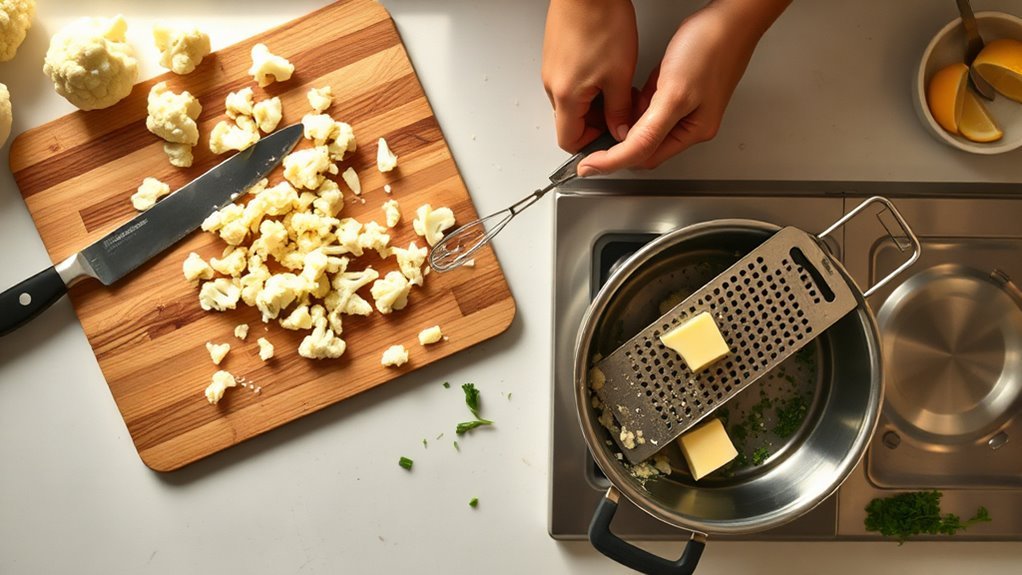
Choose a firm, dense cauliflower without brown spots, then cut it into uniform 1 to 2 inch florets. Use a box grater or a sharp knife to grate or finely chop the florets into rice-sized pieces, working in small batches to avoid mushiness.
Pat the riced cauliflower dry to remove moisture, then sauté it in olive oil over medium heat until tender but firm. Store fresh in the fridge or freeze flat to keep texture.
Keep going for tips on seasoning, cooking, and storage hacks.
Pick the Best Cauliflower for Ricing Without a Food Processor
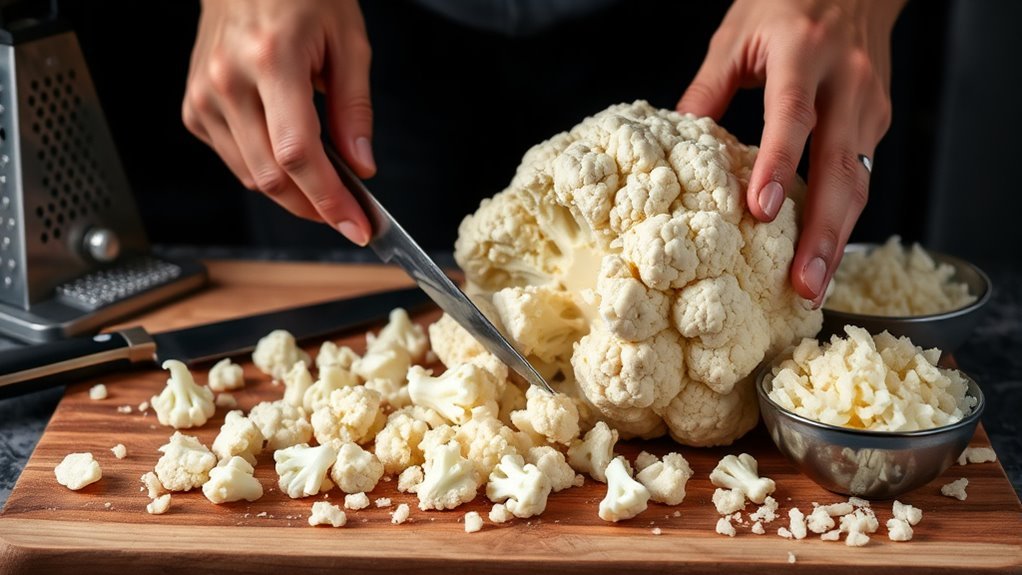
Choosing the right cauliflower is key when making cauliflower rice without a food processor. You want to pick a firm, dense head with tight, white, or brightly colored florets. Avoid any with brown spots or a strong odor because those indicate it’s past its prime.
If you’re using pre-cut florets or frozen cauliflower, choose pieces that are similar in size. That way, you’ll get even grating and consistent texture when you process by hand. A sturdy core is essential too. It lets you slice the stems thinly without the cauliflower turning mushy.
Larger heads give you more “rice,” so consider how much you need before buying. Whether organic or conventionally grown, fresh-looking cauliflower with crisp stems and firm crowns will give you the best texture. By selecting the right cauliflower, you’ll make the ricing process smoother and end up with a perfect, fluffy result every time.
Cut Cauliflower Into Even Florets for Consistent Texture
Start by cutting your cauliflower into evenly sized florets to guarantee each piece cooks and textures uniformly. First, slice the cauliflower core out, then break or cut the head into florets roughly 1–2 inches across. This assures each floret processes evenly, preventing uneven texture.
Use a sharp chef’s knife on a rimmed cutting board and avoid tearing. If you’re grating or blending, trim florets to uniform thickness, about 1 inch, so they cook or grate at the same rate.
For frozen cauliflower, thaw and pat dry before cutting to avoid clumping from excess moisture.
| Step | Tip |
|---|---|
| Slice the core | Remove before separating florets |
| Floret size | Aim for roughly 1–2 inches |
| Cutting tool | Use a sharp chef’s knife |
| Thickness | Trim to about 1 inch |
| Frozen cauliflower | Thaw and dry before cutting |
Even florets guarantee consistent texture in your cauliflower rice.
Rice Cauliflower Using a Box Grater or Knife
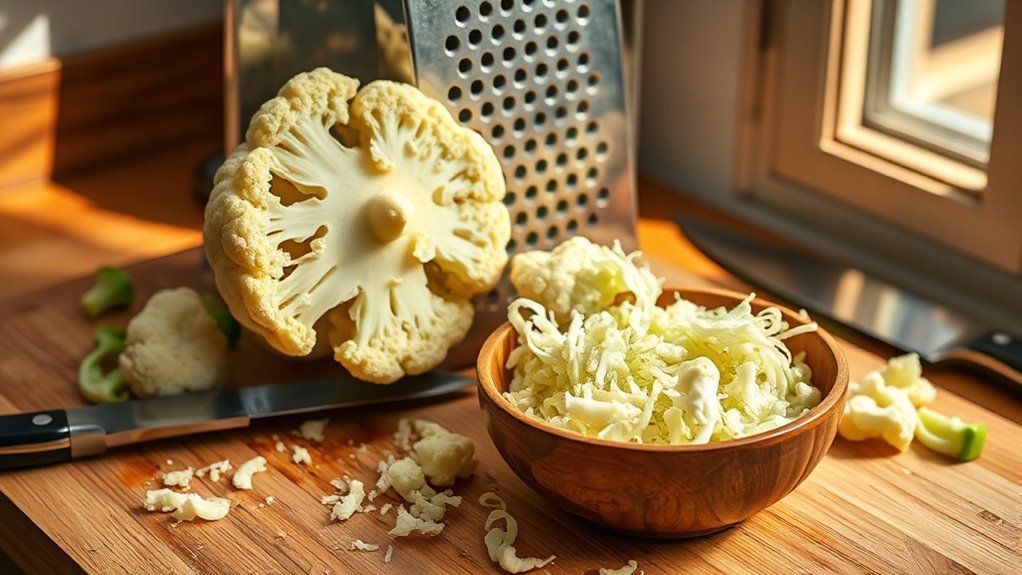
Once you have evenly sized florets, it’s time to turn them into cauliflower rice. If you don’t have a food processor to pulse the cauliflower, a box grater or a sharp knife works just as well. Use the large holes of the box grater to grate the florets over a bowl, catching the rice-sized pieces.
If you prefer a knife, chop the cauliflower into small, uniform florets, then finely mince and rock your knife over the pile until the pieces measure about 3–5 mm, resembling rice grains.
After grating or chopping, pat the cauliflower dry with a towel to remove excess moisture. This step is key to avoiding soggy rice. You can sauté your cauliflower rice in olive oil immediately or store it in an airtight container for meal prep. Both methods give you a fresh, fluffy texture without the need for a food processor’s pulse function.
Work in Small Batches to Avoid Overprocessing
You’ll want to work in small batches to keep the cauliflower from turning mushy or uneven. Processing just a few cups at a time helps you control the texture and maintain a light, fluffy consistency. Plus, it prevents your tools from overheating and makes sure each batch cooks evenly.
Prevent Overprocessing Damage
Although it might be tempting to process a large amount of cauliflower at once, working in small batches is key to preventing overprocessing. When you process just 2 to 3 cups at a time, you give yourself control to stop as soon as the texture is starting to look like rice, not mush.
Keep an eye on the pieces every 10 to 15 seconds to see when the mixture comes together evenly. Overloading your grater or blender leaves no room for blades to move freely, which causes uneven, overly processed results.
After each batch, squeeze or pat the cauliflower dry to remove moisture released by cell breakdown. Next time you prep cauliflower rice, remember that pacing yourself with small portions keeps your dish light, fluffy, and far from a soggy mess.
Ensure Even Texture
When you process cauliflower in small batches of 2 to 3 cups, you make certain each grain achieves a perfect rice-like texture without turning mushy. Working in these smaller portions helps prevent florets from clumping together, so you get evenly sized grains instead of a mix of paste and chunks.
Plus, you can check the texture after each 30 to 60 second pulse or a few grater passes and stop right when it looks like rice. If you’re blending, only fill it a quarter to a third full and pulse in short bursts. This method guarantees consistent results every time, just like the smooth delivery of peanut butter.
Want more kitchen tips like this delivered to your inbox? Sign up now!
Maintain Fluffy Consistency
Getting the texture just right is only part of the process; keeping your cauliflower rice light and fluffy makes all the difference. To maintain that perfect steam texture and avoid mushy results, work in small batches. Here’s how you do it:
- Process 2-3 cup portions at a time, pulsing for 30-60 seconds. Check often to prevent overprocessing.
- After each batch, squeeze out excess moisture with a towel to keep the rice airy and prevent clumping.
- Transfer each batch to a bowl and use gentle folding to combine. This preserves the fluffy texture for airy plating.
Remove Excess Moisture to Keep Cauliflower Rice Fluffy
Removing excess moisture from your cauliflower rice is essential to achieving a fluffy texture rather than a soggy mess. After ricing, spread the cauliflower on a clean kitchen towel or paper towels and fold it to press out liquid.
For a more effective dry, bunch the towel around the cauliflower and use a centrifugal spin by twisting firmly over the sink until almost no water drips. This step helps with humidity control during cooking, preventing your rice from steaming instead of sautéing.
If you use frozen cauliflower, thaw fully and squeeze out liquid until nearly dry. Before cooking or storing, make sure the cauliflower clumps slightly but doesn’t release water when squeezed.
Season Cauliflower Rice Before Cooking or Storing
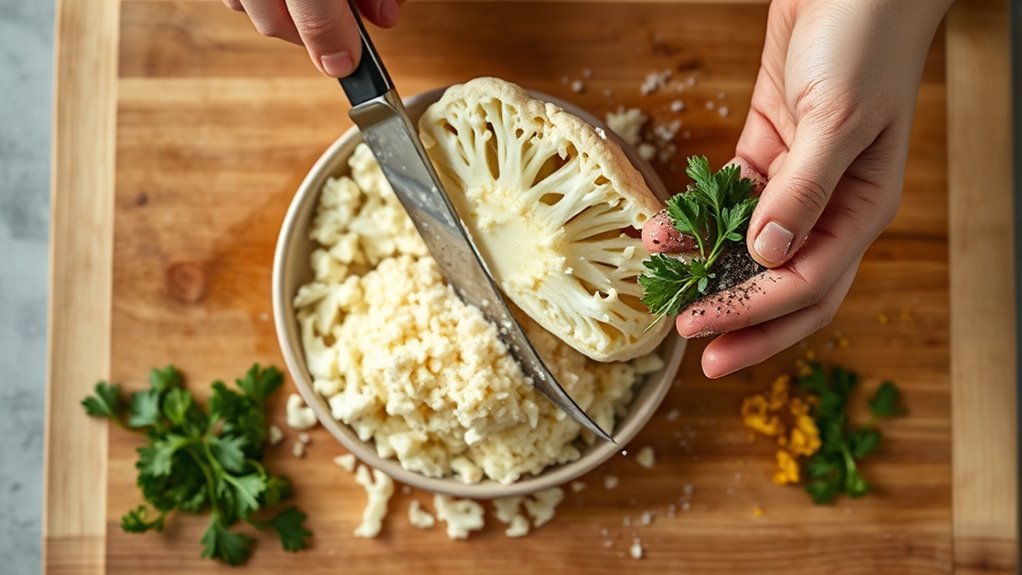
Once you’ve riced your cauliflower, go ahead and season it right away with some salt and pepper. This helps make sure the flavor is even throughout. If you’re planning to store it, try adding a bit of lemon zest or vinegar—they brighten up the taste without making it soggy. But if you’re cooking it right away, toss in some garlic, herbs, or spices to give it an extra kick of flavor while keeping the texture just right.
Seasoning Basics
Although cauliflower rice is mild on its own, seasoning it before cooking or storing can make a big difference in flavor and texture. You’ll want to balance herb pairings, acid balance, and seasoning textures to get the best results.
- Lightly salt raw cauliflower rice (¼–½ teaspoon per 2–3 cups) to draw out moisture and enhance its natural flavor.
- Add freshly ground black pepper and a squeeze of lemon or a teaspoon of vinegar if storing raw. This brightens the flavor and prevents dullness.
- Toss with 1 teaspoon olive oil and dried herbs like thyme, oregano, or smoked paprika before cooking to promote even browning and let the herbs bloom during sautéing.
Keep seasoning minimal if freezing to avoid texture changes and flavor loss.
Timing For Seasoning
Typically, you’ll want to season cauliflower rice just before cooking or serving to keep its texture and flavor at their best. Pre-salting risks include drawing out moisture, which leads to sogginess, especially with acidic dressings.
Timing experiments show seasoning right before sautéing lets flavors bloom with heat. If storing or freezing, hold off on salt or dressings until later to maintain freshness.
| Stage | When to Season | Why |
|---|---|---|
| Cooking | Just before or during | Flavors bloom, adjust to taste |
| Refrigerating | After cooking or before serving | Prevent sogginess |
| Freezing | After thawing and cooking | Preserve texture and flavor |
| Cold salads | After squeezing moisture | Even seasoning, no sogginess |
| Infused flavor | Toss with oil/spices before cooking | Enhanced aroma and taste |
Flavoring Tips
Before you cook or store your cauliflower rice, toss it with a bit of olive oil and salt to season evenly and enhance its natural flavor. This simple step guarantees every grain is flavorful from the start.
To elevate your cauliflower rice, try these tips:
- Use herb-infused oils or toss in fresh or dried herbs like parsley or dill right after ricing to let the flavors meld.
- Experiment with spice blends by adding garlic powder, onion powder, or lemon zest for a bright, savory punch.
- Incorporate umami-boosting additions such as soy sauce, tamari, or smoked paprika before storing to deepen the flavor.
These techniques make your cauliflower rice delicious whether you cook it immediately or save it for later.
Sauté Cauliflower Rice in Olive Oil for Perfect Texture
Heat a tablespoon of olive oil in a large skillet over medium heat until it shimmers, then spread the drained, riced cauliflower in an even layer. Using a pan that’s large enough prevents overcrowding, allowing moisture to evaporate quickly and helps you achieve that fluffy, rice-like texture.
If you want to try olive oil alternatives, avocado or grapeseed oil work well, but be mindful of their smoke points. Cooking over medium heat avoids high heat smoke and burnt flavors.
Sauté the cauliflower rice, stirring occasionally, for 3–5 minutes until tender yet slightly firm. For extra texture, let it cook without stirring for 30–60 seconds to develop golden bits.
Season with salt and pepper toward the end to draw out less liquid, preserving flavor and texture. Remove your cauliflower rice promptly once done to stop cooking and serve immediately for the best results.
Store Cauliflower Rice to Keep It Fresh
You’ll want to store your cauliflower rice in airtight containers or resealable bags to keep it fresh longer. Just pop it in the fridge, and it should stay good for about 4 to 5 days.
If you want to keep it even longer, freeze it in thin layers. This helps prevent clumping and makes it easier to grab just the amount you need later on. Proper storage not only keeps it fresh but also makes reheating a breeze and keeps that perfect texture intact.
Refrigeration Tips
To keep your cauliflower rice fresh, always store it in an airtight container in the refrigerator and label it with the date. Proper storage helps you track freshness and avoid spoilage.
Before storing, pat the rice dry to reduce moisture. This prevents sogginess and slows down spoilage. For the best texture, spread the rice in a single layer so it chills evenly.
Follow these refrigeration tips:
- Use airtight containers to maintain humidity control and prevent excess moisture.
- Label dates clearly to know when to use your cauliflower rice within 3 to 4 days.
- Keep cauliflower rice separate from strong-smelling foods to avoid odor issues and preserve its fresh taste.
These steps will help your cauliflower rice stay fresh and ready to enjoy.
Freezing Best Practices
Freezing cauliflower rice properly preserves its freshness and prevents clumping. First, cool the riced cauliflower completely, then spread it in a single layer on a baking sheet to flash-freeze for 1 to 2 hours. This step guarantees better airflow management and stops the pieces from sticking together.
Once frozen, portion the rice into 1 to 2 cup servings. Squeeze out as much air as possible from the freezer bags or use a vacuum sealer. Lay the bags flat to save space and encourage even thawing.
Store in the long-term freezer for up to 6 months. When ready to use, cook the rice from frozen in a skillet or microwave, stirring occasionally for the best thawing results and to evaporate excess moisture.
Airtight Storage Methods
When storing cauliflower rice, using airtight containers or resealable bags keeps it fresh longer and prevents odors from mixing with other foods. To maximize freshness and maintain quality, follow these tips:
- Use vacuum sealing or airtight glass containers to limit air exposure. This preserves texture and nutrients while preventing odor transfer.
- Control humidity by squeezing or patting the rice dry before storage. This reduces excess moisture that causes sogginess and shortens shelf life.
- Portion into meal-sized containers to avoid repeated temperature changes during thawing. This helps ensure consistent freshness.
Freeze Cauliflower Rice Flat to Prevent Clumps
You’ll want to spread your cauliflower rice evenly in a single layer on a parchment- or silicone-lined baking sheet right after squeezing out the excess moisture. This flash freezing technique prevents clumps by freezing grains separately.
Freeze uncovered for 1–2 hours until solid. Then, transfer the rice to a labeled, airtight freezer bag. Press it flat to create a thin brick, which helps with portion sizing and faster thawing.
Before sealing, remove as much air as possible using vacuum sealing methods to reduce freezer burn and keep texture fresh for 2–3 months.
| Step | Action | Purpose |
|---|---|---|
| Spread evenly | Single layer on lined tray | Prevents clumping |
| Freeze | 1–2 hours, uncovered | Flash freezing technique |
| Transfer & flatten | Into airtight bag, press flat | Portion sizing, easy thawing |
| Vacuum seal & label | Remove air, label bag | Maintain texture, avoid freezer burn |
This method guarantees your cauliflower rice stays fresh and easy to use whenever you need it.
Use Cauliflower Rice in Bowls, Fried Rice, and More
Transform cauliflower rice into a versatile base for meals by pairing 1–2 cups of cooked riced cauliflower with protein, roasted veggies, and a flavorful sauce to create balanced, low-carb bowls. This makes meal prep simple and nutritious while offering delightful texture contrasts.
Try these ideas to get started:
- Low-Carb Bowls: Combine 1 cup cauliflower rice with 3–4 ounces protein, 1 cup roasted veggies, and your favorite sauce pairings like tahini or chimichurri for vibrant, satisfying meals.
- Cauliflower Fried Rice: Sauté 2–3 cups riced cauliflower in olive oil, add beaten egg and mixed veggies, then season with soy sauce for a quick, grain-free stir-fry.
- Grain-Free Bowls: Top chilled cauliflower rice with warm chili or curry. The rice soaks up sauces without losing its texture, enhancing every bite.
For the best results, squeeze out excess moisture before cooking to keep your dishes fresh and vibrant.
Frequently Asked Questions
Can I Use Frozen Cauliflower to Make Cauliflower Rice Without a Processor?
Yes, you can use frozen cauliflower to make cauliflower rice without a processor. After thawing, squeeze out excess moisture to improve the thawed texture and prevent sogginess.
Consider blanching tips to maintain firmness before grating with a box grater. Be mindful of storage warnings because frozen cauliflower may release extra water, so dry it thoroughly before cooking or freezing again.
This guarantees your cauliflower rice stays fluffy and delicious every time.
How Long Does Cauliflower Rice Last in the Refrigerator?
Think of your cauliflower rice like a fresh bloom. Its storage time in the fridge lasts about 3 to 5 days. Keep an eye out for spoilage signs like a sour smell or slimy texture.
When you reheat, do it thoroughly to guarantee reheating safety and kill any lurking bacteria. To extend its life, store it in an airtight container and cool it quickly after cooking.
This way, you’ll enjoy it fresh and safe.
Is It Necessary to Peel the Cauliflower Stem Before Ricing?
No, you don’t need to peel the cauliflower stem before ricing. The stem texture is usually tender enough to include, and peeling isn’t necessary unless it feels tough or leathery.
To avoid any core bitterness or chewy bits, use the trim method: cut off the bottom and any brown spots, then dice the stem into small pieces. This helps everything process evenly and keeps your cauliflower rice consistent and tasty.
Can I Microwave Cauliflower Rice Instead of Sautéing It?
You can definitely microwave cauliflower rice instead of sautéing it. Imagine Sarah, who pressed the riced cauliflower in towels to control moisture, then used microwave steaming for 3 minutes.
She noticed the texture differences: it was fluffier but less caramelized than sautéed rice. By stirring halfway through, she kept it evenly cooked without mushiness.
Just be sure to control moisture well to keep it light and avoid sogginess.
What Are Some Low-Carb Recipes Using Cauliflower Rice?
You can whip up tasty keto bowls by topping cauliflower rice with grilled chicken, avocado, and salsa for a low-carb boost. Try stir fry swaps by sautéing cauliflower rice with eggs, veggies, and soy sauce. It’s a perfect low-carb substitute.
For something creamy, make cauli risotto by simmering cauliflower rice with broth, Parmesan, and mushrooms. These recipes keep carbs low while delivering great flavor and texture you’ll love.
Conclusion
Think of making cauliflower rice without a food processor like painting with a brush instead of spray. It’s hands-on, but the control is worth it.
Just like a chef who swapped gadgets for tradition and found richer flavors, you’ll discover that grating by hand gives you a fresher, fluffier texture.
With a bit of patience and these simple steps, you’re not just cooking, you’re crafting a healthier, tastier meal from scratch. Enjoy every bite!