How to Create a Lacto-Ovo Vegetarian Meal Plan
To create a lacto-ovo vegetarian meal plan, combine dairy and eggs with plenty of low-carb vegetables like leafy greens and peppers.
Focus on complete proteins, healthy fats from nuts and seeds, and fiber-rich, nutrient-dense foods.
Avoid high-carb items like potatoes or most grains.
Plan meals with variety, batch cook staples, and store them safely.
Adjust portions and ingredients to fit your goals and preferences, ensuring balanced nutrition and flexibility.
Keep exploring to craft meals that suit your lifestyle.
What Is a Lacto-Ovo Vegetarian Diet?
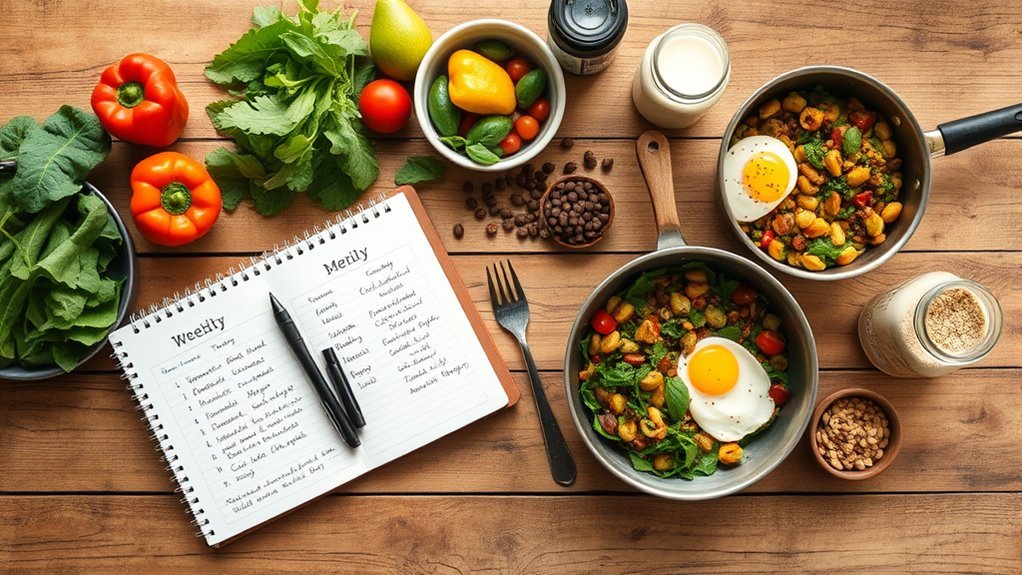
Although you exclude meat, poultry, and seafood, a lacto-ovo vegetarian diet lets you enjoy dairy products and eggs, making it one of the most common and flexible vegetarian options. This diet combines plant-based foods with animal-derived products, allowing you to benefit from a wider range of nutrients.
By including dairy and eggs, you easily get complete proteins, as these foods contain all nine essential amino acids that plant sources alone might lack. You’ll also find it simpler to meet your vitamin B12 and calcium needs, nutrients often harder to obtain on strict vegetarian plans.
The inclusion of these animal-derived products guarantees that your body receives crucial nourishment without the need for supplements. Plus, the dietary flexibility of a lacto-ovo vegetarian diet means you can enjoy diverse meals and navigate social dining situations more comfortably. This balance makes it a practical and healthful choice for many people exploring vegetarianism.
Why Choose a Lacto-Ovo Vegetarian, Low-Carb Meal Plan?
Choosing a lacto-ovo vegetarian, low-carb meal plan is a smart way to manage your blood sugar levels and lower the risk of chronic diseases like type 2 diabetes. You get plenty of protein from eggs and dairy, which means you’re not overloading on carbs.
Plus, this approach makes it easier to stick with healthy eating because you can enjoy a wide variety of nutrient-rich foods. It’s all about finding a balance that works for you while keeping things tasty and satisfying.
Health Benefits Overview
When you combine a lacto-ovo vegetarian diet with low-carb principles, you get a powerful way to support your health. This approach provides complete proteins through dairy products and eggs, essential for muscle maintenance and overall wellness.
By focusing on nutrient-dense foods like vegetables, nuts, and seeds, a low-carb vegetarian plan promotes metabolic health and helps regulate blood sugar levels. Research shows lacto-ovo vegetarians often have lower cholesterol and a reduced risk of cardiovascular disease, highlighting key health benefits.
Plus, this diet can boost your energy and reduce inflammation. Choosing a lacto-ovo vegetarian, low-carb meal plan means you’re fueling your body with wholesome nutrients while protecting your heart and supporting long-term health.
Carb Management Advantages
Balancing your carbohydrate intake plays a significant role in maximizing the benefits of a lacto-ovo vegetarian meal plan. Choosing a low-carb approach helps regulate blood sugar and boosts insulin sensitivity, which supports your metabolic health.
By including dairy and eggs, you get high-quality protein that preserves muscle without increasing carbs. This carbohydrate management strategy also aids weight control and lowers the risk of metabolic syndrome.
Focusing on nutrient-dense, low-carb plant foods like non-starchy vegetables enhances satiety, reducing cravings and keeping your energy stable throughout the day. With this meal plan, you’ll enjoy sustained fullness and better overall metabolic health, making it easier to stick with your vegetarian lifestyle while meeting your wellness goals.
Balancing Nutrients and Macros in Your Meal Plan
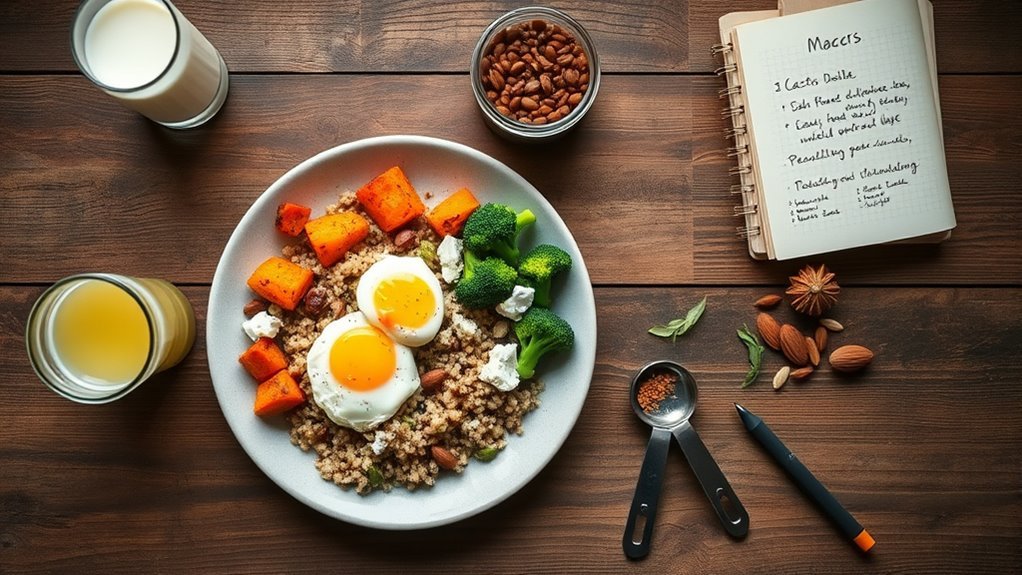
To create a well-rounded lacto-ovo vegetarian meal plan, you’ll want to include complete protein sources like eggs and dairy in every meal to meet your amino acid needs. Balancing your nutrients and macros means combining protein with carbohydrates and healthy fats for a balanced diet.
Focus on whole grains and legumes to supply fiber-rich carbohydrates. These help stabilize blood sugar and support digestion. Incorporate a variety of colorful vegetables to provide essential vitamins, minerals, and antioxidants that round out your nutrient intake.
Don’t forget healthy fats from nuts, seeds, and avocados. They aid nutrient absorption and keep your energy steady. When meal planning, adjust your macros to fit your personal needs, aiming for about 50-130 grams of carbohydrates daily while ensuring adequate protein and fat.
This approach keeps your meals nutritious, satisfying, and aligned with your health goals.
Key Low-Carb Foods to Include and Avoid
Although a lacto-ovo vegetarian diet includes many carb-rich foods, you can still focus on key low-carb options to keep your meal plan balanced. Prioritize low-carb vegetables like leafy greens, cauliflower, zucchini, and peppers, all typically under 5 grams of carbs per serving.
Include dairy products such as cheese, Greek yogurt, and cottage cheese. They’re low in carbs and rich in protein. Eggs are another excellent, versatile choice, containing less than 1 gram of carbs each.
Avoid high-carb plant foods like potatoes, sweet potatoes, corn, and most grains, which can pack 15-30 grams of carbs per serving. Also, limit or skip processed vegetarian meat and breaded items since they often include added sugars and refined carbs that don’t fit well in a low-carb diet.
Instead, focus on whole plant-based proteins and fresh ingredients to maintain the balance you need for effective meal planning.
How to Plan and Batch Cook Lacto-Ovo Vegetarian Meals
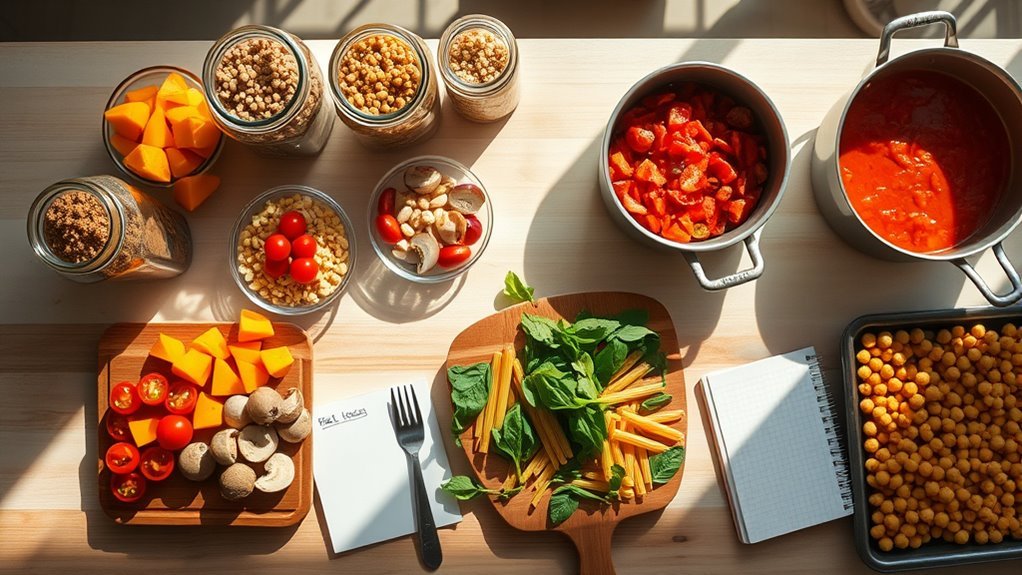
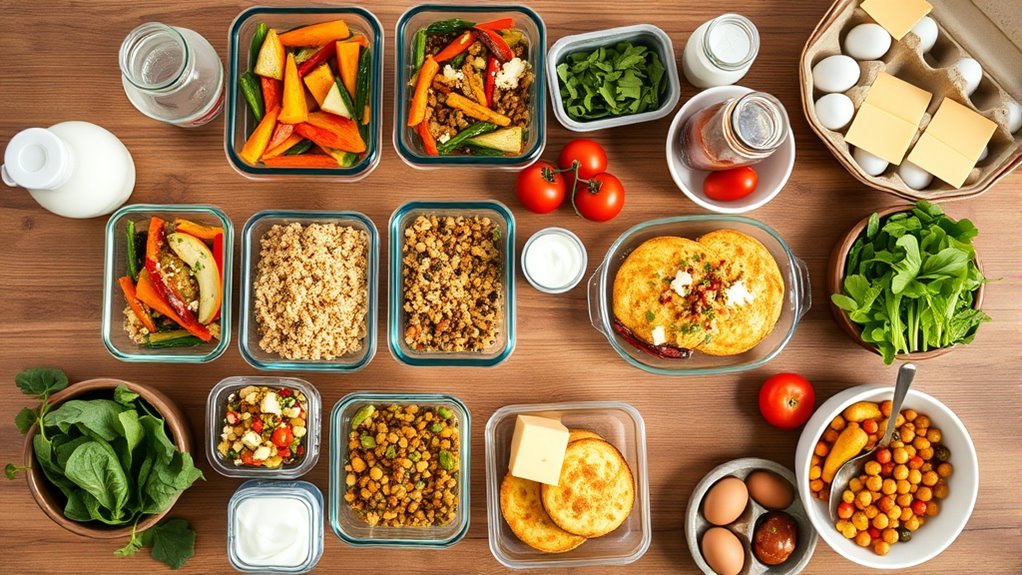
When you plan and batch cook lacto-ovo vegetarian meals, you save valuable time and reduce stress during busy weekdays. Start your meal prep by cooking staple ingredients like grains, legumes, and roasted vegetables in bulk.
Incorporate versatile proteins such as boiled eggs, baked tofu, and frittatas to keep your meals nutritious and quick to assemble. A well-thought-out meal plan ensures you maintain nutritional balance while enjoying variety throughout the week.
Use airtight containers to store your prepped food, labeling each with dates to promote food safety and organization. Batch cooking these components lets you mix and match meals easily without compromising flavor or quality.
Safe Storage and Reheating Tips for Meal Prep
Properly storing and reheating your lacto-ovo vegetarian meals guarantees they stay safe and delicious throughout the week. To prevent bacterial growth, cool cooked foods within two hours and place them in shallow, airtight containers.
Label and date all items, and use refrigerated meals within 3-4 days. Freeze leftovers like soups or casseroles to extend their shelf life, but avoid refreezing thawed items, especially eggs and yogurt.
When reheating, guarantee meals reach an internal temperature of 165°F (74°C) to maintain reheating safety and prevent foodborne illness.
| Food Storage Tips | Reheating Safety |
|---|---|
| Use airtight containers | Heat to 165°F (74°C) |
| Store in the fridge up to 4 days | Check temperature with a food thermometer |
| Freeze leftovers promptly | Avoid refreezing thawed foods |
Following these food safety tips improves your meal prep storage and keeps your meals fresh and safe.
Adjusting Your Meal Plan to Fit Your Goals and Preferences
To create a meal plan that truly works for you, start by tailoring your protein sources, like eggs and dairy, to fit your daily nutritional needs and goals. Adjust portion sizes and ingredient choices based on your specific health objectives, whether that’s weight loss, muscle gain, or managing blood sugar.
Embrace food variety by including colorful fruits and vegetables that align with your dietary preferences. Don’t hesitate to make culinary substitutions to accommodate food sensitivities or taste preferences, ensuring your plan remains enjoyable and balanced.
Regularly revisit your meal plan to reflect progress and seasonal changes.
Keep these tips in mind to adjust your plan effectively:
- Choose protein sources that match your nutritional needs
- Modify portion sizes for your health objectives
- Add diverse fruits and vegetables for vitamins and minerals
- Use substitutions to respect food sensitivities and preferences
- Update your plan regularly to maintain balance and motivation
This approach helps you stay on track while honoring your unique goals and preferences.
Frequently Asked Questions
How Can I Eat Out While Following a Lacto-Ovo Vegetarian Plan?
You can enjoy dining out by focusing on restaurant options with vegetarian-friendly dishes and menu customization. Always communicate your dietary restrictions clearly and ask for ingredient transparency to avoid hidden animal products.
Practicing good dining etiquette, like confirming details politely, helps. Incorporate allergy considerations if needed. Plan meals ahead by checking menus online, especially when traveling. This proactive approach guarantees you stick to your lacto-ovo vegetarian plan smoothly.
What Are Common Mistakes to Avoid in a Lacto-Ovo Vegetarian Diet?
You’ll want to avoid relying too much on meat substitutes and processed snack options, which can be high in sodium and unhealthy fats. Skipping diverse protein sources and nutrient-dense dairy choices limits your nutrient intake.
Don’t ignore ingredient labels during grocery shopping, and don’t neglect meal prep or cooking techniques that enhance nutrient absorption. Balancing meals thoughtfully helps make certain you get enough protein and key vitamins, keeping your lacto-ovo vegetarian diet healthy and satisfying.
How Do I Handle Social Situations With Non-Vegetarian Eaters?
When you’re surrounded by sizzling grills at a barbecue, social acceptance can feel tricky. Handle peer pressure by confidently choosing menu options that suit you, practicing polite dining etiquette. Use conversation strategies to share your reasons without judgment, respecting cultural differences.
Plan social events where vegetarian advocacy thrives, and manage guilt by focusing on your values. You’ll find social planning helps you enjoy gatherings while staying true to your diet.
Can I Include Occasional Cheat Meals in My Vegetarian Plan?
Yes, you can include occasional cheat meals in your vegetarian plan by practicing flexible eating and meal customization. Use cheat meal tips to pick guilt-free treats that maintain nutritional balance.
Apply moderation strategies and indulgence planning to avoid overdoing it, ensuring dietary flexibility without harming your goals. Enjoyment methods like savoring flavors mindfully help you stay satisfied and committed.
This way, you keep your plan enjoyable and balanced without guilt.
How Do I Track Vitamins Like B12 Without Supplements?
Think of tracking B12 like tending a garden. You need the right seeds to grow strong. You can monitor your intake by reading nutritional labels on fortified foods like plant-based milks, cereals, and nutritional yeast.
Include dairy products and eggs regularly, as they’re rich sources. Follow dietary guidelines and consider blood testing to check your levels.
Adjust your lifestyle by choosing vegan options wisely and exploring fish alternatives if needed. This helps ensure balanced B12 without supplements.
Conclusion
Creating a lacto-ovo vegetarian meal plan can boost your health and energy, especially with a low-carb focus. Did you know nearly 10% of Americans identify as vegetarian? That shows how popular plant-based eating is becoming.
By balancing your nutrients and including key foods, you’ll enjoy delicious meals that fuel your body. With smart planning and batch cooking, sticking to your goals gets easier and tastier every day. You’ve got this!