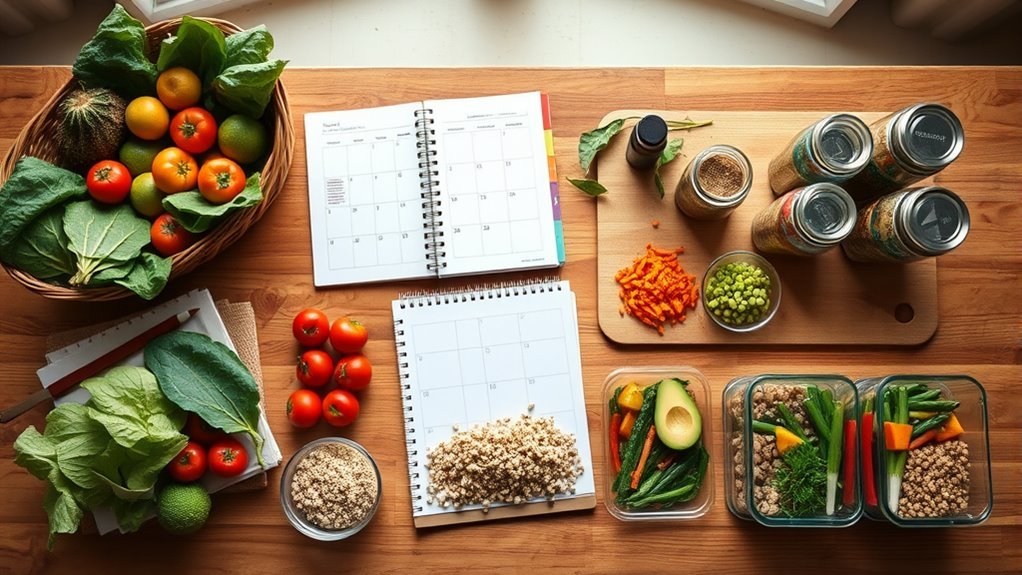
How to Plan Vegan Meals in 5 Simple Steps
Start by checking your pantry and fridge to use what you already have and minimize waste.
Next, assign daily vegan meal themes like Taco Tuesday for easy planning and variety.
Choose simple, quick recipes that fit your schedule and prep needs.
Then, create a smart grocery list organized by sections and quantities to avoid overbuying.
Finally, prep meal components in advance, saving you time and stress.
Keep going to discover practical tips for each step.
Check Your Pantry and Fridge Before Planning Vegan Meals
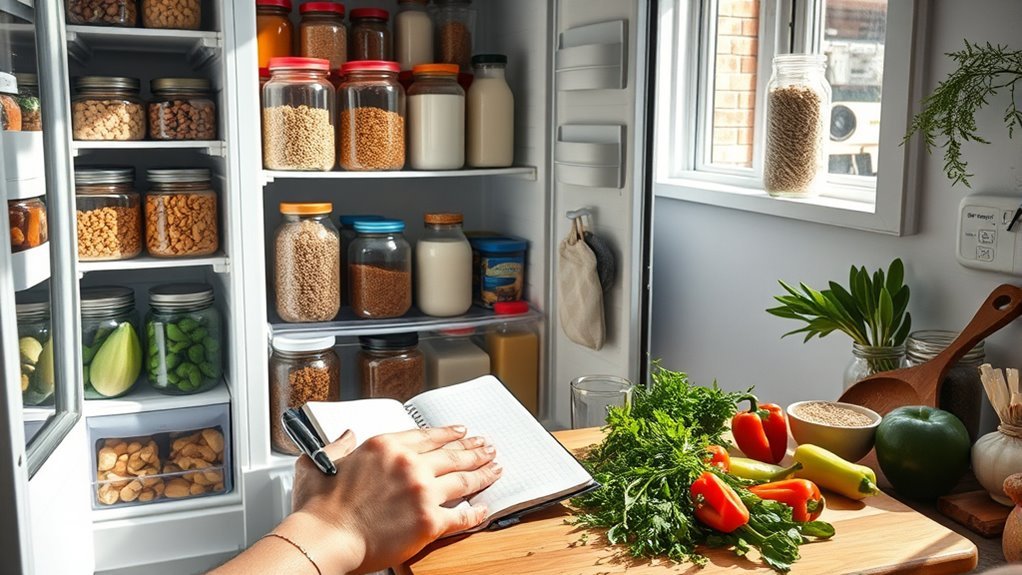
Before you start planning your vegan meals, open your pantry, fridge, and freezer to see what ingredients you already have. Conduct a thorough pantry assessment by taking inventory of staple ingredients like beans, grains, and frozen vegetables that can form the base of many dishes.
Start meal planning by checking your pantry, fridge, and freezer for staple ingredients and leftovers.
Check for perishable items and fresh produce nearing expiration. Using these first in your meal prep helps reduce food waste and saves money. Don’t forget to note leftover ingredients from previous meals; they can easily be repurposed into new, cost-effective meals.
This ingredient inventory gives you a clear picture of what’s available, making meal planning more flexible and efficient. By building your vegan meal plan around what you already own, you’ll minimize unnecessary shopping trips and avoid letting food spoil.
This approach not only supports your budget but also encourages thoughtful, sustainable cooking habits that make meal prep simpler and more enjoyable.
Use Daily Vegan Meal Themes to Make Planning Easy
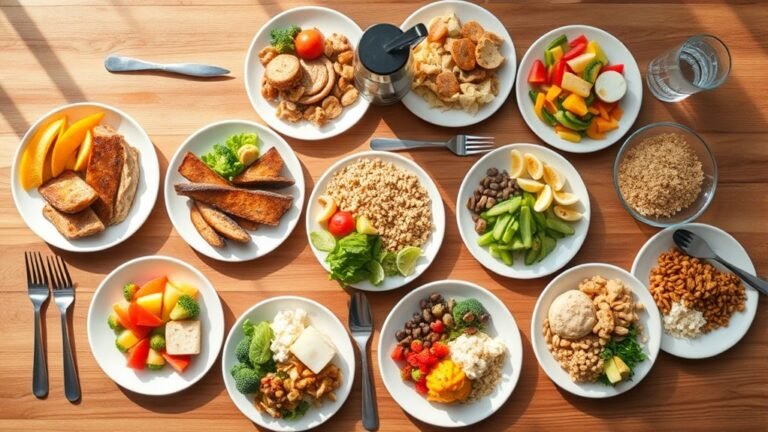
Once you’ve taken stock of your ingredients, setting daily vegan meal themes can simplify your planning even more. By assigning themed days like Taco Tuesday or Grain Bowl Wednesday, you create an organized routine that narrows down meal options and speeds up decision-making. This approach not only adds meal variety but also helps maintain nutrient balance by focusing on different food groups each day.
Incorporating vegan meal themes into your weekly routine makes meal planning less overwhelming and more enjoyable. Additionally, themed days support batch cooking and meal prep by allowing you to prepare ingredients in advance, saving time during busy weekdays.
Rotating seasonal themes keeps your plant-based meals fresh and exciting without complicating your routine. Using daily vegan meal themes is a smart strategy to streamline your meal planning, reduce decision fatigue, and guarantee you get a balanced, varied diet every week.
Choose Simple Vegan Recipes That Work for Your Schedule
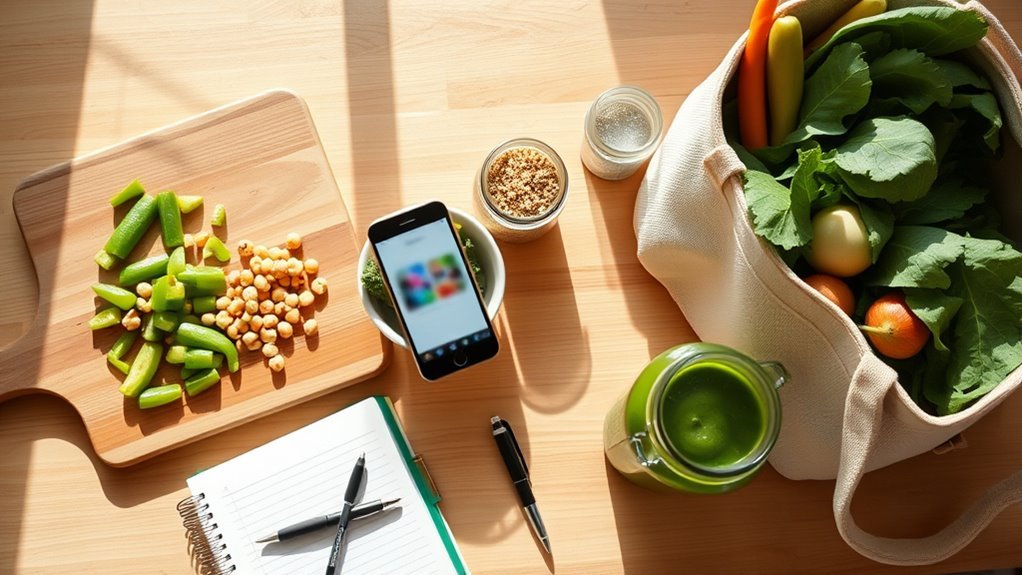
When you choose simple vegan recipes that fit your schedule, meal prep becomes less stressful and more manageable. Focus on easy vegan meal plan ideas using simple ingredients and one-pot dishes to save time. Prioritize quick meals on busy days and more involved dishes when you have extra time.
Use preparation tips like prepping grains or chopping veggies ahead to streamline your plant-based diet routine. Grab-and-go lunch options also help keep your meal scheduling flexible.
| Meal Type | Recipe Ideas |
|---|---|
| Quick Meals | Stir-fries, salads |
| One-Pot Dishes | Lentil stew, vegetable curry |
| Grab-and-Go Lunch | Chickpea salad, wraps |
| Prep-Ahead Meals | Grain bowls, bean chili |
Choosing adaptable vegan recipes with pantry staples reduces stress and supports consistent meal prep, making your plant-based diet easier to maintain.
Create a Smart Grocery List for Your Vegan Meals
To create a smart grocery list for your vegan meals, start by reviewing your weekly meal plan to pinpoint exactly what ingredients you’ll need. Focus on whole foods and plant-based proteins like grains, beans, and fresh produce to keep your meals nutritious and budget-friendly. Organize your grocery list by sections such as the produce section, grains, legumes, and frozen items to speed up your shopping trip.
Start your vegan grocery list by reviewing your meal plan and organizing items by sections for efficient shopping.
Follow these shopping tips to optimize your grocery list:
- Include precise ingredient quantities based on your meal prep portions to avoid waste and overbuying.
- Prioritize bulk buying for staples like rice, oats, and dried beans to save money and reduce packaging.
- Double-check your list against your meal plan to ensure all vegan ingredients are covered.
This approach streamlines meal planning and helps you stock your kitchen efficiently, making your vegan lifestyle easier to maintain.
Prep Vegan Meal Components Ahead to Save Time
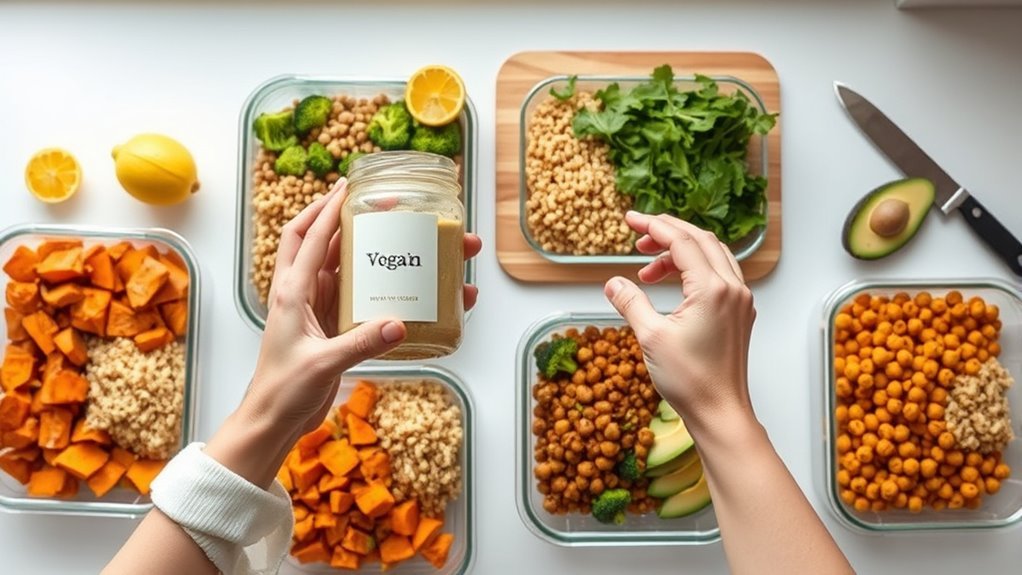
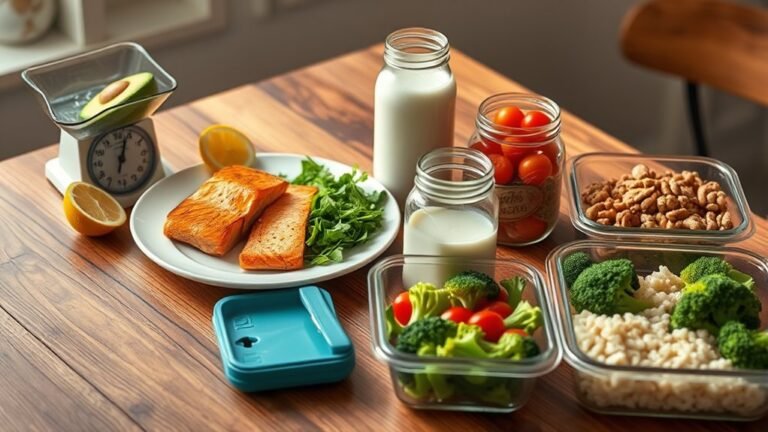
By prepping key vegan meal components like grains, beans, and chopped veggies ahead of time, you can drastically cut down your daily cooking time and make weeknight meals a breeze. Start with batch cooking cooked grains such as rice or quinoa and plant-based ingredients like lentils or beans. Store these in airtight ingredient containers for easy access.
Pre-chopped vegetables save you from last-minute chopping and speed up meal prep considerably. You can also prepare meal bundles by combining pre-measured ingredients for specific recipes, making quick assembly straightforward.
Don’t forget to make freezer-friendly portions of soups or sauces to reheat on busy days. This time-saving approach lets you pull together nutritious meals without stress, ensuring you always have versatile components ready. By organizing your meal prep this way, you’ll not only save time but also reduce food waste and enjoy more varied, delicious vegan meals throughout the week.
Frequently Asked Questions
How Do I Ensure I Get Enough Protein on a Vegan Diet?
To guarantee you get enough protein on a vegan diet, focus on plant-based proteins like legume varieties, tofu, and tempeh. Also include protein-rich grains such as quinoa and oats.
Include nut and seed options in your meals and snacks. Use protein powder tips to supplement intake when needed.
Practice balanced meal planning and protein absorption tips by combining different sources throughout the day. Vegan snack ideas like hummus with veggies help boost protein too.
What Are Common Vegan Sources of Vitamin B12?
Imagine sprinkling golden nutritional yeast over your pasta or pouring creamy vegan dairy alternatives into your morning cereal. These fortified foods, alongside plant-based cereals and B12-rich mushrooms, make getting vitamin B12 easier.
You can also enjoy fermented foods or specific seaweed varieties as vegan snack options. Don’t forget B12 supplements or, in some cases, B12 injections to reliably meet your needs and keep your body energized and healthy.
Can I Eat Out While Sticking to a Vegan Meal Plan?
Yes, you can eat out while sticking to a vegan meal plan. Use restaurant tips like checking menu options online and choosing vegan-friendly venues.
Communicate your dietary restrictions clearly to staff and ask for meal customization to suit your needs. Consider reservation strategies to secure your spot and inquire about portion sizes and allergy considerations.
When traveling, research vegan spots ahead to maintain dining etiquette and enjoy stress-free travel dining experiences.
How Do I Handle Cravings for Non-Vegan Foods?
Think of cravings like a storm you can calm. You handle cravings for non-vegan foods by using craving management techniques. Reach for vegan snacks and plant-based desserts that satisfy without guilt.
Use flavor enhancements and healthy substitutions to mimic your favorites. Practice mindful eating and recognize craving triggers, especially emotional eating.
Pair foods thoughtfully and sip herbal teas to soothe hunger cues. Over time, these habits become your new normal, easing cravings naturally.
What Are Good Vegan Substitutes for Dairy and Eggs?
You can easily swap dairy and eggs with plant-based cheeses and soy milk options for cooking or drinking. Try vegan yogurt varieties like coconut yogurt or cashew-based ones for creamy textures.
Use aquafaba as an egg replacer brand alternative in baking, or explore nut-based spreads and vegan butter alternatives for richness. Don’t forget seed-based milks and dairy-free ice creams to satisfy your sweet tooth while keeping meals fully vegan.
Conclusion
By checking your pantry first, you’ll avoid buying duplicates and reduce waste, proving meal planning isn’t just convenient but eco-friendly too. Using daily themes keeps things simple and fun, while prepping ahead saves you time during busy days.
Although some say vegan meals are hard to plan, you’ll find they’re actually easier with these steps. Embrace this approach, and you’ll enjoy stress-free, nutritious meals that support both your health and the planet.