3 Reasons to Decide If You Need a Food Processor
You need a food processor because it saves you up to 75% of prep time, handling chopping, slicing, and kneading in seconds.
It adds versatility by letting you switch quickly between tasks like grating, pureeing, and making dough, all with uniform results.
Plus, it fits your kitchen with safety features, large or small capacity options, and easy cleanup.
If you want to explore how it suits your cooking style and space, keep going for more insights.
Why a Food Processor Saves You Time and Effort
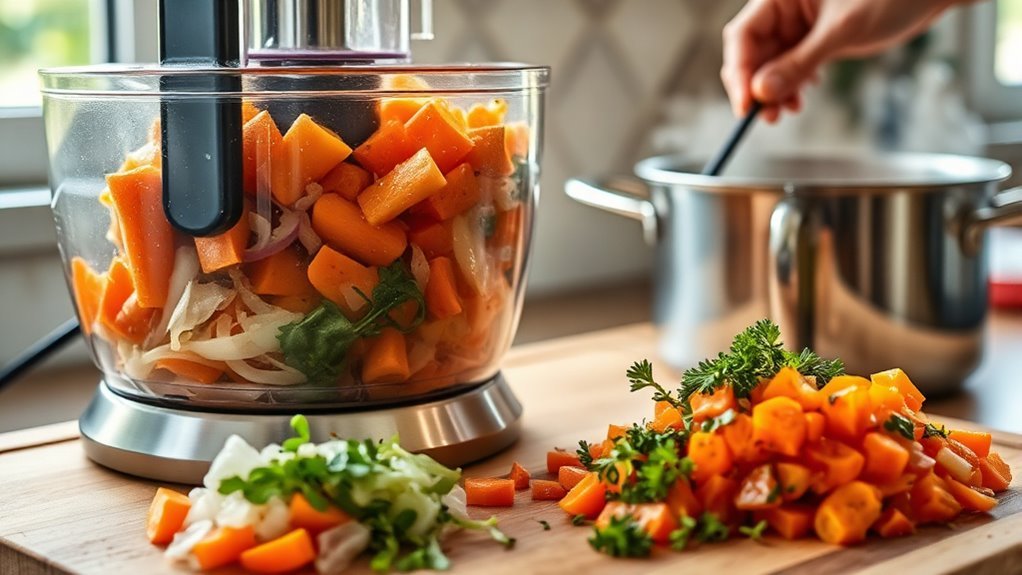
When you’re prepping meals, a food processor cuts down your work dramatically by chopping, slicing, shredding, and pureeing large quantities of vegetables in seconds. This saves you up to 75% of the time compared to doing it all by hand.
You can tackle tough tasks like kneading dough or grinding nuts in minutes, thanks to powerful motors that handle heavy-duty jobs with ease. The large-capacity bowls let you batch prep efficiently, so you can prepare meals for the entire week in one go.
Interchangeable blades and discs mean you switch functions quickly without juggling multiple tools. Plus, built-in safety features and push-feed designs let you work faster with fewer interruptions. So you won’t have to stop to reposition ingredients or worry about accidents.
This combination of speed, capacity, and safety transforms your kitchen routine, making meal prep quicker, easier, and safer every time.
How a Food Processor Adds Versatility to Your Cooking
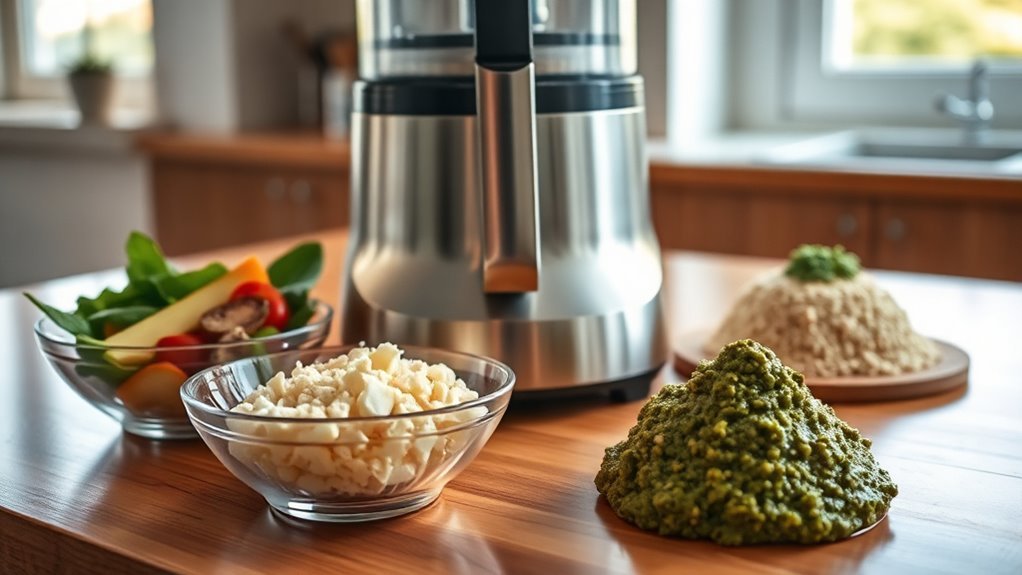
Release a world of culinary possibilities with a food processor that handles everything from slicing and grating to kneading dough and pureeing soups. Its dough capability lets you prepare up to 2-pound batches effortlessly, perfect for homemade breads and pastries.
You can switch blades to julienne vegetables or chop nuts, saving you the hassle of juggling multiple tools. Thanks to its high-torque motor and sealed bowl, it smoothly tackles wet and dry ingredients alike, whether you’re making salsa, hummus, or nut butter.
The processor guarantees a uniform texture in all your recipes, improving cooking results and consistency, especially for delicate dishes like pie crusts or pesto. Plus, large-capacity bowls make batch cooking a breeze, letting you prep meals for the week or entertain guests without extra stress.
With this versatile appliance, you expand your kitchen’s capabilities while streamlining food prep markedly.
Is a Food Processor Right for Your Kitchen?
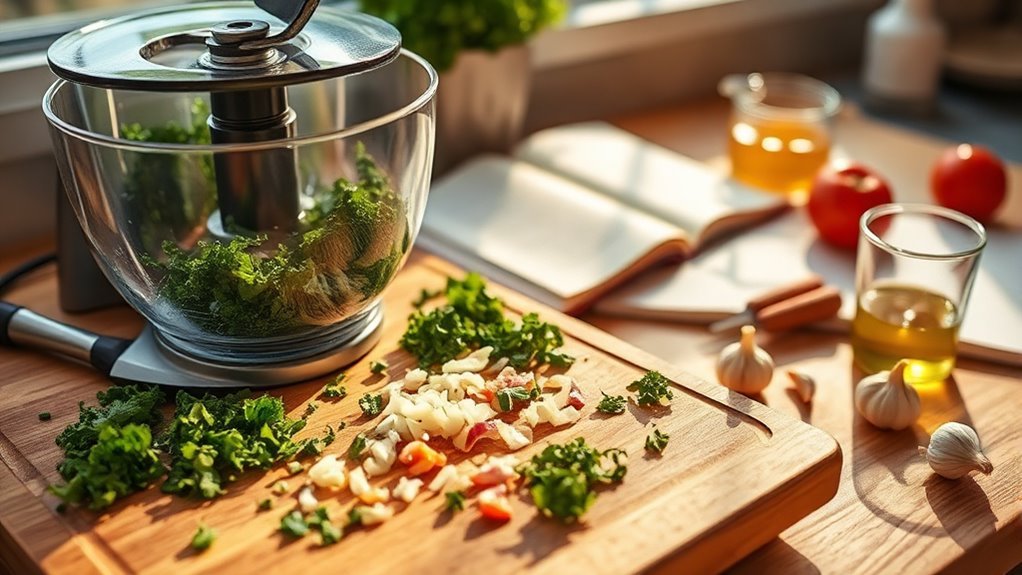
With so many tasks a food processor can handle, it’s tempting to add one to your kitchen arsenal. But before you decide, consider these points to see if it’s right for your kitchen:
- Countertop space: Food processors can be bulky, so measure your available space. Compact or nestable parts help if space is tight.
- Budget constraints: While versatile, quality models vary in price. Balance cost with features like capacity and attachments to get the best value.
- Usage needs: Pick a size that fits your cooking habits. A 7–12 cup model suits families, while mini versions handle smaller tasks efficiently.
- Cleanup and noise: Dishwasher-safe parts simplify cleanup. Also, consider noise levels and safety features for daily convenience.
Weighing these factors helps you decide if a food processor will truly enhance your kitchen or just crowd your countertop.
Frequently Asked Questions
How Do I Clean and Maintain a Food Processor?
To clean and maintain your food processor, unplug it right after use. Remove and rinse the bowl, lid, and blades under warm water to avoid dried food.
Wash removable parts in warm soapy water or the dishwasher if safe. Wipe the motor base with a damp cloth, being careful to avoid water in the vents.
Take care of the blades by sharpening or replacing them when they get dull. Also, check if the gasket needs replacing to prevent leaks.
Store all parts dry and make sure to clean your food processor regularly.
What Safety Features Should I Look for in a Food Processor?
You don’t want a food processor that’s as unpredictable as a wild beast! Look for safety interlocks that stop the motor unless the bowl and lid are locked perfectly.
Overload protection is a must too. It prevents the motor from burning out if the machine gets jammed.
Also, make sure it has non-slip feet and secure blade locks so you can handle everything safely without any slips or cuts.
Can a Food Processor Replace a Blender Completely?
No, a food processor can’t replace a blender completely. You’ll find that pureeing tests often show coarser textures from food processors, especially without enough added liquid.
Their wider, shallower bowls lack the vessel compatibility that blenders’ tall jars offer for smooth, frothy results. While you can use a food processor for some blending tasks, it won’t match the consistency or ease you get from a high-powered blender.
Are There Specific Brands Known for Durability?
Like a trusty old car that just won’t quit, some food processor brands stand out for brand longevity and warranty reputation. You’ll find Cuisinart and KitchenAid leading the pack with durable motors and solid warranties.
Breville’s high-torque models also offer lasting power, while Hamilton Beach gives you budget-friendly options with decent warranty coverage. When choosing, prioritize brands that back their products with long warranties and easy access to replacement parts.
What Accessories Come With Most Food Processors?
Most food processors come with multiple blade types like a standard S-shaped chopping blade and a reversible shredding or slicing disc. You’ll also find a dough blade for kneading and often a mini-chopping blade for smaller tasks.
Capacity options usually include a main bowl and a smaller mini bowl for sauces or dressings. Additional accessories might be a citrus juicer, whisk, spatulas, and safety-locking lids with feed chutes, making your prep work easier.
Conclusion
You might think a food processor is just a luxury, but it’s actually a time-saver and a versatile kitchen helper. While some say it’s unnecessary if you have a blender or mixer, the truth is its unique functions make prep faster and easier.
If you cook often or want to experiment, it’s worth considering. Ultimately, only you can decide if this tool fits your cooking style and kitchen needs.