What Can You Do With a Food Processor: 3 Essential Tasks
You can speed up prep by quickly chopping vegetables, shredding cabbage, pureeing sauces, or grinding meat for burgers.
You’ll master doughs and batters by mixing pizza dough, pie crusts, or pasta with precise pulses and careful water additions.
Plus, you can create smooth sauces and nut butters by toasting and processing nuts, then emulsifying oils for creamy textures.
Keep exploring to reveal even more ways a food processor can transform your cooking.
Speed Up Prep: Transform Ingredients With Your Food Processor

Cut your prep time drastically by using your food processor to chop, shred, or puree ingredients in seconds. When you have a big Meal Prep ahead, your processor becomes indispensable.
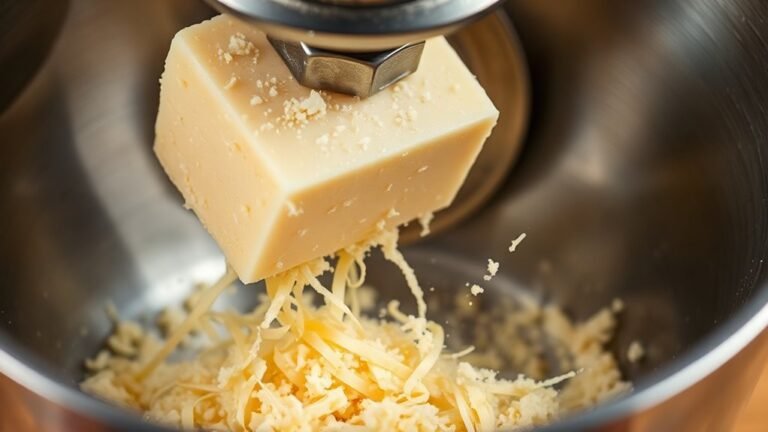
It can chop or shred large quantities of vegetables effortlessly. A 4-quart bowl can shred multiple heads of cabbage for coleslaw in just minutes, turning hours of work into moments. You can also puree roasted tomatoes, garlic, and aromatics into smooth sauces or soups in under a minute, saving you both time and effort.
Plus, grinding partially frozen meat in short pulses lets you create custom burger or sausage blends without turning the meat into paste. Emulsifying dressings and aiolis is a breeze when you stream oil through the feed tube while the motor runs, whipping up stable emulsions quickly.
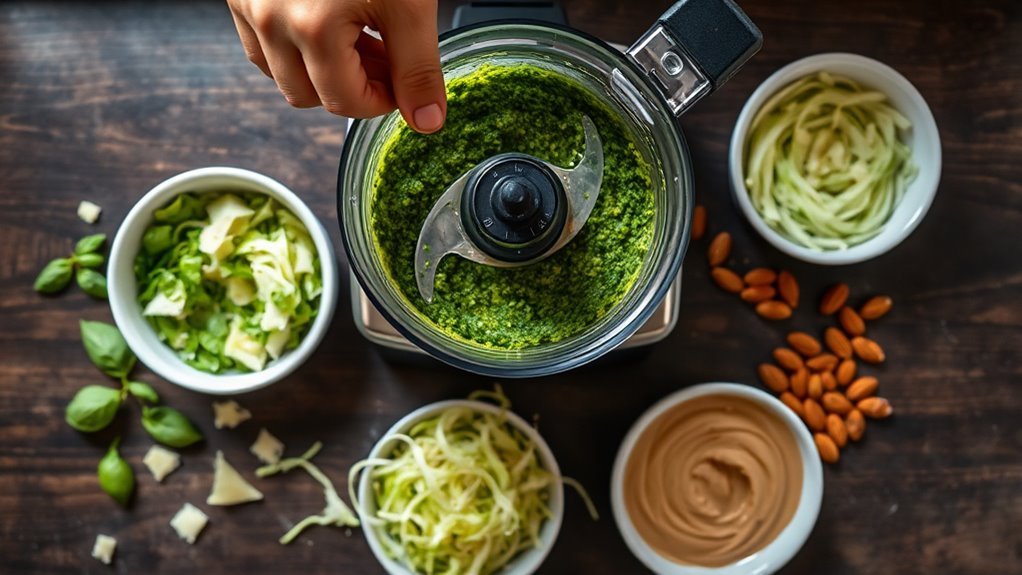
For nut butters or flours, simply process toasted nuts—pulse for flour or continue processing for a few minutes until smooth butter forms. Your food processor truly speeds up every step of prep.
Master Doughs and Batters With Your Food Processor
Whip up doughs and batters quickly by letting your food processor handle the mixing and kneading. Combine flour, sugar, and instant yeast in the bowl, then pulse to mix.
With the processor running, stream in ice water until a shaggy pizza dough forms, ready to rest. Using the metal or plastic dough blade or short pulses with the sharp S-blade, you can bring flour and liquids into a cohesive ball.
Adding a tablespoon of oil and mixing briefly helps finish the dough while minimizing gluten development compared to a stand mixer. For small-batch pasta or gnocchi dough, pulse flour and salt, then stream eggs and olive oil through the feed tube until dough clumps form.
You can also make flaky pie or pastry dough by pulsing cold cubed butter into flour until pea-sized pieces remain before adding ice water gradually. Your food processor’s precision and speed make mastering doughs and batters effortless.
Create Smooth Sauces and Nut Butters in Your Food Processor
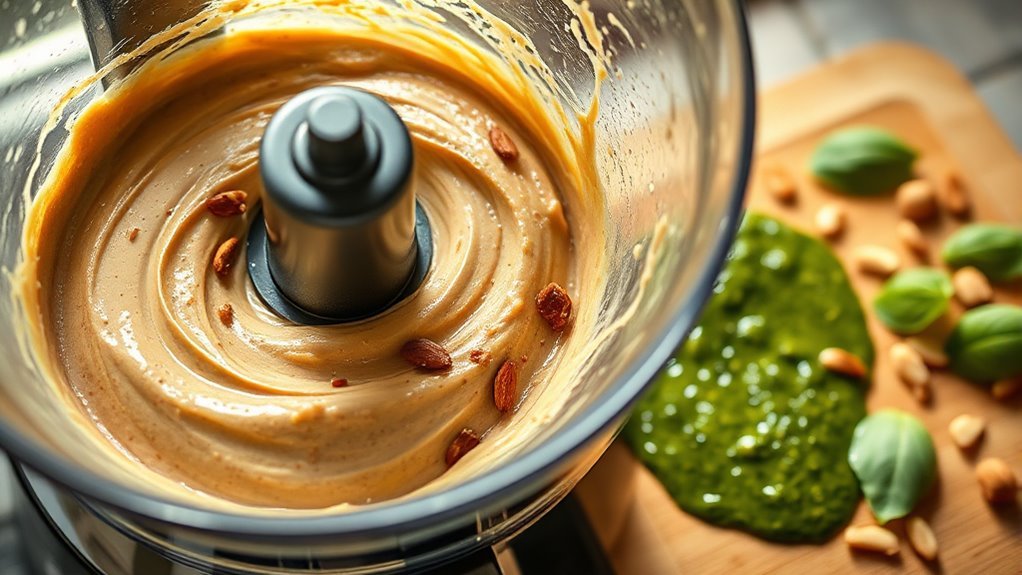
After mastering doughs and batters, you can put your food processor to work creating smooth sauces and nut butters with ease. Start by toasting nuts like almonds or peanuts to deepen their flavor. Then pulse briefly for nut flour or run the processor for 1 to 3 minutes to reach a thick paste.
Keep processing up to 4 to 6 minutes until the oils release and you get creamy, spreadable nut butters such as peanut butter. To avoid overheating, chill nuts beforehand or pulse in batches, scraping the bowl often.
For silky sauces, purée roasted vegetables or aromatics first. Then slowly drizzle in oil through the feed tube while running the processor to create a stable emulsion. Add heavy cream or acid gradually for velvety, smooth textures.
Control texture by pulsing for chunkier spreads or running continuously for fully smooth results. Season at the end to make certain even distribution without breaking emulsions. Your processor makes these tasks quick and effortless.
Frequently Asked Questions
Can a Food Processor Safely Chop Hot Ingredients?
Yes, you can safely chop hot ingredients in your food processor if you take precautions. Always allow cooling to prevent pressure buildup and protect the bowl.
Use the pulse method with small batches to avoid overheating the motor and reduce splattering. Keep the venting lid open or remove the pusher briefly to let steam escape.
Following these steps guarantees safe, effective chopping without damaging your machine or creating a mess.
How Do I Prevent Over-Processing Delicate Ingredients?
Did you know 70% of over-processed herbs lose their flavor? To prevent this, use pulse mode with short bursts instead of running the processor continuously.
Keep your ingredients chilled to maintain texture, especially soft ones like butter-rich items. When working with ultra-delicate foods, switch to low speed or a whisk attachment and watch closely.
This way, you’ll keep the perfect consistency without turning your ingredients into mush.
What Attachments Come With Most Food Processors?
Most food processors come with an S-shaped blade for chopping and pureeing, plus shredding discs for slicing or grating your ingredients. You’ll usually get a dough blade, designed specifically to knead dough without overworking it.
Some models also include a citrus strainer, perfect for juicing fruits right in the bowl. These attachments help you tackle a variety of kitchen tasks without needing extra tools.
Can I Use a Food Processor to Make Baby Food?
Absolutely, you can think of your food processor as a gentle sculptor, molding ingredients into perfect puree textures. By steam blending tender fruits and veggies, you preserve nutritional retention essential for your baby’s growth.
You’ll want to adjust the consistency to suit age portions, smooth for younger infants, chunkier for older ones. Just remember to pulse carefully and add liquid gradually, ensuring each bite is safe, delicious, and just right for your little one’s stage.
How Do I Clean Hard-To-Reach Parts of a Food Processor?
To clean hard-to-reach parts of your food processor, start by soaking dishwasher-safe components in warm soapy water. Use cotton swabs dipped in a vinegar soak or diluted bleach to sanitize tiny vents and the food pusher tube.
For stubborn grime, grab a toothbrush and scrub around the blade hub and crevices. Make sure to rinse everything thoroughly and let it air-dry before reassembling to keep your processor spotless and safe.
Conclusion
With your food processor as your kitchen compass, you’ll navigate meal prep with ease, turning raw ingredients into culinary treasures. Like a skilled artist blending colors, you’ll master doughs and batters, crafting edible masterpieces.
And when you create smooth sauces and nut butters, you transform simple elements into silky symphonies of flavor. Embrace this tool as your trusted ally, unlocking creativity, saving time, and making every dish a story worth savoring.