Do Grits Have Any Nutritional Value?
You’ll find that grits do offer nutritional value, especially if you choose stone-ground or whole-grain types, which keep more fiber, vitamins, and antioxidants. They provide energy through carbs and contain important B vitamins and minerals like iron and magnesium.
While processed grits lose some nutrients, they’re naturally gluten-free and can still be part of a balanced diet.
If you want to understand their full benefits and best ways to enjoy them, there’s more to explore.
What Are Grits and How Are They Made
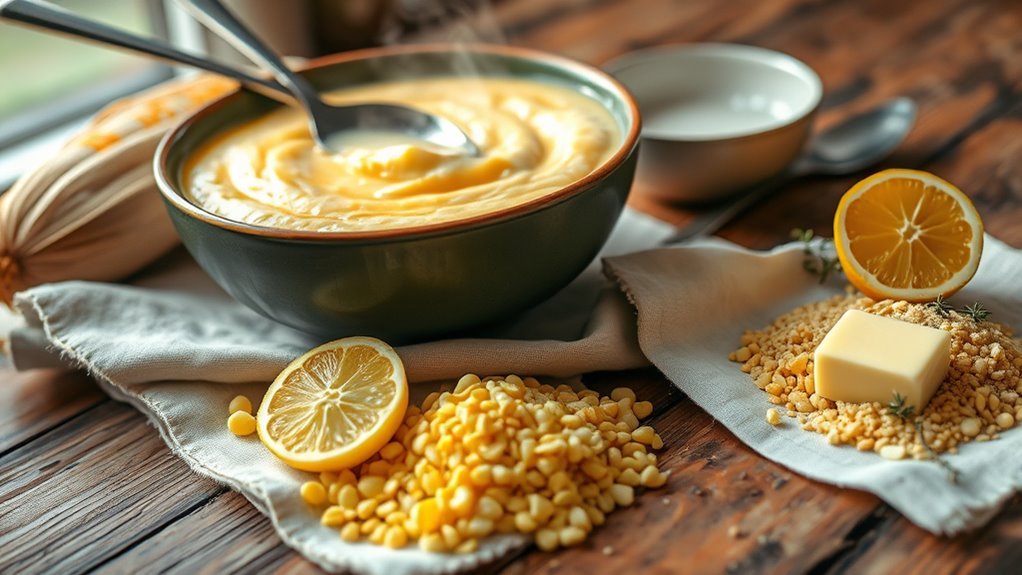
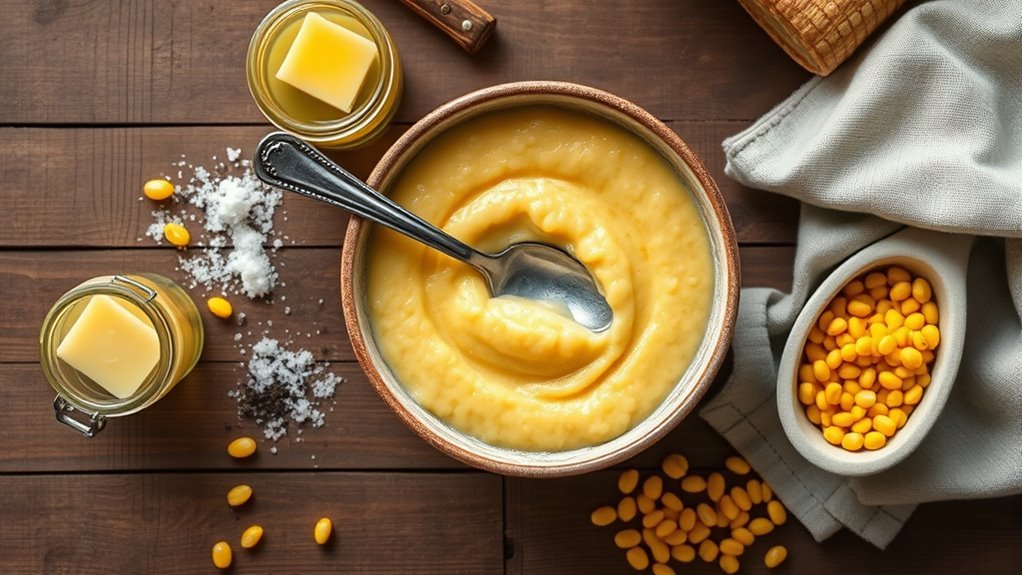
What exactly are grits, and how do they come to be? Grits are made from ground corn, usually from dent or yellow varieties. The processing involves grinding dried corn kernels into coarse or fine particles, resulting in different types of grits like stone-ground, quick, instant, and hominy.
Stone-ground grits are especially notable because they retain more of the whole grain, including the bran and germ, which makes them more nutritious than their more processed counterparts. During processing, sometimes the outer hull is removed, but stone-ground grits keep much of the grain intact.
When you cook grits, whether in water, milk, or broth, they transform into a creamy, comforting dish that’s a staple in Southern cuisine. Understanding how grits are made helps you appreciate why some types offer more nutrients and a richer texture, especially if you choose stone-ground options that preserve the whole grain.
What Nutrients and Macronutrients Are in Grits?
You’ll find that grits are mostly made up of carbohydrates. They also have a modest amount of protein and very little fat. On top of that, grits provide essential vitamins like B-complex and minerals, which help keep your body energized. Plus, depending on the type, you can get a bit of fiber and antioxidants that support overall health.
Macronutrient Composition Overview
Although grits are often thought of as a simple side dish, they pack a significant amount of carbohydrates, delivering about 31 grams per cooked cup primarily from starch. You’ll also find roughly 3 grams of protein and less than 1 gram of fat, making grits a low-fat option.
Fiber content varies, especially in stone-ground grits, which retain more natural fiber and boost their nutritional value. Here’s a quick look at what you get per cooked cup of grits:
| Nutrient | Amount |
|---|---|
| Carbohydrates | 31 grams |
| Protein | 3 grams |
| Fat | <1 gram |
| Fiber | Varies (higher in stone-ground) |
| Starch | Majority of carbs |
Grits provide energy mainly through carbs and starch, with modest protein and fiber.
Essential Vitamins And Minerals
Since grits are made from corn, they naturally provide a range of essential vitamins and minerals that support your overall health. You’ll find B vitamins like thiamin, riboflavin, niacin, and folate in grits, which help boost your energy and metabolism.
They also contain important minerals such as iron, magnesium, and phosphorus, vital for bone strength and muscle function. If you choose whole-grain or stone-ground grits, you get even more nutrients, including antioxidants like lutein and zeaxanthin that promote eye health.
While grits mainly offer carbohydrates, these vitamins and minerals make them a valuable part of your diet. So, when you eat grits, you’re not just fueling up, you’re also giving your body key nutrients it needs.
Fiber And Protein Content
While grits aren’t a powerhouse of protein, they still provide about 3 grams per cooked cup, contributing modestly to your daily intake. Their protein content is low compared to other grains, but every bit helps.
When it comes to fiber, grits contain around 1-2 grams per 1/4 cup dry serving. Choosing stone-ground grits is a smart move because they retain more fiber and nutrients by including the whole kernel. In contrast, processed quick or instant grits lose much of this nutritional benefit.
The fiber in grits supports digestion and can help regulate blood sugar, especially when combined with other fiber-rich foods. So, while grits aren’t a nutritional superstar, they offer modest protein and fiber, particularly when you opt for less processed varieties.
Fiber and Protein Content in Grits
You’ll find that grits offer a modest amount of fiber, especially if you go for stone-ground varieties. They’re a decent source, but nothing too overwhelming.
When it comes to protein, grits do provide some, but it’s not quite enough to keep you feeling full on their own. So, if you’re relying on grits to power you through, you might want to add something extra.
Understanding how fiber and protein stack up in grits can really help you make smarter choices when you’re putting together your meals. That way, you get the most out of what you’re eating.
Fiber Levels In Grits
How much fiber do grits actually provide? When it comes to fiber content, grits offer about 1 gram of fiber per 1/4 cup dry serving, which is pretty low compared to whole grains.
That’s mainly because processed grits, like quick or instant varieties, lose much of their fiber when the bran layer is removed. Stone-ground or whole-grain grits, on the other hand, retain more fiber since they undergo minimal processing.
If you’re focused on nutrition, choosing whole-grain grits gives you a better fiber boost. To increase fiber levels even more, you can easily add fiber-rich toppings such as vegetables or flaxseed. This way, you enhance the fiber content without sacrificing the classic grits flavor you enjoy.
Protein Content Overview
What role does protein play in your grits meal? Grits provide about 3 grams of protein per 1/4 cup dry serving, which is modest compared to other grains like oats or quinoa. Whether you choose stone-ground, quick, or instant grits, the protein content remains fairly consistent, with slight variations due to processing.
Alongside protein, grits offer roughly 1 gram of fiber per serving, contributing to your intake of essential nutrients. While grits alone may not be a protein powerhouse, you can boost their nutritional value by adding protein-rich toppings such as eggs or shrimp.
This way, you enhance both the taste and the nutrient profile of your meal, making grits a versatile base to build on with fiber and protein combined.
Comparing Fiber To Protein
While protein adds some substance to your grits, fiber plays a different but complementary role in your meal’s nutritional profile. Grits contain about 1 gram of fiber and 3 grams of protein per 1/4 cup dry serving. The fiber content is particularly higher in stone-ground grits compared to quick or instant varieties.
This fiber contributes to digestion and overall health, even though the protein in grits is relatively low and less filling than in legumes or other grains. If you’re aiming to boost the nutritional value of your grits, consider choosing whole-grain or enriched options, which offer slightly more fiber and nutrients.
Pairing grits with protein-rich foods like eggs enhances satiety, balancing both protein and fiber effectively.
How Processing Changes Grits’ Nutrition
Because processing removes the outer hull and germ of the corn, grits lose much of their fiber, vitamins, and minerals. This refining step strips away fundamentally whole-grain nutrients, including antioxidants and healthy fats that naturally occur in the bran and germ.
When you choose highly processed grits, you’re practically getting a product with diminished nutritional value compared to stone-ground or minimally processed options. While some refined grits are enriched with synthetic vitamins to replace lost nutrients, this enrichment doesn’t fully restore the original nutritional profile or the benefits of naturally occurring phytochemicals.
Processing not only reduces micronutrient content but also lowers the availability of health-promoting compounds. So, when you consider grits, keep in mind that the degree of processing directly affects their nutritional quality. Opting for less refined grits helps you retain more whole-grain nutrients, antioxidants, and overall health benefits that are lost during heavy processing and refining.
Nutritional Differences Between Stone-Ground and Instant Grits
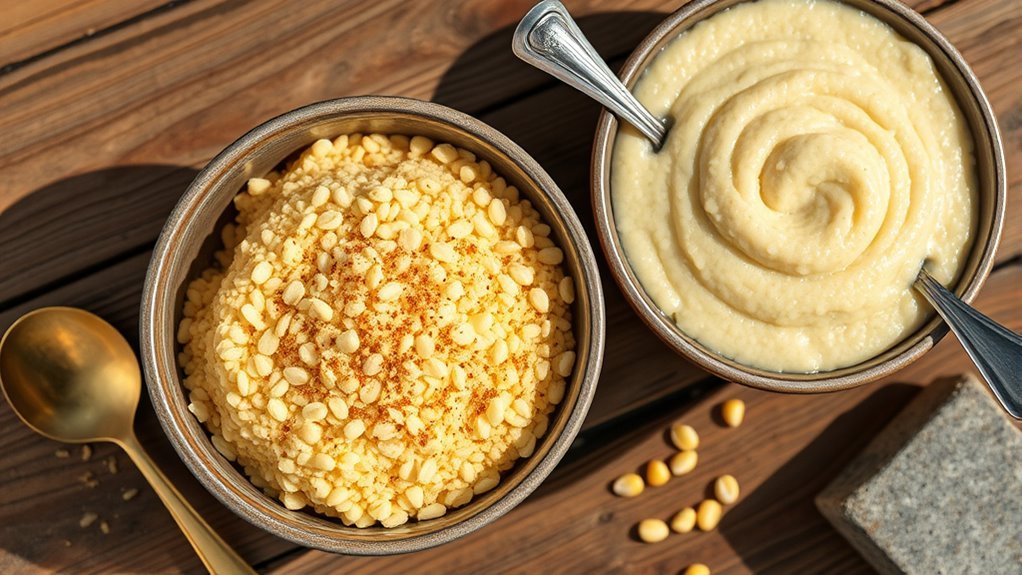
When you go for stone-ground grits, you’re getting more natural fiber, vitamins, and antioxidants. That’s because they keep more of the whole kernel intact. On the other hand, instant grits cook faster, which is super convenient, but they lose a lot of those nutrients since they’re heavily processed. So, knowing this trade-off can really help you decide which grits work best for your nutritional needs and your schedule.
Nutrient Retention Differences
If you want to get the most nutrients from your grits, choosing stone-ground over instant makes a considerable difference. Stone-ground grits retain more of the whole kernel, including bran and germ, which boosts fiber content and micronutrients.
Instant grits undergo heavy processing, stripping away many nutrients and reducing antioxidant levels. This processing affects nutrient retention, making stone-ground grits a healthier choice.
| Nutrient Aspect | Stone-Ground Grits | Instant Grits |
|---|---|---|
| Fiber Content | 2-3 grams per serving | Less than 1 gram |
| Vitamin Content | Higher (retained vitamins) | Lower due to refining |
| Mineral Content | More minerals preserved | Reduced mineral levels |
| Antioxidants | Present | Significantly reduced |
| Processing Level | Minimal | Extensive dehydration |
Cooking Time Impact
How does cooking time affect the nutritional value of your grits? Stone-ground grits, which require about 45 minutes of cooking time, retain more micronutrients and fiber because they undergo minimal processing. This longer cooking time helps preserve vitamins and antioxidants, even though some nutrient loss can occur with extended heat exposure.
In contrast, instant grits cook quickly, usually within 2 to 5 minutes, because they’re pre-cooked and dehydrated. This extensive processing removes much of the bran and germ, greatly reducing nutrient retention, especially fiber and micronutrients.
Grits and Gluten-Free Diets
Because grits are made from ground corn, they naturally contain no gluten, making them an excellent choice if you follow a gluten-free diet. If you have celiac disease or gluten sensitivity, you can enjoy grits without worry.
However, to stay safe, you should always check the label for certified gluten-free products. Cross-contamination during processing is a risk if the facility handles gluten-containing grains.
Here’s what you should keep in mind:
- Grits remain gluten-free even when enriched or fortified, as processing doesn’t add gluten.
- Opt for certified gluten-free grits to avoid cross-contamination.
- Grits provide a nutritious gluten-free carbohydrate source rich in vitamins and minerals.
How Does Grits Nutrition Compare to Oatmeal?
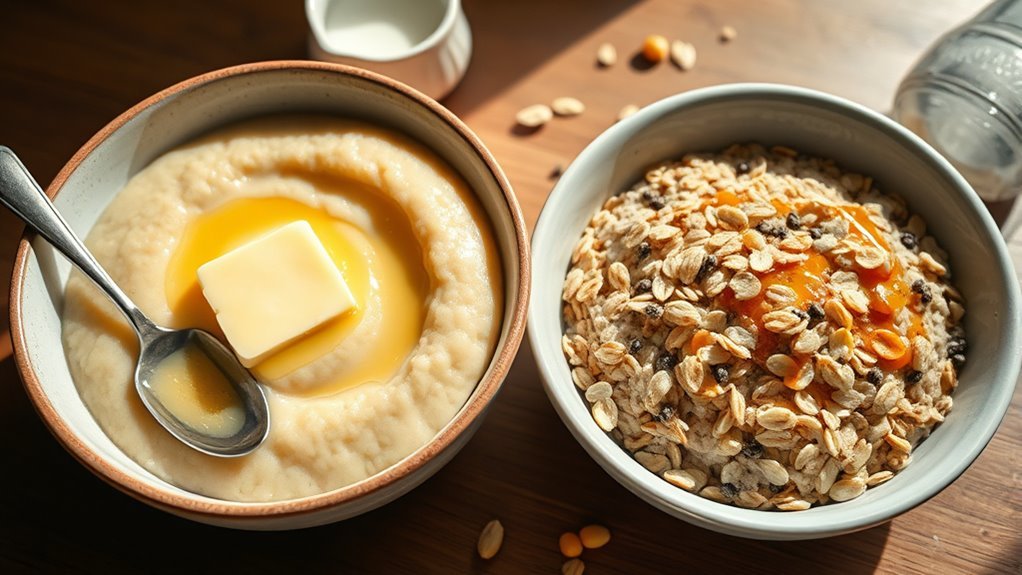
While both grits and oatmeal serve as popular breakfast options, they differ markedly in nutritional content. Grits, made from ground corn, provide about 150 calories and 31 grams of carbs per cooked cup but are low in protein and fiber.
Oatmeal, on the other hand, offers around 4 grams of protein and 4 grams of fiber per serving, making it more filling and beneficial for blood sugar regulation. When comparing grits nutrition to oatmeal, you’ll find oatmeal has higher levels of soluble fiber, which helps lower cholesterol, along with more heart-healthy phytochemicals.
Furthermore, grits are often refined, especially quick and instant types, which reduces their nutrient and fiber content compared to minimally processed oatmeal. Both contain B vitamins and antioxidants, but oatmeal generally provides superior nutrition overall.
If you’re looking for a more nutritious, fiber-rich breakfast, oatmeal tends to be the better choice over grits.
Can Grits Help With Weight Loss?
One cup of cooked grits contains about 150 calories, making them a reasonable choice if you’re watching your weight. Grits can support weight loss when you focus on portion control and combine them with nutrient-rich foods. They provide about 1 gram of fiber and 3 grams of protein per serving, which can help you feel full longer, especially if you choose stone-ground grits that preserve more fiber.
To make grits a weight-loss-friendly part of your diet, keep these tips in mind:
Pair grits with lean proteins or vegetables to create a balanced meal.
Opt for less processed grits to maximize fiber intake and improve satiety.
Control your portion size to avoid excess calorie intake.
Antioxidants in Grits and Their Health Benefits
If you want to boost your eye health and protect your cells, consider the antioxidants found in grits. Grits, especially those made from yellow corn, contain lutein and zeaxanthin, two powerful antioxidants known for supporting eye health and potentially preventing age-related macular degeneration. These antioxidants act as scavengers of free radicals, reducing oxidative stress and promoting overall cellular well-being.
However, the level of antioxidants in grits depends on how they’re processed. Minimally processed, stone-ground grits preserve higher amounts of lutein and zeaxanthin, while quick or instant processed grits often lose significant antioxidant content. Choosing less refined grits helps you maximize these health benefits.
Healthiest Ways to Prepare Grits
To get the most nutritional benefits from grits, you should cook them using water or low-fat broth. This keeps calories and saturated fats low. Choosing stone-ground or minimally processed grits guarantees you retain more fiber, vitamins, and antioxidants compared to instant varieties.
For a healthy preparation, avoid high-fat toppings like butter or cheese. Instead, focus on nutrient-dense ingredients that boost the overall value of your meal.
Here’s how you can prepare grits in the healthiest way:
- Use water or low-fat broth as the cooking liquid to reduce added fats.
- Incorporate nutrient-dense ingredients like fresh vegetables, herbs, or lean proteins.
- Substitute dairy with non-dairy milk options such as almond or oat milk for creaminess without saturated fat.
Grits’ Role in a Balanced Diet
Although often seen as a simple comfort food, grits offer valuable nutrients that can support a balanced diet when you choose whole-grain or minimally processed varieties. These types retain more nutritional value, including B vitamins like thiamin, niacin, and folate, which help fuel your energy metabolism throughout the day. Grits also provide essential minerals, such as iron, that support healthy blood function and oxygen transport.
Incorporating grits into your meals can be a smart choice, especially when paired with nutrient-dense toppings like vegetables, lean proteins, or healthy fats. Furthermore, grits contain antioxidants like lutein and zeaxanthin, which promote eye health. By including whole-grain grits as part of a varied diet, you add important nutrients that contribute to overall wellness. So, don’t overlook grits, they can play a meaningful role in maintaining a balanced diet and meeting your nutritional needs.
Frequently Asked Questions
Are Grits Safe for People With Diabetes?
Yes, you can enjoy grits safely if you manage your portions carefully. Grits nutritional benefits include a modest vitamin profile and some dietary fiber, which supports digestion. Their gluten-free nature makes them accessible if you have sensitivities.
For grits and weight management, watch the serving size and avoid sugary toppings to prevent blood sugar spikes. Pair grits with protein or fiber-rich foods to slow glucose absorption and keep your diabetes in check.
Can Grits Cause Allergic Reactions?
Yes, grits can cause allergic reactions, but it’s rare. If you have gluten sensitivity, grits are naturally gluten-free. However, cross contamination concerns during processing might affect you.
People with shellfish allergy won’t usually react to grits, but ingredient additives or preservatives in flavored grits could trigger food intolerance or allergies. Always check labels carefully and be mindful of potential cross contamination if you have any food allergies or sensitivities.
How Should Grits Be Stored for Freshness?
Did you know properly stored grits can last up to a year? For ideal grits freshness, keep them in airtight containers away from heat and sunlight.
Grits packaging like paper bags won’t preserve quality once opened, so transfer grits to sealed containers. To extend grits shelf life even further, store them in the fridge or freezer.
Good grits storage and grits preservation prevent spoilage and maintain that delicious texture you love.
Do Grits Contain Any Harmful Additives?
Yes, some grits do contain food additives and preservative concerns you should watch out for. Many store-bought quick or instant grits include artificial preservatives, stabilizers, and flavor enhancers like MSG or added salt.
To avoid these harmful additives, you should read labels carefully and choose minimally processed, stone-ground grits. This way, you’ll reduce exposure to unnecessary chemicals and enjoy a more natural, healthier option.
Can Children Eat Grits Daily?
Yes, your child can eat grits daily when you use a balanced grits recipe. Experiment with grits flavoring like cheese or herbs to boost taste without adding sugar.
Pay attention to grits texture. Creamy and smooth works best. Use grits cooking tips like slow stirring to avoid lumps.
Try different grits variations, such as stone-ground or whole-grain, to add fiber and nutrients to their meals. This keeps it exciting and healthy.
Conclusion
You might think grits are just a simple side dish, but they actually pack some surprising nutrition like fiber, protein, and antioxidants. Coincidentally, the way you prepare them can make a big difference in how healthy they are.
Whether you choose stone-ground or instant, grits can fit into your balanced diet and even support weight loss if you keep portions in check. So next time you’re hungry, don’t overlook grits; they’re more valuable than you might expect!