
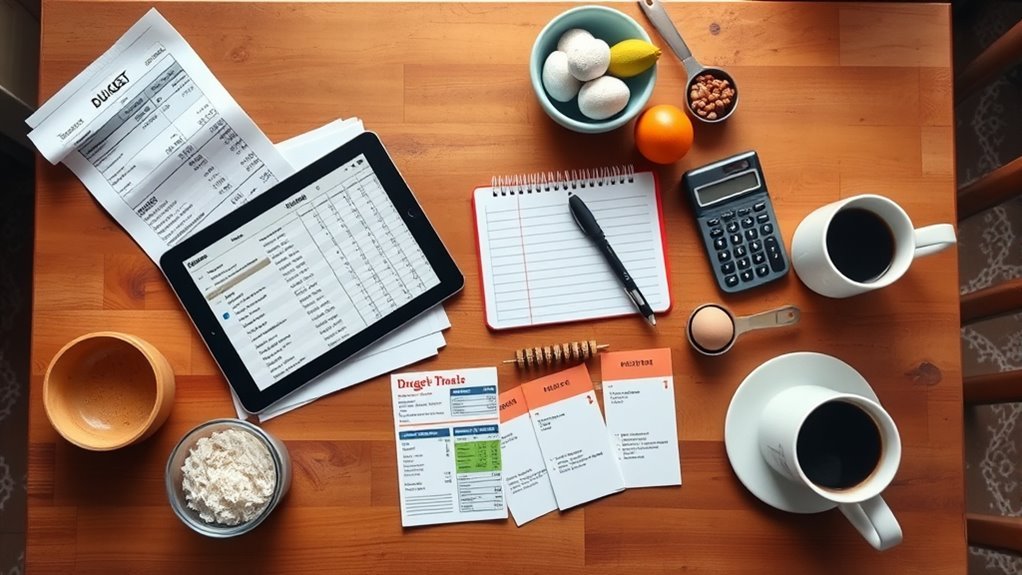
How to Budget Meal Planning Step by Step
To budget meal planning step by step, start by setting a realistic budget based on your income and family size.
Check your pantry and fridge before planning to use what you already have.
Plan meals around sales, seasonal produce, and include one meatless meal weekly to save costs.
Smart shopping means sticking to your list and avoiding pricey ingredients.
Batch cook and track your spending to adjust as needed.
Keep going to discover practical tips that make meal planning easier and more affordable.
Set a Realistic Budget for Meal Planning

Before you begin meal planning, set a realistic budget that fits your income and lifestyle. Start by calculating your total monthly food expenses, then break that down into manageable weekly or daily amounts. This helps you stay on track without feeling overwhelmed.
When setting your food budget, consider your household size, dietary needs, and typical meal costs to guarantee it’s practical and sustainable. Assign a specific dollar amount for weekly grocery shopping that aligns with your overall financial goals.
Don’t forget to adjust this budget periodically based on your actual spending, seasonal price fluctuations, and any changes in your household’s needs. To make tracking easier, use budgeting tools or apps that help monitor your food expenses in real time.
Check Your Pantry and Fridge Before Planning
Since meal planning relies heavily on what you already have, start by checking your pantry, fridge, and freezer for available ingredients and their expiration dates. This step helps you identify what you can use right away, especially items nearing their expiration, so nothing goes to waste.
Begin meal planning by inspecting your pantry, fridge, and freezer for ingredients and their expiration dates.
Organize your pantry to get a clear view of your supplies. This prevents unnecessary purchases and saves money. By knowing exactly what’s on hand, you can tailor your meal plan around those ingredients and create a precise shopping list for what you actually need.
Regularly reviewing your food inventory also helps you avoid buying duplicates, making your grocery trips more efficient. Taking the time to assess your pantry and fridge before planning ensures you maximize what you already have, reduce food waste, and stick to your budget more effectively.
This simple habit sets a solid foundation for smart, cost-conscious meal planning.
Make Your Meal Plan Fit Your Family’s Tastes and Schedule
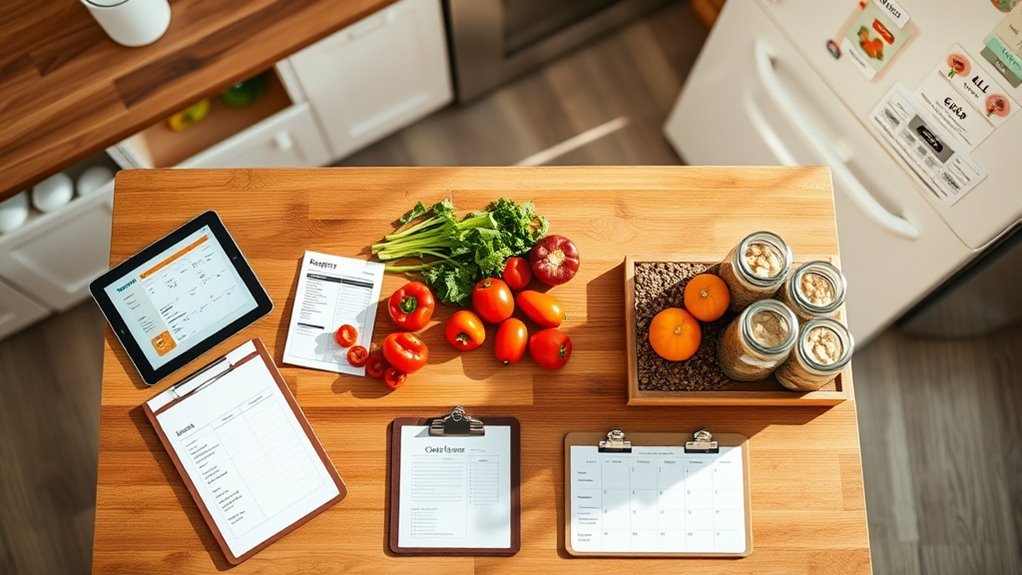
To create a meal plan that really works, start by chatting with your family about their favorite dishes and any dietary needs they might have. Then, take a look at your weekly schedule. On busy days, pick quick and easy meals, and when you have more time, try out recipes that take a bit longer. That way, everyone stays happy, and you make the most of your time without any stress.
Family Preferences Matter
When you tailor your meal plan to your family’s tastes and schedules, mealtime becomes more enjoyable and efficient. Start by asking everyone about their favorite foods and preferred meal times to make sure your plan reflects true family preferences.
This approach not only boosts satisfaction but also cuts down on food waste. Adjust recipes and portion sizes accordingly to avoid leftovers or overeating.
Don’t forget to take into account any dietary restrictions or allergies to keep everyone healthy. Involve family members in grocery shopping and meal prep. It makes the process more fun and encourages their buy-in.
Adapt To Schedules
Although your family’s tastes are essential, fitting your meal plan around your daily schedule makes mealtime manageable and stress-free. Tailor your plan by scheduling quick, easy meals on busy days and reserving more elaborate dishes for when you have extra time.
Keep a list of flexible, nutritious recipes that can be prepped ahead or adapted based on available ingredients. Incorporate your family’s favorite foods to boost satisfaction and minimize waste.
Adjust your meal plan weekly to reflect changing schedules, adding leftovers or dedicated meal prep days to save time. By aligning your meals with your family’s schedules, you guarantee every dish fits seamlessly into your routine, making budgeting and cooking less stressful and more enjoyable.
Plan Menus Using Sales and Seasonal Produce
Start by checking out the sale items and seasonal produce to help shape your meal plan around the best deals. Using ingredients that are in season not only cuts costs but also boosts flavor and freshness. Plus, by focusing on these smart choices, you’ll stretch your budget without sacrificing quality. It’s a win-win!
Focus On Sale Items
Since sale items and seasonal produce offer the best value, you should plan your menus around them to save money and enjoy fresher ingredients. Start by checking store flyers, online coupons, and local ads before grocery shopping to spot discounted fruits, vegetables, and proteins.
Incorporate these sale items as the main ingredients in your recipes. This helps stretch your budget and boost savings. When you focus on sale items during meal planning, you reduce overall grocery costs and avoid unnecessary purchases.
This strategy not only keeps your meals nutritious but also guarantees you get the most for your money. By making sale items the foundation of your weekly menu, you’ll find budgeting easier and grocery shopping more efficient.
Incorporate Seasonal Ingredients
When you plan your meals around seasonal ingredients, you tap into fresher flavors and lower prices. Incorporating seasonal produce into your meal plans means you can enjoy fruits and vegetables at their peak, which often costs less.
Check local farmers’ markets and grocery store sales regularly to find the best deals on in-season items. Adjust your recipes to highlight these ingredients, making your meals both tasty and budget-friendly.
Using seasonal produce not only diversifies your menu with new flavors but also helps reduce your grocery bill. Plus, you support sustainable shopping by choosing what’s naturally abundant.
Maximize Cost Efficiency
Although meal planning might seem time-consuming, you can cut your grocery costs by up to 30% by focusing on sale items and seasonal produce. Plan your menus around what’s on sale and what’s fresh in season to maximize discounts and boost savings.
Seasonal produce is typically 50% cheaper and fresher, so incorporating it not only cuts costs but also enhances flavor. Use store flyers and online coupons to spot the best deals and align your recipes accordingly.
Rotating meals based on available sales and seasonal ingredients helps you avoid waste and keeps your budget in check. By staying flexible and intentional with your shopping, you’ll enjoy delicious meals without overspending.
Save Money With One Meatless Meal Each Week
How can you cut grocery costs without sacrificing nutrition? One effective way is to save money by incorporating one meatless meal each week. By swapping meat for plant-based proteins like beans, lentils, or tofu, you can save approximately $10 to $15 on your grocery bill.
These ingredients are not only affordable but also packed with nutrients and versatile for recipes like vegetable stir-fries or bean salads. Meatless meals often require fewer ingredients and less prep time, making your meal planning simpler and more budget-friendly.
Plus, choosing plant-based options can lower your dietary cholesterol and boost heart health. Planning a weekly meatless meal also encourages you to explore seasonal produce and pantry staples, diversifying your diet while keeping costs low.
Stretch Meals With Grains and Affordable Proteins

By adding inexpensive grains like rice, pasta, or barley to your meals, you can easily stretch your food budget without sacrificing flavor or nutrition. When planning meals, take a look at affordable proteins like beans, lentils, eggs, tofu, or canned fish to complement these grains.
Planning meals ahead of time helps you save money on food by using ingredients efficiently for lunch and dinner throughout the upcoming week. On Sunday nights, review your menu planning and make sure you’re aware of how much food you have and the expiration date to avoid last minute trips to the grocery store.
Preparing large batches of grain-based dishes can save you time and money every day. There’s always a way to substitute costly ingredients with grains and affordable proteins to create varied, filling meals you need.
Create a Budget-Friendly Grocery List
Start by checking your pantry for staples you already have. That way, you won’t end up buying duplicates. Then, focus your grocery list on sale items and seasonal produce—it’s a great way to save more. Also, including versatile basics like rice and beans can help you whip up multiple meals without spending extra. Easy and budget-friendly!
Prioritize Sale Items
Although planning meals can feel overwhelming, prioritizing sale items helps you create a budget-friendly grocery list that stretches your dollars further. Start by checking store flyers, online coupons, and weekly sales to spot discounted products. Then, focus on sale items that fit your meal plan to maximize savings.
Here’s how to prioritize sale items:
- Identify discounted items that match your planned meals.
- Buy staple sale items like rice or canned goods in bulk to save over time.
- Choose seasonal produce on sale for fresher, cheaper options.
- Stick strictly to your sale-focused list to avoid impulse buys.
Utilize Pantry Staples
When you utilize pantry staples in your meal planning, you create a solid foundation for budget-friendly grocery shopping. Start by making a thorough list of versatile staples like rice, pasta, canned beans, and dried herbs.
Focus on buying bulk grains and dry goods. They’re cost-effective and last longer, helping you save over time. Don’t forget essential condiments and cooking oils; these add flavor without needing specialty ingredients.
Effective pantry management means regularly checking what you already have to avoid duplicates and plan meals around existing items. Prioritize affordable, nutrient-dense staples that serve as the base for many recipes.
Shop Smart to Avoid Impulse Buys and Save
If you want to keep your grocery bills in check, making a detailed list based on your planned meals is essential. This simple step supports impulse avoidance and helps you stick to your budget.
Here’s how to shop smart and save:
- Shop after eating to reduce cravings that lead to unnecessary snack purchases.
- Use unit pricing to compare products and pick the most cost-effective options, especially for bulk items.
- Stick strictly to your list and avoid wandering aisles where impulse buy triggers lurk.
- Take advantage of coupons and store sales only for items already on your list, not for tempting extras.
Avoid Costly Ingredients to Keep Your Budget Low
Shopping smart helps you stick to your list and resist impulse buys, but controlling ingredient costs can make an even bigger difference in your overall budget. To keep meal planning affordable, avoid costly ingredients like specialty cheeses or imported spices that often inflate prices.
Instead, choose recipes centered around staple items such as rice, pasta, and seasonal produce, which offer versatility without breaking the bank. Swap out pricey proteins like beef or seafood for budget-friendly alternatives like beans, lentils, eggs, or canned fish.
Also, pay attention to package sizes. Buying large quantities can lead to waste and added costs if you don’t use everything. Experiment with meals that rely on common pantry staples and steer clear of recipes requiring unusual or expensive components.
Batch Cook and Freeze Meals for Busy Days
Batch cooking lets you prepare multiple meals at once, saving you time and stress on busy days. By batch cooking and freezing meals, you’ll always have nutritious options ready, cutting down on last-minute takeout. Here’s how to make the most of it:
- Choose freezer-friendly recipes like casseroles, stews, and cooked grains that reheat well.
- Portion meals into containers, label them with dates, and freeze to keep food fresh for 3–6 months.
- Plan batch cooking sessions around sales to buy ingredients affordably and stretch your budget.
- Use a Meal Swap strategy with family or friends. Trade different batch-cooked meals to add variety without extra cooking.
This approach not only cuts costs but also prevents food waste and simplifies your weekly meal planning. Freezing in advance means busy days won’t derail your budget or healthy eating goals.
Use Leftovers Creatively in New Meals
When you get creative with leftovers, you can turn yesterday’s meals into completely new dishes that save both time and money. Use leftover cooked meats, grains, and vegetables to whip up soups, casseroles, or wraps that reduce waste and stretch your budget.
For example, repurpose roast chicken and rice into sandwiches or salads for quick, cost-effective lunches later in the week. You can also transform vegetable scraps and small leftover bits into homemade broth or stock, adding flavor to future meals without extra cost.
Incorporate leftovers into breakfast by mixing cooked veggies or meats into omelets or breakfast burritos. Plan your meals with leftover creativity in mind. Design recipes that seamlessly integrate previously cooked ingredients.
This approach not only cuts down cooking time but also maximizes the value of every ingredient you buy. By using leftovers inventively, you’ll keep your meal planning budget-friendly and reduce food waste effectively.
Track Your Food Spending and Adjust Your Plan
Although meal planning sets a solid foundation, tracking your food spending lets you see exactly where your money goes and adjust your plan accordingly. By monitoring your spending patterns, you gain valuable insight into how well your budget aligns with reality. Here’s how to stay on top of it:
Meal planning builds the base, but tracking spending reveals where your money truly goes for smarter budgeting.
- Review grocery receipts weekly to identify spending patterns and spot areas to cut costs.
- Compare actual expenses against your budget to fine-tune meal plans and shopping habits.
- Track ingredient costs to find budget-friendly options and consider substitutions when needed.
- Keep records of meal costs and leftovers to evaluate your plan’s efficiency and make improvements.
Analyzing this data monthly ensures you stay on track and helps set realistic future budgeting goals. By actively tracking your food spending and adjusting your plan, you’ll optimize your budget and enjoy meals without overspending.
Frequently Asked Questions
How Do I Handle Meal Planning on a Tight Work Schedule?
You handle meal planning on a tight work schedule by mastering time management. Prep and portion meals on your days off to save time later. Use quick-cooking ingredients like pre-washed veggies and canned beans to speed things up.
Batch cook large portions, then freeze individual servings for easy reheating. Keep recipes simple and creatively use leftovers to avoid daily cooking stress. This way, you’ll stay efficient and eat well despite your busy routine.
What Are Some Budget-Friendly Snacks to Include in Meal Plans?
You can choose snack options like bulk-purchased popcorn, rice cakes, and whole fruits such as apples or bananas to save money. Canned or dried beans, like chickpeas and black beans, make nutritious, budget-friendly snacks when roasted or seasoned.
Don’t forget eggs; they’re affordable and protein-packed. Homemade trail mixes with bulk nuts, seeds, and dried fruits give you customizable snack options. Also, refillable containers with sliced veggies or smoothies work great for on-the-go.
How Can I Involve Kids in Budget Meal Planning?
Want to make budget meal planning a family adventure? You can involve kids by letting them choose meals from budget-friendly recipes and help with tasks like measuring ingredients or setting the table.
Family involvement teaches them about money and nutrition, turning meal prep into a fun, educational activity. Don’t forget to include them in creating the grocery list, so they understand budgeting and smart shopping firsthand.
What Kitchen Tools Help Save Money When Meal Planning?
You’ll save money using kitchen tools like a slow cooker or pressure cooker, which let you use affordable cuts and cook in bulk with energy-efficient cooking techniques.
A kitchen scale helps you portion ingredients accurately, avoiding waste. A grocery price scanner app lets you compare prices, ensuring you buy the best deals.
Reusable storage containers support batch cooking, so you can store leftovers and reduce extra trips, stretching your budget further.
How Often Should I Review and Adjust My Meal Budget?
You should review and adjust your meal budget weekly to maintain financial flexibility and keep spending on track. After each grocery trip, take a moment to reassess your budget, making tweaks as needed.
Monthly adjustments help you respond to income changes or price shifts, while quarterly reviews ensure your plan stays aligned with seasonal costs and dietary needs. Staying consistent with reviews gives you better control and prevents overspending.
Conclusion
So, unless you enjoy the thrill of last-minute takeout and the heartbreak of empty wallets, stick to your meal plan like it’s the last slice of pizza.
Budgeting isn’t just for accountants; it’s your secret weapon against culinary chaos. By checking your pantry, embracing meatless meals, and getting creative with leftovers, you’ll dodge grocery store traps and keep your wallet happy.
Remember, starving artist vibes are optional. Smart meal planning is the real masterpiece.