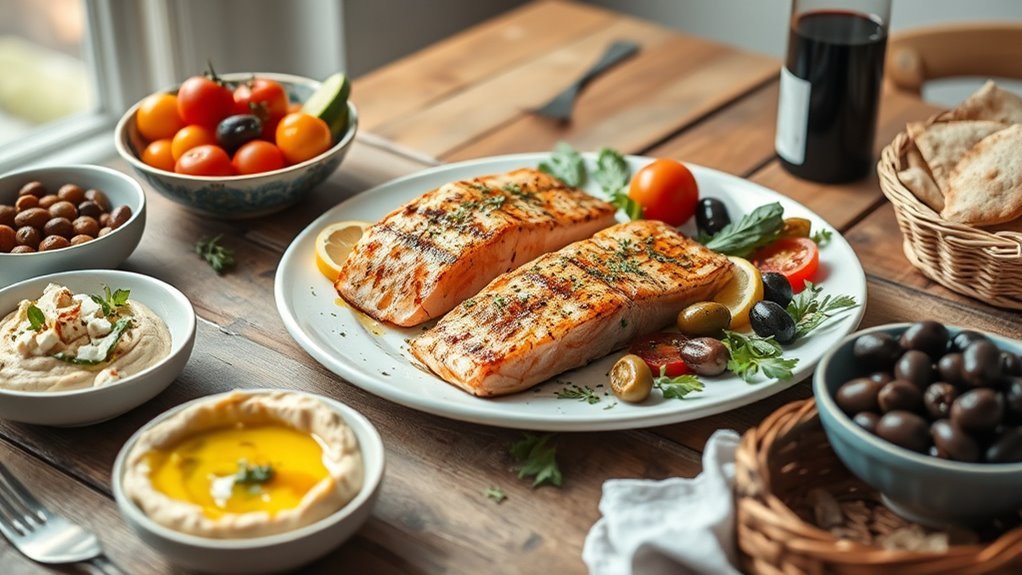
What Is a Mediterranean Diet Meal Plan?
A Mediterranean diet meal plan centers on fresh, plant-based foods, healthy fats like extra virgin olive oil, whole grains, nuts, and lean proteins such as fish and legumes.
You’ll limit red meat, processed foods, and added sugars while enjoying flavorful, nutrient-rich meals.
This plan supports heart health, longevity, and sustainable eating with easy meal prep and variety.
If you stick with it, you’ll discover how to tailor meals and boost overall wellness naturally.
What Is a Mediterranean Diet Meal Plan and Why It Matters
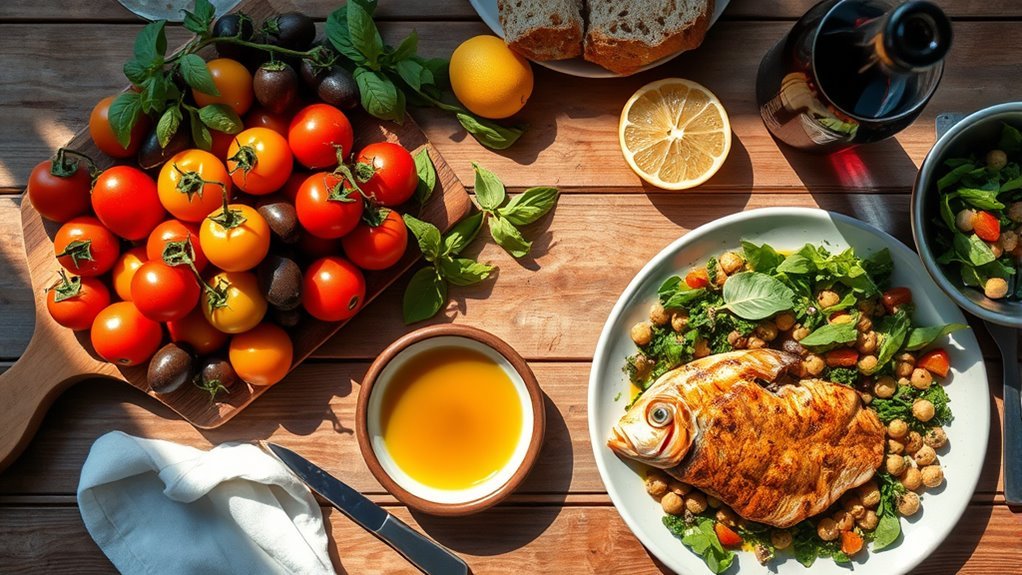
A Mediterranean diet meal plan focuses on eating plant-based foods, healthy fats like olive oil, and plenty of seafood, rather than following strict rules. You’ll enjoy a variety of vegetables, fruits, whole grains, nuts, and moderate amounts of fish, poultry, and dairy.
This flexible approach makes the Mediterranean meal plan easy to adapt to your tastes and lifestyle while emphasizing portion control and food quality.
The Mediterranean diet adapts seamlessly to your lifestyle, focusing on portion control and high-quality foods.
The key to this diet’s popularity is its strong link to heart health. By prioritizing healthy fats, especially from olive oil, and nutrient-dense foods, you reduce the risk of cardiovascular disease, stroke, and certain cancers.
Scientific research supports these benefits, showing that the Mediterranean diet promotes longevity and overall well-being. When you choose this meal plan, you’re not just eating for today. You’re investing in long-term health by embracing balanced, sustainable eating habits that nourish your body and protect your heart.
Mediterranean Diet Meal Plan Foods: What to Eat and Why
When you choose foods for a Mediterranean diet meal plan, you focus on nutrient-rich options that fuel your body and protect your heart. Vegetables take center stage, providing fiber, antioxidants, and essential nutrients that support overall health.
Whole grains like brown rice, quinoa, and barley supply steady energy and aid digestion. You rely on extra virgin olive oil as your primary source of healthy fats, which helps reduce inflammation and supports heart health.
Including fish and seafood rich in omega-3 fatty acids at least three times a week further boosts cardiovascular benefits. Legumes, nuts, and seeds add protein and healthy fats, rounding out your meals.
Dairy products such as yogurt and cheese appear daily but in moderation, ideally low-fat. This balanced approach emphasizes plant-based foods and healthy fats, making your Mediterranean diet meal plan both delicious and heart-friendly.
What Foods to Limit or Avoid on a Mediterranean Diet Meal Plan
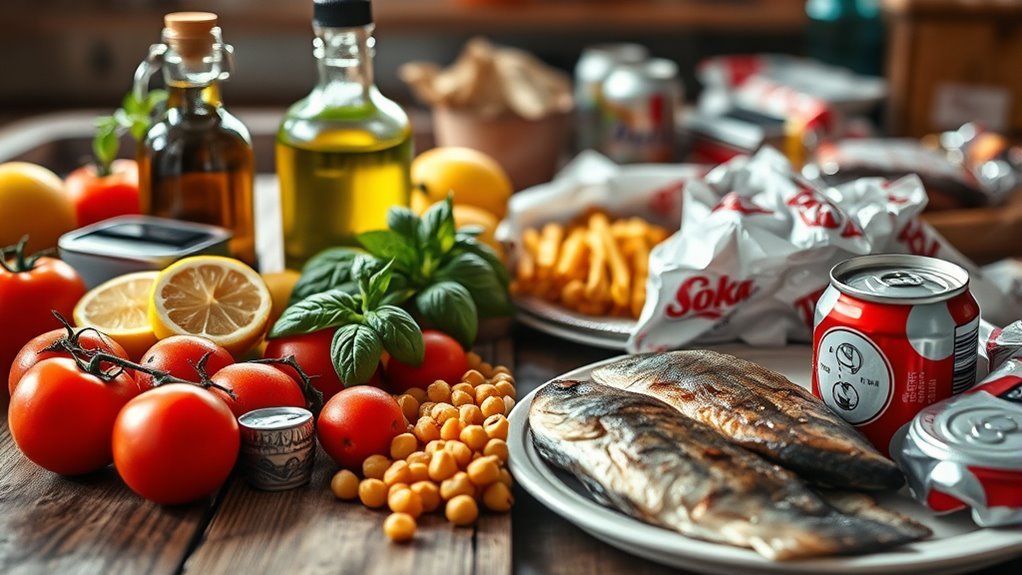
Although the Mediterranean diet emphasizes wholesome, nutrient-dense foods, you’ll want to limit or avoid certain items that can undermine your health goals. Processed foods like chips, snack crackers, and instant meals often contain high levels of sodium, trans fats, and preservatives, which don’t support your well-being.
You should also steer clear of refined grains such as white bread, white rice, and most commercial pasta because they lack fiber and can cause blood sugar spikes. Added sugar found in baked goods, candies, ice cream, and sugary beverages like sodas and fruit juices adds empty calories and promotes inflammation.
Furthermore, minimize red and processed meats like sausages, bacon, and deli meats since they’re linked to higher cardiovascular risks. By cutting back on these foods, you’ll stay true to the Mediterranean diet’s focus on fresh, natural ingredients and improve your overall health.
How a Mediterranean Diet Meal Plan Supports Heart Health and Longevity
You’ll see how a Mediterranean diet meal plan can lower your risk of heart problems by combining nutrient-rich foods that work together to improve your cardiovascular health. When you eat plenty of fish, healthy fats, and antioxidant-packed plants, it helps reduce inflammation and supports better cholesterol levels. Sticking to this plan doesn’t just boost your heart—it also promotes a longer, healthier life.
Cardiovascular Risk Reduction
How does the Mediterranean diet protect your heart and extend your life? By focusing on heart health through nutrient-rich foods, it markedly lowers your cardiovascular risk. Here’s how it works:
- Omega-3 fatty acids from fish, nuts, and olive oil help reduce LDL cholesterol and blood pressure, two major contributors to heart disease.
- The diet’s emphasis on plant-based foods cuts inflammation, a key factor in atherosclerosis and other chronic heart conditions.
- Long-term adherence leads to a reduced risk of stroke, heart attack, and overall cardiovascular mortality, boosting your lifespan by up to 25%.
Nutrient Synergy Benefits
When you combine nutrient-rich foods like olive oil, nuts, fatty fish, fruits, and whole grains in a Mediterranean diet meal plan, their benefits amplify each other to support your heart and longevity. This nutrient synergy means antioxidants from fruits and vegetables work alongside healthy fats from olive oil and fish to reduce inflammation and improve vascular function.
The omega-3 fatty acids enhance blood vessel elasticity while fiber helps lower blood pressure and reduce arterial plaque buildup. Together, these elements reduce LDL cholesterol and combat oxidative stress, which are key factors in cardiovascular health.
Longevity and Wellness
Because the Mediterranean diet combines nutrient-rich foods with a balanced lifestyle, it plays a powerful role in supporting heart health and extending longevity. By focusing on healthy fats and plant-based foods, you reduce inflammation and protect your cardiovascular system. Long-term adherence shows a 25% drop in cardiovascular events and a 23% lower risk of all-cause mortality.
Here’s how it boosts your wellness and longevity:
- Healthy fats from olive oil and omega-3-rich fish improve heart function.
- Plant-based foods provide antioxidants that fight age-related diseases.
- A lifestyle that includes physical activity and social connections enhances overall wellness.
Following this meal plan helps you live healthier, longer, and with greater crucial.
Structuring Daily Meals on the Mediterranean Diet
Although structuring your daily meals on the Mediterranean diet may seem challenging at first, focusing on nutrient-dense options like oatmeal with fruit for breakfast and balanced plates with vegetables, lean proteins, and whole grains for lunch and dinner makes it simple. Effective meal planning revolves around choosing healthy eating options that provide variety and moderation.
For breakfast, start with nutrient-dense choices such as vegetable omelets or oatmeal topped with fresh fruit to fuel your day. At lunch, build balanced meals featuring salads, whole grains, and lean proteins like fish or beans, dressed with olive oil and herbs.
Dinner should mirror this balance, combining vegetables, seafood or lean meats, and whole grains, bringing flavor with herbs and spices. Don’t forget snacks. Nuts, yogurt, or fresh fruit help keep your energy steady.
How Much and How Often to Eat Key Mediterranean Foods
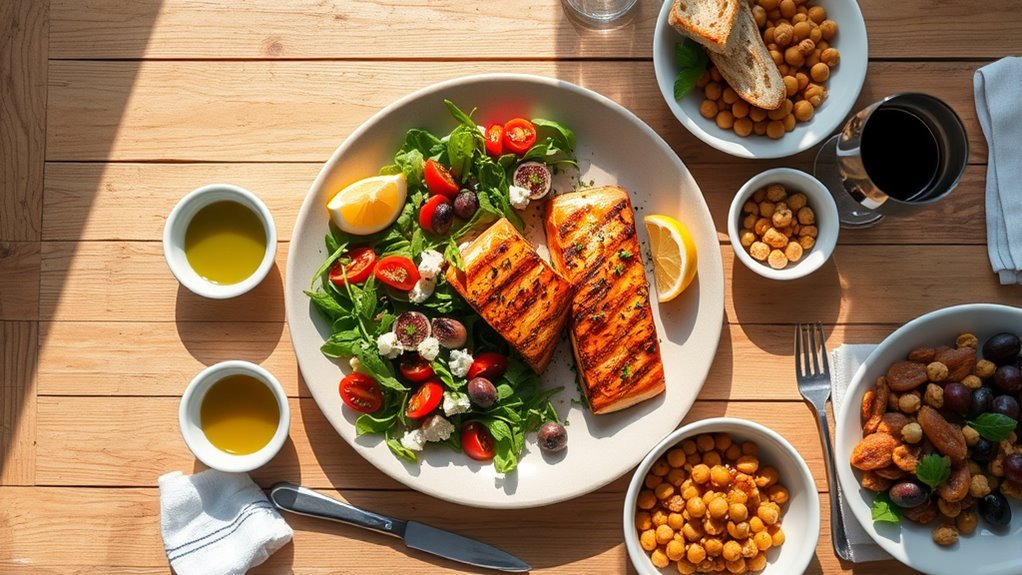
To get the most benefits from the Mediterranean diet, you’ll want to focus on how much and how often you eat key foods like vegetables, whole grains, fish, and nuts. Incorporating the right amounts helps you maximize nutrition and align with typical Mediterranean Diet meal plans.
Focus on the quantity and frequency of key foods to maximize the benefits of the Mediterranean diet.
Here’s a simple guide:
- Aim for 3-4 servings of vegetables and fruits daily to boost antioxidants and fiber.
- Include whole grains like whole-wheat bread or brown rice 3-6 times per day for steady energy.
- Eat fish rich in omega-3s, such as salmon or sardines, at least 3 times weekly, with each serving around 3-4 ounces.
Don’t forget to add nuts and seeds about 3 times a week, while limiting red meat to once weekly. This balance keeps your meals varied and nutritious, staying true to the Mediterranean diet’s heart-healthy principles.
Adapting the Mediterranean Diet Meal Plan for Special Dietary Needs
You can easily adapt the Mediterranean diet to fit vegetarian or gluten-free needs. Just swap out animal proteins for plant-based options and choose gluten-free grains.
It’s a good idea to work with a registered dietitian, too. They can help tailor the plan to your specific dietary requirements.
That way, you’ll enjoy all the benefits while honoring your unique health needs.
Vegetarian Mediterranean Options
How can you enjoy the rich flavors of the Mediterranean diet while following a vegetarian lifestyle? You can focus on plant-based proteins, legumes, and whole grains to create satisfying, nutritious meals. This approach keeps your diet aligned with Mediterranean principles while avoiding meat and fish.
Consider these key points:
- Emphasize legumes like beans and lentils, which provide protein and fiber essential for heart health.
- Incorporate whole grains such as quinoa, farro, and brown rice for sustained energy and digestive benefits.
- Add vegetables, fruits, nuts, seeds, and olive oil to maximize nutrient density and anti-inflammatory effects.
You can also enjoy moderate amounts of low-fat dairy, like yogurt and cheese, to round out your vegetarian Mediterranean meal plan.
Gluten-Free Adaptations
Although gluten restrictions might seem challenging, adapting the Mediterranean diet to be gluten-free is entirely doable without sacrificing flavor or nutrition. You can make simple gluten-free adaptations by swapping traditional wheat-based grains for grain substitutions like quinoa, brown rice, millet, or certified gluten-free oats.
Many Mediterranean dishes, such as salads, grilled seafood, and vegetable stews, are naturally gluten-free, so you can enjoy those whole foods without worry. When baking or making bread, try gluten-free flours like almond, chickpea, or rice flour to keep meals wholesome.
Just be cautious with processed foods and check labels for hidden gluten or cross-contamination. By focusing on whole foods and mindful grain substitutions, you’ll maintain the Mediterranean diet’s benefits while honoring your gluten-free needs.
Personalized Dietitian Guidance
A registered dietitian can tailor the Mediterranean diet meal plan to fit your unique dietary needs and health goals. Whether you’re vegetarian, managing diabetes, or need a low-sodium diet, personalized guidance guarantees you enjoy the benefits without compromise.
A dietitian adapts your meal plan by suggesting plant-based proteins, gluten-free grains, or dairy alternatives for special dietary restrictions. They also recommend adjustments like limiting red meats or controlling carbs to support heart health and blood sugar balance.
Plus, they advise on flavorful, salt-free seasoning and personalized calorie targets aligned with your lifestyle and medical conditions. With a dietitian’s expertise, your Mediterranean diet meal plan becomes a flexible, sustainable approach tailored just for you, promoting health while respecting your individual needs.
The Role of Extra Virgin Olive Oil in the Mediterranean Diet Meal Plan
When you incorporate extra virgin olive oil (EVOO) into your Mediterranean diet meal plan, you’re choosing a source of healthy monounsaturated fats that replaces less beneficial saturated fats from animal products. EVOO is rich in antioxidants, especially polyphenols, which help reduce inflammation and protect your heart health.
Using 1 to 4 tablespoons daily, whether drizzled over salads, cooked with vegetables, or paired with seafood, lets you enjoy these benefits while enhancing flavor. Unlike refined oils, EVOO undergoes minimal processing, preserving its valuable nutrients and antioxidants that support your cardiovascular system.
Research shows that regular consumption of extra virgin olive oil is linked to a lower risk of heart disease, stroke, and certain cancers. By making EVOO a staple in your meals, you’re not only embracing healthy fats but also boosting your overall well-being through its natural, protective compounds.
Incorporating this oil is a simple yet powerful way to nourish your body within the Mediterranean diet framework.
Sample Mediterranean Diet Meals for Breakfast, Lunch, and Dinner
You’ll find plenty of tasty Mediterranean breakfast ideas to enjoy, like Greek yogurt topped with nuts or avocado toast loaded with fresh veggies. When lunchtime comes, why not try a salad or a grain bowl packed with lean proteins and vibrant, fresh ingredients? And for dinner, you can focus on heart-healthy meals—think grilled salmon or whole-grain pasta tossed in olive oil-based sauces. It’s all about simple, delicious, and wholesome choices throughout the day.
Mediterranean Breakfast Ideas
Since mornings can be hectic, Mediterranean breakfast ideas focus on quick, nutrient-packed options that fuel your day. These meals balance whole grains, healthy fats, and fresh ingredients to keep you energized. You’ll find plenty of choices that avoid processed sugars and highlight natural flavors.
Here are three Mediterranean breakfast ideas to try:
- Greek yogurt topped with berries, nuts, and a drizzle of honey for protein, healthy fats, and antioxidants.
- Overnight oats made with whole grains, flavored with cinnamon and citrus zest for a fiber-rich start.
- Vegetable omelets or shakshuka, loaded with fresh veggies and eggs, offering vitamins and plant-based nutrients.
These options make sticking to a Mediterranean breakfast simple, delicious, and nourishing every morning.
Nutritious Lunch Options
Although lunch often has you pressed for time, Mediterranean diet options make it easy to enjoy meals that are both nutritious and satisfying. You can whip up salads filled with fresh vegetables, legumes like chickpeas, and a drizzle of olive oil, a great source of healthy fats.
Whole grains such as couscous, farro, or brown rice pair perfectly with grilled seafood or chicken, giving you lasting energy. Don’t forget to add small servings of cheese, yogurt, or nuts for extra protein and healthy fats.
Soups like lentil or vegetable minestrone offer fiber and essential nutrients, keeping you full and nourished. Flavor your meals with herbs like oregano, garlic, and lemon to enhance taste without relying on salt or processed ingredients.
These lunch options keep your Mediterranean diet balanced and delicious.
Heart-Healthy Dinner Choices
When planning your Mediterranean dinner, focus on heart-healthy ingredients like fatty fish, vegetables, and whole grains. These components work together to boost your cardiovascular health and keep your meals delicious.
- Choose fish like salmon or sardines, rich in omega-3 fatty acids. They help reduce inflammation and support your heart.
- Cook with extra virgin olive oil to add monounsaturated fats that improve cholesterol and lower heart disease risk.
- Pair whole grains like farro or brown rice with colorful vegetables and lean proteins. Avoid excess salt by using herbs and spices for flavor.
Tips to Make the Mediterranean Diet Meal Plan Work for You
To make the Mediterranean diet meal plan work for you, focus on incorporating a variety of colorful vegetables and fruits every day while using extra virgin olive oil as your main fat source. Effective meal planning is key. Base your meals on whole grains, lean proteins like fish and poultry, and legumes to keep your nutrition balanced.
Boost your vegetable intake by roasting or steaming a variety of veggies ahead of time. Meal preparation helps you stay consistent. Batch-cook grains, pre-portion snacks, and have herbs and spices ready to enhance flavor without added sugars or processed ingredients.
Limiting red meat and saturated fats while embracing plant-based foods supports healthy eating habits. By preparing meals in advance and focusing on fresh, natural ingredients, you’ll find it easier to stick with the Mediterranean diet and enjoy its benefits every day.
Frequently Asked Questions
Can the Mediterranean Diet Help With Weight Loss?
Yes, the Mediterranean diet can help with weight loss by encouraging you to embrace the Mediterranean lifestyle, which focuses on traditional eating habits rich in whole, nutrient-dense foods. Regional food variations and historical dietary influences emphasize vegetables, healthy fats, and lean proteins, naturally reducing calorie intake.
Is Wine Consumption Recommended on the Mediterranean Diet?
Think of wine moderation as the golden thread weaving health benefits into cultural traditions. Yes, moderate wine consumption is recommended on the Mediterranean diet, usually one glass daily for women and two for men.
You’ll want to enjoy red wine with meals, not as a standalone drink, to maximize its antioxidants and support heart health. But remember, always consider your alcohol intake carefully and consult your healthcare provider before adding wine to your routine.
How Does the Mediterranean Diet Compare to Keto or Paleo Diets?
You’ll find Mediterranean flavors richer and more diverse than keto or paleo diets because it embraces dietary flexibility, including whole grains, fruits, and legumes. Unlike the strict carb limits in keto or the grain exclusion in paleo, the Mediterranean diet reflects deep cultural influences, focusing on balanced, minimally processed foods.
Meal preparation is simpler too, letting you enjoy shared meals without restrictive rules, making it easier to stick with long-term for health and enjoyment.
What Are Common Mediterranean Diet Snacks?
You might be surprised how delicious Mediterranean snacks can be! Picture yourself enjoying healthy snack options like crunchy almonds, juicy grapes, or crisp cucumber slices dipped in hummus. These nutritious snack ideas not only satisfy your cravings but boost your energy.
Quick snack recipes also include Greek yogurt topped with honey or olives paired with feta cheese. These choices keep you full and energized, making healthy snacking effortless and enjoyable every day.
Can Children Follow a Mediterranean Diet Meal Plan?
Yes, children can follow a Mediterranean diet meal plan, which supports child nutrition with nutrient-rich, minimally processed foods. When meal planning, you’ll want to take into account dietary restrictions and adjust portions to meet your child’s energy needs.
Including family meals featuring fruits, vegetables, whole grains, and lean proteins encourages healthy habits. Don’t hesitate to consult a pediatrician or dietitian to tailor the plan specifically for your child’s growth and preferences.
Conclusion
When you start a Mediterranean diet meal plan, you’re not just choosing delicious, heart-healthy foods. You’re embracing a lifestyle that’s celebrated for longevity.
It’s no coincidence that people around the Mediterranean enjoy vibrant health while savoring flavorful meals rich in olive oil, fresh veggies, and whole grains.
By making simple swaps and enjoying balanced meals, you’ll feel energized and nourished. So, why not begin today and see how this timeless diet can transform your well-being?