7 Sample Meal Plans for the DASH Diet
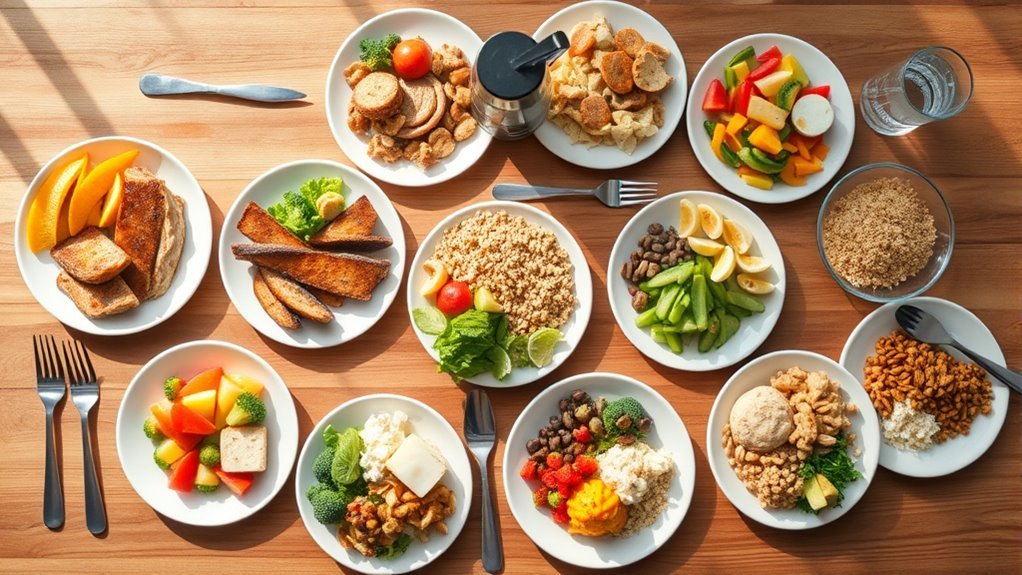
You can follow the DASH diet with simple, heart-healthy meal plans that focus on vegetables, fruits, whole grains, lean proteins, and low-fat dairy.
Your meals will limit sodium and unhealthy fats while boosting potassium, calcium, and magnesium to support healthy blood pressure.
From nutrient-rich breakfasts to balanced dinners featuring lean meats and plant-based options, these plans keep things diverse and tasty.
Keep exploring for practical tips and detailed menus to make the DASH diet easy and effective for you.
Introduction to the DASH Diet: Benefits and Basics
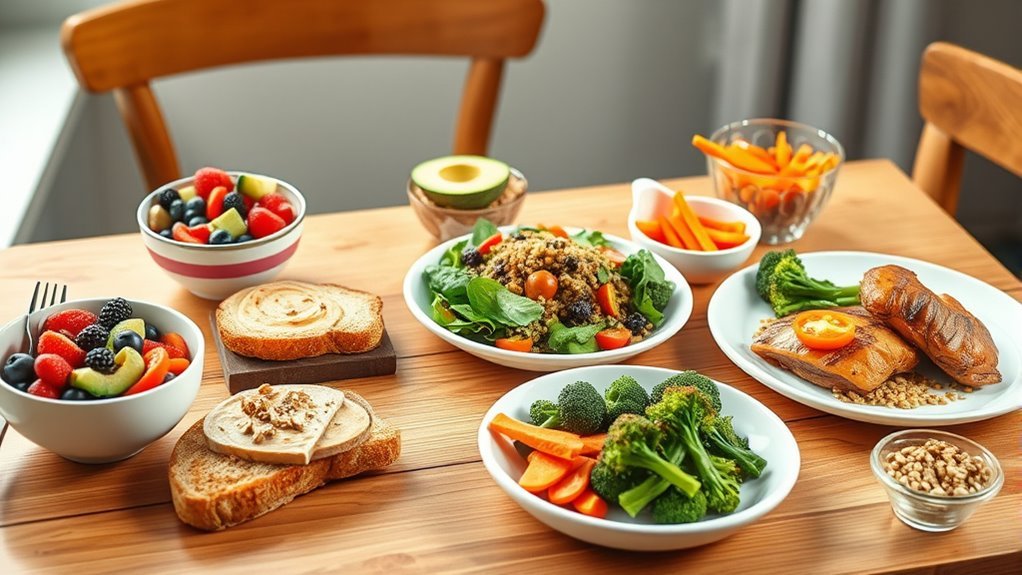
Although managing blood pressure can feel challenging, the DASH Diet makes it easier by focusing on nutrient-rich, low-sodium foods that support heart health. This approach emphasizes healthy eating through plenty of vegetables, fruits, whole grains, lean proteins, and low-fat dairy.
By including key nutrients like potassium, calcium, magnesium, fiber, and protein, the DASH Diet helps you lower blood pressure effectively.
When you start meal planning with the DASH Diet, you’ll limit foods high in saturated fats, added sugars, and sodium, keeping sodium intake around 2,300 mg per day. This balance not only aids in reducing blood pressure but also promotes overall heart health.
Research shows that following this diet consistently can bring noticeable improvements within weeks. By choosing the DASH Diet, you take a proactive step toward managing blood pressure while enjoying flavorful, nutrient-packed meals every day.
Day 1 DASH Diet Menu: Balanced Breakfast, Lunch & Dinner
When you follow the Day 1 DASH Diet menu, you’ll enjoy a variety of delicious meals that keep your heart health in mind. For breakfast, savor pumpkin pancakes topped with walnuts, honey, and a sliced banana, paired with skim milk. This meal plan kickstarts your day with fiber and essential nutrients.
Lunch features a whole grain pasta salad with olive oil and cauliflower, offering a low-calorie, low-cholesterol option that fits the DASH Diet’s goals. Dinner rounds out the day with roasted salmon glazed in balsamic, a rice blend, green beans with peppers, and canned pear slices, accompanied by unsweetened tea.
Each meal in this DASH Diet meal plan emphasizes low saturated fat, plenty of fiber, and nutrient-rich ingredients like fruits, vegetables, lean proteins, and whole grains. Portion sizes and food choices are carefully designed to reduce sodium and unhealthy fats while boosting potassium and calcium intake, supporting your heart health throughout the day.
Day 2 DASH Diet Plan: Heart-Healthy Meals With Lean Proteins
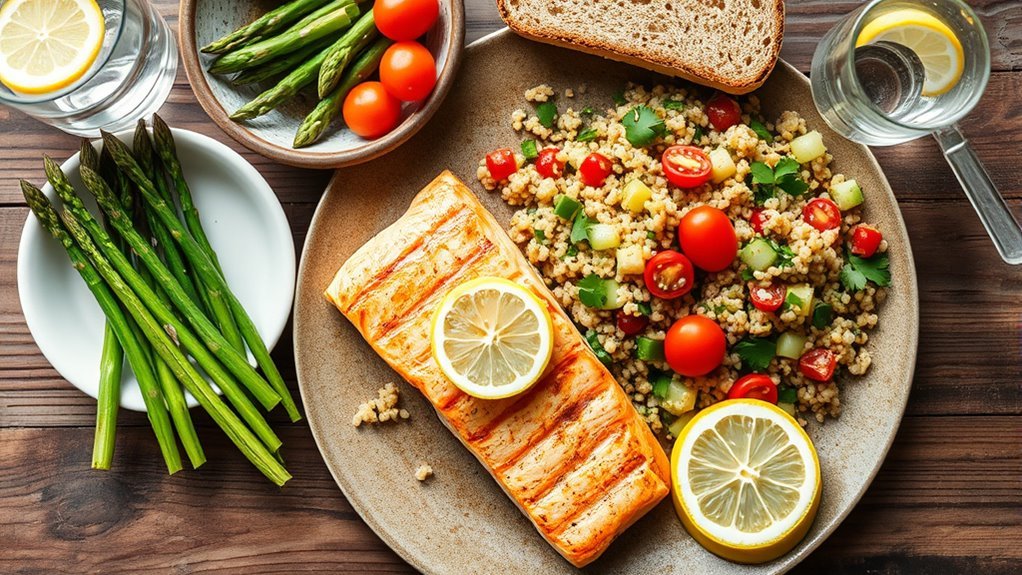
By choosing lean proteins like egg whites and roasted pork loin, you’ll nourish your body with heart-healthy meals that fit perfectly into the Day 2 DASH Diet plan. Start your day with two whole wheat English muffins topped with scrambled egg whites, reduced-fat cheese, and fresh tomato slices. Pair this with an 8-ounce glass of skim milk.
For lunch, enjoy a vibrant snow pea and orzo salad alongside 3 ounces of roasted pork loin and a garden salad featuring spinach, sun-dried tomatoes, and lemon juice. This meal plan emphasizes lean proteins, keeping saturated fats low to support healthy blood pressure.
The carefully balanced nutrients provide ample magnesium and potassium, essential for cardiovascular health, while maintaining sodium within DASH diet recommendations. By following this heart-healthy approach, you’ll help reduce your risk of hypertension and promote overall wellness, making your meals both delicious and beneficial.
Day 3 DASH Diet Meals: Low-Sodium Options to Lower Blood Pressure
Building on the focus of lean proteins from Day 2, Day 3 shifts attention to cutting sodium intake to under 1,500 mg, a key step in lowering blood pressure. This DASH diet meal plan emphasizes low-sodium, fresh, and unprocessed foods to help manage your blood pressure effectively.
Start your day with oatmeal topped with fresh berries and a sprinkle of cinnamon. No added salt needed. For lunch, enjoy a grilled chicken salad loaded with mixed greens, colorful vegetables, and a homemade vinaigrette that’s low in sodium.
Dinner features baked fish seasoned with lemon and herbs, accompanied by steamed vegetables and whole grains, all prepared without salt. Using herbs and spices instead of salt enhances flavor while keeping sodium low.
Day 4 DASH Diet Menu: Plant-Based Proteins and Fresh Vegetables
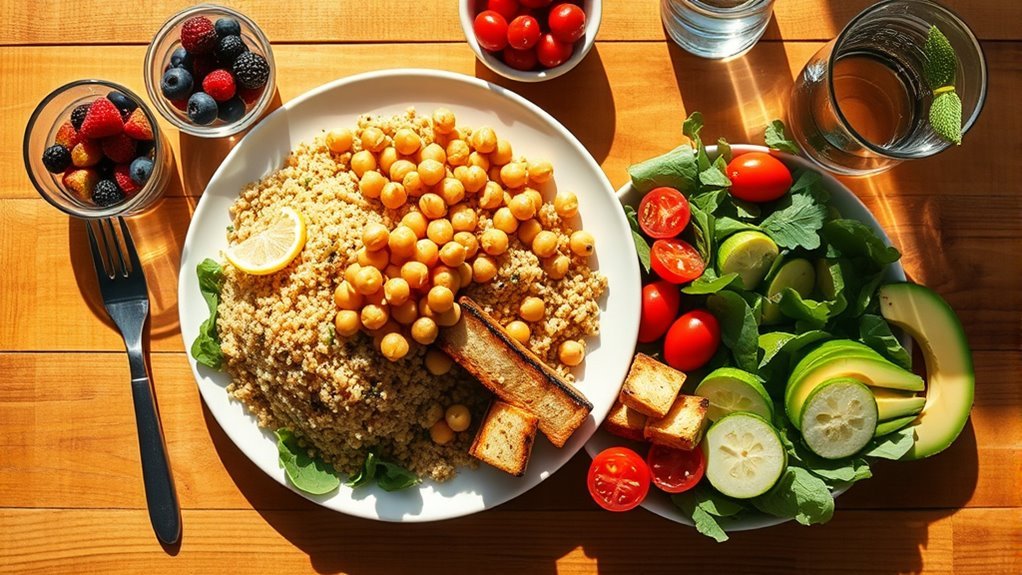
On Day 4, you’ll focus on plant-based proteins like beans and tofu. These provide key nutrients without the extra saturated fat. Plus, fresh vegetables such as spinach and bell peppers add fiber and vitamins that support your heart health.
This combination not only helps lower sodium but also boosts essential minerals like potassium and magnesium. It’s an easy way to keep your meals both tasty and heart-friendly.
Plant-Based Protein Sources
Although many protein options exist, Day 4 of the DASH diet focuses on plant-based sources like beans, lentils, and nuts to keep your heart healthy and meet your nutrient needs. These plant-based proteins are naturally low in saturated fat and cholesterol, making them ideal for cardiovascular health.
Including lentils and beans in your meals helps reduce sodium intake compared to processed meats, supporting blood pressure management. You can enjoy dishes like lentil soups, bean salads, or veggie-stuffed wraps to diversify your protein intake.
Pairing these proteins with fresh vegetables adds essential vitamins, minerals, and fiber, enhancing the DASH diet’s overall benefits. By emphasizing plant-based proteins, you’ll nourish your body while sticking to a heart-friendly, nutrient-rich plan.
Fresh Vegetable Benefits
Pairing plant-based proteins with fresh vegetables boosts the nutritional value of your meals while keeping saturated fat and sodium low. Fresh vegetables like spinach, bell peppers, and carrots provide essential vitamins A, C, and K that support overall health.
Including a variety of these vegetables increases your dietary fiber intake, which promotes digestion and heart health. Because fresh vegetables are naturally low sodium and low in calories, they help manage weight and hydration effectively.
Plus, their antioxidants play an indispensable role in reducing inflammation and oxidative stress in your body. By focusing on fresh vegetables in your DASH diet, you enhance both flavor and nutrition, making it easier to maintain a heart-healthy eating plan that’s rich in essential nutrients.
Day 5 DASH Diet Plan: Low-Fat Dairy and Fiber-Rich Foods
When you focus on low-fat dairy and fiber-rich foods, you’ll provide your body with essential nutrients like calcium and protein while supporting heart health. The Day 5 DASH diet plan emphasizes low-fat dairy options such as skim milk and low-fat yogurt, which help you meet your calcium needs without adding saturated fat.
Focusing on low-fat dairy and fiber-rich foods provides essential nutrients that support heart health and calcium intake.
Including fiber-rich foods like whole-grain bread, oats, and a variety of vegetables boosts your fiber intake, aiding digestion and promoting cardiovascular health.
This plan aims for 25-30 grams of fiber daily, balancing it with calcium while keeping sodium levels in check to manage blood pressure effectively. By choosing these nutrient-dense foods, you support your heart and overall wellness.
The meal plans on Day 5 are designed to help you reduce unhealthy fats and maintain a healthy blood pressure level, making it easier to stick with the DASH diet and enjoy its long-term benefits.
Day 6 DASH Diet Meals: Potassium-Rich Fruits and Whole Grains
Because potassium-rich fruits like bananas, oranges, and cantaloupe help control blood pressure, you’ll want to include them generously in your Day 6 DASH meals. These fruits provide a natural way to meet the recommended 4,700 mg daily potassium intake, which helps counteract sodium’s effects.
Pairing potassium-rich fruits with whole grains such as oats, brown rice, and whole-wheat bread boosts nutrient absorption, making your meals more effective in supporting heart health.
To optimize your Day 6 DASH diet meals, focus on:
- Including a variety of potassium-rich fruits in snacks and breakfasts
- Choosing whole grains for fiber and essential nutrients
- Combining fruits and grains to enhance mineral uptake
- Maintaining balanced meals that support healthy blood pressure
Frequently Asked Questions
How Do I Adjust the DASH Diet for Food Allergies?
You can adjust the DASH diet for food allergies by making gluten-free modifications like using quinoa or rice instead of wheat. For nut allergy alternatives, try seeds or sunflower seed butter.
Incorporate dairy-free options such as almond or oat milk, and use soy substitutions like tofu or tempeh if soy’s safe for you. For seafood considerations, swap fish with lean poultry or legumes to keep your meals balanced and allergy-friendly.
Can I Follow the DASH Diet While Vegetarian or Vegan?
You can definitely follow the DASH diet while vegetarian or vegan. Did you know plant-based protein can lower heart disease risk by 25%?
Swap traditional dairy with fortified dairy alternatives to keep calcium levels up. Try vegan breakfast ideas like oatmeal topped with nuts or tofu scramble.
For vegetarian-friendly snacks, opt for hummus with veggies. Use fruit substitution options like berries instead of high-sugar fruits to stay DASH compliant and deliciously healthy.
What Are Common Snack Options Compatible With the DASH Diet?
You can enjoy plenty of healthy snack ideas on the DASH diet. Quick snack options like fresh fruit-based snacks such as apple slices or berries are perfect for a nutrient boost.
Nut and seed snacks like unsalted almonds or sunflower seeds give you protein without excess sodium. Low sodium snack choices like air-popped popcorn or vegetable sticks with hummus also fit well.
These snacks keep you satisfied while supporting your heart health goals.
How Do I Eat DASH Diet Meals on a Tight Budget?
You might think eating healthy on a tight budget is impossible, but it’s not. Focus on affordable ingredients like beans, frozen veggies, and whole grains. Use budget-friendly recipes that stretch portions and maximize nutrition.
Embrace economical shopping by buying in bulk and choosing seasonal produce. Meal prepping saves time and money by reducing waste and avoiding last-minute expensive meals. With these cost-saving tips, you’ll stick to the DASH diet without overspending.
Is the DASH Diet Safe for Children and Teenagers?
Yes, the DASH diet can be safe for children and teenagers when you focus on healthy meal substitution and portion control strategies suited to their growth needs. Pay attention to nutritional supplement considerations to guarantee they get enough vitamins and minerals.
Use meal prep tips to make balanced meals easy and stress hydration importance to support their active lifestyle. Always consult a healthcare professional before making major dietary changes for young ones.
Conclusion
By following these DASH diet meal plans, you’re not just eating well; you’re actively supporting your heart health and blood pressure. While some believe salt is the main culprit in hypertension, research shows it’s the overall diet pattern that matters most.
So, by embracing balanced meals rich in fruits, veggies, lean proteins, and whole grains, you’re taking a powerful step toward lasting wellness. Stick with it, and your body will thank you in the long run.