
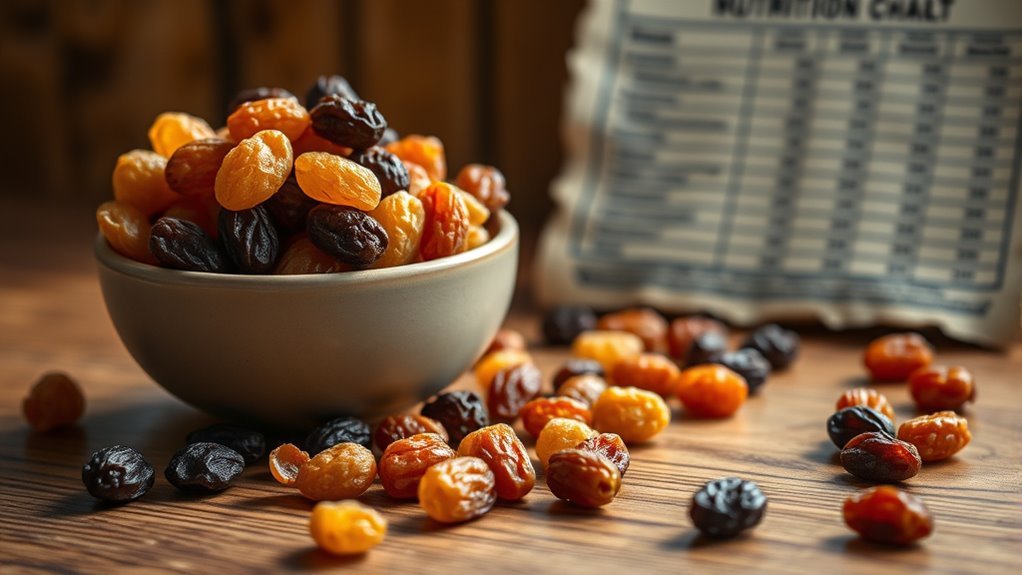
Understanding the Nutritional Value of Raisins
You get a nutrient-packed snack with raisins, rich in fiber, essential minerals like potassium and iron, and antioxidants that protect your cells.
Their natural sugars provide quick energy, but fiber helps steady your blood sugar.
Raisins also support digestion, heart health, and even oral care by fighting bacteria.
Compared to other dried fruits, they offer unique benefits and versatile uses.
Explore more and discover how raisins can fit perfectly into your healthy lifestyle.
What Are Raisins and How Are They Made
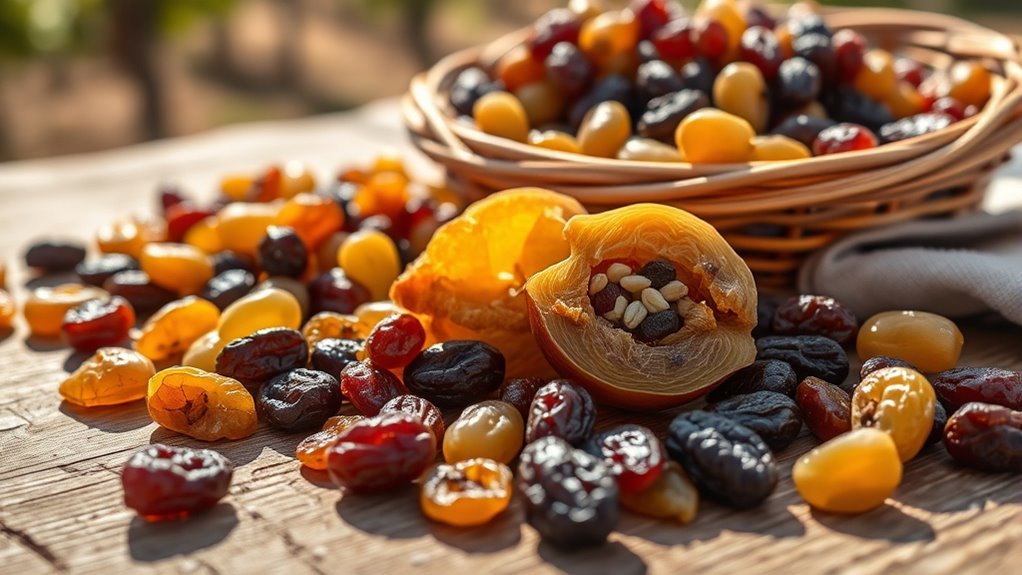
Although you might think raisins are just dried grapes, there’s more to their story. Raisins come from various types of dried grapes, primarily from the *Vitis vinifera L.* species. The drying process plays a vital role in their unique characteristics.
Natural raisins are sun-dried over about three weeks, which gives them a darker color and a traditional, rich flavor. You’ll also find sultanas, made from Thompson seedless grapes. These grapes are dipped in sulfur dioxide and dehydrated quickly in machines, producing lighter, sweeter raisins.
Another variety, currants, come from Black Corinth grapes. These small, dark raisins dry naturally and have a tangy taste often used in baked goods. Understanding these differences helps you appreciate the drying process that concentrates sugars and flavors, turning grapes into the nutrient-dense snacks we call raisins.
Key Nutrients Found in Raisins: Fiber, Minerals, and More
You’ll find that raisins pack a good amount of dietary fiber, which helps keep your digestion smooth. They’re also loaded with essential minerals like potassium, calcium, and iron that support many body functions. Plus, raisins offer vitamins and phytochemicals that contribute to your overall health. So, including them in your diet can be a tasty way to boost your nutrient intake.
Dietary Fiber Benefits
Because raisins pack 3.3 to 4.5 grams of dietary fiber per 100 grams, they play a powerful role in supporting your digestive health and keeping your bowel movements regular. Their fiber content acts as a prebiotic, feeding the beneficial bacteria in your gut and enhancing colon health.
This promotes smoother digestion and helps reduce the risk of digestive issues. Plus, the dietary fiber in raisins helps you feel fuller longer, which can aid in weight management by controlling your appetite.
Essential Mineral Content
When you include raisins in your diet, you tap into a rich source of essential minerals that support many critical bodily functions. These dried fruits are packed with potassium, calcium, iron, copper, and trace minerals, all essential for your health. Here’s why their mineral content matters:
Potassium helps maintain healthy blood pressure and electrolyte balance, keeping your heart and muscles functioning well. Iron supports red blood cell production, preventing anemia and boosting your energy levels.
Calcium and copper contribute to bone strength and metabolic processes, while trace minerals like boron further enhance your overall well-being.
Vitamins And Phytochemicals
Although raisins are best known for their mineral content, they also deliver a powerful mix of vitamins and phytochemicals that boost your health in multiple ways. They provide essential vitamins like vitamin C, B-complex, and vitamin E, which support your immune system, energy metabolism, and antioxidant defenses.
Raisins contain phytochemicals such as phenolic acids (caftaric, coutaric) and flavonols (quercetin, rutin), key antioxidants that help protect your cells from damage. These bioactive compounds, including minor ones like tartaric acid and triterpenoids, further enhance the health benefits of raisins.
What Raisins’ Sugars Mean for Your Health
Raisins are packed with natural sugars like fructose and glucose. These sugars give you a quick boost of energy but can also affect your blood sugar levels.
The good thing is that raisins have a moderate glycemic index, which means they raise blood glucose gradually. This is especially true when you eat them in reasonable amounts.
Knowing how these sugars impact your insulin and glucose levels can help you enjoy raisins without worrying about unwanted spikes.
Sugar Types And Impact
Because they contain about 60% sugar, mainly fructose and glucose, you should be mindful of how raisins affect your blood sugar levels. The sugar content in raisins comes from natural sugars that provide energy but can raise your blood glucose if you eat too many.
Luckily, raisins have a moderate glycemic index (49–69), meaning they cause a slower rise in blood sugar compared to pure glucose.
Keep these points in mind:
- Fructose has a lower glycemic index than glucose, so it impacts blood sugar less sharply.
- The fiber in raisins helps slow sugar absorption.
- Pairing raisins with protein or healthy fat can reduce blood sugar spikes.
Glycemic And Insulin Effects
When you eat raisins, their natural sugars, mainly fructose and glucose, affect your blood sugar and insulin levels in different ways. Raisins have a low-to-moderate glycemic index, ranging from 49 to 69, meaning they cause a moderate rise in blood sugar.
Fructose, with a lower GI of about 15, is absorbed more slowly, which helps moderate the insulin response. The dietary fiber in raisins further slows carbohydrate absorption, preventing rapid spikes in blood glucose and insulin levels.
Thanks to their natural sweetness, raisins can satisfy cravings without causing sharp blood sugar fluctuations. By practicing moderate intake, especially when combined with other foods, you support stable blood sugar and insulin sensitivity. This makes raisins a smart choice for managing your health effectively.
How Raisins’ Fiber Helps Digestion
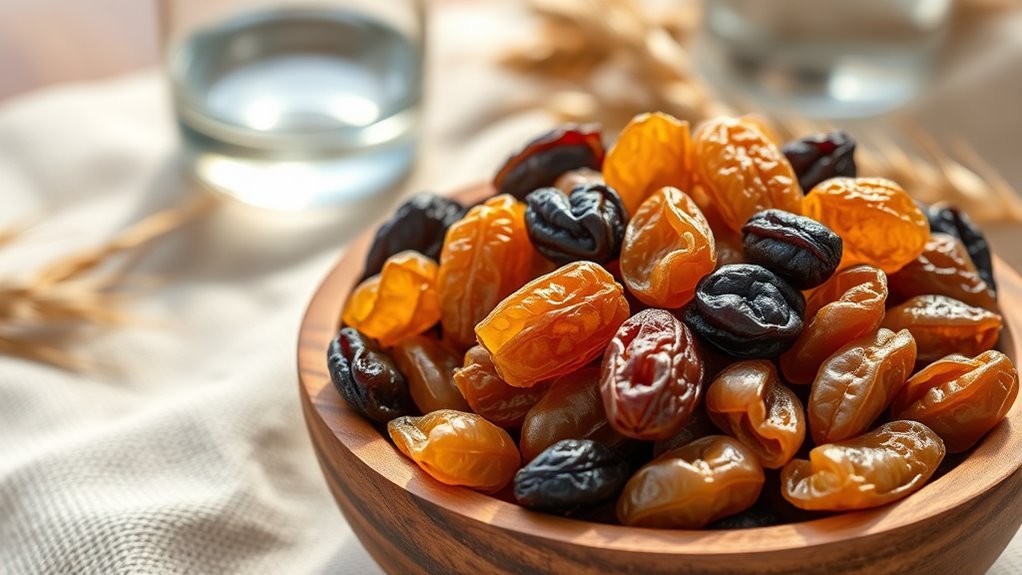
Although you might not immediately think of dried fruit as a digestive aid, the fiber in raisins plays a crucial role in keeping your digestive system running smoothly. Raisins provide 3.3 to 4.5 grams of dietary fiber per 100 grams, supporting digestion and gut health effectively.
Here’s how their fiber benefits you:
- Raisins contain insoluble fiber, which adds bulk to your stool and promotes regular bowel movements, helping prevent constipation.
- The dietary fiber in raisins acts as a prebiotic, feeding beneficial gut bacteria and enhancing overall colon health.
- Their soluble fiber helps regulate intestinal transit time, improving nutrient absorption and keeping digestion balanced.
Raisin Antioxidants and Their Health Benefits
Beyond fiber, raisins pack a powerful punch of antioxidants that help protect your body from harmful free radicals. These antioxidants come mainly from phenolic acids like ferulic and tartaric acid, which boost the fruit’s ability to neutralize damaging molecules.
Raisins deliver potent antioxidants, including phenolic acids, that defend your body against harmful free radicals.
Raisins also contain flavonols such as quercetin, kaempferol glycosides, and rutin, further enhancing their antioxidant strength. Different raisin varieties vary in antioxidant content, with red raisins typically offering higher phenolic acid levels and greater potential to combat oxidative stress.
When you eat raisins, your serum’s resistance to oxidation increases, reaching a peak about an hour after consumption. This antioxidant activity plays a key role in lowering oxidative stress, helping to protect your cells from damage.
While these benefits support overall well-being, they also contribute to maintaining cardiovascular health by preventing harmful lipid peroxidation. Including raisins in your diet is a smart way to harness natural antioxidants for better health.
How Raisins Support Heart Health
Because raisins contain powerful polyphenolic compounds like flavonoids and phenolic acids, they actively reduce oxidative stress. Oxidative stress is a major contributor to heart disease. When you include raisins in your diet, you harness their antioxidants to protect your cardiovascular system.
Here’s how raisins support heart health:
- Regulate Blood Pressure: The potassium in raisins helps balance sodium levels. This eases blood pressure and reduces strain on your heart.
- Lower Cholesterol: Regular raisin consumption can decrease total and LDL cholesterol. Lower cholesterol means less risk of plaque buildup in arteries.
- Enhance Blood Flow: Raisins promote nitric oxide production, causing vasodilation that improves circulation. This reduces the workload on your heart.
Raisins’ Impact on Blood Sugar and Diabetes
Raisins offer more than heart benefits. They also influence blood sugar levels, which is important if you’re managing diabetes. Their natural sugars can raise blood sugar, but raisins have a moderate glycemic index (49–69), allowing cautious consumption.
The dietary fiber in raisins slows glucose absorption, helping prevent spikes after meals. Pairing raisins with proteins or healthy fats stabilizes blood glucose further. Regularly eating raisins may improve insulin resistance thanks to their bioactive phytochemicals.
However, portion control is key since excessive intake can raise blood sugar too much.
| Factor | Impact on Blood Sugar | Tips for Diabetes Management |
|---|---|---|
| Natural Sugars | Can increase blood sugar | Limit portions |
| Glycemic Index | Moderate (49–69) | Combine with protein/fats |
| Dietary Fiber | Slows glucose absorption | Helps reduce post-meal spikes |
| Insulin Resistance | May improve with regular use | Supports blood sugar control |
| Portion Control | Essential to avoid spikes | Measure servings carefully |
Oral Health Benefits of Raisins
While you might expect dried fruit to harm your teeth, the phenolic compounds and phytochemicals in raisins actually fight harmful oral bacteria. These bioactive substances exhibit antibacterial activity that helps reduce bacterial buildup, promoting better oral health. Plus, the natural sugars in raisins stimulate saliva production, which balances your mouth’s pH and prevents decay.
Here are three key oral health benefits of raisins:
- Inhibit Plaque Formation: Raisins’ compounds prevent plaque-forming bacteria from sticking to your teeth, lowering the risk of cavities.
- Boost Saliva Production: Increased saliva helps wash away food particles and neutralizes acids that cause tooth erosion.
- Antioxidant Effects: The antioxidants in raisins, like phenolic acids and flavonoids, reduce inflammation and may protect against gum disease.
Raisins vs. Other Dried Fruits: Nutrition and Benefits
When you compare raisins to other dried fruits, you’ll notice they have more sugar and calories. But they also offer some unique antioxidants that are pretty beneficial. On the other hand, dried apricots usually have less sugar and pack more vitamin A, which is great for your eyes and skin. Prunes stand out because they provide extra fiber, which can really help with digestion. Knowing these differences makes it easier to pick the best dried fruit that fits what your body needs.
Nutrient Comparison Highlights
Although many dried fruits offer valuable nutrients, you’ll find that raisins stand out for their high natural sugar and calorie content, placing them on par with apricots and prunes. When comparing raisins to other dried fruits, consider these highlights:
- Raisins provide more iron and potassium than most dried fruits, making them a mineral-rich choice.
- They have higher sugar content than dried apricots, which offer more vitamin A but fewer calories.
- Raisins boast a greater amount of phenolics and flavonoids than prunes and others, giving them a stronger antioxidant profile.
Sugar and Calorie Content
Raisins stand out not only for their rich mineral content but also for their especially high sugar and calorie levels compared to other dried fruits. With about 60% sugar, mainly fructose and glucose, raisins are sweeter and more calorie-dense than dried apricots, prunes, or cranberries.
A half-cup of raisins packs around 217 calories and 47 grams of sugar, giving you a quick energy boost. However, this high sugar content means you need to practice portion control to avoid consuming too many calories unintentionally.
While dried fruit offers natural sugars, raisins’ concentrated sugar makes them a potent energy source but one best enjoyed in moderation. Balancing your intake helps you benefit from their sweetness without overloading on calories.
Unique Health Benefits
How do raisins compare to other dried fruits regarding health advantages? Raisins stand out due to their unique blend of phytochemicals and nutrients. Here are three key health benefits:
- Rich in antioxidants and phenolic compounds: Raisins, especially red varieties, have potent antioxidant effects that often surpass those of apricots or prunes. This helps combat oxidative stress.
- Support blood health: They provide more iron and dietary fiber than many dried fruits. This promotes better blood health and aids digestion.
- Unique phytochemicals: Tartaric acid and specific phenolic acids like caftaric and coutaric give raisins distinct health benefits not usually found in other dried fruits.
Easy Ways to Add Raisins to Your Diet
When you want to boost your meals with natural sweetness and fiber, sprinkling raisins on oatmeal, yogurt, or cereal is a simple and effective choice. Raisins add dietary fiber and a nutritious boost without extra calories.
You can also incorporate raisins into baked goods like cookies, muffins, or bread to enhance flavor and nutrition. For a healthy snack, mix raisins with nuts and other dried fruits to create a convenient trail mix perfect for busy days.
Adding raisins to salads, whether fruit or vegetable-based, introduces a sweet contrast and interesting texture. Plus, using raisins as a natural sweetener in smoothies or homemade energy bars gives you a wholesome alternative to processed sugars.
Frequently Asked Questions
How Should Raisins Be Stored to Maintain Freshness?
To maintain freshness, you should use proper storage methods by keeping raisins in airtight containers to control moisture and prevent spoilage. Choose containers that seal tightly, and store them in cool, dark places following temperature guidelines to extend shelf life.
Refrigeration is a great preservation technique if you want to keep them fresh for up to six months. Avoid humidity and direct sunlight, as moisture can cause mold or fermentation, ruining your raisins.
Are There Any Potential Allergies Related to Raisins?
Yes, you can have a raisin allergy, though allergic reactions are rare. If you experience symptoms like itching or swelling after eating raisins, consider symptom identification and see a doctor for allergy testing.
Raisins may cause cross reactivity risks if you’re allergic to grapes or pollen. To avoid issues, practice allergy prevention by checking labels for sulfites and potential cross contamination, especially if you have asthma or nut allergies.
Do Raisins Contain Gluten or Other Common Allergens?
Wondering about raisins’ gluten content? You’ll be glad to know raisins don’t naturally contain gluten, but cross-contamination risks exist during processing. Always check labeling standards to avoid hidden allergens, especially in flavored varieties.
While raisins themselves pose no nut allergy concerns, facilities might handle nuts, so review allergen profiles carefully. To stay safe, trust reputable brands that guarantee gluten-free processing and clear allergen labeling on their packaging.
Can Raisins Be Included in a Weight Loss Diet?
Yes, you can include raisins in a weight loss diet if you practice portion control because of their calorie content and sugar levels. A small handful makes a great snack alternative that satisfies sweet cravings.
Pair raisins with protein or healthy fats to stabilize blood sugar and enhance digestion benefits. Including them with balanced meals helps you enjoy their nutrition without overloading calories, supporting your weight loss goals effectively.
What Is the Environmental Impact of Raisin Production?
You should know raisin production impacts the environment through high water usage and pesticide concerns that can harm soil and biodiversity. The carbon footprint rises with energy-intensive drying and transportation.
However, if you choose raisins from sustainable farming practices, like organic cultivation and solar drying, you help reduce these effects. Supporting growers who prioritize sustainability minimizes pesticide use and conserves water, making raisin production kinder to the planet overall.
Conclusion
You might think raisins are just tiny, sticky snacks, but they actually pack a surprising nutritional punch. While you’re busy avoiding sweets, these naturally sweet gems quietly boost your fiber, antioxidants, and even oral health.
So next time you reach for candy, remember raisins are the sneaky healthy treat you didn’t know you needed. Who knew something so small could do so much good without asking for much in return?