How to Meal Plan Vegetarian Meals in 7 Easy Steps
To meal plan vegetarian meals in 7 easy steps, start by mapping your week to find pockets of free time for cooking.
Choose protein-rich staples like beans, lentils, and tofu for balanced nutrition.
Build a flexible meal plan mixing quick and elaborate recipes.
Make a simple, grocery list organized by sections, then prep ingredients ahead to save time.
Batch cook grains and vegetables for easy assembly.
Keep your meals exciting with regular recipe swaps and new inspirations.
Discover how these steps fit together to simplify your week.
Plan Your Vegetarian Meal Week Around Your Schedule

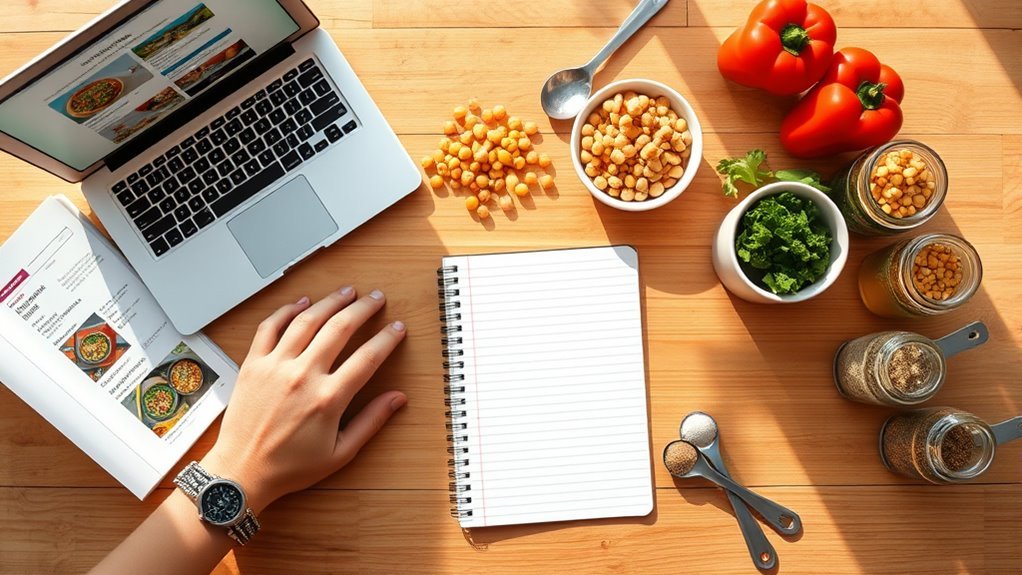
When you plan your vegetarian meals around your weekly schedule, you make cooking less stressful and more efficient. Start by evaluating your week to spot days with ample cooking time and those requiring quick, ready-to-assemble meals.
Planning meals around your week helps reduce stress and boosts cooking efficiency.
On your free days, cook larger batches that serve as leftovers when you’re busy. Align your grocery shopping and meal prepping sessions with your most flexible days to guarantee fresh ingredients and smooth preparation.
Incorporate versatile ingredients that fit multiple dishes, so you can easily adjust your vegetarian meal plan as your week unfolds. Using a meal planning app or simply marking your calendar helps you organize and stick to your plan.
This approach not only saves you time but also reduces daily decision fatigue, letting you enjoy nutritious, tasty meals without the last-minute rush. By syncing your meal prepping with your schedule, you set yourself up for a balanced, hassle-free week of vegetarian eating.
Choose Balanced, Protein-Rich Vegetarian Ingredients
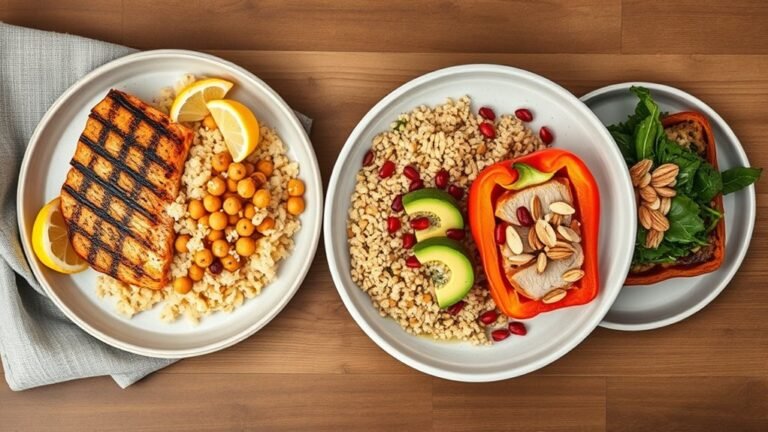
You’ll want to focus on essential protein sources like beans, lentils, tofu, and dairy to keep your meals balanced. It’s a good idea to combine plant proteins, such as grains with legumes, because that helps create complete amino acid profiles. And don’t forget to add nutrient-dense options like seeds and high-protein vegetables—these can really boost your protein intake even more.
Essential Protein Sources
How can you guarantee your vegetarian meals pack enough protein to keep you energized and satisfied? Focus on essential protein sources that fit seamlessly into a plant-based diet. Here are four staples to include:
- Legumes like lentils, chickpeas, and black beans provide 15-18 grams of protein per cooked cup.
- Soy products such as tofu, tempeh, and edamame offer complete proteins with all nine essential amino acids.
- Quinoa delivers about 8 grams of protein per cooked cup, making it a rare plant-based complete protein.
- Nuts and seeds like almonds, chia, and hemp add 5-10 grams of protein plus healthy fats per ounce.
Incorporating these ingredients ensures your meals stay balanced and protein-rich. This way, you’re fueling your body effectively on a vegetarian path.
Combining Plant Proteins
Why settle for just one protein source when combining plant proteins can provide a complete amino acid profile? You can easily create complete proteins by pairing legumes like beans or lentils with grains such as rice or quinoa.
Incorporate plant-based options like tofu, tempeh, or edamame alongside seeds and nuts to boost protein quality. If you follow a lacto-ovo vegetarian diet, mixing dairy or eggs with plant proteins ensures you get all essential amino acids.
Don’t forget protein-rich vegetables like spinach, broccoli, and peas. They complement other plant proteins and increase total protein content. By planning meals that combine these balanced, protein-rich vegetarian ingredients, you’ll support muscle maintenance and enjoy a well-rounded, nutritious diet without relying on animal proteins alone.
Nutrient-Dense Ingredient Choices
Building on combining plant proteins, selecting nutrient-dense ingredients helps you create meals that are both balanced and rich in protein. Focusing on plant-based options guarantees you get a variety of essential nutrients without missing out on flavor or satisfaction.
Here are four nutrient-dense ingredient choices to include in your meal plan:
- Lentils, chickpeas, tofu, and tempeh provide high-quality plant-based protein and essential amino acids.
- Whole grains like quinoa, farro, and oats add complex carbs and extra protein.
- Leafy greens such as spinach, kale, and broccoli boost vitamins, minerals, and fiber.
- Nuts, seeds, and nut butters like chia seeds, flaxseeds, and almond butter offer healthy fats and protein.
Choosing these ingredients helps you build well-rounded, protein-rich vegetarian meals effortlessly.
Create a Flexible Meal Plan With Nutritious Recipes
When you create a flexible meal plan, you can enjoy a variety of nutritious vegetarian dishes without feeling restricted. Start by incorporating plant-based proteins like beans, lentils, tofu, and tempeh to keep your meals balanced.
Use versatile ingredients such as seasonal vegetables, which you can prep in advance for quicker meal assembly. For example, chop veggies or cook grains ahead to simplify meal prep and keep your options open.
Mix quick recipes like vegetable soup with more elaborate meals to fit your schedule. This approach reduces waste and keeps your menu exciting.
| Ingredient | Meal Idea |
|---|---|
| Lentils | Lentil curry |
| Tofu | Stir-fry with tofu |
| Seasonal Vegetables | Roasted vegetable soup |
| Beans | Bean chili |
| Quinoa | Quinoa salad |
This flexibility lets you enjoy variety while maintaining nutrition and ease throughout the week.
Make a Simple, Effective Shopping List for Your Meals
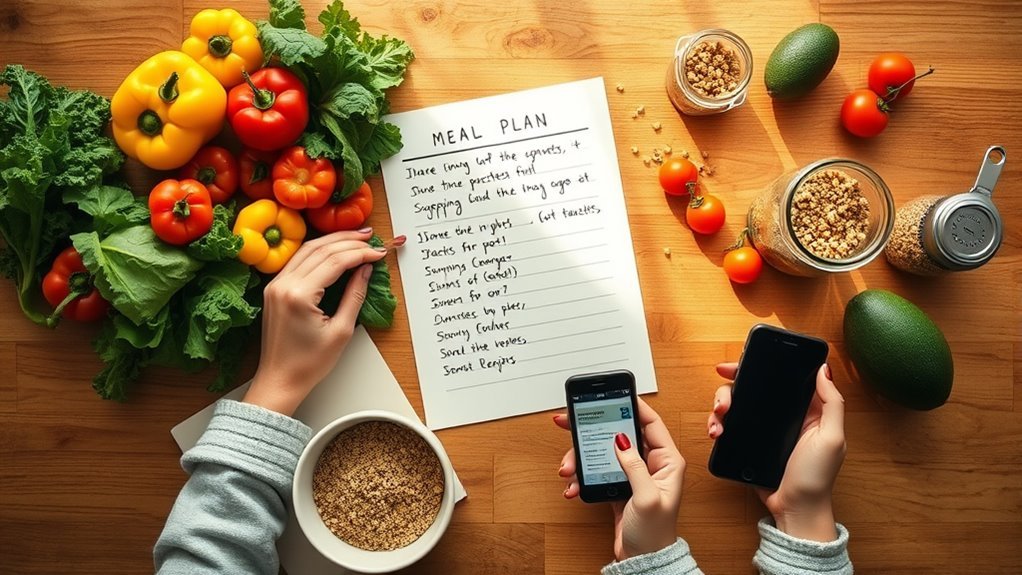
Start by jotting down essential vegetarian ingredients like grains, legumes, and fresh produce to make sure you cover all your meal needs. It’s a good idea to organize your shopping list by store sections, too. That way, you can move quickly through the aisles and avoid backtracking. This simple approach helps keep you efficient and makes sure you grab everything you need for balanced meals.
Essential Ingredients Overview
Although meal planning may seem overwhelming at first, focusing on a core set of staple ingredients makes creating vegetarian meals simple and efficient. When you build your shopping list, prioritize plant-based essentials that work across dishes like stir fry, salads, and bowls.
Here’s a quick overview to get you started:
- Grains and legumes: farro, oats, chickpeas, lentils
- Plant-based proteins: tofu, tempeh
- Fresh produce: kale, bell peppers, carrots, citrus fruits
- Pantry staples: olive oil, vinegar, dried herbs, spices, canned tomatoes
Don’t forget dairy or alternatives like Greek yogurt or hummus to add creamy textures and protein. With these ingredients on hand, you can easily mix and match to whip up tasty, nutritious vegetarian meals all week long.
Shopping List Organization
To make your shopping trips quicker and more efficient, organize your list by grouping ingredients into categories like produce, grains, proteins, dairy, and pantry staples. Use your weekly meal plan to list exact quantities for each ingredient, which helps reduce waste and avoid overbuying.
Include versatile staples such as canned beans, frozen vegetables, and dried grains that fit multiple meals. Prioritize adding fresh produce and perishable items last, so you buy them fresh and use them quickly.
Before heading out, review and cross-check your shopping list to confirm all meal plan ingredients are accounted for, preventing extra store visits. This organized approach keeps your shopping list simple, effective, and aligned with your vegetarian meal plan, saving you time and effort.
Prepare Ingredients Ahead to Save Time During the Week
When you prepare ingredients ahead of time, you’ll save valuable minutes during busy weekdays. Meal prep isn’t just about cooking full meals in advance; it’s about setting yourself up for quick, easy assembly later. Here’s how to streamline your vegetarian meal planning:
Preparing ingredients in advance saves time and simplifies quick, healthy vegetarian meals during busy weekdays.
- Batch cook grains like rice or farro and store them in airtight containers for versatile use.
- Pre-wash, dry, and chop vegetables and herbs so they’re ready to toss into any dish.
- Portion cooked beans, roasted veggies, and tofu separately to mix and match throughout the week.
- Use clear meal prep containers to keep ingredients organized and accessible.
Batch Cook Vegetarian Staples for Easy Meal Assembly
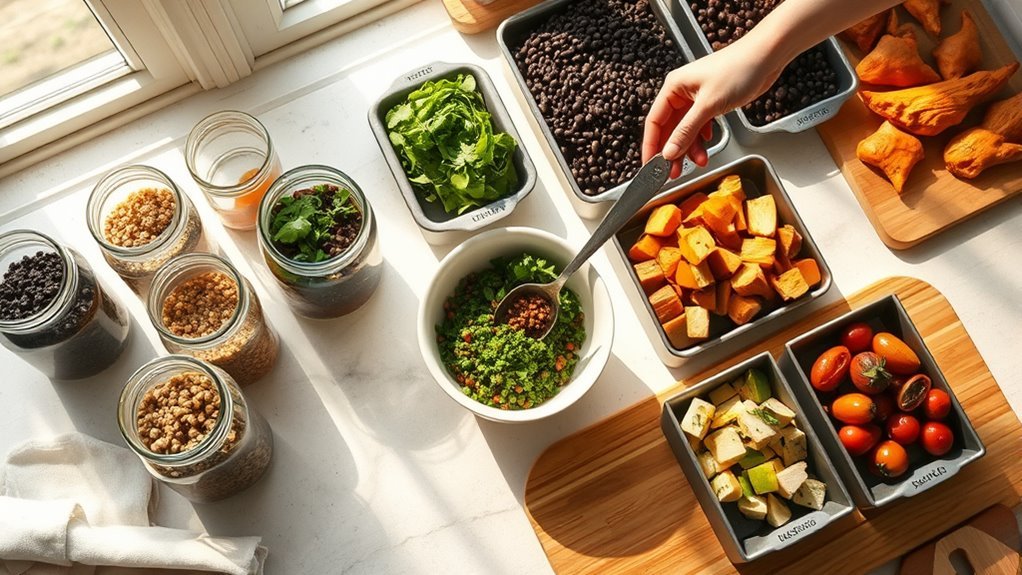
Batch cooking vegetarian staples like grains, beans, and roasted vegetables lets you pull together meals quickly without starting from scratch each time. When you batch cook these essentials, you save time and simplify meal assembly throughout the week.
Prepare large quantities of tofu or tempeh, then store them in airtight containers so you can easily add them to salads, stir-fries, or wraps. Freezing pre-portioned cooked ingredients keeps them fresh and makes grabbing components for busy nights effortless.
Focus on versatile bases like cooked farro or chickpeas, which you can quickly transform into salads, bowls, or wraps. Label and organize your batch-cooked items in clear containers to streamline your prep and avoid wasting time searching for ingredients.
Stay Inspired: Tips to Customize and Refresh Your Plan
Although meal planning can become routine, you can keep things exciting by regularly rotating new recipes and incorporating seasonal ingredients. To customize and refresh your vegetarian meal plan, try these tips:
Keep your meal planning fresh by rotating recipes and using seasonal ingredients for a personalized vegetarian menu.
- Personalize meals with your favorite spices and textures to keep boredom at bay.
- Experiment with cuisines like Indian, Mediterranean, or Mexican for variety and balanced nutrition.
- Keep a list of quick go-to recipes and ingredient swaps to easily adjust your meals when needed.
- Draw inspiration from food blogs, social media, or cookbooks to discover fresh ideas.
Frequently Asked Questions
How Can I Store Batch-Cooked Vegetarian Meals Safely?
You can store batch-cooked vegetarian meals safely by using airtight meal prep containers to keep moisture and contamination out. Let your food cool to room temperature within two hours before refrigerating.
Label each container with the date to track freshness, and consume meals within 3-4 days. For long-term storage, choose freezer-safe containers or bags, remove excess air to prevent freezer burn, and always reheat thoroughly to guarantee safety.
These food storage tips will keep your meals fresh and delicious.
What Are the Best Plant-Based Protein Substitutes for Dairy?
You’ll find the best plant proteins as dairy alternatives in fortified plant milks like soy, almond, and oat, which provide protein levels similar to cow’s milk. Nutritional yeast adds a cheesy flavor and complete protein punch.
Legumes such as lentils and chickpeas work great in soups and salads. Don’t forget tofu, tempeh, and seitan, they’re versatile, high-protein options that easily replace dairy in your meals.
How Do I Handle Meal Planning for Picky Eaters?
You handle meal planning for picky eaters by using picky eater strategies like introducing familiar flavors and mild seasonings first. Use flavor enhancement techniques such as balancing tastes and adding variety in textures and colors to keep meals interesting.
Gradually mix in new vegetables or plant-based proteins alongside favorites. Offering customizable meals, like build-your-own bowls, lets them pick what they enjoy, making the shift to vegetarian meals smoother and more appealing.
Can I Freeze Prepped Ingredients Without Losing Nutrition?
You can freeze prepped ingredients without losing much nutrition, especially if you store them right. Flash freezing at -20°F helps keep vitamins intact by reducing ice crystal damage.
Using airtight containers or vacuum-sealing preserves freshness, so your vegetarian snacks stay tasty and nutritious. Just remember, some vitamin C might dip slightly, but proper fresh produce storage and gentle reheating keep most nutrients stable.
Freezing is a smart way to save time and maintain quality.
What Kitchen Tools Simplify Vegetarian Meal Prep?
You’ll find vegetable choppers invaluable for quickly dicing and slicing veggies without the hassle. Meal prep containers keep your ingredients organized and fresh, making it easier to portion meals ahead.
Combine these with a sharp chef’s knife and a sturdy cutting board, and you’ll speed through prep effortlessly. These tools simplify your workflow, save time, and help maintain the quality of your vegetarian meals throughout the week.
Conclusion
By planning your vegetarian meals around your week, you’ll find yourself grabbing vibrant veggies just as they’re perfectly ripe, almost like they’re waiting for you. When you batch cook and prep ahead, dinner comes together effortlessly, as if the kitchen knows your rhythm.
With a flexible plan and balanced ingredients, you’ll not only save time but also discover new flavors that keep your meals exciting. It’s like your meal plan and life are in perfect harmony.